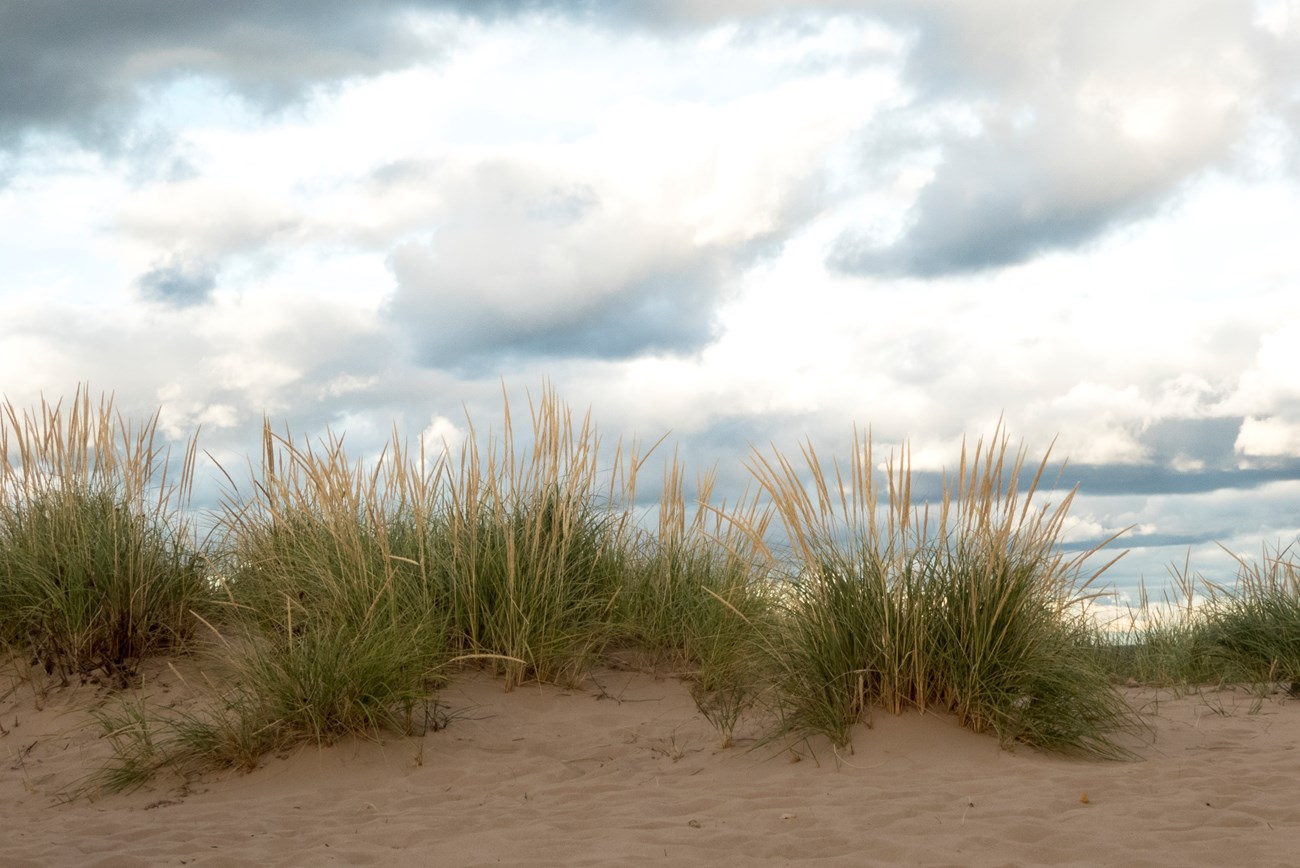
Sand, dune grass, and a Great Lakes horizon can make Sleeping Bear Dunes feel like a simple beach escape. Look again and the landscape becomes something more interesting: a record of ice, water, and wind still being rewritten.
The scenery did not happen all at once
The National Park Service describes a shoreline shaped by glaciers, erosion, and wind. Glacial deposits supplied material, waves worked the shore, and wind moved sand into dunes. What looks like a permanent hill is part of a changing system.
That story gives a scenic stop a different rhythm. Notice the exposed sand, the vegetation, and the edges where the landscape changes. Dune grass is part of the place you came to see, not just background decoration.
Choose your outing before you arrive
A viewpoint, an established walking route, and a beach visit are different experiences. Review official visitor information to choose a location appropriate to your group. Sand can make walking more demanding than the same distance on firm ground, and descending a steep slope may be much easier than returning.
Respect posted barriers and access guidance, stay on designated routes where required, and do not assume every inviting patch of sand is an appropriate place to climb. Conditions along the lakeshore can change; check the forecast and park alerts before setting out.
Give the small details some time
The wide view naturally draws attention, but the closer details help explain it. Grass holds its place against moving sand; wind leaves patterns; the lake forms the edge of an enormous geological story.
For a first visit, build a manageable day around one or two official access points. There is no need to turn a beautiful stretch of Michigan into an endurance challenge. Sometimes the memorable part is simply understanding what you are looking at.