Fire Island can feel like several different trips along one narrow stretch of New York coast. There is a striped lighthouse near a state park parking field, a maritime forest reached by ferry or boat, and a long shoreline shaped by wind and water. Choosing the right access point matters just as much as choosing what to see.
Fire Island National Seashore protects portions of a barrier island south of Long Island. This is not a place where visitors can simply drive a public road from one attraction to the next. Start with the season, transportation and available services, then build an itinerary that leaves room for weather and ferry changes.
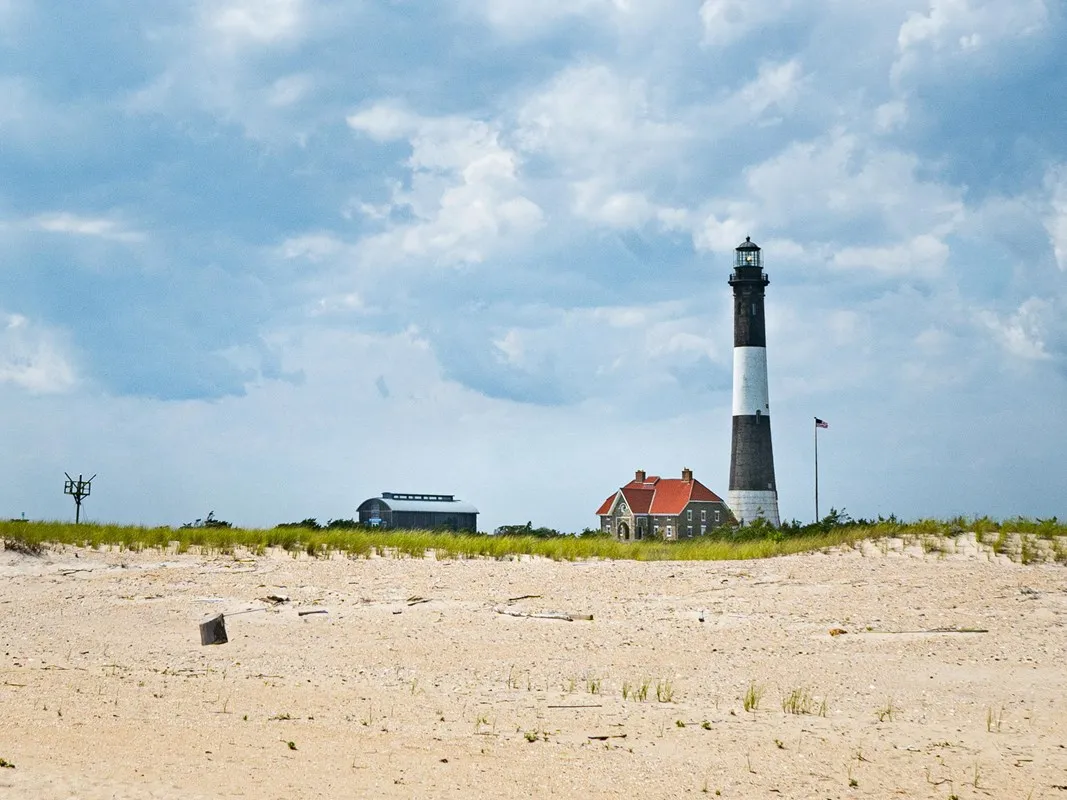
1. Begin at the Fire Island Lighthouse
The black-and-white lighthouse is one of the island's most recognizable landmarks. The present tower was completed in 1858 near the site of an earlier lighthouse; its distinctive stripes were added later, in 1892. Maritime history here reaches beyond a beautiful view: for generations, lights along this coast helped ships navigate their approach to New York.
One year-round way to reach the lighthouse area is by car to Robert Moses State Park's Field 5. Park toward the east end and follow the boardwalk about three quarters of a mile to the lighthouse. A seasonal parking fee may apply. The walk is part of the outing, so wear comfortable shoes and bring a layer when the wind is brisk.
The lighthouse is operated by the Fire Island Lighthouse Preservation Society in cooperation with the National Park Service. Tower tour availability depends on volunteer staffing, and tower admission has a fee. Call ahead and check current hours if climbing is central to your plan. The lighthouse grounds can still make a rewarding visit when a tower tour is unavailable.
2. Understand how to reach the middle of the island
Sailors Haven, Watch Hill and Fire Island communities have different ferry connections from Long Island. Sailors Haven is reached by passenger ferry from Sayville, private boat or on foot from nearby island communities. Watch Hill has a separate ferry connection from Patchogue. Check the specific operator's current schedule and destination before buying a ticket.
Schedules are seasonal and weather dependent. As of November 16, 2026, the park lists Sailors Haven and Watch Hill visitor facilities as operating in the warmer season rather than year-round. Public transportation may be limited from October through April. Do not assume a return trip runs late simply because an outbound trip is listed: confirm both legs and leave a margin for delays.
Pack what you need for the time you expect to be away, including drinking water, sun protection and any medication. Summer insects can be a factor, too. Food, restrooms, showers and other services vary by destination and season; verify them before departure, particularly when traveling with children.
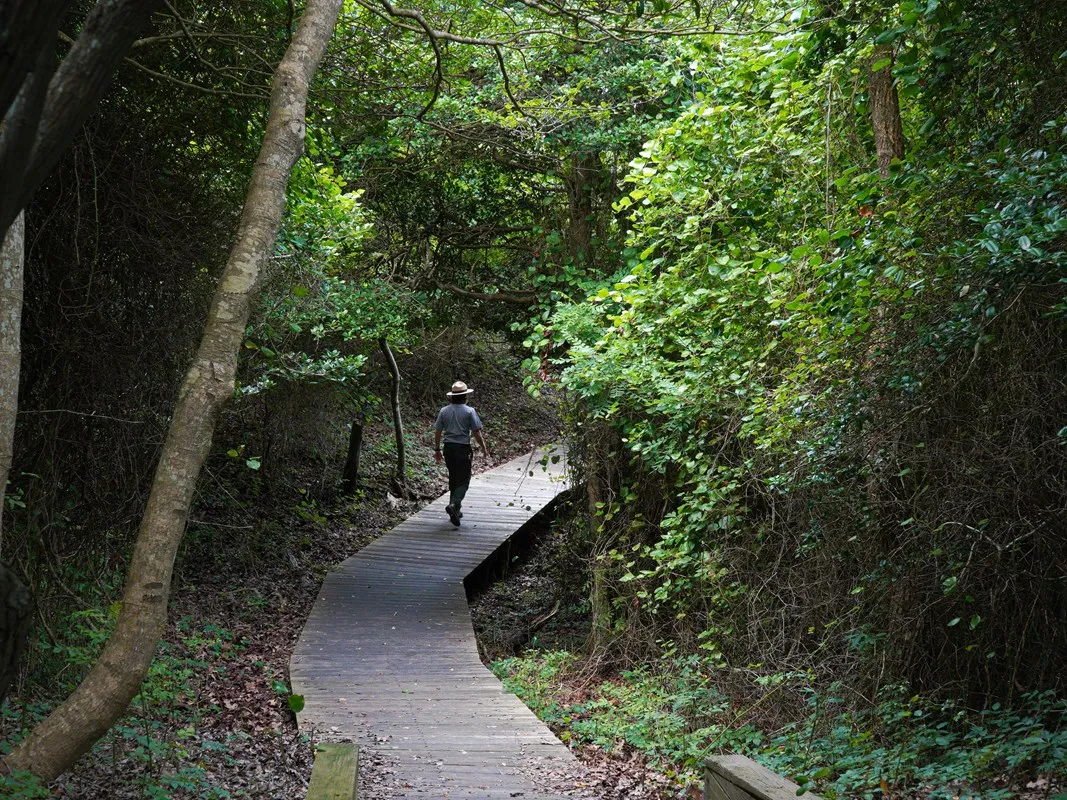
3. Walk the Sunken Forest at Sailors Haven
The Sunken Forest offers a very different Fire Island scene from an open beach. A boardwalk leads through a rare maritime forest sheltered behind the dunes, where trees and shade create a quiet contrast with the nearby ocean. The park describes a roughly one-and-a-half-mile boardwalk trail through the area.
This is a fragile habitat as well as a memorable walk. Stay on the boardwalk and marked routes, leave plants in place and give wildlife space. Ask a ranger about seasonal guided walks when programs are available; they can help explain how a forest persists so close to the Atlantic shore.
The Sailors Haven visitor center operates seasonally and is listed closed from October 13, 2026 through the off-season. Other facilities also close or reduce service. Check the park and ferry operator before planning a visit outside summer, and do not interpret a closed visitor center as a guarantee that a boat connection is running.
4. Choose a beach day with conditions in mind
Fire Island's beaches are beautiful because they are dynamic, exposed places. Waves, currents, weather and available services can change the character of a day quickly. If swimming is part of the plan, seek a lifeguarded beach when lifeguards are on duty and follow posted warnings. A quiet-looking ocean is not a substitute for current safety information.
Give nesting birds and other wildlife room, obey seasonal closures and stay off protected dunes. Dune vegetation helps hold sand in place, and a shortcut across it can damage the very landscape visitors came to see. Leave shells, wildlife and other natural features as the park directs, and take your trash with you.
Pet rules vary by location and season. For example, the park restricts pets on the Sailors Haven ocean beach from March 15 through Labor Day. Check the current rules for the particular beach before bringing a dog, and keep pets leashed where they are allowed.
5. Make a realistic day plan
For a first trip outside the summer season, the lighthouse area can be a practical choice because it is reachable by car and a boardwalk walk from Field 5. Check both the state park and lighthouse for parking, opening hours and weather. Add a beach walk only if conditions and access are appropriate.
In warmer months, make Sailors Haven the center of a separate ferry day: confirm the return sailing, explore the Sunken Forest and allow time to enjoy the shore. Trying to combine far-apart destinations can turn a relaxing outing into a race against the last boat. Check accessibility details with the park and ferry operator if you need them, since a vessel, boardwalk and sandy beach can each present different challenges.
Whether you choose the lighthouse or a ferry trip, the appeal lies in the change of pace. Planning the practical details first leaves more time to notice the island's maritime history, sheltered woods and open horizon.