The fields and wooded ridges near the Hudson River are peaceful now, but Saratoga National Historical Park preserves the setting of two Revolutionary War battles that changed the course of the conflict. Here, in 1777, an American victory was followed by the surrender of British General John Burgoyne's army and helped encourage vital French support for the American cause.
The park is more than one battlefield stop. A tour road, walking trails, a monument and other historic properties give visitors several ways to explore. The sites have different addresses and seasonal schedules, so check the National Park Service's current conditions before leaving home.
1. Start with the visitor center
The battlefield visitor center at 648 Route 32 in Stillwater is a sensible place to begin. Exhibits and orientation materials provide context for the fighting and help explain why the terrain mattered. Pick up a map and ask about road conditions, open facilities and ranger programs before choosing your route.
The park suggests allowing about an hour for the visitor center. That is useful time even if you know the outline of the Revolution: maps and interpretation can make the later drive much easier to follow. Confirm the visitor center's hours for your date, since they vary through the year.
Saratoga's story is not just one afternoon of combat. The two battles, subsequent British retreat and surrender form a sequence spread across different places. Plan to spend time at the stops, and give young visitors an opportunity to ask questions rather than trying to absorb every detail at once.
2. Drive the battlefield tour road when it is open
The self-guided tour road winds through the battlefield and provides access to interpretive stops. The National Park Service estimates about 30 minutes to drive the route without stops, but most visitors will want longer to read the signs and take in the landscape. An optional audio tour and park information in the NPS app offer extra context.
As of November 16, 2026, the park lists the road as scheduled to close to motor vehicles on November 30. Check the latest operating schedule and weather before setting out, as conditions can change. The road is also open to walking and bicycling during the park's stated daylight hours; use the marked multi-use lane and watch for vehicles when the road is open to traffic.
Bring water and dress for the weather. The park advises that water is not available along the tour road and fountains are turned off in winter. If traveling with someone who needs accessible facilities or a shorter route, contact the park in advance for current options.
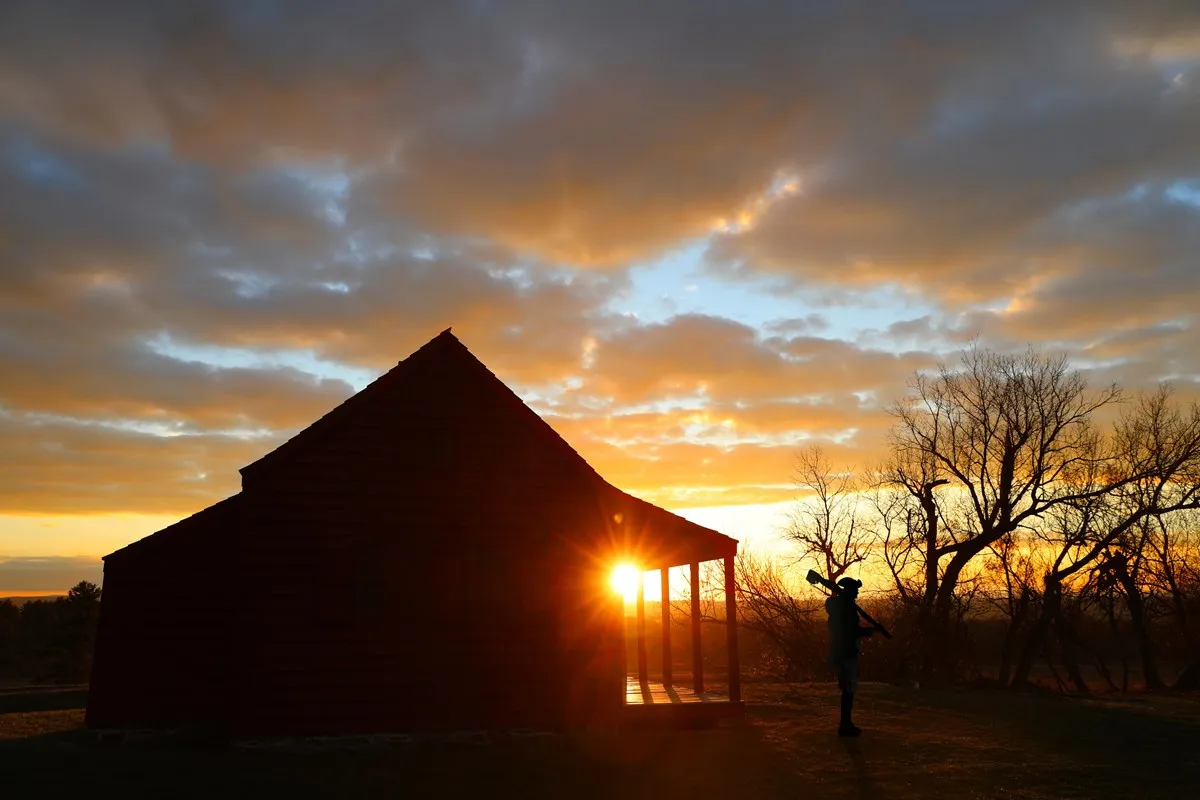
3. Notice the Neilson House and the landscape around it
The Neilson House is a surviving structure associated with the battlefield and served as an American headquarters during the campaign. Its presence gives a human scale to an otherwise broad landscape of fields, slopes and military positions. Use the interpretive material to connect the house with the positions around it rather than treating it as an isolated landmark.
The park lists the house interior as closed for the 2026 season, while its grounds are open sunrise to sunset. Check for future tour availability before promising children a look inside. Even from outside, the location is useful for thinking about how officers, soldiers and civilians encountered the war in the same working landscape.
Stay in areas open to visitors and leave historic objects and natural features undisturbed. The park preserves both the battlefield and its setting, so a little care helps the next visitor experience it too.
4. Choose a walk that fits the day
The battlefield grounds are open sunrise to sunset, and walking is a good way to appreciate distances that can disappear when viewed from a car. The park describes the Wilkinson Trail as a marked loop of roughly four and a quarter miles. It also notes that other established trails are not marked, so obtain a map and ask about trail conditions before setting out.
Hiking trails are for pedestrians; bicycles belong on the tour road's designated lane. In colder months, expect changing footing and shorter daylight. The park cautions that winter routes are not necessarily shoveled, so check local weather and the current park notices rather than assuming a dry summer trail experience.
You do not need to hike the full loop to enjoy the park. A short walk at an open tour stop can be a good alternative for families or anyone with limited time. Follow posted access instructions, and carry out anything you bring in.
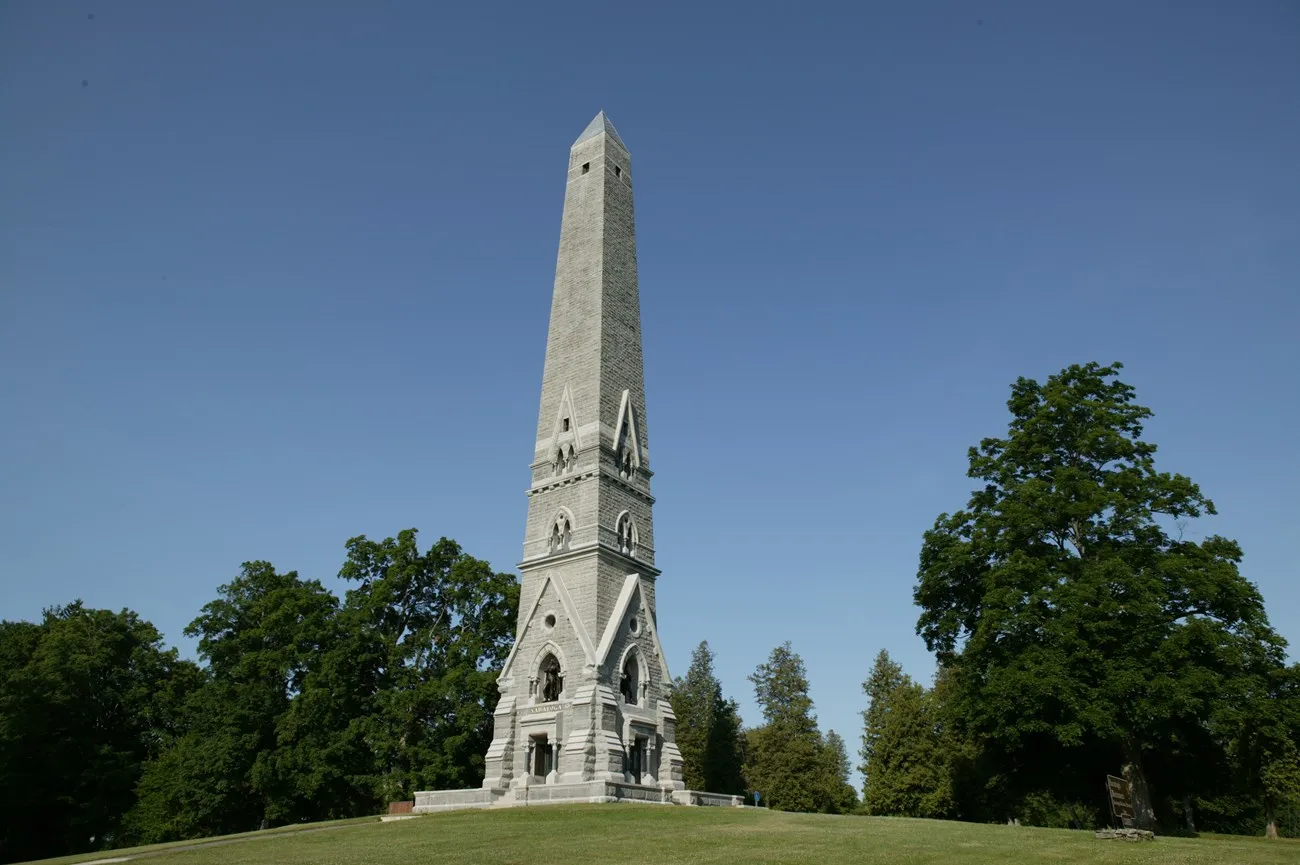
5. Continue to Saratoga Monument and Victory Woods
The Saratoga Monument in the village of Victory commemorates the American victory and stands near the area of Burgoyne's final camp. The stone obelisk was constructed in the nineteenth century, long after the fighting, and adds a different layer to the visit: how later generations chose to remember the campaign.
When open, the monument has stairs to a high viewpoint, but the park lists the interior closed for the 2026 season. Its grounds remain open sunrise to sunset. Nearby Victory Woods has a walking path interpreting the final British camp; that path is not shoveled in winter, according to the park. Both sites are separate from the battlefield visitor center, so use current directions and allow driving time.
The park also preserves the Schuyler House and surrender site. The house interior is listed as closed for the 2026 season; check access and hours before adding either stop. For a manageable first visit, combine the visitor center, open tour road and one additional site. Leave some flexibility for weather, seasonal closures and the stories that make you want to linger.