In downtown Seneca Falls, a modest brick chapel and the public spaces around it mark a turning point in American history. Here, in July 1848, organizers and attendees gathered for the first women's rights convention. Today Women's Rights National Historical Park helps visitors connect the words debated there with the people, homes and reform movements behind them.
This is a place to slow down and read closely, rather than rush through a checklist. The visitor center, chapel and Declaration Park are together downtown, while other historic properties are separate stops. Seasonal hours matter, and some buildings open only for programs. Start with the National Park Service's current schedule before you make a long drive.
1. Begin at the visitor center
The visitor center at 136 Fall Street is a practical first stop for orientation, exhibits and current ranger-program information. The park recommends allowing about an hour for the exhibits and orientation film. That time gives the story a useful foundation before you step into the chapel or visit a historic house.
Look for the ways local lives connect to national change. The convention did not happen in isolation: it emerged from networks of reformers, including people involved in the antislavery movement, who were willing to challenge the roles and rights assigned to women. Exhibits can help visitors distinguish the organizers from the many other people whose participation shaped the event.
Ask staff which sites and programs are open on the day of your visit. As of November 16, 2026, the park lists the visitor center and chapel open Tuesday through Saturday, 10 a.m. to 4 p.m., through December 19; the schedule changes again in winter. The park also plans a visitor-center renovation in spring 2027, with the closure date still to be determined. Recheck before traveling.
2. Stand in the Wesleyan Chapel
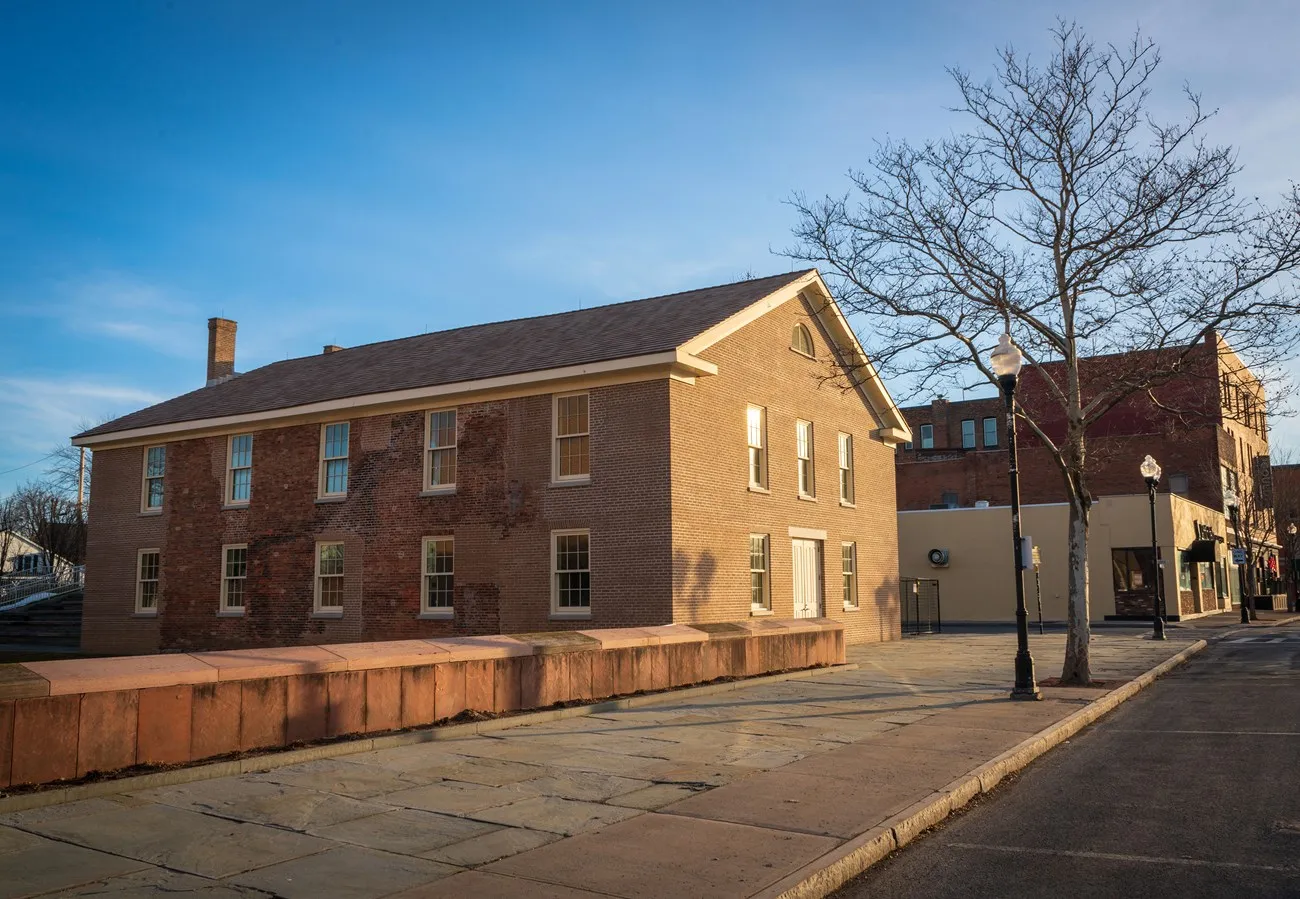
The Wesleyan Chapel hosted the convention on July 19 and 20, 1848. Around 300 people gathered to discuss women's civil, social and religious rights. The meeting produced the Declaration of Sentiments, a document modeled on the Declaration of Independence that challenged the laws and customs restricting women.
The building visitors see today has a history of its own. After the convention, it passed through many uses and changes. The National Park Service acquired the property in the 1980s, and its preservation incorporates material from the original structure. That makes the chapel both a historic site and a thoughtful interpretation of a building that did not remain unchanged for more than a century.
If a ranger talk fits your day, take it. A guided explanation can bring the debates into focus and help families understand why the convention mattered without pretending that legal equality was achieved in 1848. Changes in voting rights and other areas came through much longer struggles, and rights and access were experienced differently by different communities.
3. Read the Declaration of Sentiments outdoors
Declaration Park lies beside the visitor center and chapel. Its long waterwall presents the text and signers of the Declaration of Sentiments in an outdoor setting. Reading even a small portion at the wall helps turn a familiar phrase into a concrete question: what did equality mean to the people gathered here, and what changes did they call for?
The park lists Declaration Park as open dawn to dusk, though weather and maintenance can affect your experience. In cold weather the water feature may not look like a summer photograph. The space still offers an opportunity to pause between indoor stops, and it can be especially useful if the visitor center is closed when you arrive.
Take a few minutes to compare the declaration's language with the historic moment. Consider who had a voice in the room, the obstacles they faced and the activism that followed. The words on the wall are a starting point for discussion, not the end of the story.
4. Explore Elizabeth Cady Stanton's Seneca Falls home
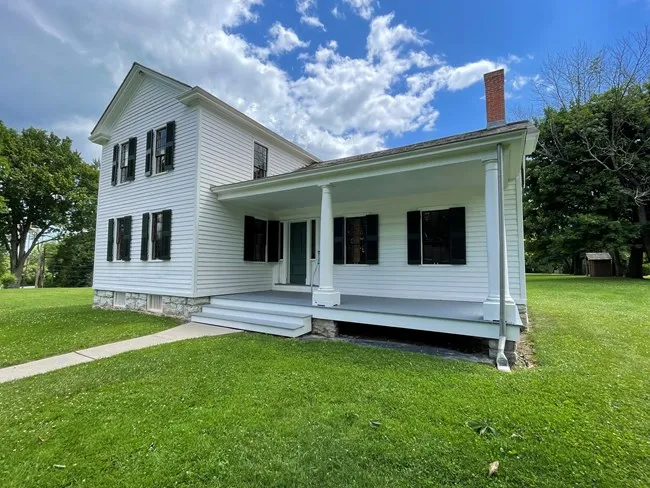
Elizabeth Cady Stanton lived with her family in a house on Washington Street, a separate property from the downtown visitor center. The park describes the house as a setting for both family life and reform work. Stanton moved there in 1847, the year before the convention, and the growing family remained in Seneca Falls until 1862.
The property offers a more personal scale than the public meeting space. Thinking about household responsibilities alongside writing, organizing and political work makes the challenges of nineteenth-century reform more tangible. This is also a chance to see that significant history can happen in ordinary domestic surroundings as well as in famous public rooms.
Do not assume the interior is open whenever the visitor center is open. Park programs and house access change by season and staffing; check the current schedule or ask a ranger before adding it to your plans. If no tour is offered, respect posted signs and view the property only from areas open to visitors.
5. Make room for the wider Finger Lakes setting
Seneca Falls is in the Finger Lakes region, making the park an easy anchor for a longer day in the area. You might spend the morning with the park's exhibits and ranger program, take a lunch break downtown, and use the afternoon for an additional historic stop or a relaxed drive. Check individual businesses and attractions for current hours, especially on weekdays and outside summer.
The historical park includes places in both Seneca Falls and nearby Waterloo, so check each address rather than assuming every stop is walkable from the chapel. Parking, walking surfaces and tour access differ by site. Contact the park ahead of time if you need a particular accessibility accommodation, and allow extra time for moving between locations.
For a shorter visit, the visitor center, chapel and outdoor declaration are a satisfying combination when open. For a deeper one, arrange the day around a ranger program and the availability of the historic homes. Either way, Seneca Falls rewards visitors who make room to listen to the people behind the document.