Ohio’s best-known attractions tend to gather the crowds, but some of the state’s most memorable places sit a little off the main route: a serpent-shaped earthwork on a southern bluff, a sandstone gorge in the Hocking Hills, Ice Age grooves on a Lake Erie island, or a museum of neon tucked into a Cincinnati neighborhood.
These eleven stops stretch from the lakeshore to the Appalachian foothills. Some are free and easy to add to a drive; others take a ferry ticket, a timed reservation or a full afternoon. Check current hours, fees and trail conditions before you set out, and give each place enough time to be more than a photograph from the parking lot.
1. Serpent Mound: An earthwork best seen by walking it

In Adams County, south of Peebles, a grassy ridge holds one of North America’s most striking ancient earthworks. Serpent Mound is an effigy in the shape of a snake with a coiled tail, stretching 1,348 feet along a bluff above Ohio Brush Creek. Ohio History Connection, which manages the National Historic Landmark, notes that you cannot see the entire figure from any one spot on the ground; the best way to understand it is still to walk its length.
Who built it, and when, remains an open question. Nearby burial mounds belong to the Adena culture, and later radiocarbon studies have pointed at different times to both Adena and Fort Ancient builders. The site interprets that uncertainty rather than forcing a single answer, which is part of what makes a visit worthwhile. A historic observation tower on the grounds has undergone a major restoration; confirm its current status, along with seasonal hours and the vehicle parking fee, before you go.

Stay on the designated path, keep pets leashed, and leave the earthwork undisturbed. The site is typically closed on Mondays, and winter hours are more limited, with a last-entry time in the afternoon. Arrive early enough to walk the full loop without rushing.
2. Conkle’s Hollow: A sandstone gorge in the Hocking Hills

Old Man’s Cave, Ash Cave and Cedar Falls get most of the Hocking Hills attention. A short drive away, Conkle’s Hollow State Nature Preserve offers a quieter look at the same Black Hand sandstone, with cliffs that rise nearly 200 feet above a narrow valley floor. Ohio’s Division of Natural Areas and Preserves describes the gorge as only about 100 feet wide in places, with waterfalls slipping over the rock after a rain.
Two trails tell different stories. The Gorge Trail is partly paved and runs about a mile round trip to the head of the hollow, a practical choice if you want the cliffs without a strenuous climb. The Rim Trail is a roughly two-mile loop along the top, with steep sections and serious drop-offs. It is a nature preserve, not a state park picnic ground: pets are not permitted, and visitors must stay on designated trails.

The preserve, near Rockbridge in Hocking County, is open from half an hour before sunrise to half an hour after sunset. Wear shoes with traction; the sandstone can be slick, and the rim is no place for a casual scramble. If you only have time for one lesser-known Hocking Hills stop, this is a strong one.
3. Nelson-Kennedy Ledges: Tight passages and mossy cliffs

Northeast of Garrettsville, this 167-acre day-use park packs a surprising amount of drama into a small footprint. Sharon conglomerate cliffs split into slots, overhangs and named passages such as Devil’s Icebox, The Squeeze and Old Maid’s Kitchen. Ohio State Parks marks four short trails by color, from an easier white route to a difficult red trail that threads the tightest gaps.
The distances are modest; the time goes into stepping, squeezing and watching your footing. The rock stays damp and shaded, and park rules are strict for good reason: stay on marked trails, do not climb or rappel, and skip flip-flops. The park is carry-in, carry-out, and it is open from half an hour before sunrise to half an hour after sunset.

In spring 2025 the park opened the Falls Edge Glass Walkway, a 137-foot span over Sylvan Creek Gorge with a view toward Minnehaha Falls. It sits on the white trail. Confirm current conditions if that overlook is a priority, and leave extra time on weekends, when the small parking area fills quickly.
4. Glacial Grooves: Deep scratches on Kelleys Island

Getting here is part of the outing. Kelleys Island sits in Lake Erie, and you will need a ferry or other boat service from the mainland. About a mile and a half north of the island’s small downtown, at Division Street and Titus Road, a paved lot leads to Glacial Grooves State Memorial, a site managed with Ohio History Connection and widely described as the largest easily visited example of its kind.
The main trench is about 400 feet long, 35 feet wide and up to 15 feet deep, carved into Devonian limestone as the last ice sheet dragged harder rock across the bedrock. A walkway of steps and footbridges loops around the upper rim; admire the grooves from the designated path rather than climbing into them. Admission is free, but boat schedules change with the season and the weather, so check the current crossing before you build a day around the island.
5. Leetonia’s Beehive Coke Ovens: Brick ruins in the woods

In a 10-acre park on Cherry Valley Road, rows of domed brick ovens sink into the hillside like a forgotten industrial street. They were built in 1866 for the Leetonia Iron and Coal Company, which used them to turn local coal into coke for iron furnaces. The operation later ran under names including Cherry Valley Iron Works and closed in 1930. Ohio History Connection describes the site as the largest remaining collection of beehive coke ovens in the nation; it was listed on the National Register of Historic Places in 1993.

Admission is free, and a path from the park connects toward the Little Beaver Creek Greenway Trail if you want a longer walk or bike ride. Look into the dark mouths of the ovens, but do not climb inside; the brickwork is historic, uneven and not a playground. The village of Leetonia maintains the park, a rare chance to see how coal once powered this corner of the Mahoning Valley.
6. Historic Zoar Village: A Separatist town still on its streets

East of Canton, the village of Zoar still looks like a place apart. German Separatists settled here in 1817 after leaving their homeland to escape religious persecution. In 1819 they organized the Society of Separatists of Zoar, a communal society that lasted until 1898. Today the National Historic Landmark is jointly interpreted by the Zoar Community Association and Ohio History Connection, with restored buildings, a general store that dates to 1833, and a formal public garden kept in the spirit of the nineteenth-century original.
Guided tours of the historic buildings follow a seasonal schedule, while the Zoar Store and Visitor’s Center keeps somewhat longer hours. Confirm both before you go, especially in the off-season. Even a self-guided walk along Main Street is enough to notice how a communal village organized work, worship and daily life in Tuscarawas County, a short hop from the Ohio and Erie Canal corridor that once helped the community thrive.
7. Field of Corn: A concrete harvest in Dublin

At the corner of Frantz and Rings roads, 109 white ears of corn stand in tidy rows, each about six feet tall and weighing some 1,500 pounds. Columbus sculptor Malcolm Cochran created Field of Corn (with Osage Orange Trees) for Dublin’s Art in Public Places program. It was dedicated in October 1994 on land once farmed by Sam Frantz, a local leader in hybrid corn, and it sits among a remnant row of osage orange trees that once marked the edge of the fields.
The installation is easy to underestimate from the car and more effective when you walk the rows. Cochran has said the regimented pattern can recall a cemetery as well as a harvest, a memorial to a farming landscape that suburban Dublin has otherwise outgrown. There is no ticket booth; it is an outdoor sculpture in a city park, and a fifteen-minute stop can turn into a longer one if you like public art with a sense of humor and a little melancholy.
8. Topiary Park: A Seurat painting grown in Columbus

Downtown Columbus has a park that does something almost no other garden attempts. At Old Deaf School Park, also called Topiary Park, artists James and Elaine Mason shaped a living version of Georges Seurat’s A Sunday Afternoon on the Island of La Grande Jatte. The official garden includes life-size topiary figures of 54 people, eight boats, three dogs, a monkey and a cat, arranged around a pond that stands in for the Seine.
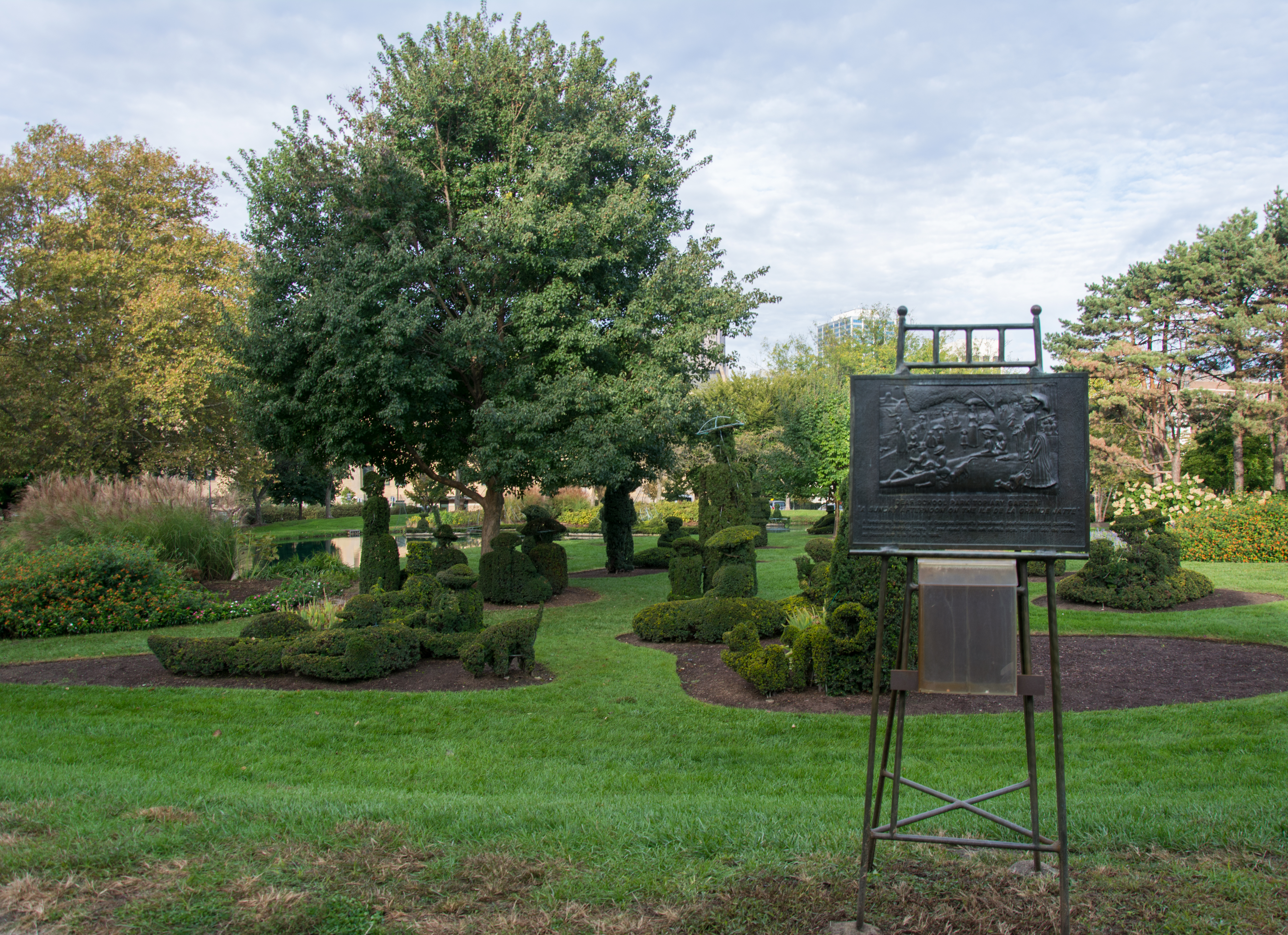
The park occupies former grounds of the Ohio School for the Deaf, at 480 East Town Street beside the Main Library. Columbus Recreation and Parks lists the park as open from 7 a.m. to 11 p.m., and admission is free. Bring a copy or a mental image of the painting; half the pleasure is noticing how a shrub can become a Sunday stroller. The shrubs look their sharpest after a recent trim, so the scene changes a little with the season and the pruning schedule.
9. Clifton Gorge: A narrow canyon on the Little Miami

Just east of Yellow Springs, Clifton Gorge State Nature Preserve protects a 268-acre slice of the Little Miami, a National Natural Landmark since 1968. Ohio’s nature-preserve staff describe it as one of the state’s most spectacular dolomite and limestone gorges, a two-mile stretch where the river, in places, is squeezed through a deep channel formed by connected potholes in resistant Silurian rock. Massive slump blocks lie on the valley floor where cliff overhangs have broken away.
About three miles of trail, including the Gorge, Rim, Narrows and Orton routes, thread the preserve. The north-facing slopes stay cool enough to support hemlock, Canada yew and other northern plants, and spring brings a notable wildflower display that can include the rare snow trillium. As at other state nature preserves, pets are not permitted, and visitors must stay on designated trails. John Bryan State Park is next door if you want a picnic area or a longer outing after the gorge.

The preserve is open from half an hour before sunrise to half an hour after sunset. An Exploration Center on site has limited seasonal hours. Watch your step near the narrows; the views are the point, not a climb toward the water.
10. The American Sign Museum: A main street built of neon

In Camp Washington, a former industrial complex now holds what the museum calls the largest and most diverse public sign museum in the country. Founder Tod Swormstedt, a longtime editor of Signs of the Times magazine, opened the collection to the public in 2005 and moved it to 1330 Monmouth Avenue in 2012. A 2024 expansion added more room for the indoor “Main Street” of neon, painted and plastic signs that once advertised motels, diners, theaters and neighborhood businesses.

Plan on 60 to 90 minutes, and check the museum’s current hours and admission before you go. It is typically open Wednesday through Sunday. On Saturdays, Neonworks of Cincinnati, the working neon shop inside the building, offers demonstrations of tube bending. Photography for personal use is welcome, but tripods and other extra equipment are not, and the signs are for looking, not touching. It is one of the few indoor stops on this list, and a useful contrast after a day of trails.
11. The Wilds: Open-range conservation near Cumberland

Southeastern Ohio’s mining country holds one of the more surprising landscapes in the state. The Wilds, near Cumberland in Muskingum County, is a conservation center on nearly 10,000 acres of reclaimed surface-mined land, a gift in the 1980s from a subsidiary of American Electric Power. It opened for public tours in 1994 and is now operated in partnership with the Columbus Zoo and Aquarium. Endangered and threatened species graze large pastures that were once a coal pit.
This is not a traditional walk-between-exhibits zoo. Most first-time visitors take an open-air safari, a seasonal tour (typically offered May through October) that rolls through the conservation pastures. Other tours and overnight stays run on their own calendars, and reservations are essential. Among the animals that have been part of the breeding and conservation work here are southern white rhinos, giraffes, Przewalski’s horses and scimitar-horned oryx; what you see on a given day depends on the tour and the season.
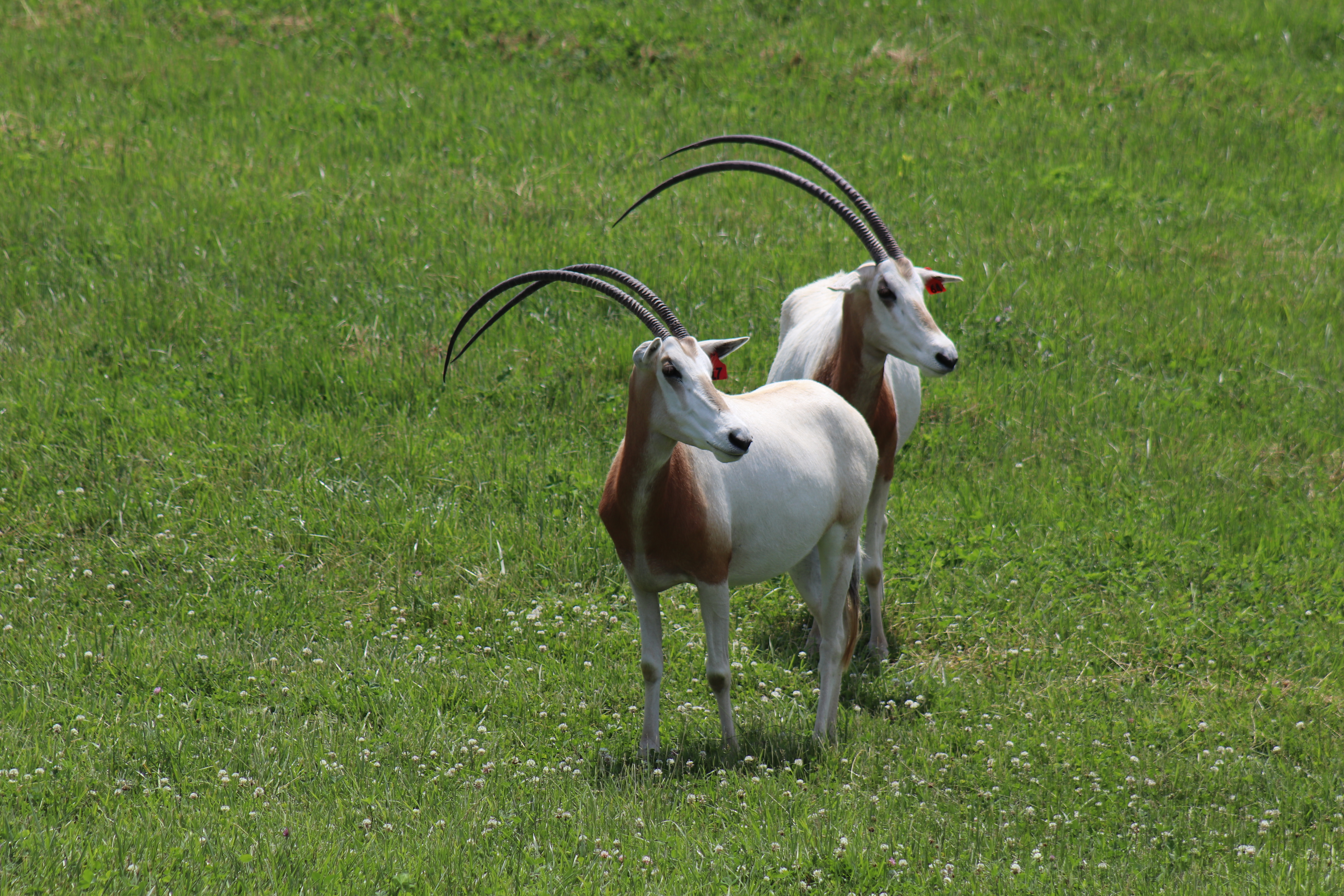
Book ahead on The Wilds’ own site, confirm meeting times, and allow for the drive into the hills west of Cambridge. The point of the place is the scale: animals in open grassland, on land that had to be put back together before any of this was possible.
Before You Go
These stops are scattered from Lake Erie to the Ohio River valley, and they do not fit neatly into a single afternoon. Check the managing park, museum or village for current hours, fees, reservations, ferry schedules and trail rules. Stay on marked paths, keep off historic ruins and earthworks, and leave room in the day for the unexpected delay that makes a hidden stop feel like a real visit.


