California’s coast is full of places where the road seems to end at the ocean. At a lighthouse, that feeling comes with another layer: the people who once watched for ships, tended lamps and listened for fog signals while the Pacific did whatever it pleased.
These six historic light stations stretch from Mendocino County to San Diego. Some invite a relaxed walk to an overlook; others require a guided tour or a serious climb. Each has a different story, and checking access before you leave home makes the trip much more rewarding.
1. Point Cabrillo Light Station: A Mendocino Headland Made for Lingering
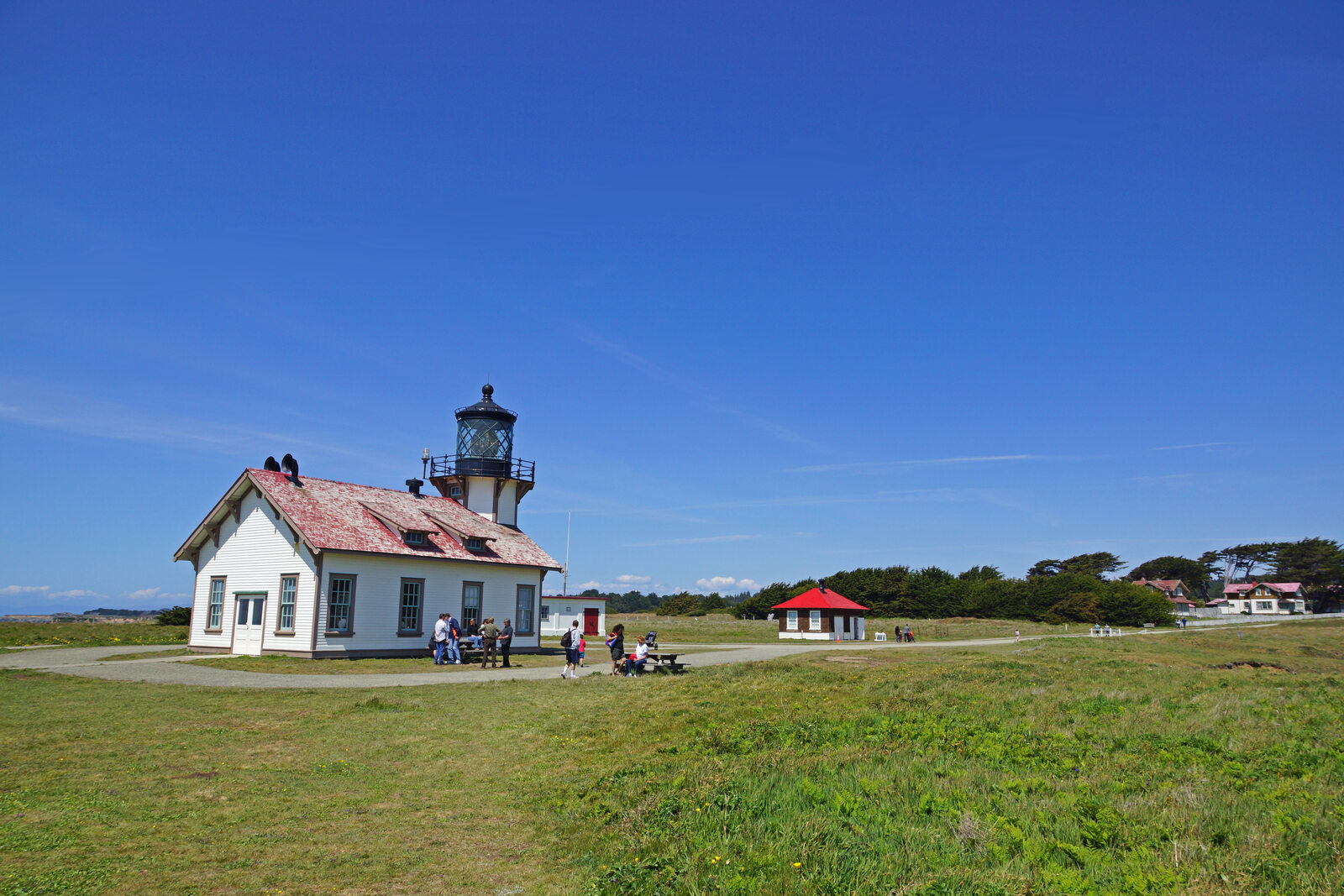
At Point Cabrillo, the lighthouse is part of a low, welcoming building rather than a tall tower standing alone. Set on a headland between Mendocino and Fort Bragg, its red roof and lantern room sit against a broad backdrop of Pacific water and coastal grassland.
The approach helps set the mood. California State Parks describes a roughly half-mile walk down the access road from the main parking area to the light station. Give yourself time to enjoy the open headland instead of treating the lighthouse as a quick photo stop. The route back is uphill, so allow a little longer on the return.
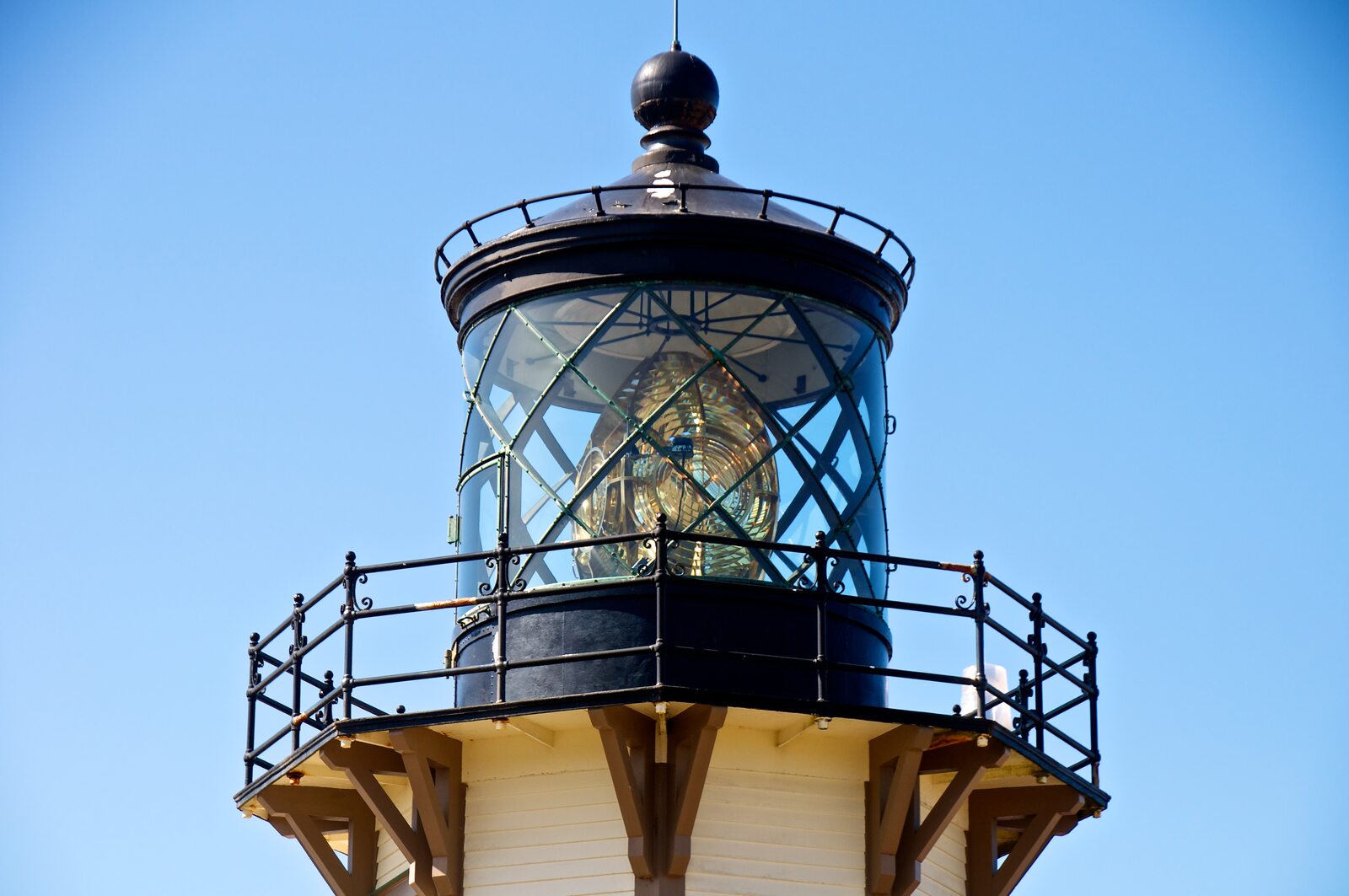
The historic station includes the lighthouse and original keepers’ houses and outbuildings. Inside the light station, exhibits help explain the work and equipment behind the view. The surrounding preserve is also a place to watch the water, although wildlife sightings are never guaranteed.
Before you go: The state park lists the grounds as open from sunrise to sunset and the restored lighthouse open daily from 11 a.m. to 4 p.m.; check current hours before traveling. Accessible parking is available near the light station residences. Bring a layer for the wind and pack out your trash.
2. Point Reyes Lighthouse: The View at the Bottom of 313 Steps
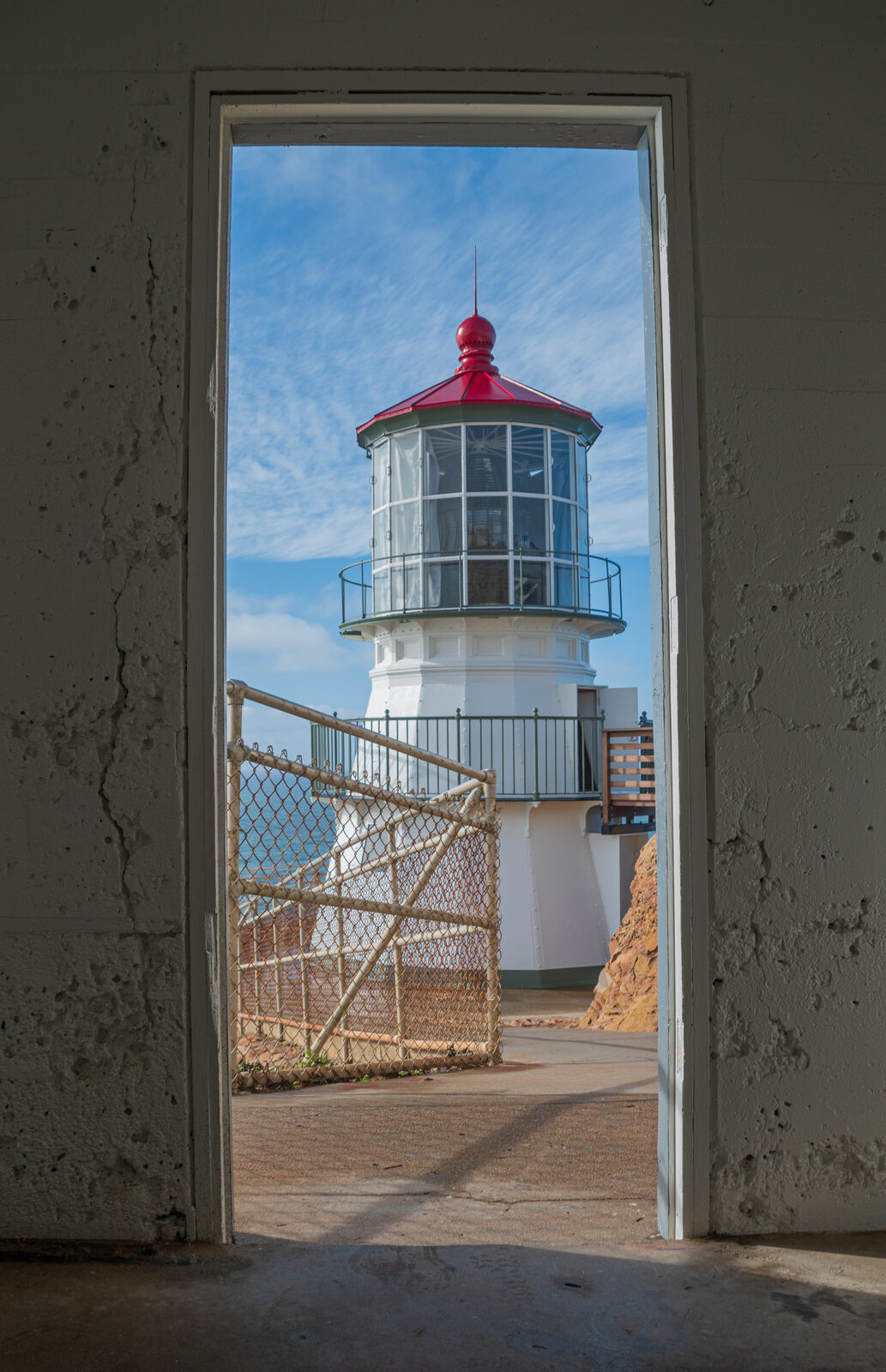
The first glimpse of Point Reyes Lighthouse can feel like a reward for reaching the end of the peninsula. From the observation deck, the white structure sits far below the cliff top, with the ocean stretching out beyond it.
Its position was deliberate. The National Park Service explains that the station, first lit in 1870, was placed below the area’s characteristic high fog. Building on the cliffside took serious effort: materials had to be lowered from above to create a light that mariners could see through difficult coastal conditions.
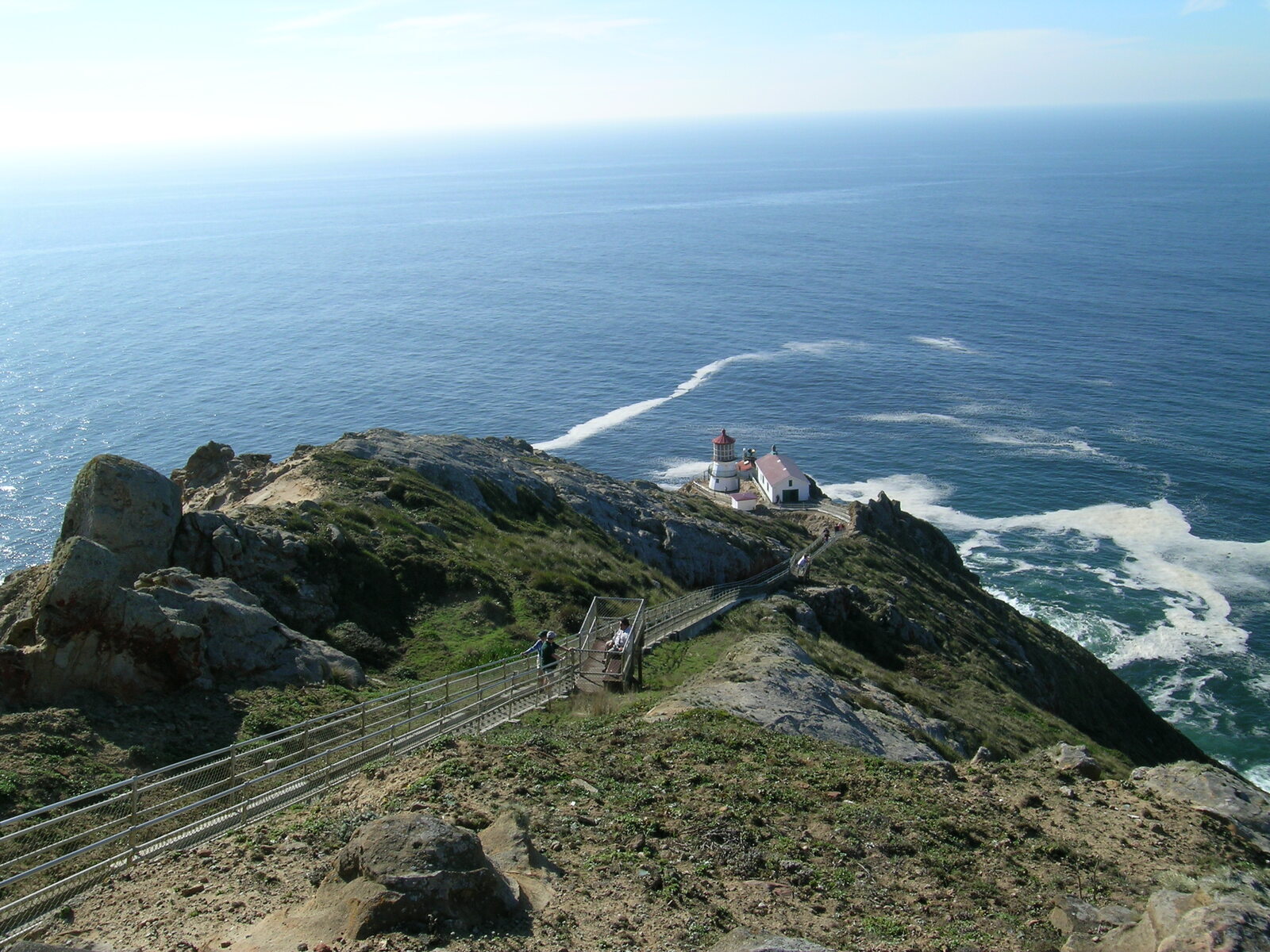
Today, the dramatic setting comes with a practical challenge. From the main parking area, it is a walk to the visitor center and observation deck, followed by 313 steps down to the lighthouse—and the same 313 steps back up. That is roughly the height of a 20-story building, so choose the descent with your own stamina in mind.
Before you go: The observation deck offers a view even when the stairs are closed. The park closes the stairs when winds exceed 40 mph, and access also depends on visitor-center hours; check the National Park Service page for current hours and preservation work. Allow time for the drive across the peninsula, too.
3. Pigeon Point Lighthouse: A Tower With a Restoration Story
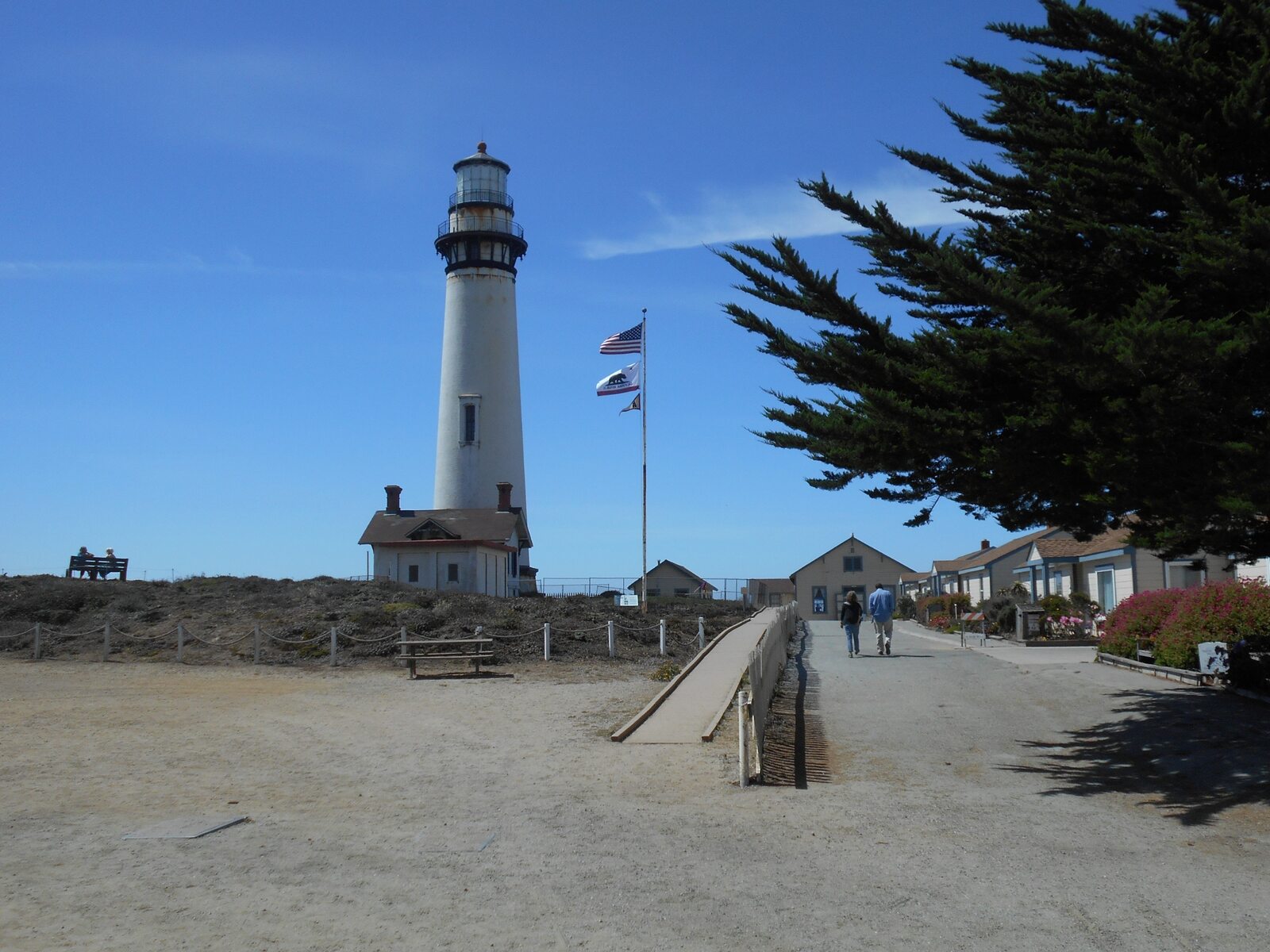
Pigeon Point rises above a rocky stretch of the San Mateo County coast, a landmark that can catch your eye from the road and hold it once you get closer. First lit in 1872, its white tower has spent more than a century marking a coast where fog and rocks made navigation dangerous.
Its name recalls the clipper ship Carrier Pigeon, wrecked nearby in 1853. The original first-order Fresnel lens was designed to concentrate light for ships offshore; the state park says the lens is displayed in the historic Fog Signal Building while the modern light serves as the navigational aid.
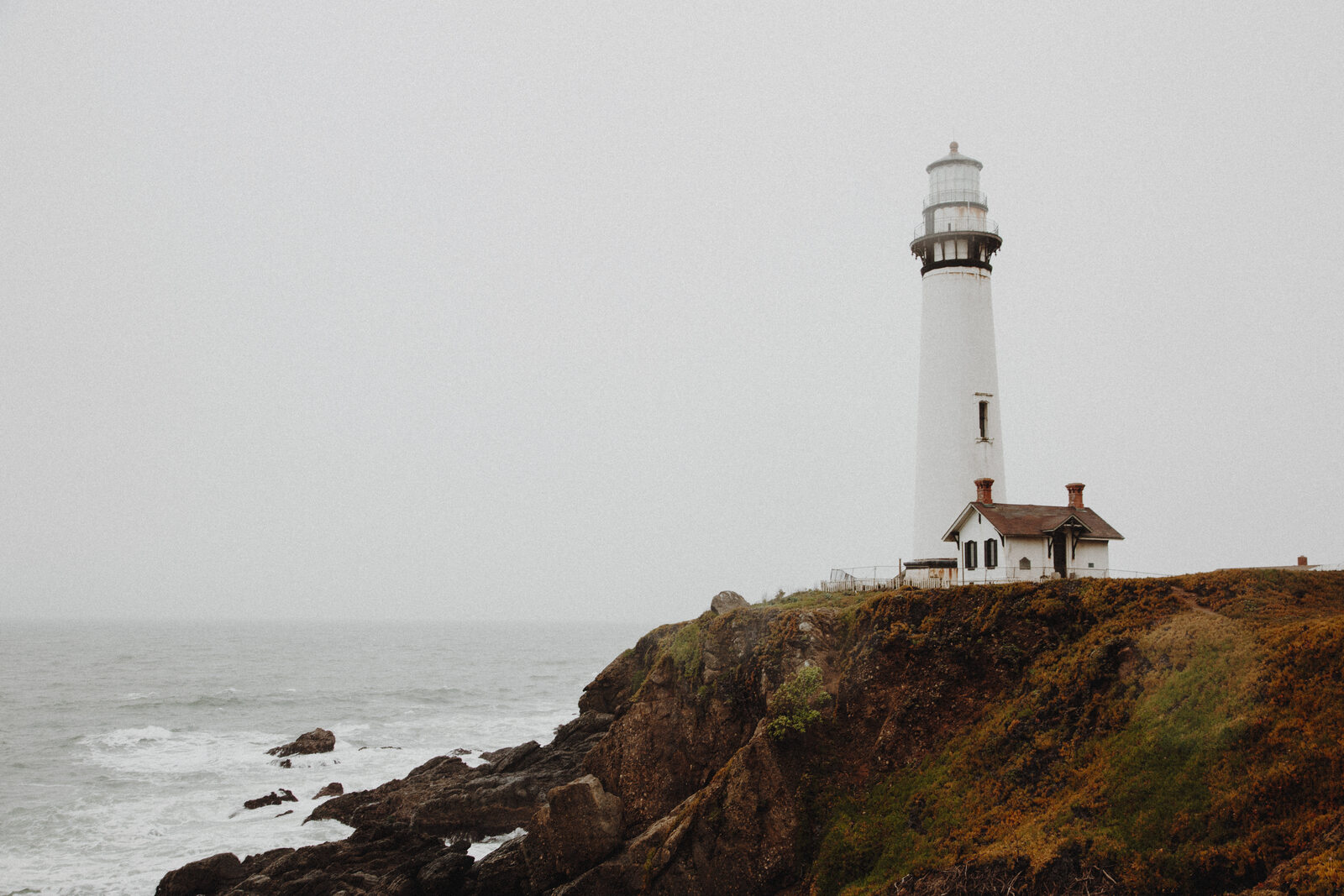
There is an important difference between visiting the grounds and entering the tower. As of November 15, 2026, California State Parks says the lighthouse itself remains closed until restoration is complete. The tower may still be viewed from the grounds, but older photographs can show it without the construction that visitors may encounter today.
Before you go: Check the state park for the latest restoration and exhibit information. The park lists the day-use area open from 8 a.m. to sunset, with visitor-center hours subject to staffing. Rocky Point is closed to visitors to protect the site and nesting birds; service animals are permitted, but other dogs are not allowed on the lighthouse grounds.
4. Point Sur Lightstation: A Guided Walk Above Big Sur
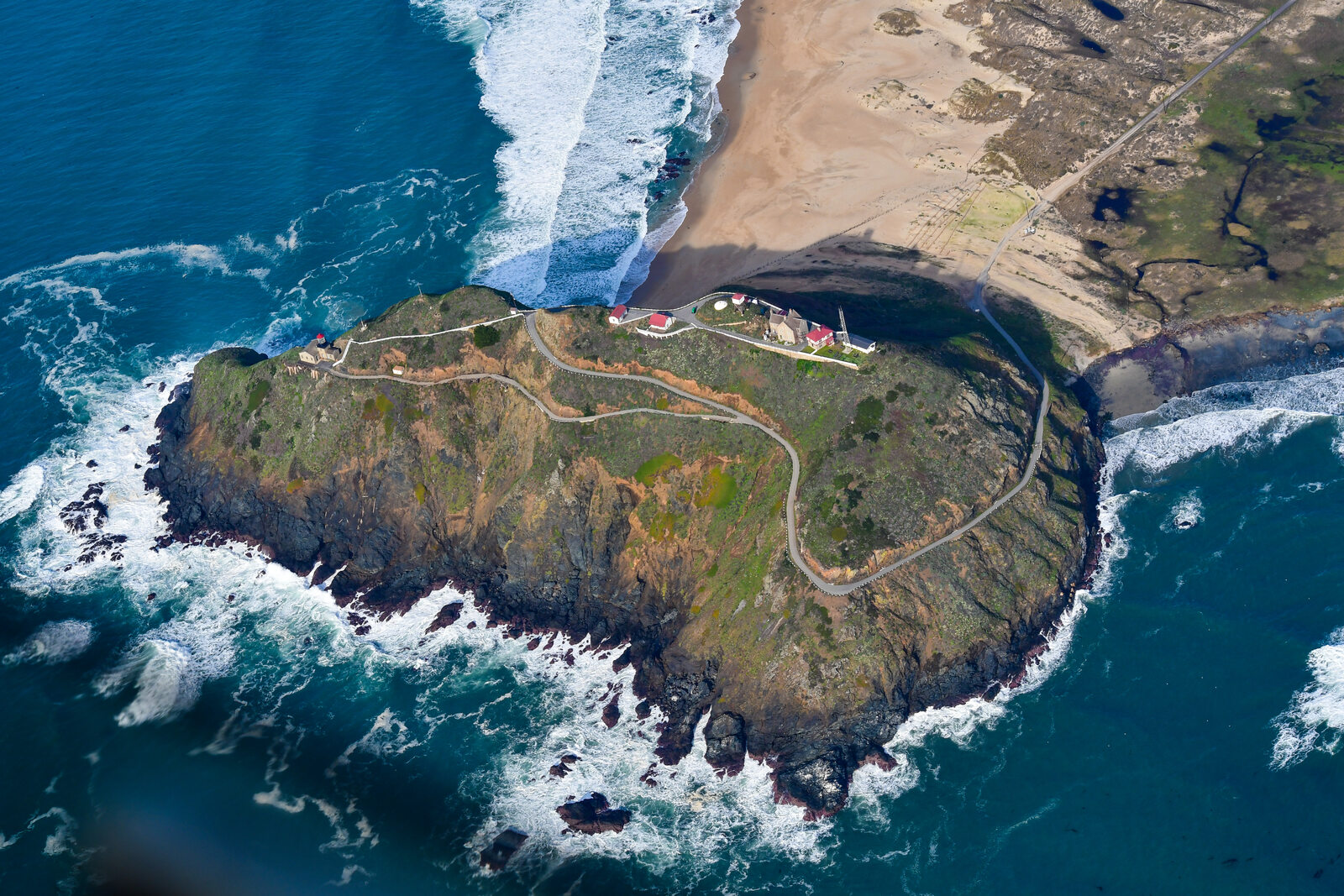
Point Sur looks remarkable even before the story begins: a volcanic rock rises from the edge of the Big Sur coast, carrying a historic light station high above the Pacific. The light was first lit in 1889, and keepers and their families lived at the station until automation in 1974.
This is not a place to assume you can simply pull in and wander around. California State Parks says the light station is open to the public only on docent-led tours. The walk gives visitors a chance to understand how the buildings worked together and what life at a remote station required.
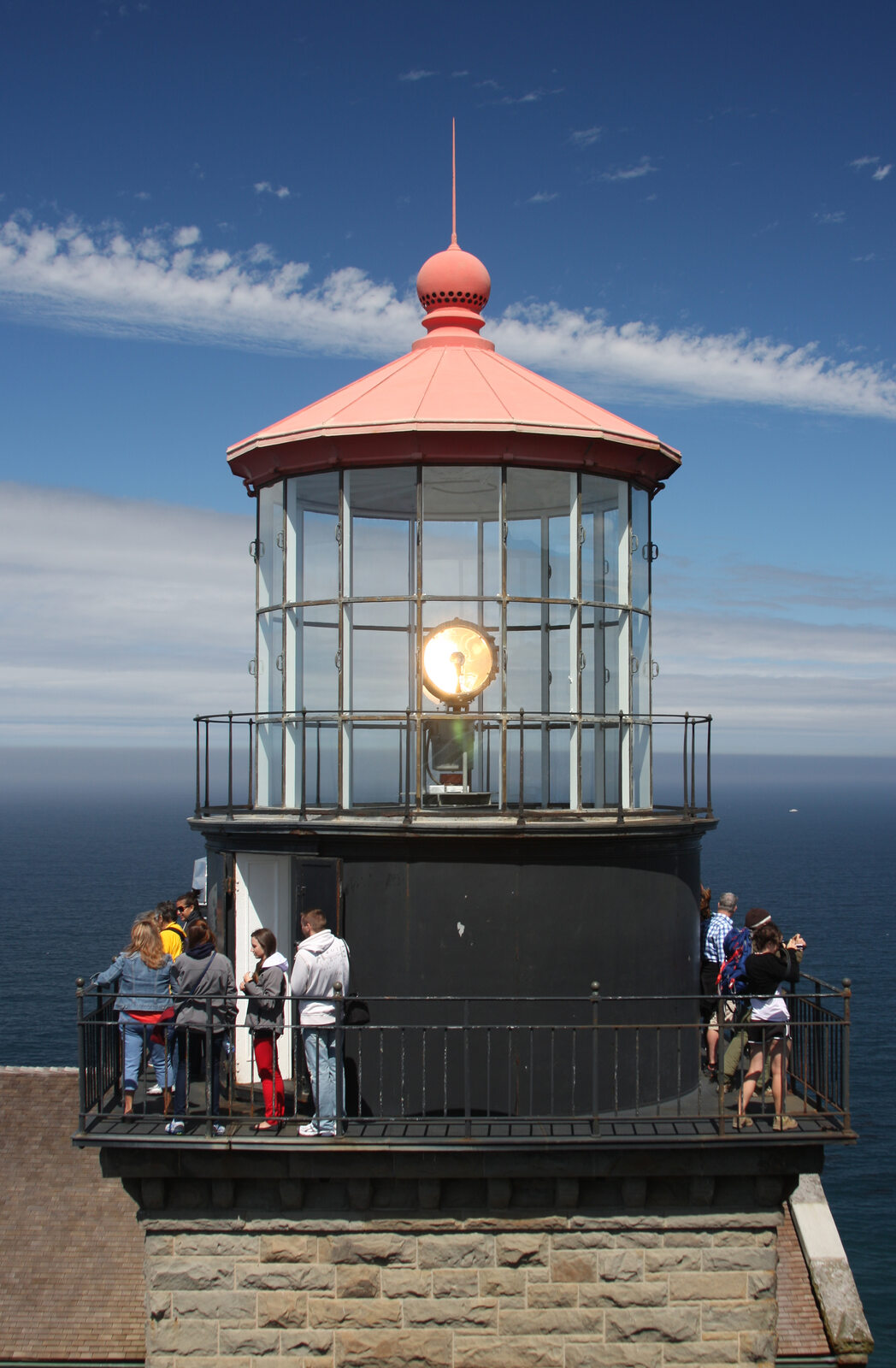
The state describes the light-station tour as a strenuous, steep and unshaded walk, with two stairways. Wind, sun and fog can all change how the outing feels. Wear good walking shoes, bring layers and water, and consider whether the route is suitable for everyone in your group.
Before you go: Tours have limited space and can change or be canceled because of weather. The park advises arriving early and checking its current instructions; its published guidance says tours are first come, first served. Visitors with disabilities who can transfer to a park vehicle may arrange assistance in advance, but a narrow path and steep stairs lead down to the lighthouse itself. Check Highway 1 conditions as well.
5. Point Fermin Lighthouse: A Victorian Home With a Light on Top
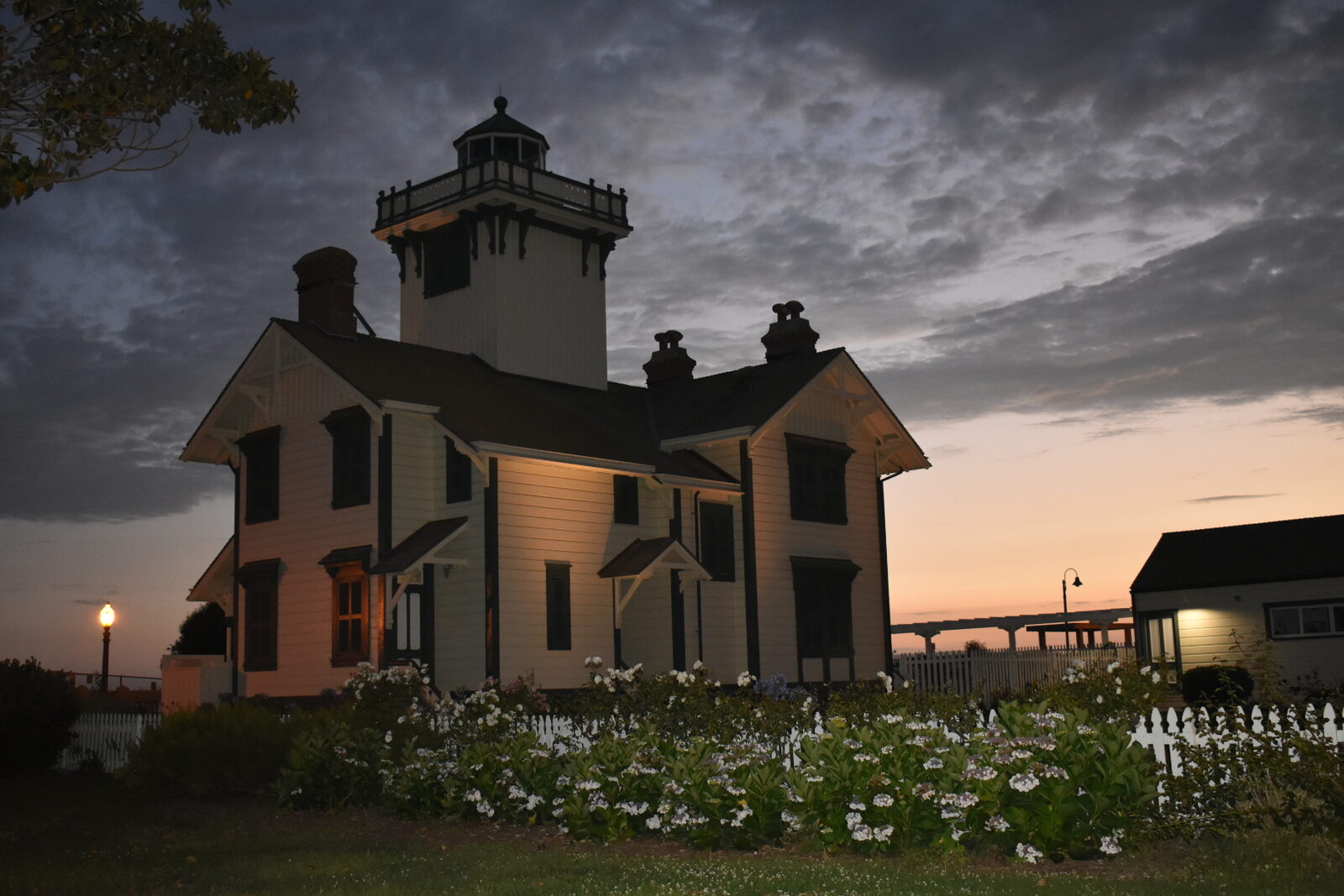
In San Pedro, Point Fermin offers a different picture of a lighthouse: a Victorian-era building with a tower rising from the roof, set within a public park above the harbor approaches. It feels as much like a historic home as a piece of maritime equipment.
The light was established in 1874, and the City of Los Angeles identifies Mary and Ella Smith as its first keepers. Their work included tending the light and maintaining the lens and building—everyday responsibilities that made the romantic image of lighthouse life possible.
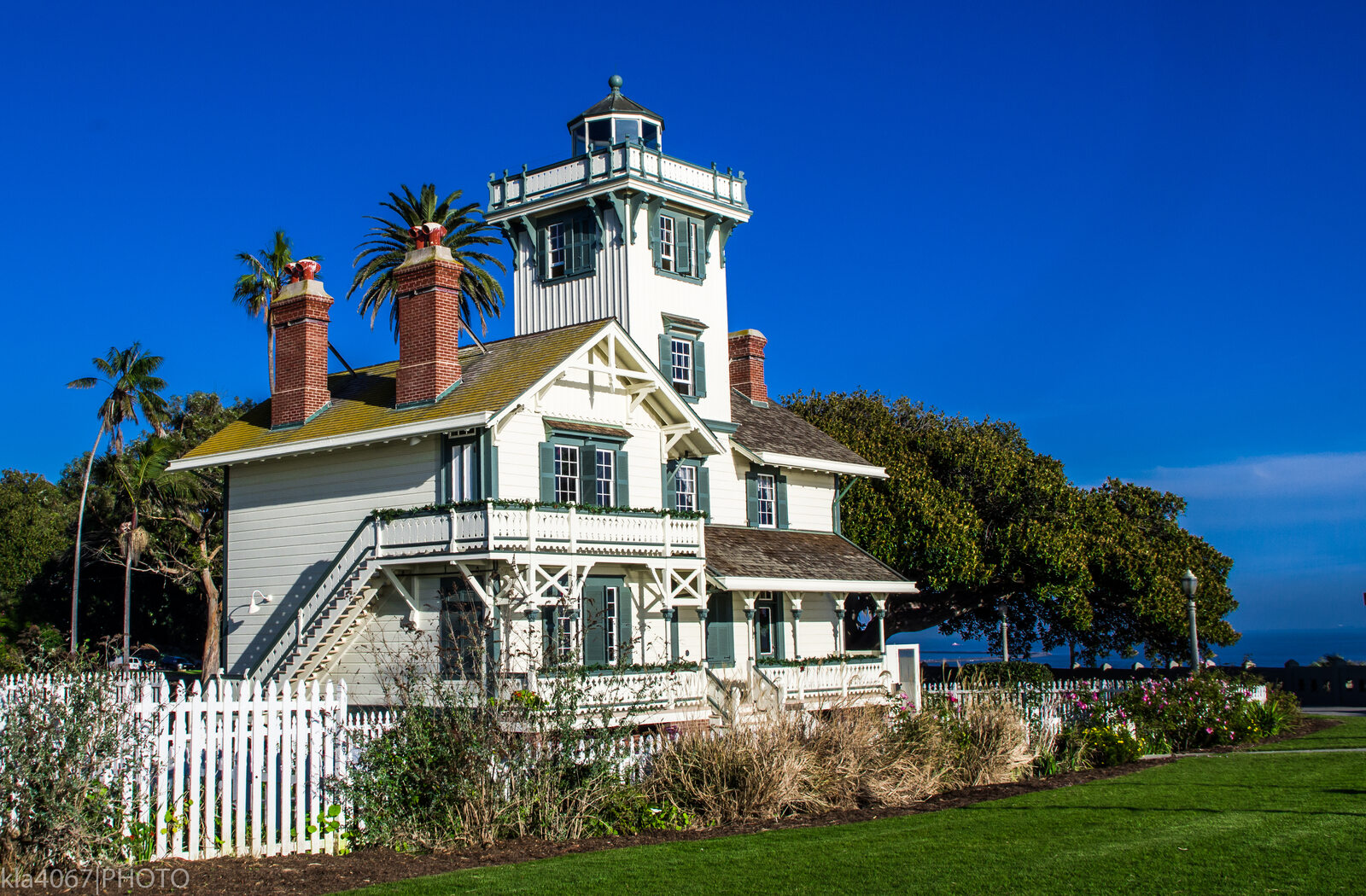
Look closely at the house as well as the lantern. The shape of the porches and roofline helps tell the story of a station designed as a place to live and work. A visit can be paired with time in Point Fermin Park, where ocean views add a welcome pause to a San Pedro outing.
Before you go: The Point Fermin Lighthouse Society says the interior is accessible by guided tour only. Its published schedule lists free afternoon tours Tuesday through Sunday on a first-come basis, with closures possible for holidays or special events. Height restrictions apply to the tower; confirm the schedule before making a special trip.
6. Old Point Loma Lighthouse: When a Beacon Was Too High
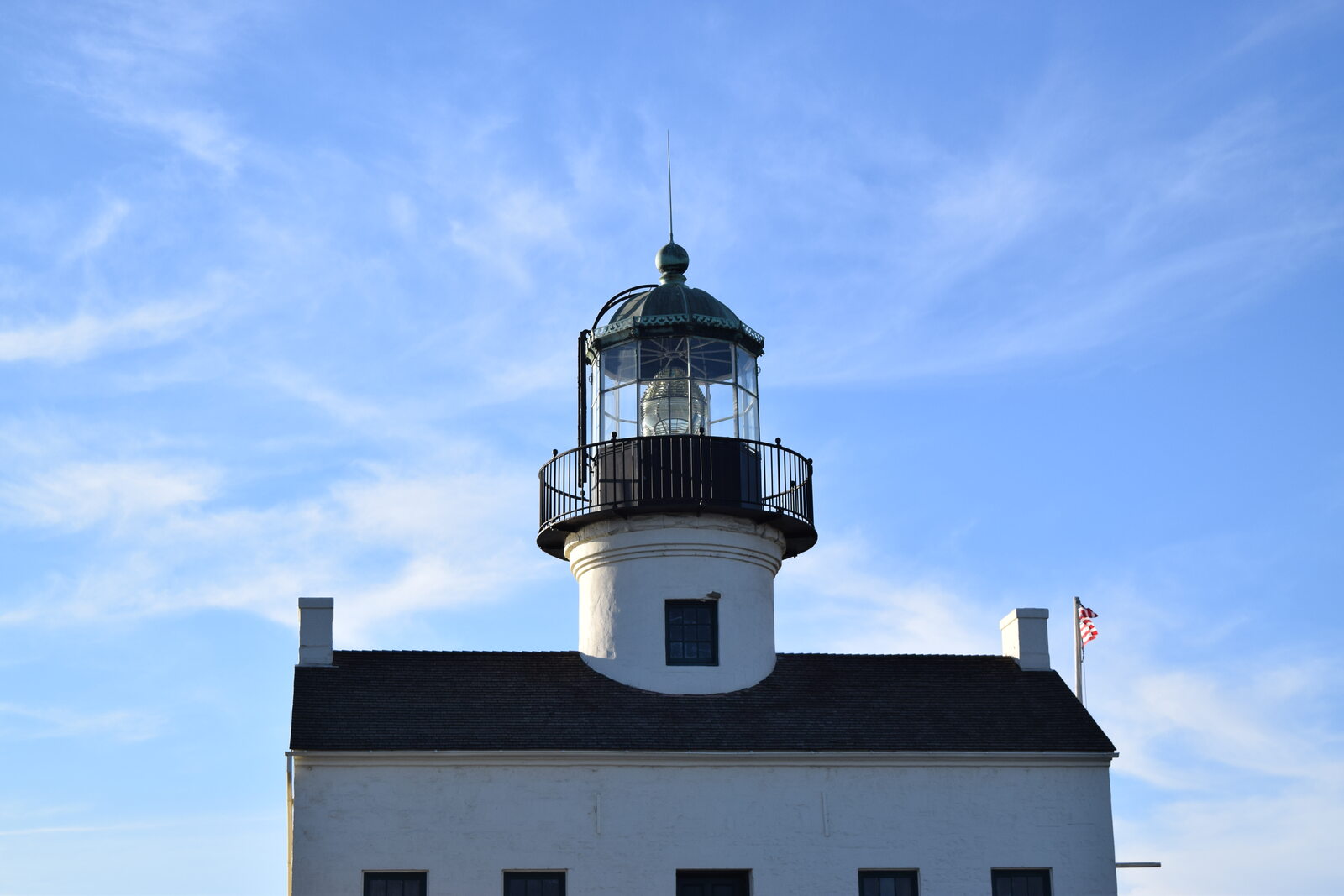
At Cabrillo National Monument in San Diego, the Old Point Loma Lighthouse comes with a paradox. Its position high above the entrance to the bay offered a commanding view, but that same height could place the light inside the fog and low clouds it needed to pierce.
The National Park Service says the old light guided ships from 1855 until 1891. A new station at a lower elevation took over after visibility problems made the original location less effective. The preserved old lighthouse now offers a way to imagine the people who lived and worked above the bay.
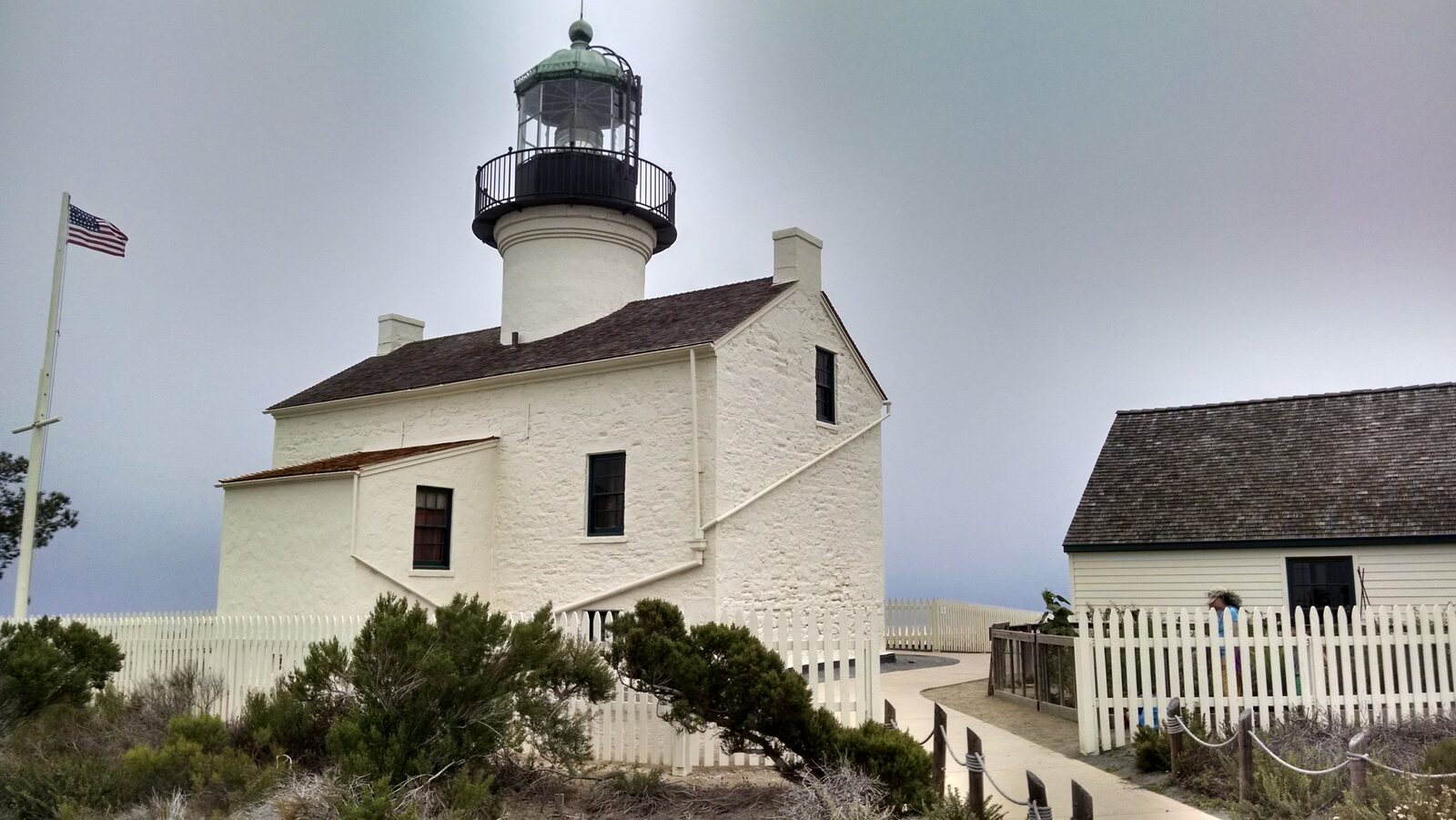
Allow time for the grounds and the assistant keeper’s quarters, and compare the restored domestic spaces with the larger maritime job the station performed. The surrounding monument also offers views and exhibits, so the lighthouse can anchor a longer visit rather than being the only stop.
Before you go: The upper tower is generally accessible only on special guided Open Tower Days, with safety and height requirements. National Park Service pages describe different levels of interior accessibility, so contact the visitor center for current access if stairs are a concern. Park admission applies; the monument is closed on Thanksgiving and Christmas Day.
Plan a Lighthouse Day Along the Coast
These destinations are spread across hundreds of miles, so they are best treated as separate day trips or stops on a longer journey. Check road conditions, park alerts, tour schedules and weather before setting out, especially on Highway 1 after storms.
Respect barriers and cliff edges, leave wildlife undisturbed and remember that a tour of the grounds does not necessarily include a climb into the lantern room. A jacket, water and a little extra time for the view belong on almost any California lighthouse itinerary.