This November, the road turns 100.
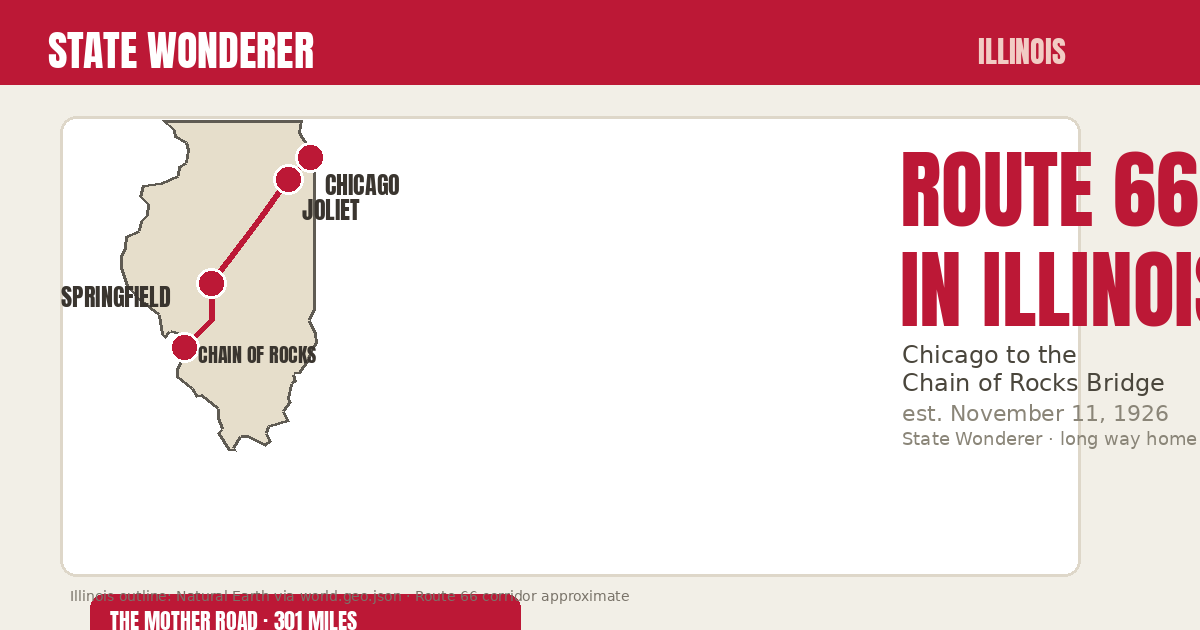
U.S. Route 66 was approved by the federal highway system on November 11, 1926, and Illinois has a special claim on the anniversary: the Mother Road begins here. The historic route ran from downtown Chicago southwest across the prairie to the Mississippi River at the St. Louis area, roughly 301 miles through the state. Illinois was the first of the eight states along the route to have its segment completed, and much of the drive now runs beside Interstate 55. In its centennial year, the Illinois corridor is a good, manageable way to take in the road up close.

A road built for the long way home
Before there were numbered interstates, Route 66 tied small towns together on two-lane pavement. The Illinois section grew out of paved roads that were already in place: much of the route followed the state highway system, which is one reason Illinois finished its segment before the other states on the road. Today six separate portions of the historic Illinois roadbed are listed on the National Register of Historic Places, and the corridor is managed as the Illinois Route 66 Scenic Byway. The state's tourism office now markets the route as "the birthplace of the road trip."
Start where it begins: Chicago
Route 66's eastern end sits in the Loop. Look for the iconic Route 66 start sign on East Jackson Boulevard downtown; it marks the spot where the road leaves the city. From there the route heads southwest toward Joliet, outside the metro area following the old Pontiac Trail through farm country that gave the highway its small-town rhythm.
Prairie towns worth stopping in
Joliet, with Route 66 Park and the road's crossing of the Des Plaines and Illinois rivers, is the first real corridor town. Farther down the old alignment, Pontiac leans into the road's roadside culture with murals and Route 66 museums — a strong, compact stop for a centennial outing. Springfield pairs Mother Road history with Lincoln history: the route passes the Illinois State Capitol and the Old State Capitol before heading south. Between the state capital and Litchfield, a surviving stretch of the old brick pavement remains near Chatham, one of the last intact brick alignments in Illinois.
South to the river
South of Litchfield the route rolls through Mount Olive, where the restored Soulsby Service Station is a working reminder of roadside service on the Mother Road. Near the St. Louis edge of the state, the historic Chain of Rocks Bridge carries the old bypass alignment. The steel truss bridge bends at a 22-degree angle to cross the Mississippi and was opened in 1930 for traffic bypassing St. Louis; it closed to automobiles in 1967 and now serves cyclists and pedestrians. Today, travelers on the modern drive often cross the river on one of the interstate bridges instead, but the old span still marks the point where Illinois hands off the route to Missouri.
Planning a centennial drive
The Illinois Route 66 Scenic Byway publishes a 2026 centennial visitor guide and maps of the corridor, and towns from Chicago to the Chain of Rocks Bridge have staged events through the anniversary year. A few tips for the drive: pick one cluster of towns rather than trying to cover all 300-odd miles in a single day, save parking and backup plans because centennial crowds are real, and leave at least one unplanned hour — that is usually the stretch of road people remember. For the longest way home, take the old alignments where they survive and let diners, murals and small downtowns carry the pace.
Sources: Wikipedia: U.S. Route 66 in Illinois, Enjoy Illinois: Route 66 Illinois Road Trip, Illinois Route 66 Scenic Byway, Illinois Community: Route 66 Centennial in Illinois (2026).