At Maquoketa Caves State Park, a walk through the woods can lead to a natural stone bridge, a cave entrance or a steep staircase descending into a rocky hollow. The eastern Iowa park is a memorable place to explore, but a good visit starts with understanding that its terrain is rugged and its caves close seasonally to protect bats.
Bring a flashlight and shoes with traction, check the Iowa Department of Natural Resources’ current alerts, and choose a route for everyone in your group. These six ideas will help you plan a first trip without assuming that every cave or trail is open on the day you arrive.
1. Check cave season before you go
The DNR says the park’s caves close annually from November 15 until April 1 to protect hibernating bats. The park’s current alerts should also be checked for additional closures. As of November 2026, the agency lists a boardwalk section between Hernando’s Hideaway and Up-and-Down as closed; do not enter a signed closure even if an older map or photograph shows a route through it.
The annual closure is a reason to adapt your day, not a challenge to work around. Consider an aboveground walk where permitted, a picnic or a different destination if entering a cave was your main goal. Check current trail conditions and facilities as well, especially during cold weather when modern restrooms may be closed for the season.
2. Start with a trail map and an honest footwear check
The DNR describes a six-mile trail system connecting caves, viewpoints and park facilities. You do not need to walk every mile. Pick a manageable section, note where it begins and ends, and tell someone your plan if traveling alone.
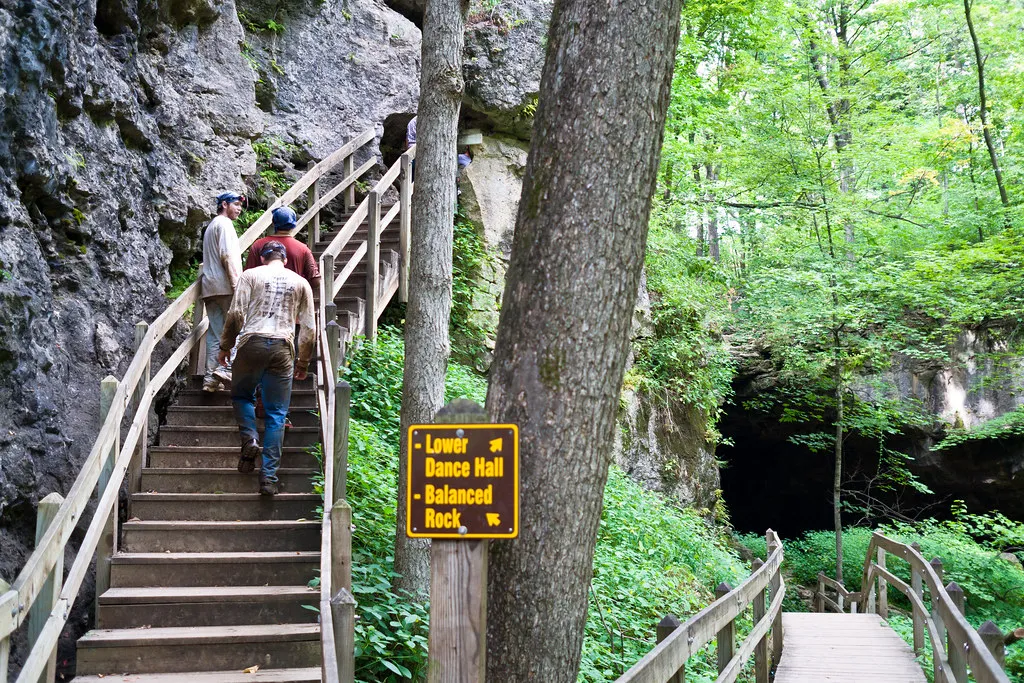
This is not a level garden walk. The agency describes steep inclines, rocky terrain and staircases and says the trail system is not accessible. Cave entrances and routes may be slippery, uneven and low enough to require stooping. If anyone in the group is uncomfortable with those conditions, agree on an alternative before reaching a difficult section.
Wear sturdy footwear, carry water and use extra care after rain. Follow signs and remain on permitted trails. Climbing and rappelling are prohibited in the park under DNR rules, so admire rock formations from designated visitor areas.
3. See the Natural Bridge from the trail
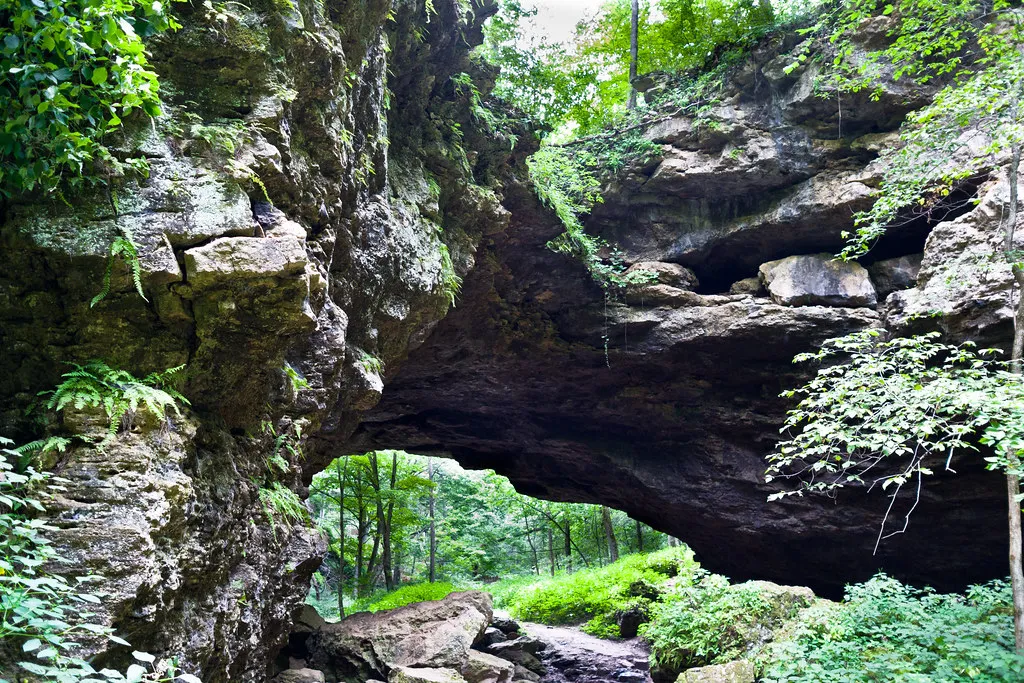
One of the park’s most striking formations is the Natural Bridge, which the DNR says stands about 50 feet above Raccoon Creek. Its scale is easier to appreciate when you slow down and look at the opening and the surrounding rock rather than rushing past for a single photograph.
This is a good point to talk with children about the difference between a trail destination and a playground: stone can be slick, heights are real, and the safest view is from an authorized route. Conditions and trail access change, so look for current signs rather than trying to recreate an older picture.
The historical photographs in this article show the park at earlier times. They identify the landscape, but they do not establish which stairways or boardwalks are open now. The agency’s live alerts should guide your route.
4. Plan carefully for Dancehall Cave
The DNR lists Dancehall Cave at about 1,100 feet long and notes that the park contains around 13 caves of different sizes. Some can be explored by walking; others are tighter spaces suited to people with more experience. Do not assume that one cave’s entrance, footing or clearance describes another.
Bring your own reliable light and consider a backup. Hands may be needed for balance, so a hands-free light can be useful, and clothing that can get dirty is sensible. Turn around if anyone is uneasy, if water or footing looks unsafe, or if a closure prevents entry. A family outing should never depend on pushing beyond a person’s comfort or ability.
Read the park’s interpretive information about bats and white-nose syndrome before entering any open cave. Follow current instructions intended to protect bats and avoid disturbing them. Never touch wildlife or cave formations.
5. Look for Balanced Rock and the larger landscape
The DNR also highlights Balanced Rock among the park’s geological features. Use a current map and posted signs to decide whether the route to it is open and suitable for your group. A visible landmark can be an engaging goal for children, but let the terrain set the pace rather than promising that everyone will reach every feature.
The forest around the caves is part of the experience too. Listen to water, notice the changing light beneath the trees and take breaks away from narrow passages so other visitors can pass. After wet weather, even familiar routes may require more time than expected.
6. Build in a picnic and a backup plan
The DNR identifies accessible parking, routes and seasonal restroom facilities near the lower shelter, along with accessible picnic features elsewhere in the park. It also notes that its visitor center is seasonal. Call ahead if a particular facility or accessible route is necessary for your group, because hours and conditions can change.
Campers should consult the official reservation information and current alerts. Modern water facilities may close for winter; verify services before setting out. For a day trip, pack food, water and a change of shoes, and allow time to stop in Maquoketa afterward if you want a meal.
The reward here is a varied landscape, not the number of cave openings checked off. A careful walk and a flexible plan can make the park memorable while protecting the bats and fragile places that make it special.