In a residential Jackson neighborhood, the home of Medgar and Myrlie Evers tells a national story on a human scale. Across town, the Mississippi Civil Rights Museum places the struggle for equal rights within a wider state history. Together, these sites offer a meaningful day of learning—one that deserves time, care and attention to the people who still call the neighborhood home.
The house and museum are separate destinations with separate schedules. Check current access before leaving, and plan enough time to absorb the interpretation instead of rushing between them. These five steps can help visitors prepare.
1. Learn why the Evers home matters
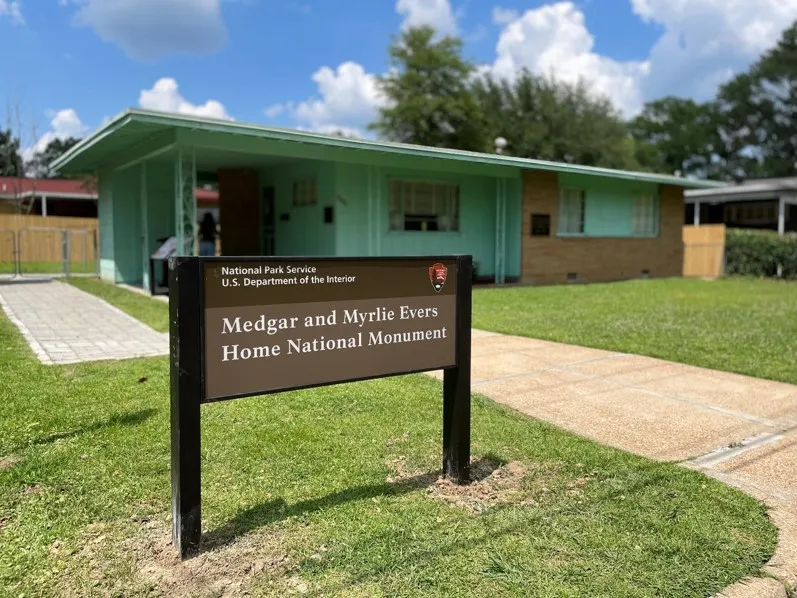
Medgar and Myrlie Evers were partners in the civil rights struggle. Their Jackson home was a family space as well as a place connected to their work for racial equality. On June 12, 1963, Medgar Evers was assassinated in the carport. The National Park Service preserves the house as the Medgar and Myrlie Evers Home National Monument and interprets both the family and the movement around them.
Beginning with the family helps place the national story in a lived setting. The rooms, yard and neighborhood can prompt questions about how ordinary routines continued amid extraordinary danger. Myrlie Evers's later work for justice also makes the story larger than a single tragic event.
The National Park Service website provides background on the Everses and the monument. Reading a little before arriving can give you more time to ask questions during a tour and understand what you see. Approach the site as a place of history and reflection, with consideration for others who are visiting for their own reasons.
2. Check tour and accessibility details
The Evers home is at 2332 Margaret W. Alexander Drive in the Elraine neighborhood. The park lists ranger-led house tours during posted days and hours, with a midday closure. Because the house is small and group sizes are limited, call the park to confirm current tour arrangements and any reservation requirements. The National Park Service notes that no restrooms are available at the house.
An accessible ramp leads to the house. The park also explains that visitors using wheelchairs or powered chairs may need to transfer to a smaller wheelchair to see the entire interior because of the dwelling's size. Contact staff ahead of time to discuss your needs and the current arrangements.
This remains an active residential neighborhood. Respect neighbors' privacy, use appropriate parking and keep driveways clear. The park suggests considering parking at Myrlie's Garden near the Missouri Street intersection. A little preparation makes a visit easier for both guests and residents.
3. Spend a moment at Myrlie's Garden
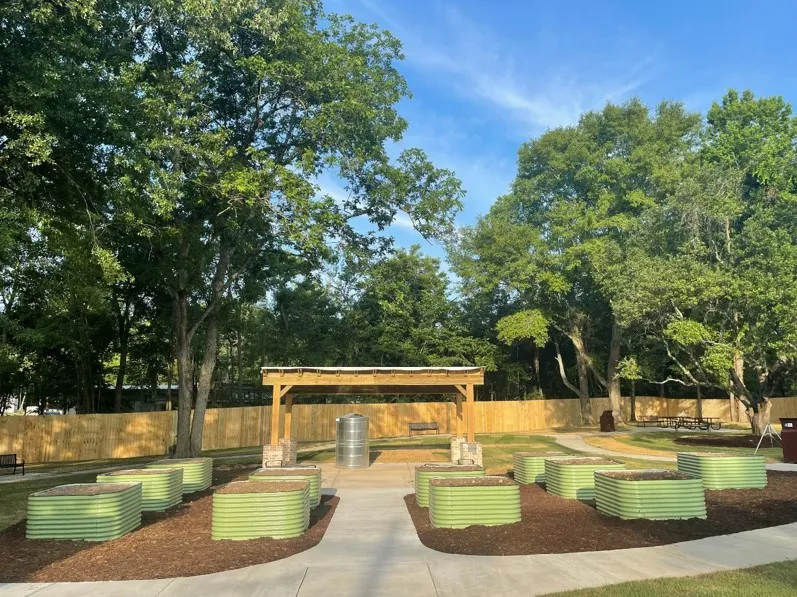
Myrlie's Garden offers educational exhibits, a community garden, picnic tables and a shaded pavilion. The park lists the garden as open from sunrise to sunset, with accessible parking and paved sidewalks. Verify any current alerts before your visit, especially after severe weather or for a planned group outing.
The garden is an opportunity to pause before or after touring the house. Its planting beds and gathering space connect the monument to a living community as well as a historic address. Read the exhibits, respect the plants and use the space considerately. The garden photograph here is from the National Park Service and shows the site as photographed, not a guarantee of seasonal planting.
4. Put the story in a wider Mississippi context
The Mississippi Civil Rights Museum at 222 North Street in downtown Jackson interprets the state's freedom struggle through multiple galleries. Its exhibits include the stories of Medgar Evers, Fannie Lou Hamer, Vernon Dahmer and many others who worked for change. A museum visit can provide context for the individual family history encountered at the home.
The Mississippi Civil Rights Museum and the adjacent Museum of Mississippi History share admission options. The museum's own pages contain differing Sunday opening times, so check the latest visitor information or contact the museum before relying on a Sunday schedule. It also lists holiday closures and free Sunday admission; confirm current details and prices before traveling.
Allow enough time for the exhibits and for breaks. Some material addresses violence and injustice, so families may want to prepare children and make space for questions. A shorter, thoughtful visit can be more useful than trying to read every panel while tired.
5. Connect the stops with care
The home and museum are in different parts of Jackson, so allow driving and parking time. Use each operator's directions and accessibility information, and check for temporary changes. If you only have a few hours, choose one site and return for the other rather than rushing through both.
Consider ending the day by discussing one person or event that changed your understanding of Mississippi's history. The value of these places lies in the connections they make between individual choices, community action and national change. A quiet walk in the garden, a ranger's explanation or a museum exhibit can each offer a different way into the story.