The first time South Dakota’s Badlands Wall appears above the prairie, it can look as though a completely different landscape has been folded into the horizon. From the road, ridges and canyons seem to change shape with each turn. Stop at a few overlooks and you begin to notice something else: every viewpoint tells a slightly different story.
Badlands Loop Road, also known as South Dakota Highway 240, makes that landscape surprisingly approachable. The paved route through the park’s North Unit links viewpoints, trailheads and the Ben Reifel Visitor Center. These seven stops make a rewarding first drive; take them east to west or reverse the order if you enter near Wall.
1. Begin with the wide-open view at Big Badlands Overlook
Near the eastern end of the route, Big Badlands Overlook introduces the eastern Badlands Wall and the scale of the landscape beyond it. Give yourself a little time here, even if the first instinct is to photograph the view and hurry on. Look from the foreground ridges toward the far horizon and you can see how dramatically the land drops away.
It is a useful first stop for a family, too: the overlook offers an immediate sense of place before anyone has to commit to a long walk. Keep an eye on children near edges, and use the designated parking area rather than stopping in the road.
2. Look across the layers at White River Valley Overlook
Continue west to White River Valley Overlook, where the view opens toward layers of the White River Group. The bands and ridges are easier to appreciate when you pause long enough to compare their shapes and colors instead of treating every formation as one enormous backdrop.
Light and weather change the experience throughout the day. A hazy afternoon and a clear morning can make the same terrain look remarkably different, so a second stop on a return drive can be worthwhile if your schedule allows.
3. Take a picnic break at Bigfoot Pass
Bigfoot Pass combines a scenic viewpoint with a picnic area, making it a practical place to slow down between photo stops. Pack food and water before entering the park and leave enough time to enjoy lunch without turning the whole route into a race against the clock.
Weather here deserves respect. The park warns that storms and temperatures can change quickly, and wet Badlands terrain can be slippery. Check the forecast and seek appropriate shelter when lightning threatens; a picnic plan is easy to change when conditions do.
4. Change perspective at Panorama Point
Panorama Point offers a broad view toward the White River Valley. It is a good place to pull out a park map and connect the landscape outside the windshield with the larger route. The view has similarities to the Bigfoot Pass area, but the shift in perspective makes it worth comparing the two.
If someone in your group prefers shorter stops, this road gives you flexibility: choose a few viewpoints, spend longer at each and skip the urge to collect every overlook. The National Park Service says most scenic overlooks and wayside exhibits are accessible to wheelchair users, though surfaces and conditions vary.
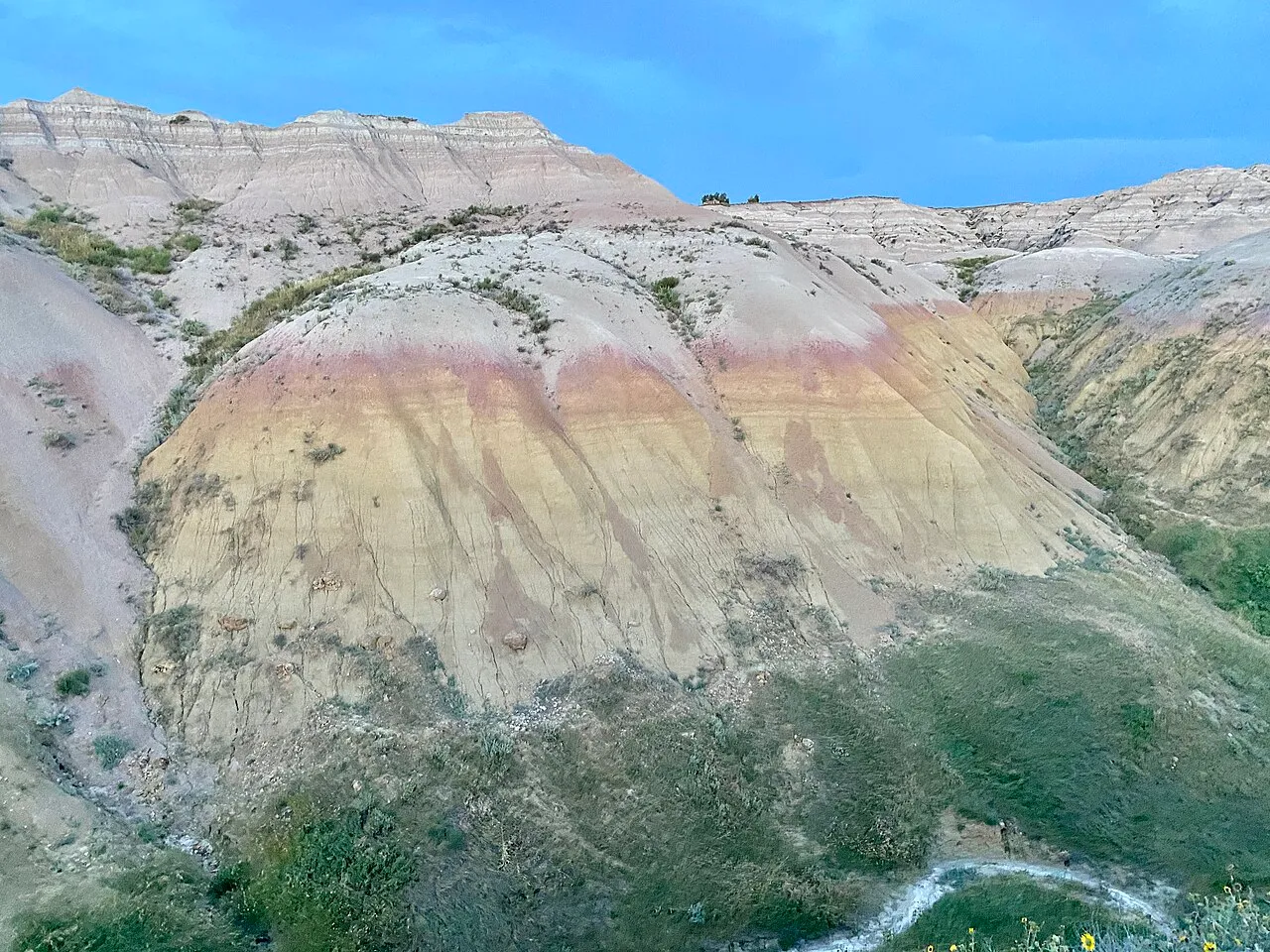
5. Find a different palette at Yellow Mounds Overlook
Yellow Mounds is one of the drive’s most distinctive stops. Warm yellow and reddish bands bring a different palette to the pale, sculpted formations seen elsewhere along the route. The overlook provides views of some of the park’s older exposed layers, offering an easy invitation to think about how much history is stacked into the scenery.
Bring a camera, but leave the landscape as you found it. Fossils and other natural objects belong in the park. If you find something that looks significant, note its location and tell a ranger instead of collecting it.
6. Save time for Pinnacles Overlook
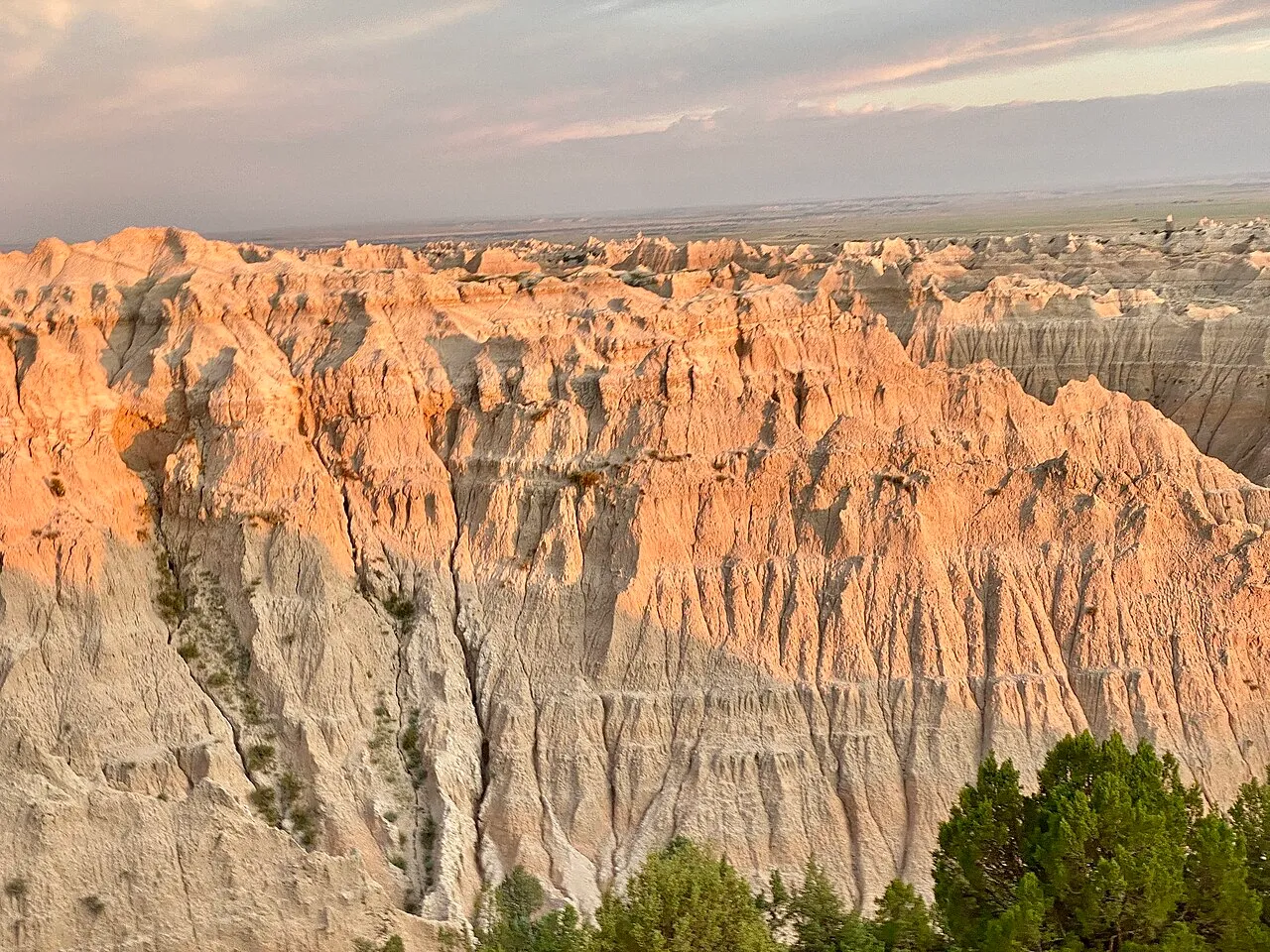
Pinnacles Overlook is a fitting finale near the western end of the loop. The ridges extend across a vast view, and the Park Service highlights the overlook for its geology and sunsets. Late-day light can be beautiful, but do not schedule your drive so tightly that you must rush back in the dark or through deteriorating weather.
Wildlife can appear along the road, so slow down and keep a respectful distance. Stay in your vehicle when appropriate, use a designated pullout, and never approach an animal for a closer photograph. A small pair of binoculars makes a good addition to your day bag.
7. Add a short boardwalk walk near Cedar Pass
If you want to stretch your legs, the Window Trail offers a short accessible boardwalk to a natural opening in the Badlands Wall. The Door Trail begins with an accessible boardwalk section before continuing beyond it over more rugged ground. Check the park’s trail information and choose the portion that suits your group and the day’s conditions.
The Ben Reifel Visitor Center is a sensible place to ask rangers about current conditions, pick up a map and learn more about the landscape. Visitor-center hours can change seasonally, so check before relying on it for a particular arrival time.
Before you go
Badlands Loop Road is a two-lane paved road with steep sections and reduced speed limits. It can be reached from Interstate 90 near Wall or from the eastern entrance; the park also describes access from Interior. Entrance fees apply. Allow extra time for viewpoints, carry water and sun protection, and check the park’s current conditions and the forecast before setting out, especially in winter or storms.
As of November 16, 2026, the park’s Notch Trail closure notice says the trail is closed until further notice for repairs. Conditions can change, so confirm the latest status directly with the park before planning a hike.