The sound reaches you before you have seen the whole scene: water moving over pink stone in the middle of South Dakota’s largest city. Falls Park gives Sioux Falls its name and gives visitors an easy reason to slow down, walk a little and see the Big Sioux River from several perspectives.
It can be a quick stop on a road trip or the start of a longer day downtown. These five ideas help you make the most of the park, with time for its waterfalls, history and surrounding paths.
1. Begin at the overlooks
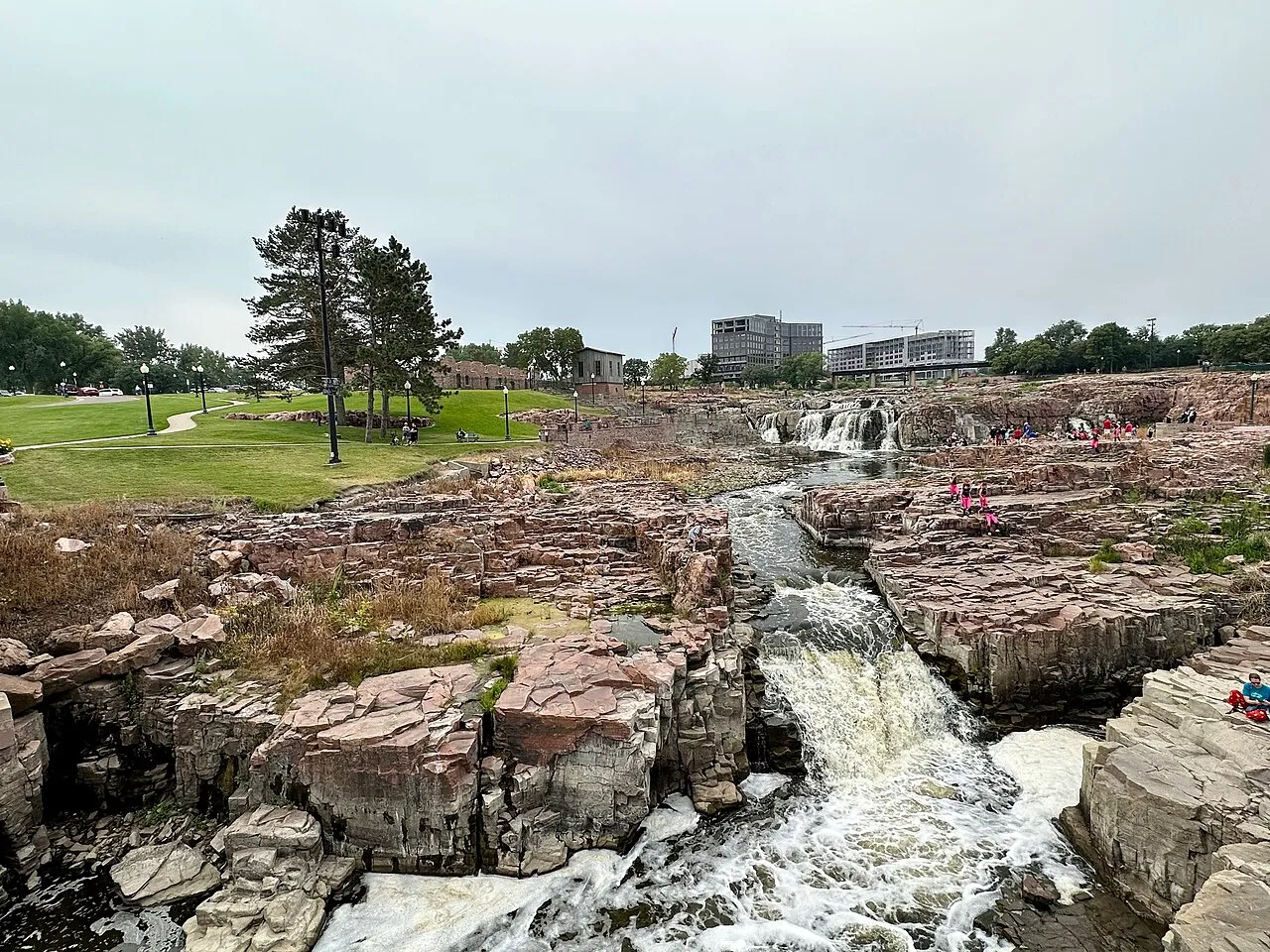
Start with the water. The Big Sioux River moves over exposed Sioux quartzite in a series of drops and channels, and the view changes as you move around the park. A broad overlook lets you understand the layout before choosing a path for a closer look.
Conditions at the falls vary with river levels and weather. The City of Sioux Falls warns that rocks are slippery when wet and that floodwater can be powerful. Enjoy the scene from appropriate paths and viewing areas, keep children close and do not take unnecessary risks on the rocks.
2. See the park from the observation tower
The city lists a visitor center and observation tower among the park’s amenities. When open, the tower offers a higher perspective that helps connect the falls, river and surrounding city. It is a useful first stop for a family or anyone who wants to orient themselves before setting off on foot.
Facility hours can differ from the park’s outdoor hours, so check ahead if the tower is especially important to your plans. Weather, maintenance or a special event may also change access. The outdoor overlooks remain worthwhile even when a particular facility is unavailable.
3. Look for the park’s industrial history
The falls shaped more than the scenery. City planning documents describe the Queen Bee Mill, which opened beside the river in 1881 and was later damaged by fire. Its remaining ruins and interpretive displays connect the water to the city’s early development.
Pause to read the signs and imagine the working landscape that once occupied the riverbanks. The park has also been a gathering place over a much longer history, including for Sioux peoples. A visit is richer when the waterfall is understood as part of that continuing story rather than an isolated photo stop.
4. Add a short section of the recreation trail
Falls Park is an access point to the Sioux Falls recreation trail network. You can walk or cycle a small section and return to the park without committing to the entire loop. The city describes the main Greenway loop as following the Big Sioux River through a variety of city and park landscapes.
On shared paths, stay to the right, pass on the left and give an audible signal before passing. Check the city’s trail information for detours or closures, and choose a distance that leaves enough energy for the rest of your day.

5. Leave time for a picnic or a downtown visit
The city lists picnic facilities, walking paths, an accessible playground and an overlook café at the park. Check seasonal hours before relying on a particular service, or bring a picnic and make the stop as simple as you like. Families can take turns enjoying the views and giving younger travelers a break from the car.
Because the park is close to downtown, it also works well as one part of a larger Sioux Falls outing. Start at the water, then explore nearby shops, restaurants or cultural attractions at your own pace. A return stop at a different time of day can give the falls a new look.
Before you go
Find current amenities, location details and posted hours on the city’s Falls Park page. Paths and viewing areas can be affected by weather or high water, so follow signs and closures. In cold months, dress for wind and watch for ice; after heavy rain, give the river extra room.
The best visit does not require a complicated plan: pick a safe viewpoint, give yourself time to listen to the falls, and let the river set the pace.