Alaska’s glaciers do not all offer the same kind of journey. One has a road leading toward its visitor area; another fills a fjord beyond Seward; and two immense ice fronts ask you to travel by water or air along the Southeast Alaska coast. Together they make a useful introduction to the state’s ice without pretending that the distances between them are small.
These four glacier experiences are separate trips, not stops on one easy road tour. Check the latest National Park Service conditions and operator schedules before booking, allow room for weather, and remember that glacier ice and icebergs can move or break without warning.
1. Exit Glacier: See a Changing Landscape Near Seward
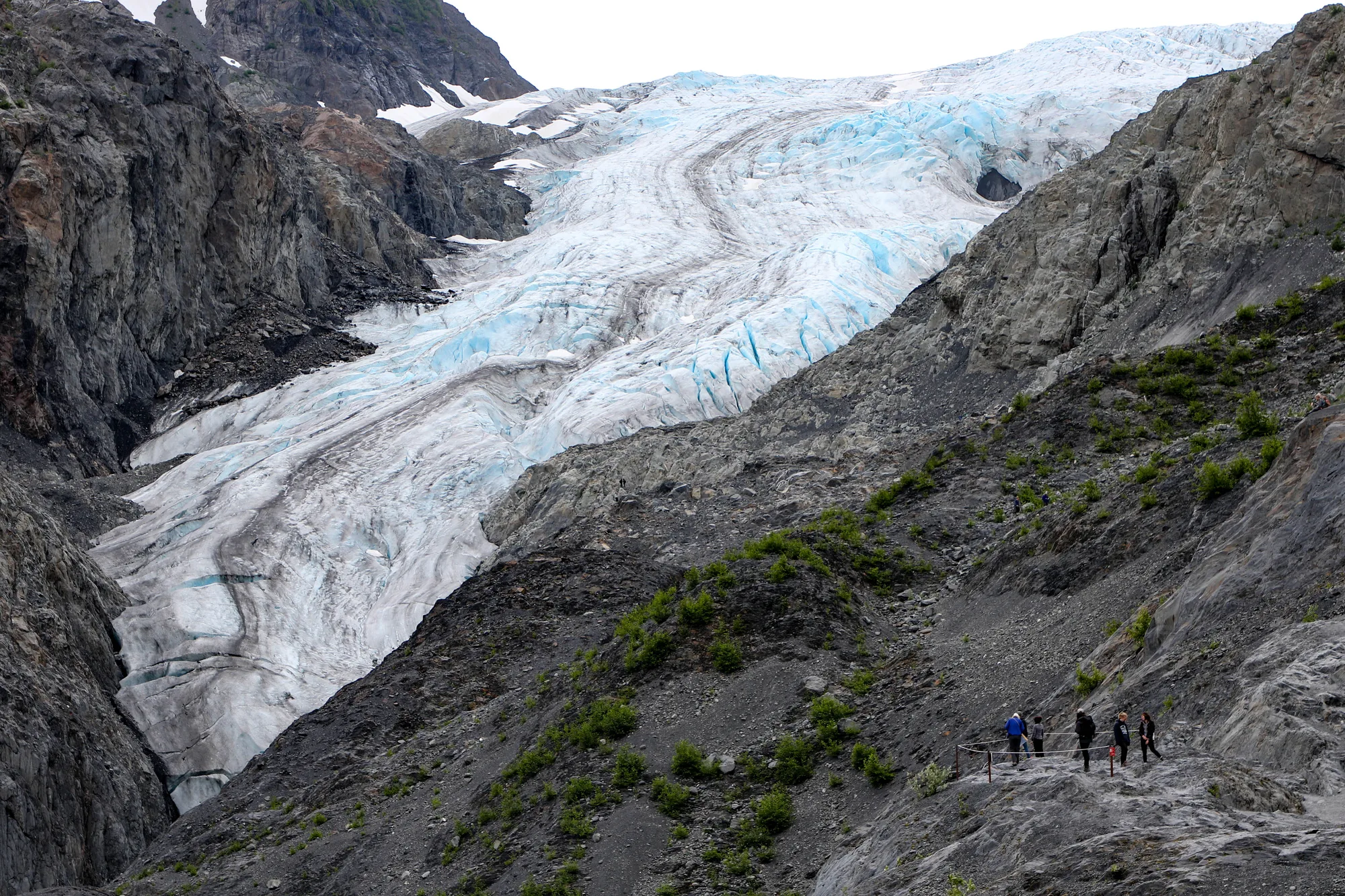
Exit Glacier is the rare Alaska glacier with a developed visitor area reached by road. In Kenai Fjords National Park, the Exit Glacier area lies outside Seward, making it a natural choice for travelers who want to combine a coastal town with a walk through glacial scenery.
The approach offers more than a single view of ice. Markers along the route identify earlier positions of the glacier, giving visitors a way to picture how the valley has changed. Trails lead through forest and toward overlooks, while the longer Harding Icefield Trail climbs into the mountains above. Conditions and the view of the glacier change as the ice retreats; a historical photograph will not necessarily match the landscape on the day you visit.
Plan carefully: The National Park Service has reported a flood-related closure affecting the Exit Glacier area. Roads, facilities, and trails can close or reopen as conditions change, so check the park’s current conditions before setting out. In winter, snow can close the road to vehicles. Do not walk onto glacier ice or approach the unstable face without the skills, equipment, and local guidance needed for the terrain.
2. Aialik Glacier: Take the Water Route From Seward
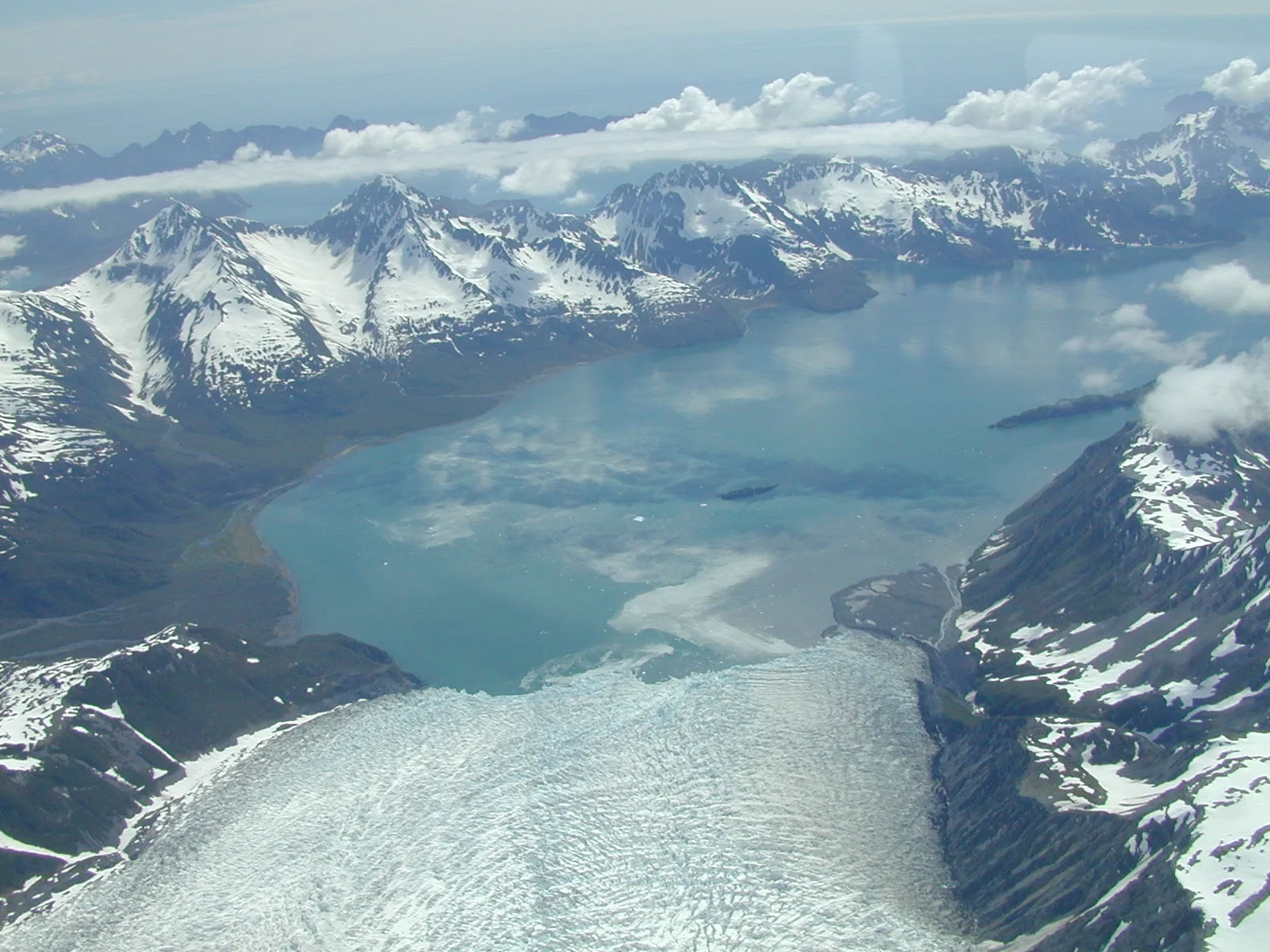
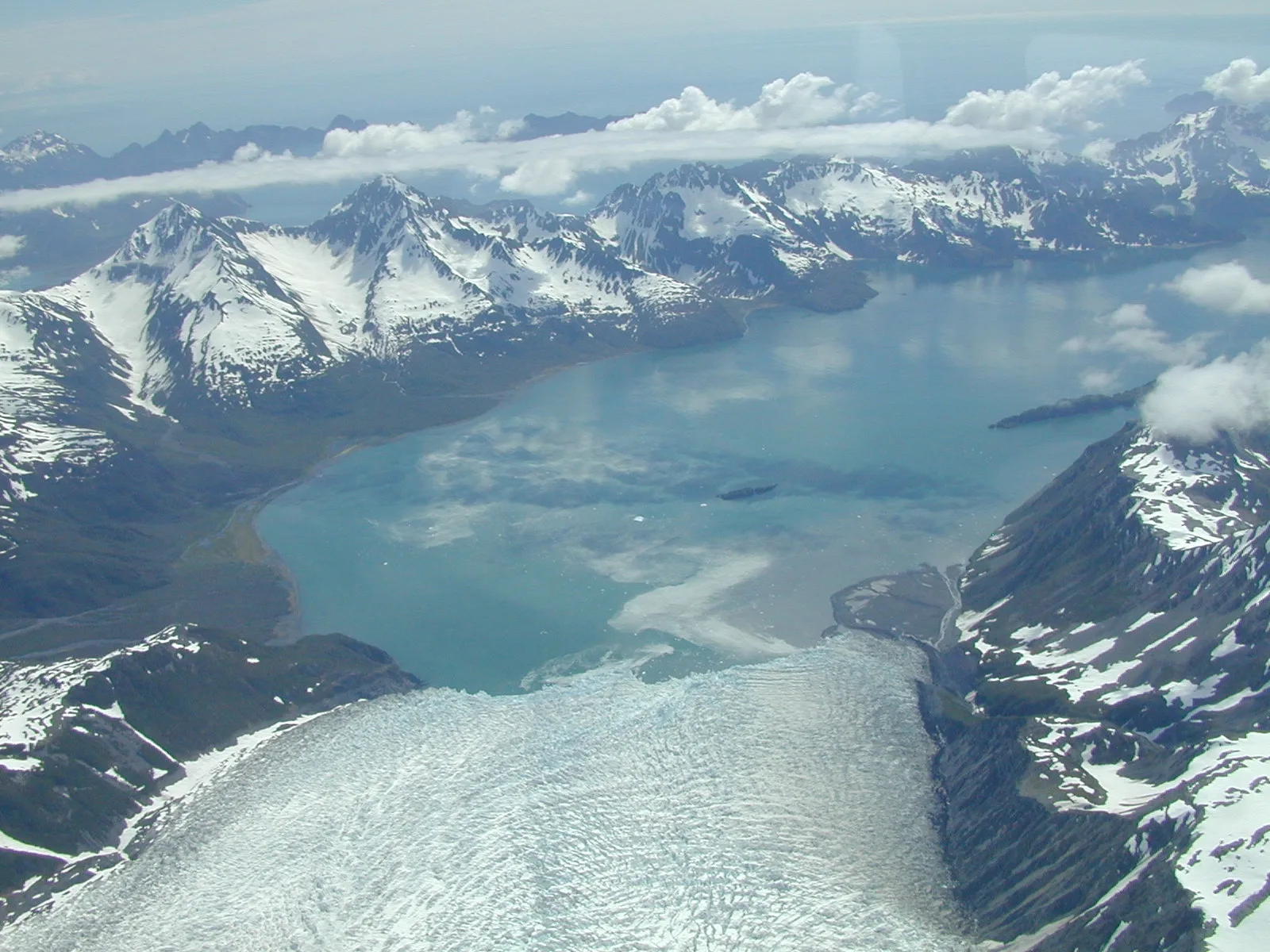
To understand why Kenai Fjords has “fjords” in its name, leave the highway behind. Aialik Glacier meets the water in Aialik Bay, where steep coastal mountains, salt water, and ice bring the scale of the Harding Icefield into focus. The glacier is one outlet of that icefield, the vast source of ice spread across the mountains above.
Boat trips departing Seward can travel into the park’s coastal waters, though itineraries vary with the operator and with sea conditions. A trip toward a tidewater glacier is an all-day commitment rather than a quick extension of a downtown stroll. The payoff is the changing perspective: the coast opens into bays and inlets, and a wall of ice eventually appears between mountain slopes.
Choose a trip for the route and time on the water, not a promise that a glacier will calve on command. Wildlife sightings and sea conditions are never guaranteed, either. Dress in warm layers, bring rain protection, and ask the operator about seasickness, accessibility, and cancellation rules. If you have only one day around Seward, deciding between the road-access Exit area and a boat trip makes the day much easier to plan.
3. Hubbard Glacier: Watch Ice Meet the Sea Near Yakutat
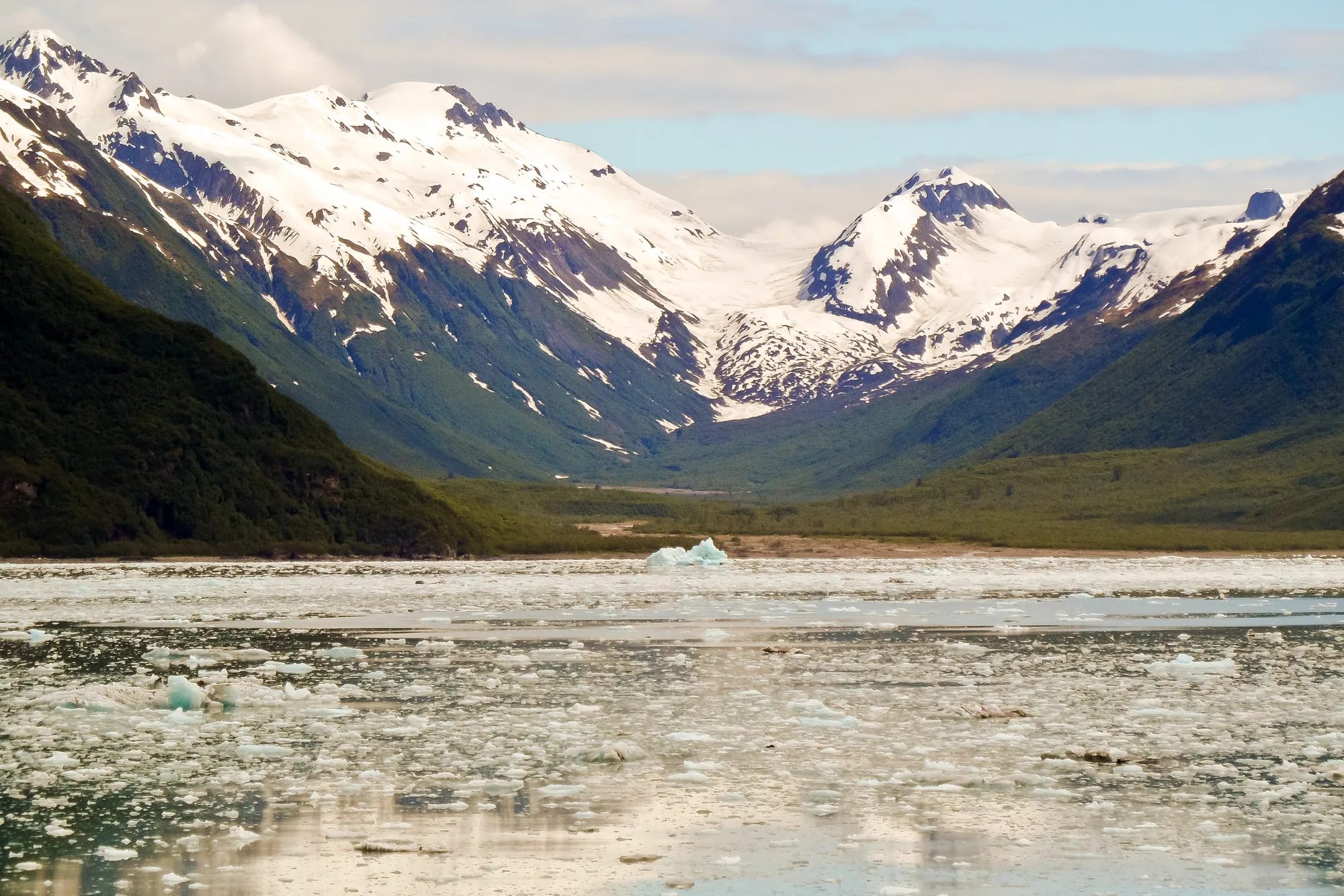
Hubbard Glacier belongs to a different Alaska itinerary. Its immense tidewater front lies in the Yakutat coastal area of Wrangell–St. Elias National Park and Preserve. It is not a roadside stop on the drive to McCarthy or Kennecott: the park says the Yakutat coastal area is reached by boat or airplane.
The National Park Service describes Hubbard as the longest tidewater glacier in North America. Ice flowing down from the mountains reaches salt water, where pieces can break away from its face. That process, called calving, helps explain the floating ice often seen in photographs of the area. It also makes the water immediately around a glacier dangerous, even when the scene looks still.
Most visitors will experience this part of the coast through a vessel itinerary or an air trip rather than an independent hike to the ice. Look closely at the route when choosing a cruise or local operator; weather, ice, and safe navigation can affect how close a vessel can travel. Bring binoculars for viewing from a responsible distance, and give yourself time in Yakutat if arranging a trip locally rather than assuming every departure runs every day.
4. Margerie Glacier: Explore Glacier Bay by Boat
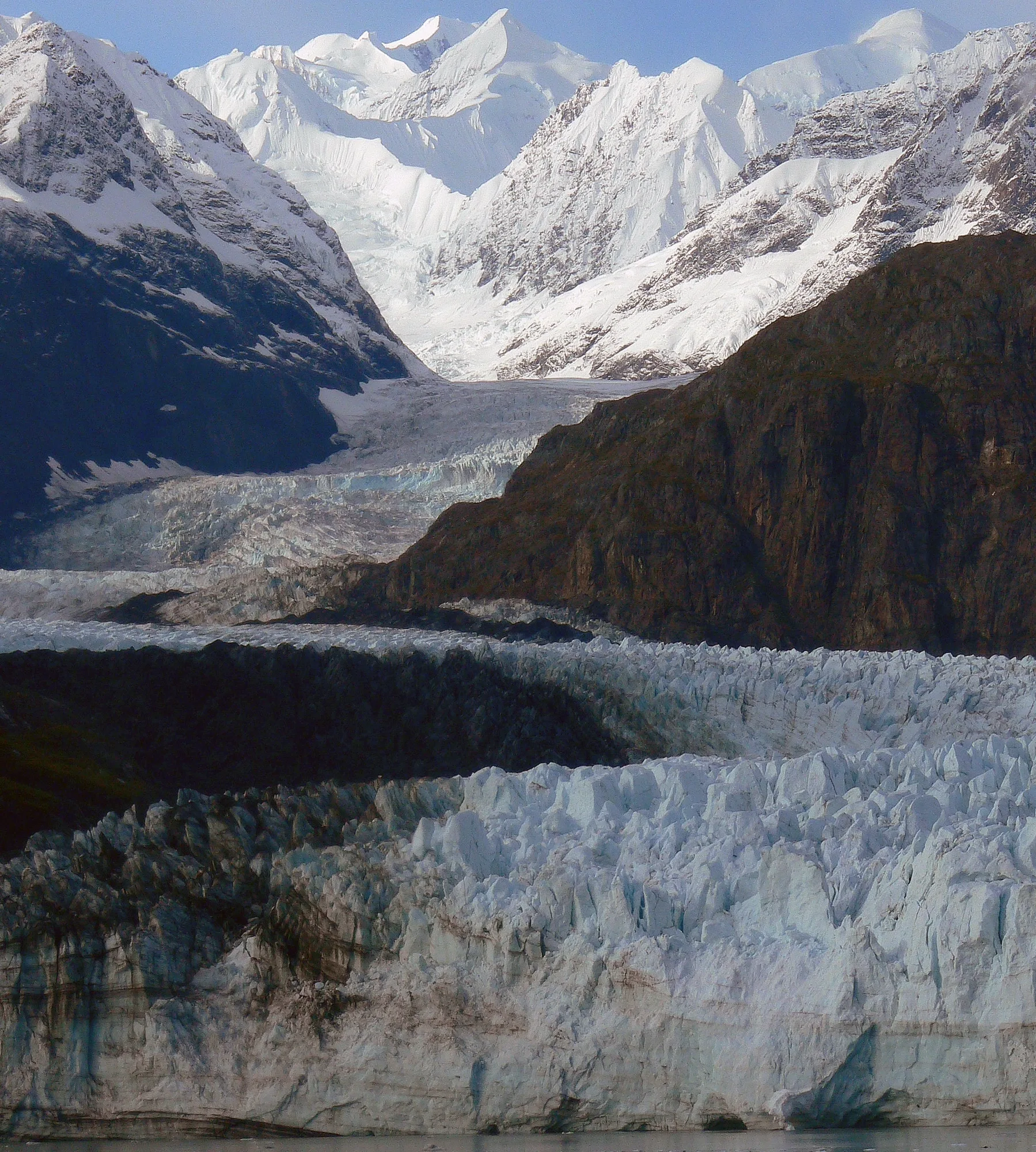
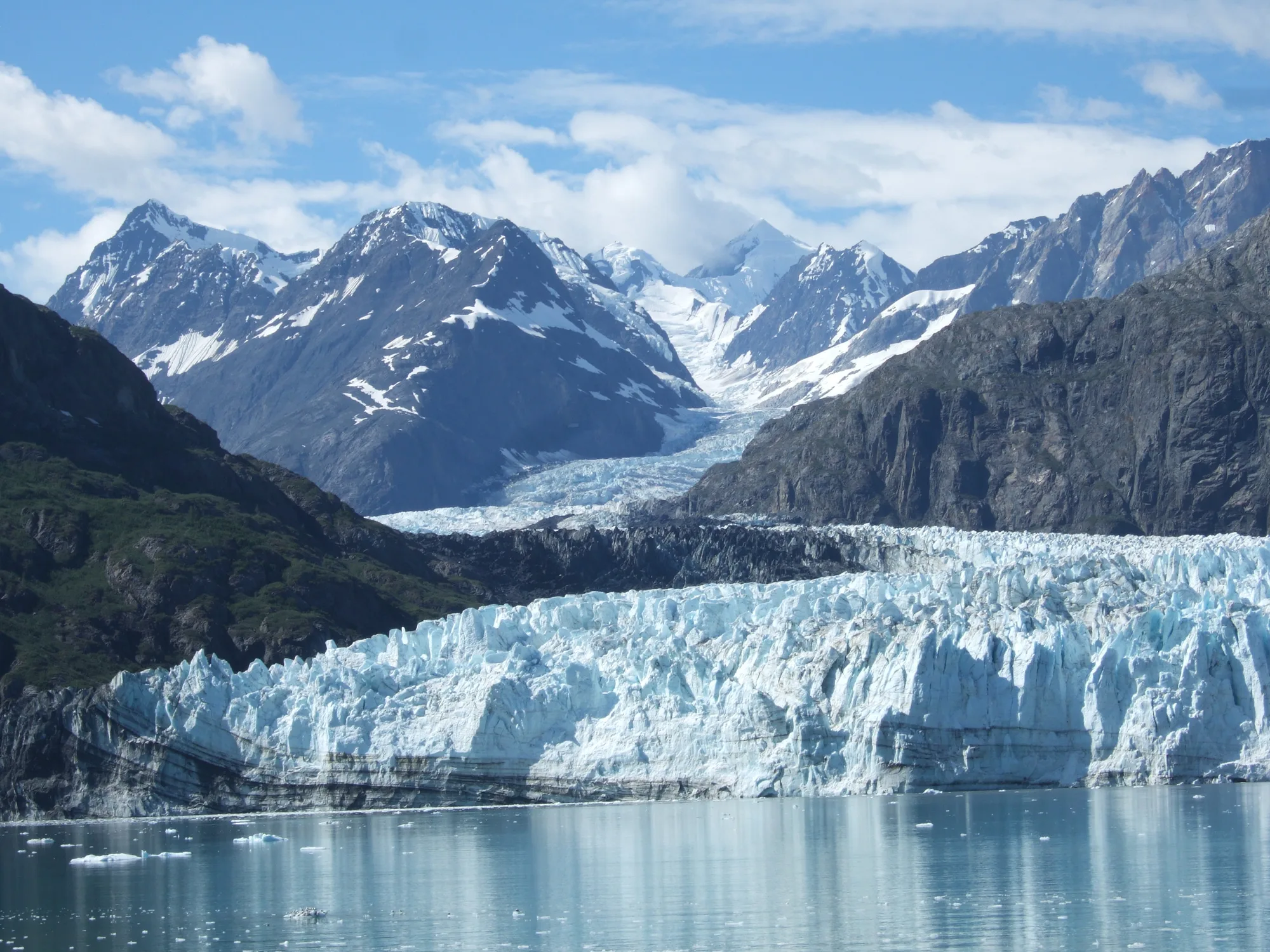
In Glacier Bay National Park and Preserve, Margerie Glacier descends from the mountains toward Tarr Inlet. Its ice front is one of the striking sights on a journey through the upper bay, where the story is not only the glacier itself but the landscape left as ice has retreated over generations.
This is a water-based experience. Some visitors arrive on a cruise itinerary; others travel to the Gustavus and Bartlett Cove area and arrange a tour into the bay. Compare schedules and routes before making reservations. The presence of a national park on a map does not mean its most famous glacier can be reached by a short drive.
Pay attention to the entire passage rather than treating the ice front as the only destination. Water, forest, exposed rock, and the steep walls of the fjord show different parts of a living landscape. Bring a waterproof outer layer, use binoculars to watch wildlife without disturbing it, and follow vessel crews’ instructions. Approaches are governed by safety and wildlife protections; the view available on any trip depends on the day’s conditions.
How to Choose Your Alaska Glacier Trip
For a trip based around Southcentral Alaska, Seward is a practical starting point: check whether the Exit Glacier area is accessible and consider a boat excursion for a different perspective. For a Southeast Alaska voyage, compare Glacier Bay itineraries with trips that include Hubbard Glacier. Those choices involve different communities and transport arrangements, and neither belongs on an ordinary Seward day trip.
Give all four landscapes the respect their beauty deserves. Glaciers are active, cold environments, and ice cliffs, crevasses, unstable ground, and sudden weather changes are real hazards. Stay on open routes, keep away from glacier faces and floating ice, and use professional guides when a trip calls for specialized ice travel. Before paying for a tour, check Kenai Fjords conditions, Glacier Bay trip information, and the Wrangell–St. Elias directions.