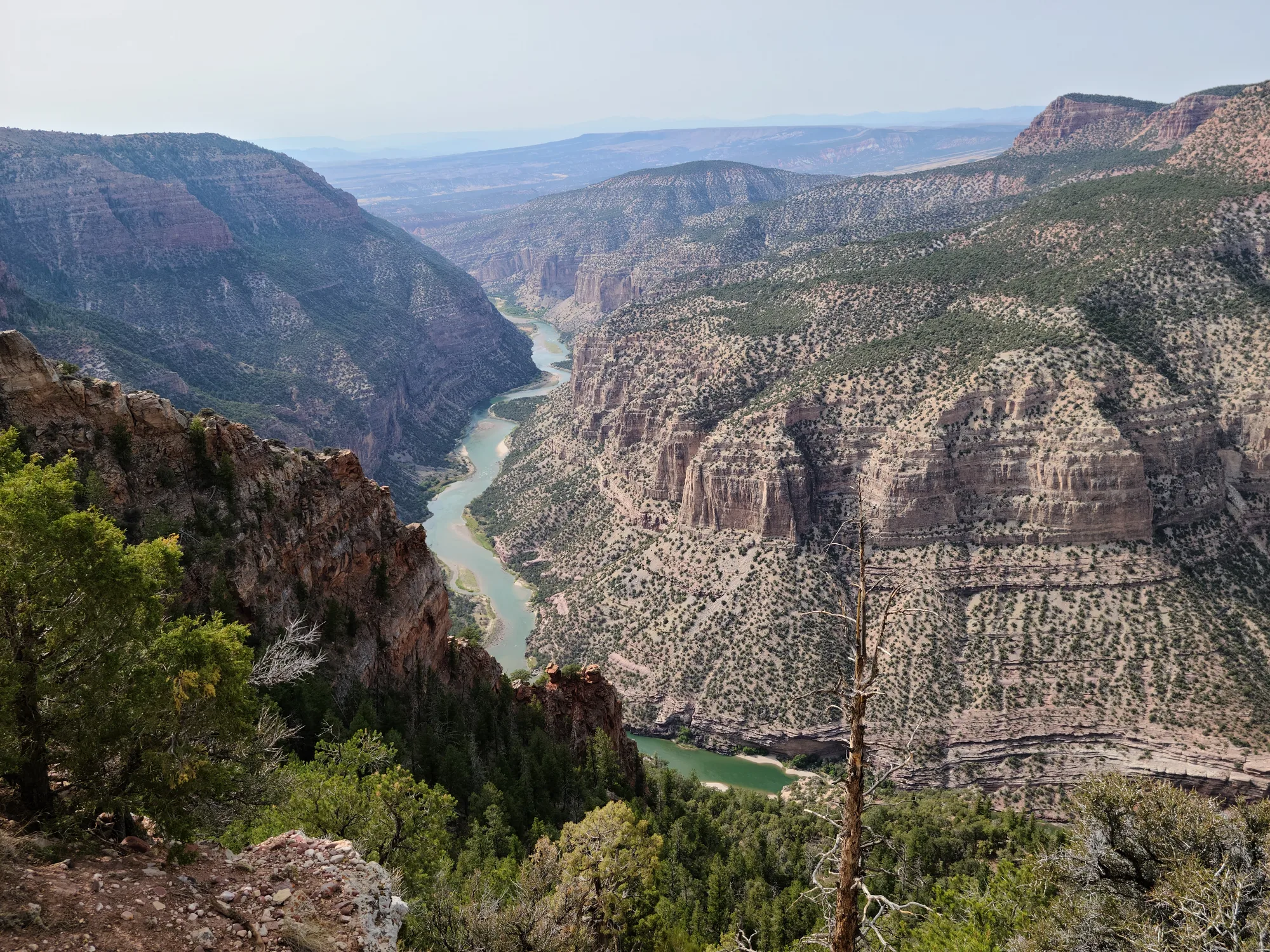
Black Canyon of the Gunnison has a way of making distance feel deceptive. From the rim, the opposite wall can look close enough to reach; then your eye follows the rock down toward the river, and the depth becomes much harder to judge.
The South Rim offers several ways to experience this dramatic Colorado landscape without attempting an inner-canyon descent. These five ideas can help shape a first visit, but road access changes with the season. Check the park's current conditions before making a long drive.
1. Start at the South Rim Visitor Center
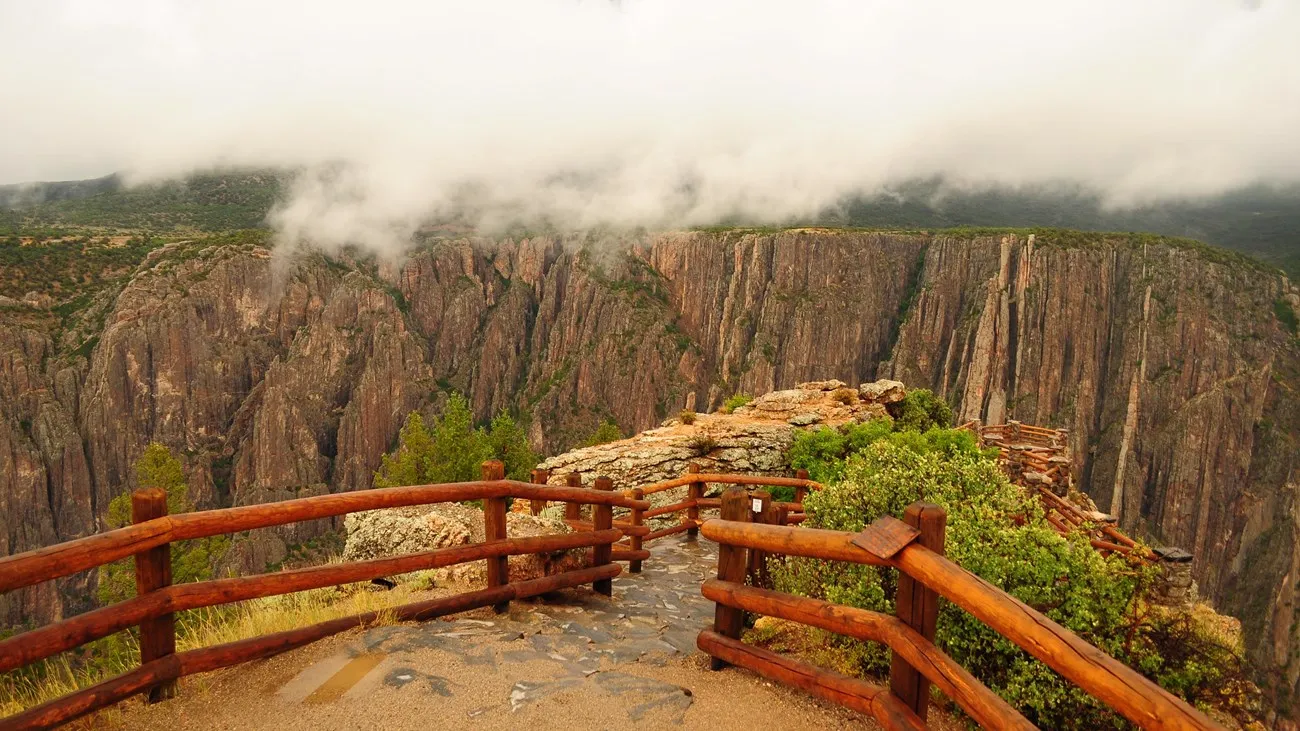
The South Rim Visitor Center, near Gunnison Point, is a practical place to get oriented. The National Park Service lists exhibits, information, maps, restrooms and nearby trailheads. Ask about road and trail conditions before deciding how much of the rim you can see that day.
Gunnison Point offers an immediate introduction to the canyon's steep walls. Take a moment to look down as well as across, and use the designated viewpoint rather than moving toward an exposed edge for a photograph. If clouds or haze obscure the far wall, the changing atmosphere can still make the view memorable.
The visitor center is open much of the year, with holiday exceptions. Check its current hours before relying on water, ranger assistance or indoor facilities, particularly in winter.
2. Choose a Few Stops Along South Rim Drive
The paved South Rim Drive follows the canyon for seven miles from Tomichi Point to High Point and has 12 overlooks, according to the park. Most viewpoints involve a short walk from the parking area. If time is limited, the park suggests considering Gunnison Point, Chasm View, Painted Wall and Sunset View.
Allow two or three hours for several overlooks rather than expecting each stop to take only a minute. The canyon changes character with position and light, and a little extra time makes it easier to decide which short walks are comfortable for your group.
As of the park's November 13, 2026 conditions update, South Rim Road was listed as open, while East Portal Road was closed. Conditions can change quickly. In winter and early spring the road is normally closed to vehicles beyond the visitor center; when conditions permit, that section may be used for cross-country skiing or snowshoeing. Verify the latest status before setting out.
3. Look for the Painted Wall
The Painted Wall is one of the most recognizable sights in the canyon. Pale bands cut through dark rock, creating patterns that look almost drawn onto the cliff. The view is a reminder that the canyon is not only a dramatic drop but also an exposed record of the region's geology.
A camera or binoculars can help you notice the contrasting rock, but give the larger scene your attention too. The light can shift across the wall over the course of the day, and weather may affect visibility. Use designated viewpoints and check the length and surface of the approach before leaving the parking area.
4. Compare the Canyon From Another Overlook
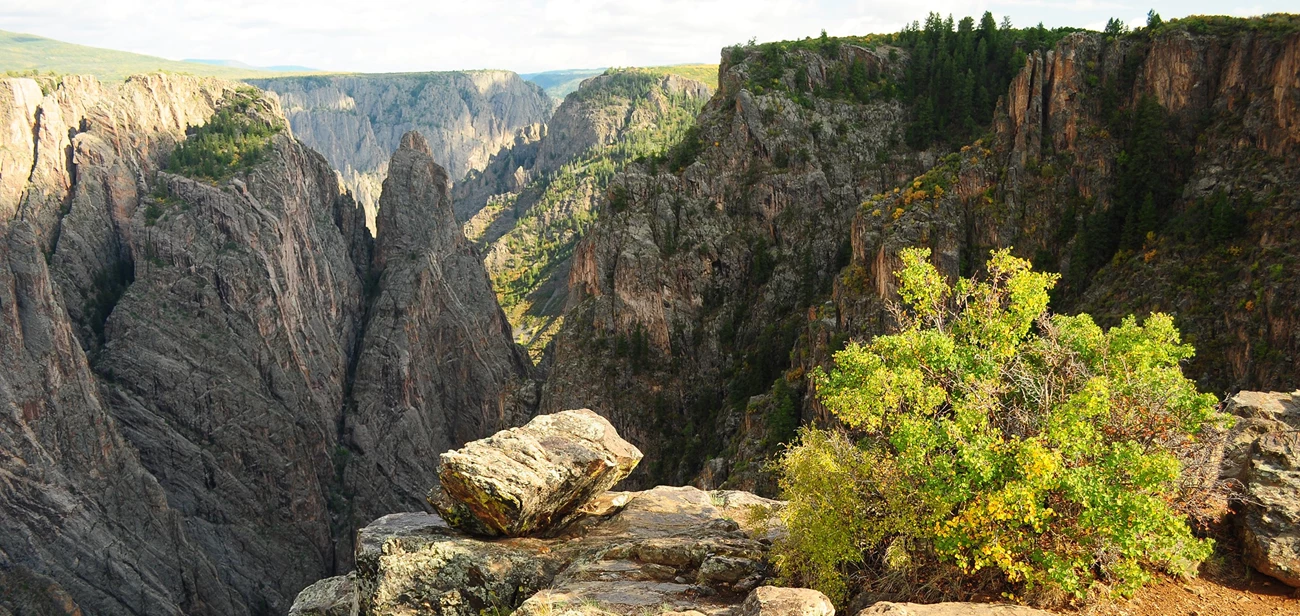
Cross Fissures, Chasm View and other South Rim viewpoints show the canyon from different angles. At one stop, the eye follows a narrow cleft; at another, the opposing walls and the river's distant course become easier to read. You do not need to visit every overlook to appreciate the variety.
The National Park Service identifies Pulpit Rock, Chasm View and Sunset View as accessible overlooks. Accessibility can mean different things for different visitors, and weather or maintenance can alter conditions, so consult the park's current information or call ahead about your specific needs.
Parking areas may be busy in the warmer months. Wait for a designated space, keep children close and never climb beyond barriers. Pets have their own rules, which should be checked before arriving.
5. Pick a Trail That Fits Your Day
If you have time and appropriate conditions, a rim-area trail adds another perspective. Ask at the visitor center about distance, footing and current closures before choosing a route. A short walk can feel different after rain or snow, and steep terrain makes a cautious plan worthwhile.
The park's November 12, 2026 trail report described wet or muddy stretches and ice on portions of Oak Flat Loop, while the Rim Rock Trail passed through a heavily burned area with uneven surfaces and blowing ash. These reports can become outdated quickly; use the park's current conditions page, and turn back if the route or weather is beyond your experience.
Inner-canyon routes are a separate undertaking from rim walks and need much more preparation. Visitors who prefer a gentler day can have a worthwhile visit using overlooks, the visitor center and a suitable short trail.
Before You Go
Bring water, layers and sun protection, and check the National Park Service for entrance information, road status and weather. Cell service and services can be limited. If winter conditions close much of the road to vehicles, plan around the areas that remain accessible rather than assuming the full summer drive is available.