Florida's springs invite visitors to look beneath the surface. Clear water reveals submerged plants and fish, while boardwalks, forests and historic attractions tell a story that stretches well beyond a swimming hole.
These eight state parks offer different experiences: some are made for a cool dip, some are better explored by boat, and one provides a winter refuge for manatees. They are not ranked, and several are far apart. Pick the outing that suits your group and check official notices before setting out.
1. Blue Spring: A Winter Refuge for Manatees

At Blue Spring State Park near Orange City, a boardwalk follows the spring run through the trees. In colder months, manatees gather in the warm water, offering visitors a chance to watch these animals from land. Their arrival depends on conditions; no wildlife sighting is guaranteed.
The park protects that refuge by closing the spring run to swimming and other water activities during manatee season. Park guidance describes swimming season as April 1 through November 14, with reopening subject to conditions. Never swim or dive with manatees, and keep a respectful distance from wildlife.

As of November 13, 2026, day-use reservations are required and the French Landing boat ramp and canoe/kayak rentals and launches are listed as closed. Check the park's current page for changes, then plan a boardwalk walk and a picnic around the reservation you obtain.
2. Silver Springs: See Below the Surface Without Getting Wet

Silver Springs State Park offers an appealing alternative for visitors who want to experience a spring without swimming. Its glass-bottom boats reveal the water and underwater life of the Silver River, while paths and gardens offer a relaxed way to explore on shore.
Boat tours operate through a concessionaire and may fill, so check schedules, accessibility and reservations before you arrive. The park says one boat in its fleet is wheelchair accessible on specified dates; confirm availability if that feature is important for your group.

Swimming is not allowed in the Silver River. Paddling is another way to experience the water, but follow park rules, stay in your vessel and give wildlife and tour boats plenty of room. Check access and launch details before choosing your route.
3. Ichetucknee Springs: A Spring Swim and a River Float

Ichetucknee Springs State Park offers two different ways to spend time on the water. Visitors can swim at designated spring areas near the north entrance, or plan a float down the Ichetucknee River when the park's tubing operations and conditions allow.
These are separate activities with different rules. The park permits swimming at Ichetucknee Spring and Blue Hole Spring, but says the Blue Hole is for experienced swimmers because of its depth and strong current. There is no lifeguard on duty.

Swimming or snorkeling in the river itself is prohibited: floaters must stay on their flotation devices or in their vessels to protect the ecosystem. Check entry locations, shuttle information and seasonal hours before leaving home, and avoid trampling aquatic plants.
4. Rainbow Springs: Deep Water and Gardens

Near Dunnellon, Rainbow Springs combines a spring-fed swimming area with walking paths through the landscape of a former roadside attraction. The park's historic garden features make it possible to enjoy a visit even if you prefer to stay on land.
The headsprings swimming area is deep: Florida State Parks reports an average depth of roughly 10 to 18 feet, with no lifeguard on duty. Watch children closely, know your swimming ability and follow the park's rules for flotation devices. Swimming is confined to the designated area.
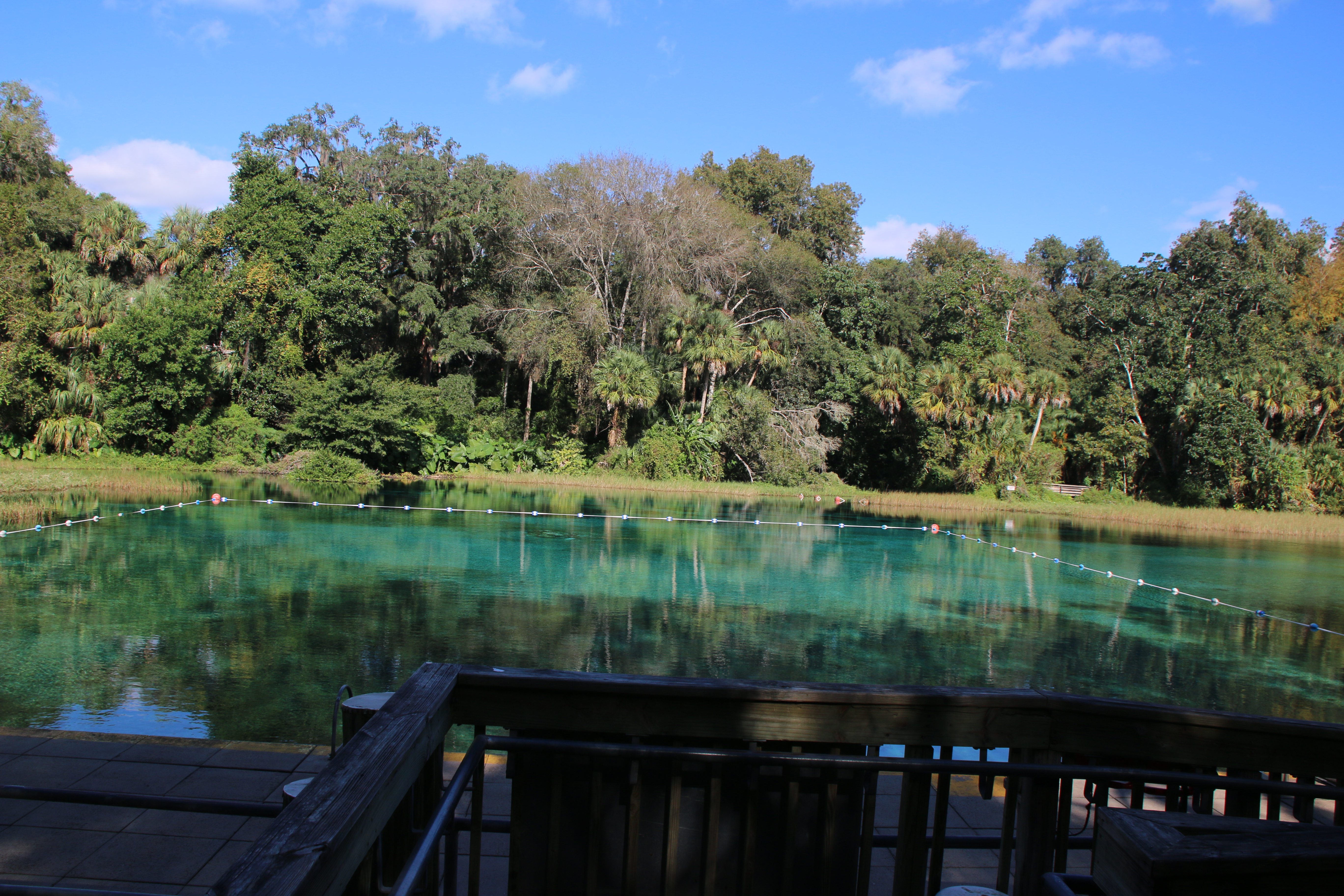
Day-use reservations are required under the park's current program. The tubing entrance is separate from the headsprings and operates seasonally. As of November 13, 2026, the park reports parking lot renovations and limited parking; consult the park before traveling for the latest access information.
5. Wekiwa Springs: A Spring Day Close to Orlando
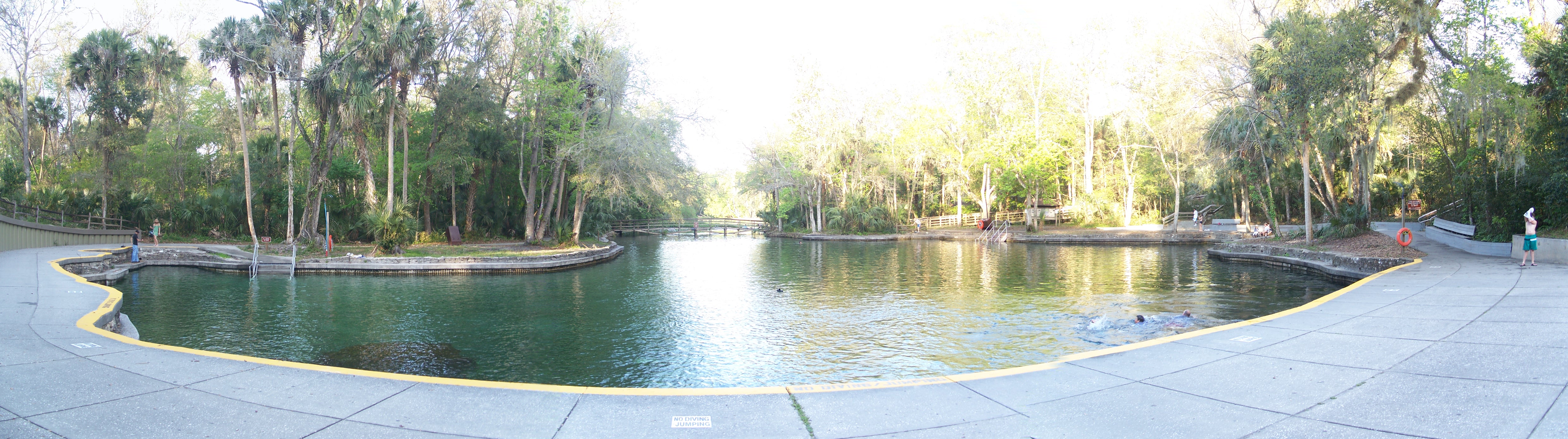
Wekiwa Springs State Park offers a swimming area, trails and picnic space north of Orlando. Its grassy slope gives families and groups a place to spread out near the water, while a swim lift can help visitors who need assistance entering and exiting the spring.
The park's swimming rules matter: there is no lifeguard, jumping and diving are prohibited, and swimming is not permitted in Wekiwa Springs Run, Rock Springs Run or the Wekiva River. Children and non-swimmers should be accompanied by an adult swimmer.

Reservations are required for day-use entry under the current park program, and the park can be especially busy during warm weather. Check the reservation instructions and arrival guidance before you go; arriving early alone does not replace a reservation.
6. De Leon Springs: Swimming and a Side of History

De Leon Springs State Park pairs a spring-fed swimming area with a long cultural and industrial history. The spring run once powered mills, and the park's restaurant continues the site's association with food and gathering. Make time to explore the grounds as well as the water.
The swimming area ranges from shallow water to much deeper water at the spring boil. The park says there is no lifeguard, and children and non-swimmers should stay in the roped areas with an adult swimmer. A swimmer chair lift and stairs with handrails provide access to the water.

Swimming is not permitted in Spring Garden Run. As of November 13, 2026, the park lists the fishing pier, boat dock and ramp as temporarily closed because of flooding, with boat tours suspended. Check the park's current notices before planning around any of those activities.
7. Manatee Springs: A Cypress Boardwalk to the Suwannee

Manatee Springs State Park near Chiefland offers a different perspective on spring country. An approximately 800-foot boardwalk passes through cypress forest toward the Suwannee River, giving visitors a place to watch for wildlife and appreciate the relationship between the spring and river.
Swimming is permitted in the main spring when conditions and park notices allow, but not in the spring run, at the end of the boardwalk or in Catfish Hotel. The park warns that the current can be swift, so review the swimming information and make decisions suited to your group's abilities.

As of November 13, 2026, the park reports construction affecting the ranger station, Hickory Camp Loop and waterfront picnic area, as well as a waterfront restroom closure. Check the current notice before setting out, particularly if you rely on a specific facility.
8. Weeki Wachee: A Classic Florida Attraction

Weeki Wachee Springs State Park blends a natural spring with a longstanding piece of Florida entertainment: live mermaid performances in an underwater theater. For families, the chance to pair a show with time at Buccaneer Bay gives this park a different character from the quieter spring walks elsewhere on this list.
Show seating is limited and attractions can change with weather or park operations. Review the current schedule before your visit, and arrive prepared for the possibility that a show or activity may be unavailable. The park's FAQ is the best source for the day's details.

The water park's slides and lazy river operate seasonally. As of November 13, 2026, the park lists them as closed for the season, while the beach and swimming area are open with reduced space and no lifeguard. Conditions can change, so confirm before making the trip.
Before You Go
Check the individual park's current reservations, fees, swimming rules, construction notices and weather advisories. Some areas have deep water, strong currents or no lifeguard. Stay in designated areas, supervise children, leave wildlife undisturbed and never enter an underwater cave without the required authorization and training.


