Some hotel stays are mostly about having somewhere to put your suitcase. Others begin telling a story before you have even found your room.
In Illinois, those stories can unfold beneath a Chicago lobby ceiling, alongside the Fox River or inside a timber lodge built during the Great Depression. These six places offer very different kinds of history, along with a practical reason to linger: each is a base for seeing more of the place around it.
This is a collection of ideas, not a ranking of amenities. Rooms, rates, accessibility and restaurant hours vary, so check directly before you book—especially when an older building has several kinds of accommodations.
1. DeSoto House Hotel — Galena
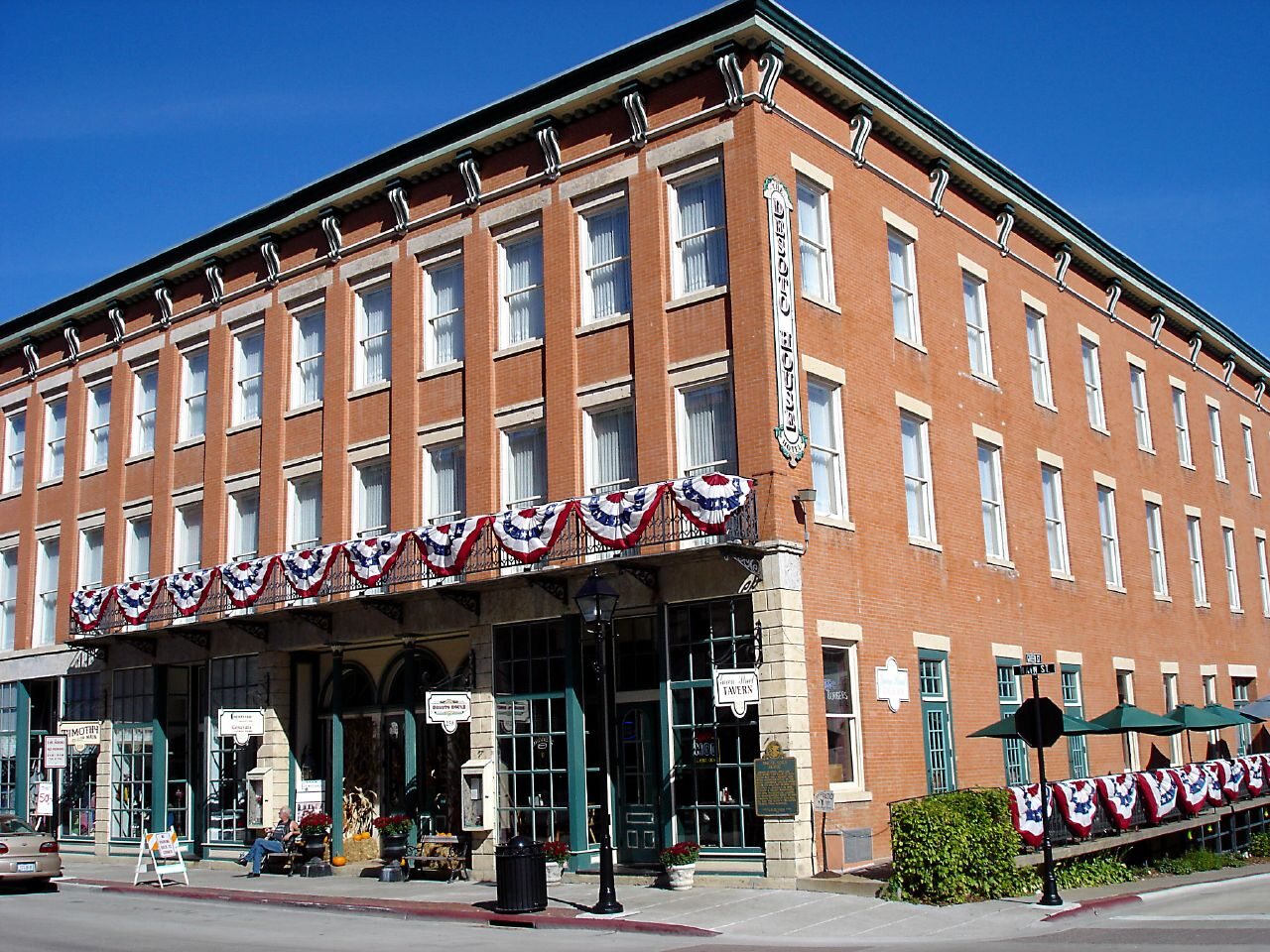
Galena's Main Street is the sort of place that encourages a second lap. Brick storefronts line the street, restaurant windows invite a longer look, and an overnight stay lets you enjoy the town after the day-trip crowds have headed home. The DeSoto House puts that walk right outside the door.
Opened in 1855, the hotel was built by local investors during a prosperous period in Galena's history. Its guest list became part of the town's story: Abraham Lincoln spoke from the hotel's balcony in 1856, and Ulysses S. Grant later used rooms here during his presidential campaign. Rather than trying to see every historic site in an afternoon, use the hotel as a starting point for a slower exploration of Galena's architecture and shops.
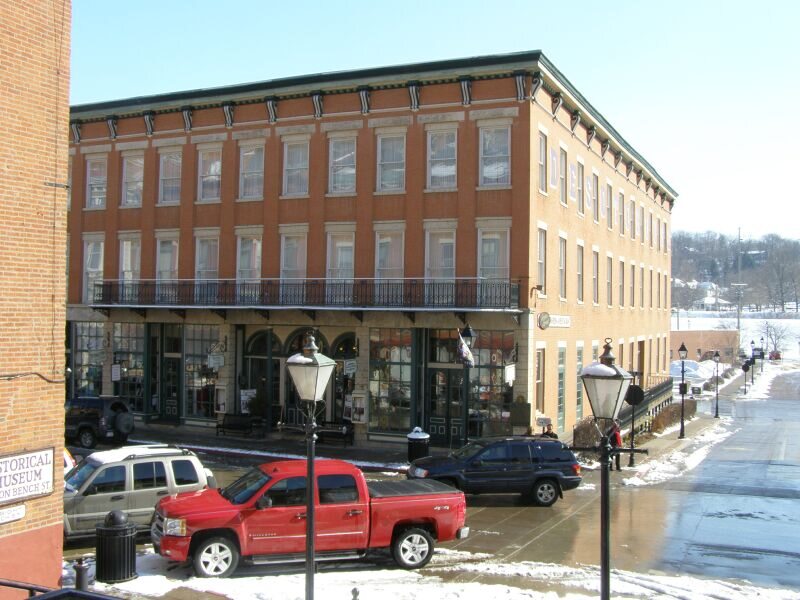
The building has changed over a long life, so a room here is a modern hotel stay in a historic setting, not a perfectly preserved 1850s time capsule. Ask about room layout and accessibility when reserving, and check the hotel's dining schedule if you are counting on a meal in the building.
The best part of this stop may be its simplicity: park, settle in, and let a stroll become the evening's main event.
2. Hotel Baker — St. Charles
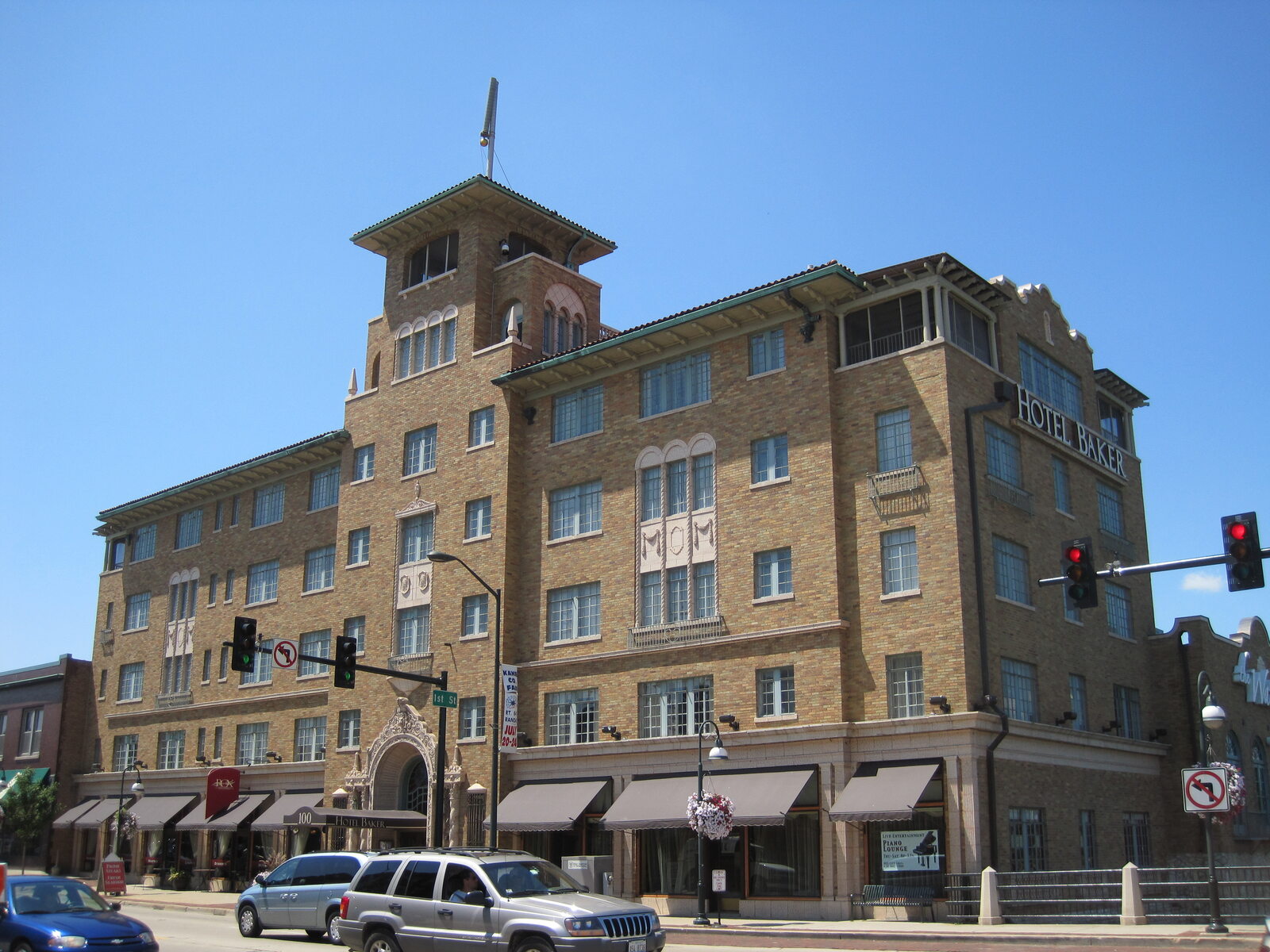
On the Fox River in downtown St. Charles, Hotel Baker combines a small-city setting with the ambition of a grand old hotel. Colonel Edward J. Baker's property opened in 1928, with details that ranged from a hydroelectric facility to the Rainbow Room and its illuminated dance floor.
The ballroom became a place for entertainment and celebrations; today, it is also an event venue. Its history makes a good reason to look closely at the building, but don't assume the room will be open to walk-in visitors during a private function. The hotel says some guest rooms retain original furnishings, while only selected rooms offer river views.
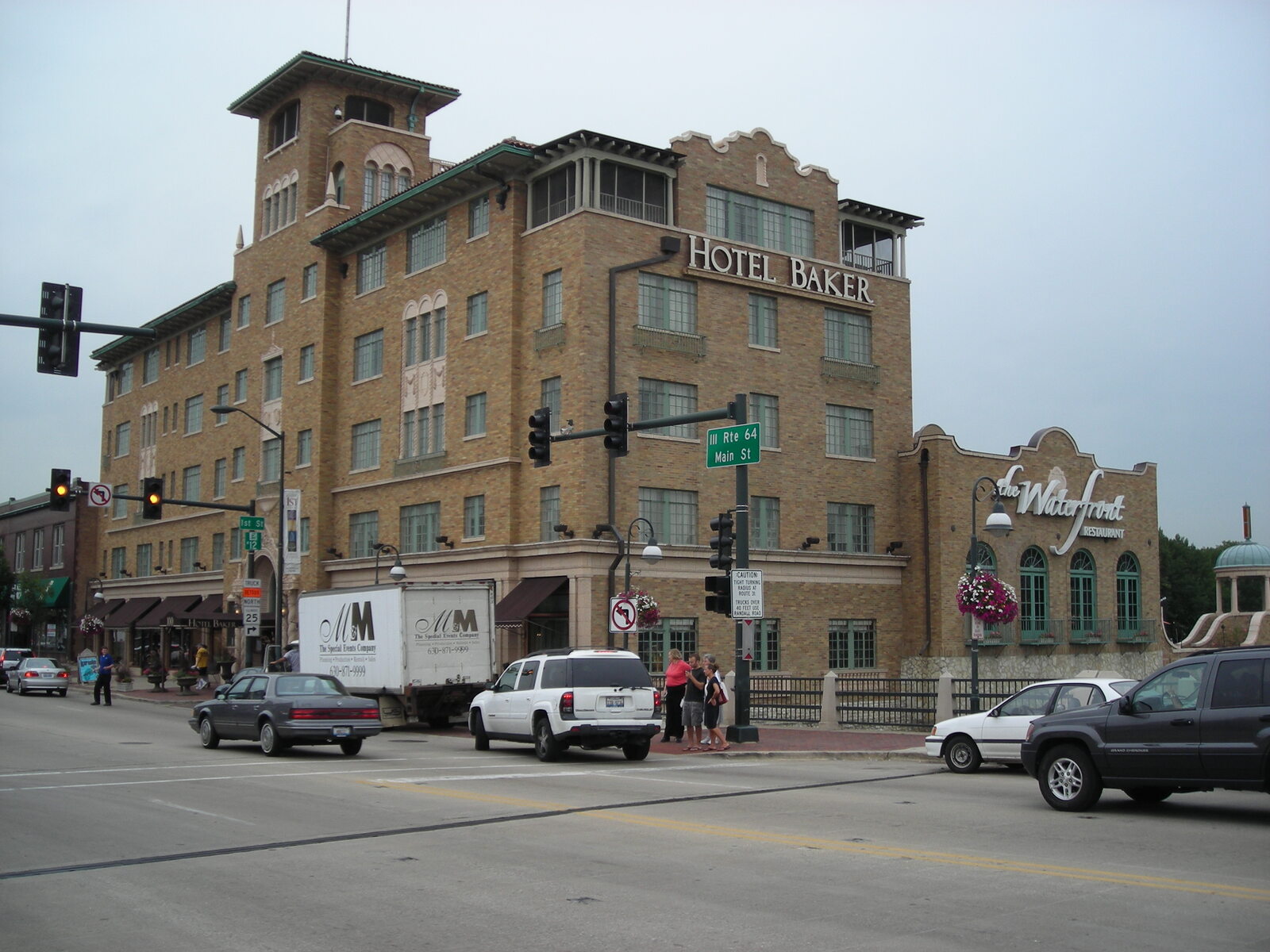
That matters when choosing a stay. If watching the water from your window is the point of the trip, ask for a river-view room rather than assuming every room faces the Fox. A walk along the river and a meal downtown can turn a short hotel break into a relaxed weekend without a long list of reservations.
This is a useful pick for travelers who want historic atmosphere with a town center around them. St. Charles gives you room for a gentle itinerary: an afternoon outside, a change for dinner and no need to rush the following morning.
3. Palmer House — Chicago
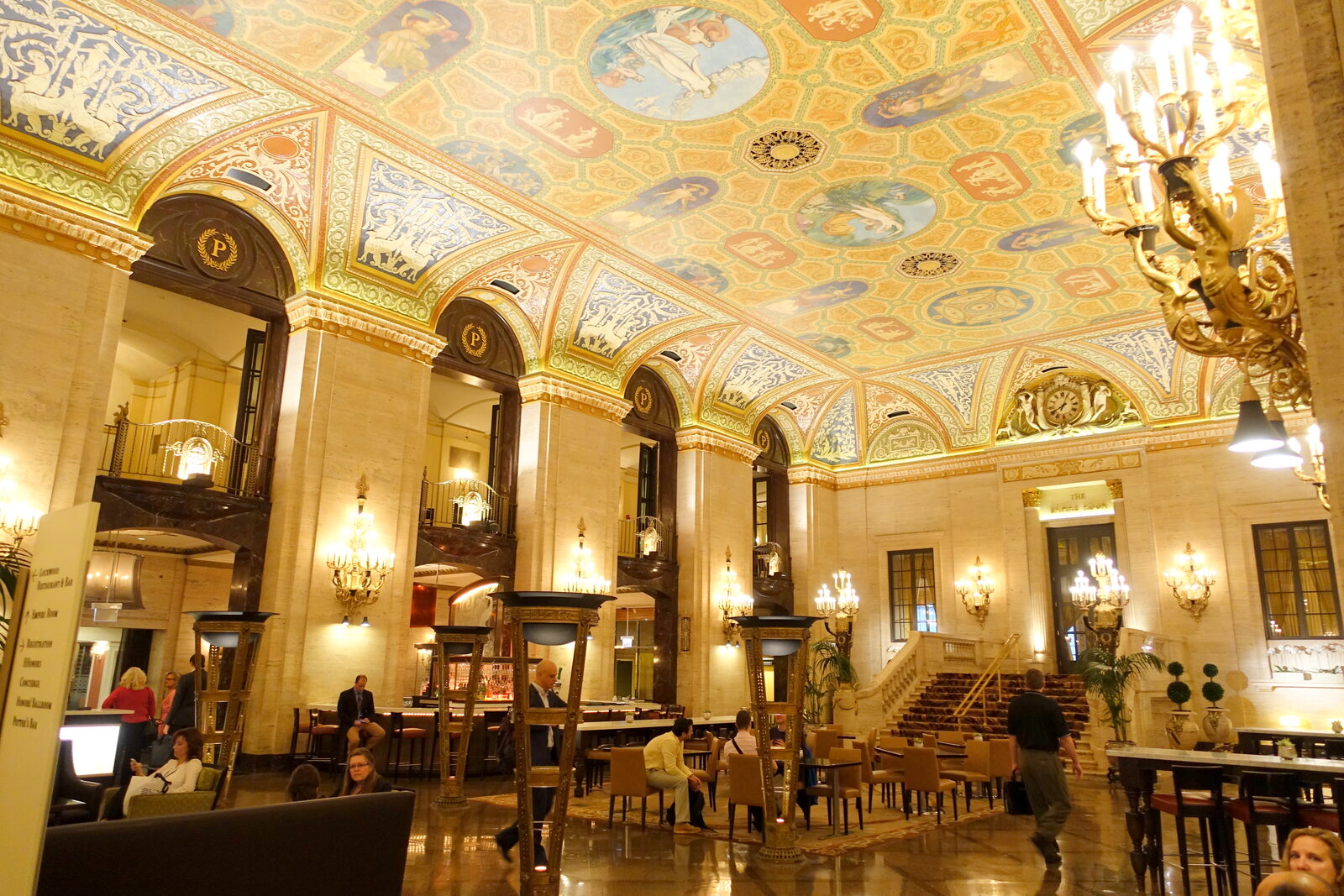
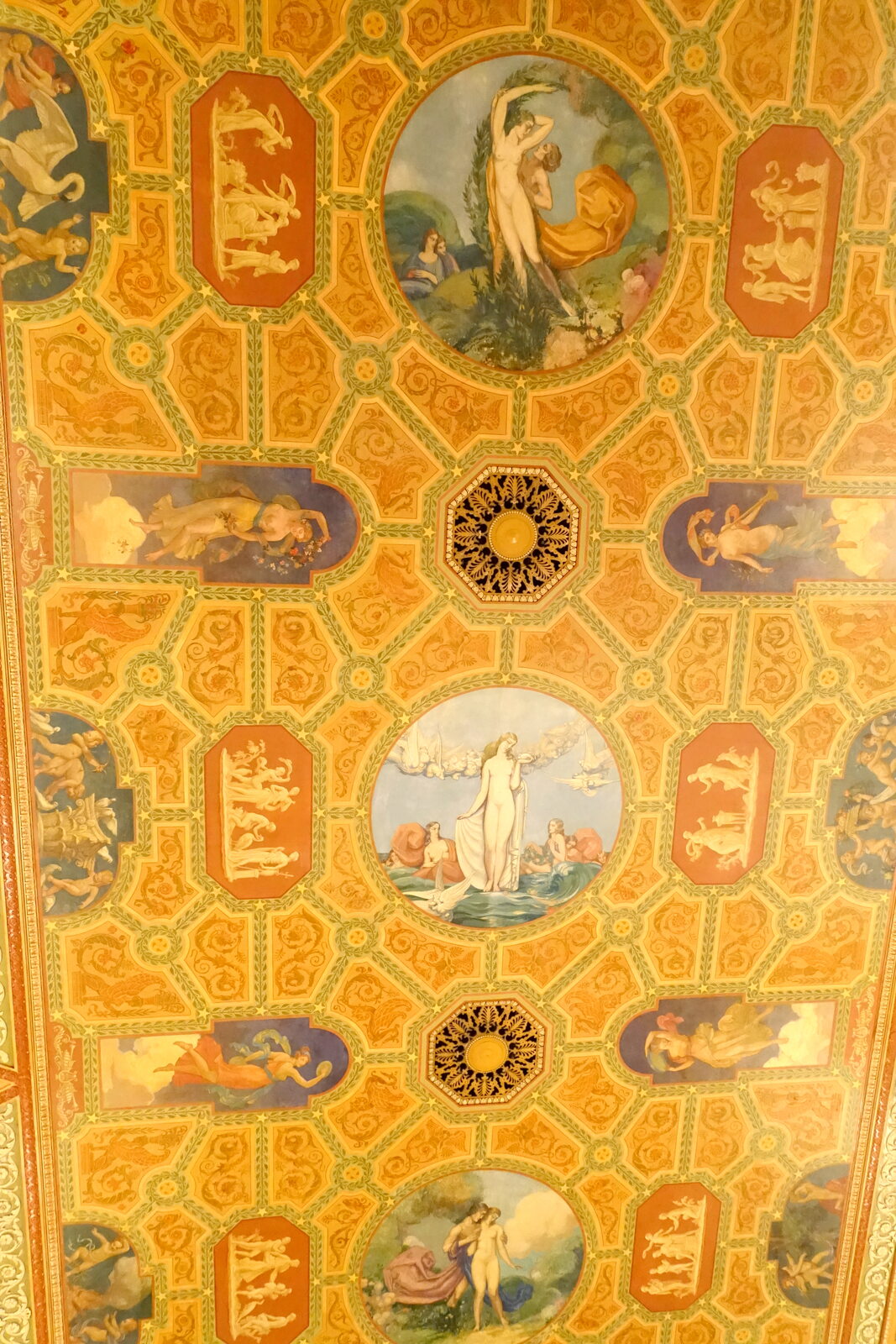
Walk into the Palmer House and look up. The ornate lobby ceiling provides a memorable welcome in the middle of Chicago's Loop, where theaters, city streets and the lakefront can fill an entire weekend.
The hotel's story reaches back to 1871. The original Palmer House was destroyed in the Great Chicago Fire shortly after opening, and a replacement welcomed guests in 1873. The building standing today is a later, third version, completed in the 1920s. That distinction makes the history more interesting: this is a story of rebuilding and reinvention as well as longevity.
Bertha Palmer is also connected to a famous sweet. According to the hotel, she asked its pastry kitchen for a dessert for visitors to the 1893 World's Columbian Exposition, part of the story behind the Palmer House brownie. Consider one with a break in the lobby before setting out again.
The hotel's location suits visitors who like exploring on foot or by transit, but downtown parking and room choices deserve a look before booking. Check the hotel's current history-tour availability if seeing the building with a guide matters to you; schedules and reservations can change.
4. Starved Rock Lodge — near Utica
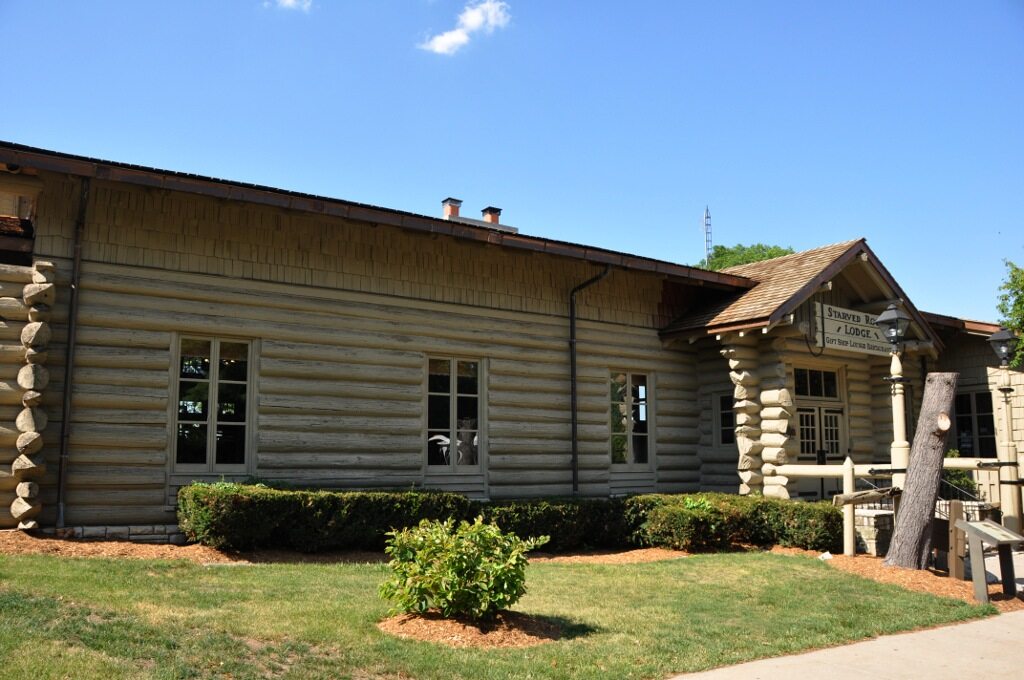
At Starved Rock State Park, the appeal starts with a dramatic change of pace. Instead of leaving a city hotel for the day's scenery, you wake up in the park, with wooded trails and sandstone canyons nearby.
The Civilian Conservation Corps began work on the lodge and cabins in the 1930s, and the lodge opened in 1939. Its Great Hall and large two-sided stone fireplace are reminders of a time when public-works projects helped shape places Americans still visit for recreation. The lodge has been modernized over the years, so ask about the character and location of the room or cabin you are considering.
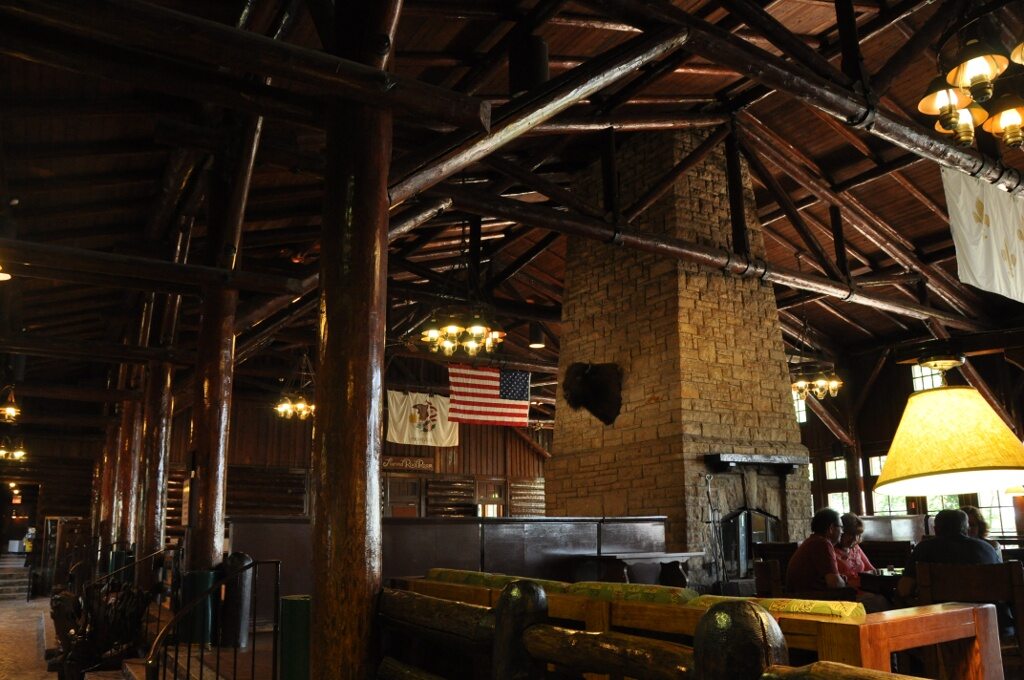
A stay here is especially appealing when you want more than a quick glimpse of a popular park. Arrive with enough daylight for a walk, leave time for the Great Hall, and plan a second outing for the next morning. Trail conditions can change with rain, ice and erosion; check the park's alerts and stay on open, marked routes.
Waterfalls depend on recent precipitation and seasons. They are a delightful possibility rather than a guarantee, and the park's popularity means parking and trail congestion are worth considering on busy weekends.
5. Pere Marquette Lodge — near Grafton
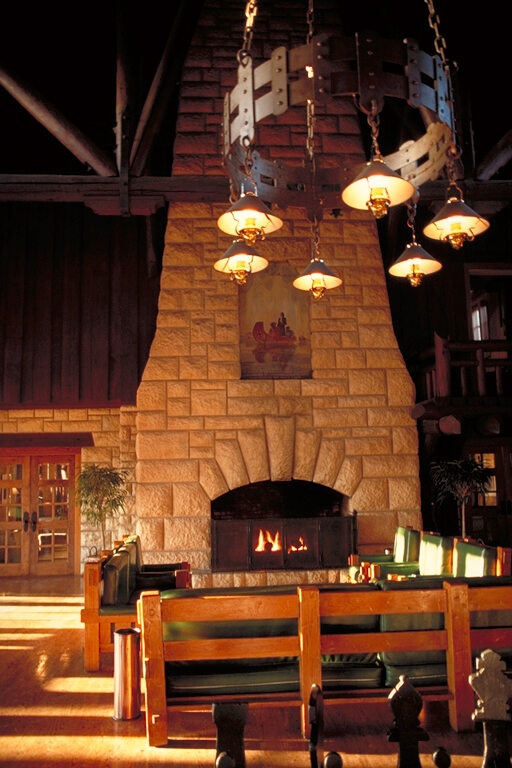
There is another Illinois park lodge with a monumental fireplace, but the landscape here has its own personality. Pere Marquette Lodge sits within Pere Marquette State Park, near Grafton and the Illinois River, making it a natural stop on a Great River Road getaway.
Built by the Civilian Conservation Corps and opened in 1940, the lodge uses substantial timbers and locally quarried limestone. The Great Room's stone fireplace is a focal point, while the surrounding park offers wooded bluffs and river-country views. The park's history reaches back far beyond the lodge, including the Indigenous communities who lived in the region; treat archaeological and burial sites with respect.
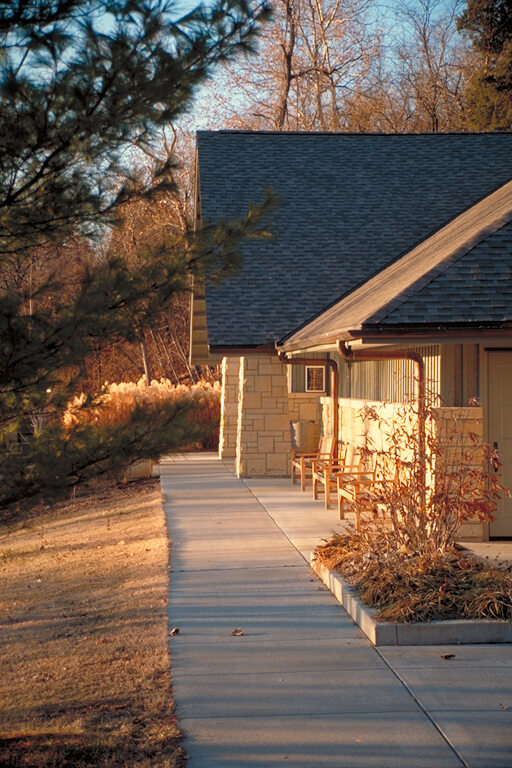
When booking, pay attention to the room description. The operator identifies historic lodge rooms dating to the original building and a separate wing added during the 1988 renovation. Historic rooms are accessible by stairs, while the newer wing has elevator service. Cabin rooms are another option a short walk from the main lodge.
This is a fine choice for a slower itinerary: explore the park in daylight, return to the lodge for dinner, then take the river road toward Grafton when you are ready to move on. Check weather and current park conditions before setting out on a hike.
6. Peoria Marriott Pere Marquette — Peoria
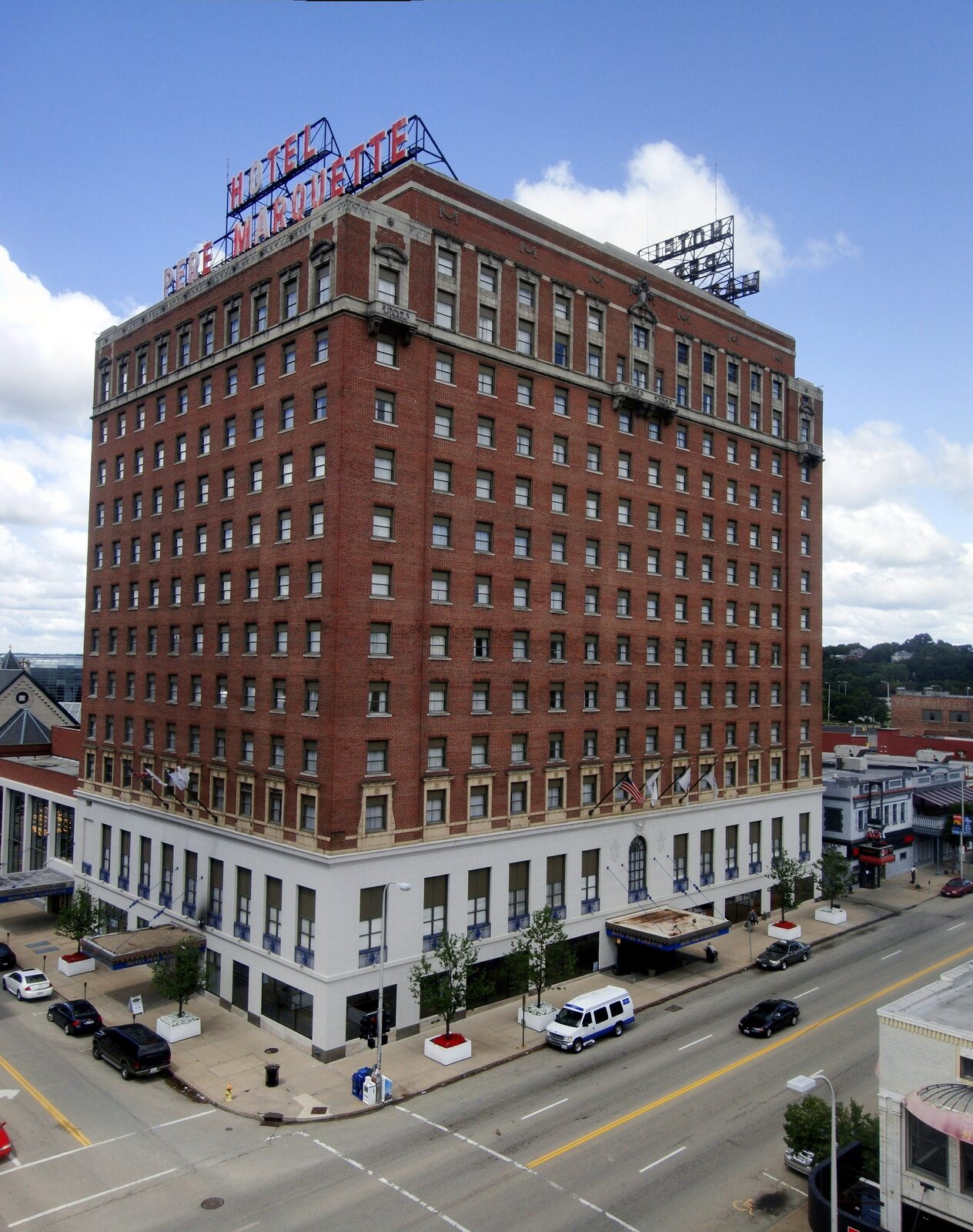
Don't confuse this downtown Peoria hotel with the park lodge near Grafton. They share a name associated with French missionary Jacques Marquette, but offer different trips: one is a city hotel, the other a park escape.
The Peoria hotel opened in 1927 and has been renovated for contemporary travelers. Its downtown location puts the Peoria Civic Center close by; the hotel connects to it by skywalk. The Peoria Riverfront Museum and Caterpillar Visitors Center are also nearby, making the hotel a useful base for a weekend that mixes architecture, performances and exhibits.
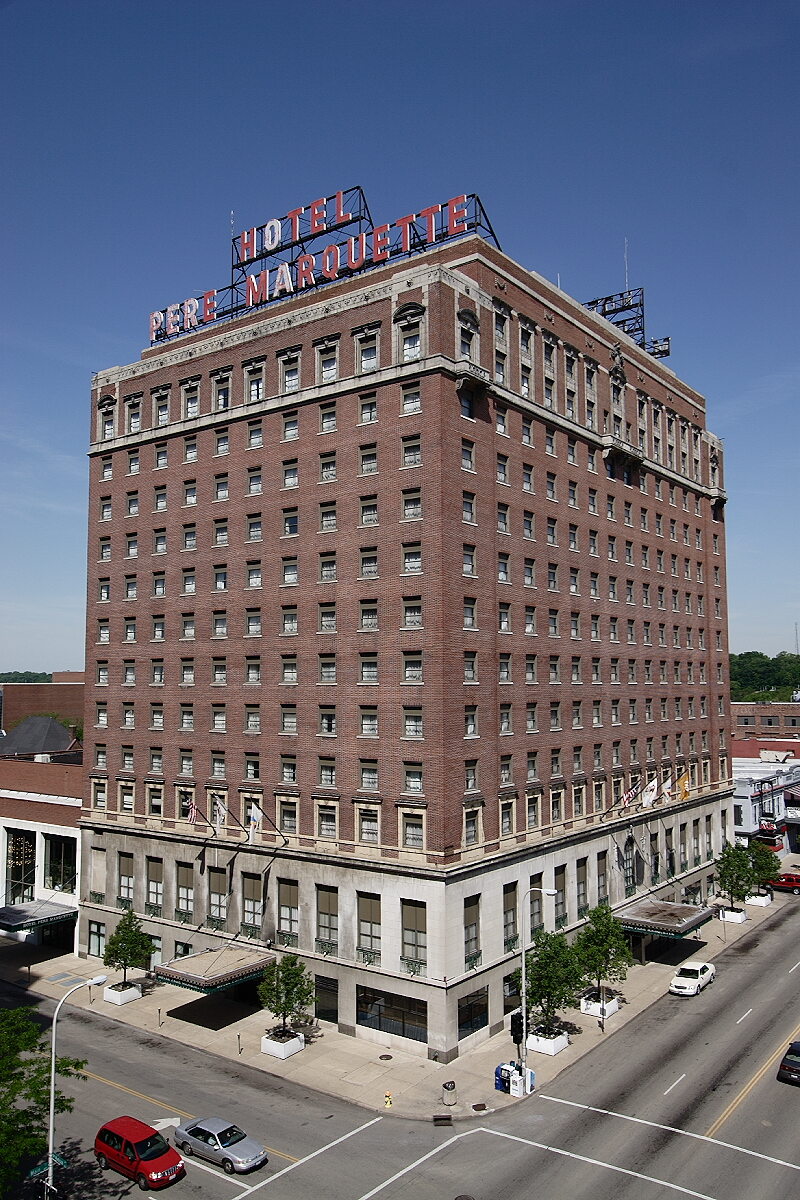
The pleasure here is in pairing an older building with an easy city itinerary. Check what is on at the Civic Center or museum before choosing dates, and ask about parking, room location and any event-related traffic. A performance night can be lively; a quieter date may suit a traveler who wants to wander at a more leisurely pace.
It is a reminder that a historic stay does not have to mean a remote inn or a carefully staged period room. Sometimes the most interesting part is how a familiar city building keeps finding new uses for new generations of guests.
Make the stay part of the trip
These six properties span river towns, Chicago streets and state-park woods. Pick the setting that fits the weekend you want, then leave a little space around the reservations. A lobby worth noticing or an unplanned walk after dinner can be as memorable as the attraction that brought you there.