Red timber walls, quiet country roads and a roof over the crossing: Madison County’s covered bridges invite a kind of road trip that moves at walking speed. The movie made two of the bridges famous, but a visit reveals a wider local story about rivers, timber construction and the people who kept these landmarks standing.
Six covered bridges remain in the county; local tourism identifies five as original and Cedar as a replica. You do not have to visit all six to enjoy the area. Start with these four distinct stops, use Winterset as a base and allow time for gravel roads, photographs and a meal in town.
1. Roseman Bridge: a movie landmark in the countryside
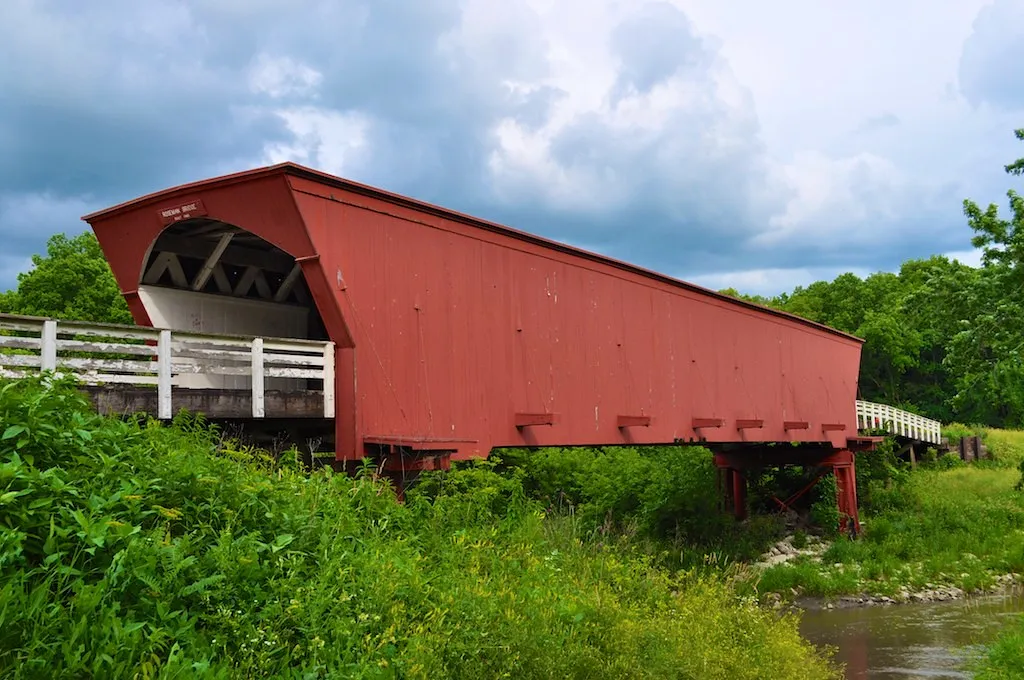
Roseman spans the Middle River southwest of Winterset. Its red exterior, white trim and long timber structure are memorable from outside, while the covered passage lets visitors look closely at the lattice truss that supports it. The bridge remains in its original location, although a modern road bypassed it in 1981.
Roseman appears in The Bridges of Madison County, and the local tourism office tells an interesting production story: crews deliberately aged the recently renovated bridge for the film, after which it had to be repainted. A local ghost story also clings to the bridge; enjoy it as folklore rather than a verified supernatural event.
Walk across where permitted and pause to notice how the roof protects the structural timbers. The approach includes gravel, so consult the county’s bridge map and choose a route suited to your vehicle and the weather. Park only where allowed and keep clear of nearby traffic.
2. Holliwell Bridge: a second film stop over Middle River
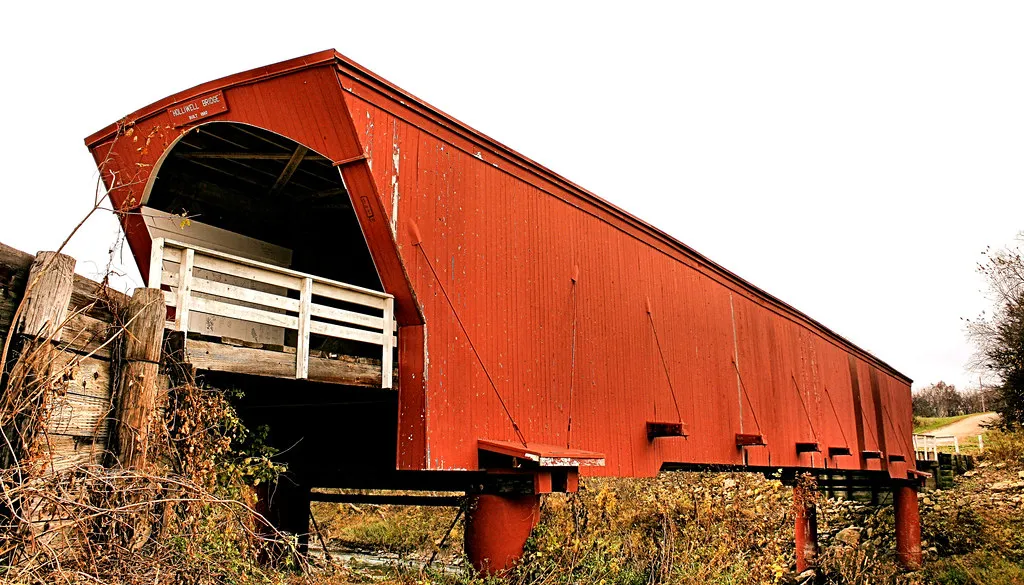
Holliwell is the other Madison County covered bridge featured in the film. The bridge southeast of Winterset was completed in 1880 and remains at its original location, though local records describe changes to the angle of its crossing after flooding damaged supports. A modern road now carries vehicles past the historic structure.
The county describes Holliwell as its longest remaining covered bridge. Walk inside to see the repeating lattice and look out at the surrounding river landscape. The bridge is not just a backdrop: its enclosure helped protect the costly wooden structure from weather, extending its useful life.
The road to Holliwell includes gravel. After rain, snow or ice, conditions may be different from a dry-weather map description, so check road notices and allow extra time. The old photographs in this guide show the bridges at earlier dates; scenery and access can change.
3. Cutler-Donahoe Bridge: an easy Winterset park stop
Cutler-Donahoe offers a useful contrast to the rural crossings. It stands in Winterset City Park and can be reached by paved roads, making it a convenient choice when you have less time or prefer to avoid gravel. The bridge originally crossed the North River near Bevington and was later moved to the park.
Look for the pitched roof and timber latticework, then leave time to explore the park. For film fans, the county distinguishes the covered bridge from the separate stone picnic bridge in the park that appeared in the movie. They are different structures, so use a local map if you want to find both.
This stop also works well with a walk around Winterset’s public square or a meal downtown. Check current park information, weather and business hours before your trip; a short park visit can be a pleasant alternative to trying to cover the entire county in one afternoon.
4. Cedar Bridge: a replica with a different story
Cedar adds another dimension to the tour because the present bridge is a replica rather than one of the five surviving originals. Its story makes preservation tangible: heritage sites sometimes require rebuilding as well as maintenance, and a replica can help visitors understand the form of a structure while acknowledging that it is not the original fabric.
County tourism identifies Cedar as the only covered bridge in the group open to motor vehicles, subject to posted limits. Do not assume that means every vehicle will fit: read and obey the height and other restrictions on site. Visitors can also cross the public bridges on foot or bicycle, according to county guidance.
The approach to Cedar is mostly paved from the south with a short gravel section. If you want an all-paved approach, county tourism recommends Imes Bridge in St. Charles or Cutler-Donahoe in Winterset instead. Always follow temporary signs and closures over a general itinerary.
How to plan a respectful bridge day
Pick up or download the county’s covered bridge map before leaving. Roseman, Holliwell and Hogback have gravel or dirt approaches, and travel time can change with weather and road work. Start with two or three bridges if you want a relaxed half-day; a longer itinerary can include Imes and Hogback as well.
Do not drive through bridges closed to traffic, write on the wood, climb the structures or leave litter. The farmhouse associated with the movie is privately owned and closed to visitors, so leave it out of your route. The county offers guided tours by appointment for travelers who want local history along the way; confirm current arrangements before setting out.
The bridges are at their best when you give each one a little time. Step out, listen to the river or the wind and notice the hand-built details that turn a simple crossing into a destination.