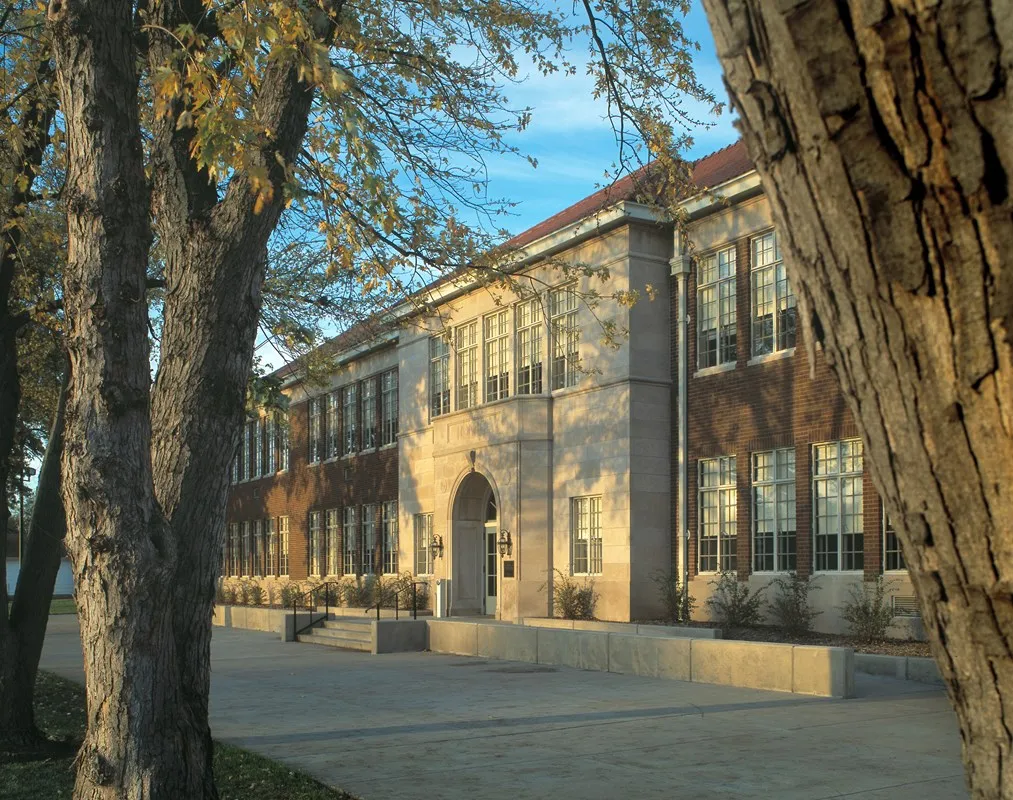
From the outside, Monroe Elementary School in Topeka looks like a handsome historic school building. Inside, its classrooms and galleries open onto a story that changed American education. Brown v. Board of Education National Historical Park preserves the former segregated school and explores the people and legal challenges behind the Supreme Court’s 1954 decision.
It is a place to listen, learn and reflect. Whether you have an hour or a longer afternoon, these five parts of a visit can help you understand the site and the continuing work for equality.
1. Begin with the story of Monroe School
Monroe was one of four segregated elementary schools for Black children in Topeka. Today the building is the center of a national historical park, where visitors can learn about the history of segregation and the families, educators, attorneys and community members who challenged it.
Pause outside before entering and consider the ordinary life that once unfolded here: children arriving for class, teachers preparing lessons and families navigating an unequal school system. The preserved building gives the national story a specific local setting. Inside, ask a ranger for an orientation and information about the current exhibits or programs.
2. Watch the introductory film
The park’s auditorium presentation, Race and the American Creed, traces the history of racism and segregation through a conversation between a young student and an older family friend. The National Park Service lists the film at approximately 30 minutes, making it a useful foundation for the galleries that follow.
If your time is limited, ask staff about the next showing and decide how to balance the film with the exhibits. Families may also want to discuss the subject matter beforehand. Some material elsewhere in the museum contains historic footage that the Park Service says may be unsuitable for children under 12.
3. Follow the road to the Supreme Court
The Road to Brown gallery examines barriers Black Americans faced in seeking education and the long struggle against those barriers. Photographs, exhibit panels and short films explain why parents and community leaders challenged school segregation and the risks that accompanied their efforts.
The 1954 Supreme Court decision is often discussed under one case name, but the story involved lawsuits from several places. In its unanimous decision, the Court held that racial segregation in public education was unconstitutional. The gallery places that ruling within a much longer history rather than treating it as a moment that appeared without years of organizing and legal work.
4. Visit the restored kindergarten room
The former kindergarten room has been restored to suggest its appearance around 1954. Small tables and chairs bring the focus back to the children at the center of a national legal struggle. The space also invites visitors to think about the teachers who worked at Monroe and the changes that followed the decision.
It is an especially useful place to pause with children and connect the exhibits to familiar questions: What is a classroom for? Who gets to attend a neighborhood school? What does fairness look like in daily life? Give those conversations time rather than trying to see every panel as quickly as possible.
5. Explore Brown’s continuing legacy
The Legacy of Brown gallery follows the civil rights movement after the decision and considers the continuing work of confronting discrimination. A court ruling was a crucial step, but changing institutions and everyday experience required sustained action by many people and communities.
Ask a ranger about current interpretive programs or use the park’s self-guided materials to explore at your own pace. If you have more time in Topeka, the Park Service also offers a brochure about the city’s broader civil rights history. Check individual destinations before assuming they are open to visitors.
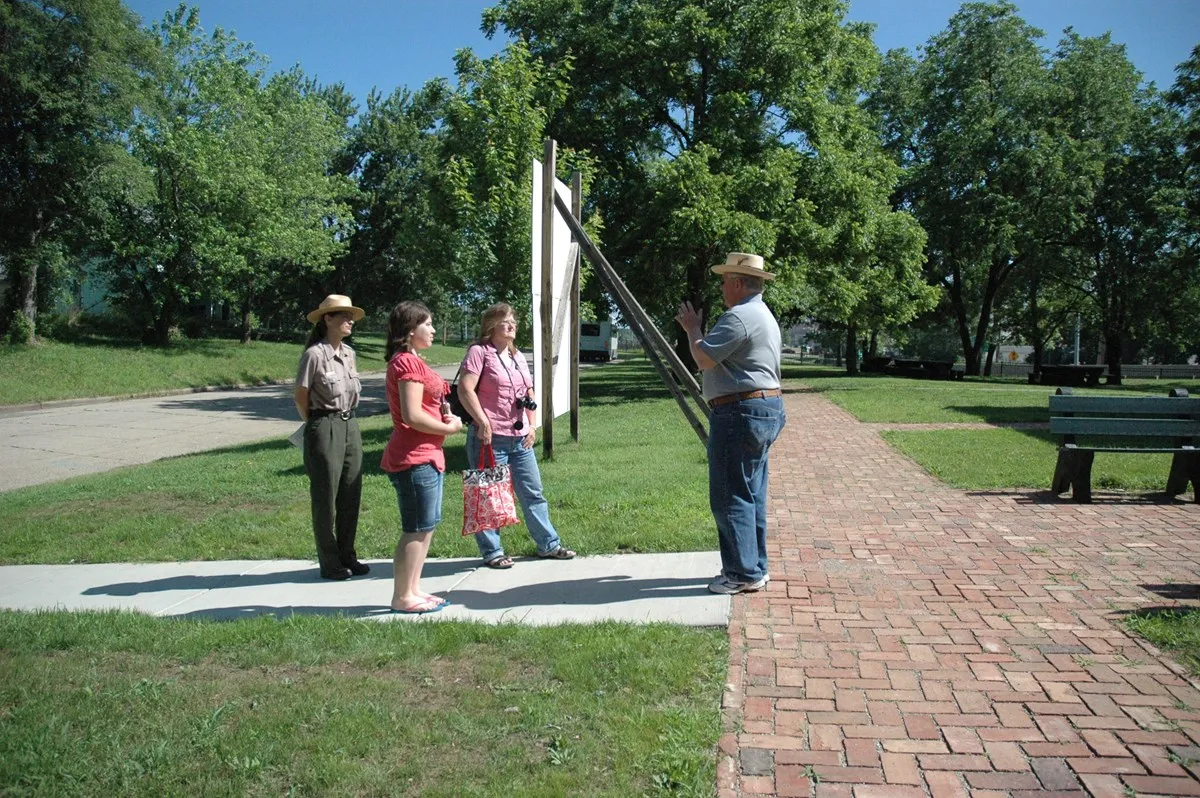
Plan a respectful visit
Admission is free, and no entrance pass is required. Hours, programs and access can change, so consult the park’s current visitor information before traveling. The site lists visitor parking on the east side and accessible parking on the west side; contact the park for details about accessible exhibits and accommodations.
The National Park Service asks visitors not to bring food, drinks, gum or backpacks into the site. Only service animals are allowed on the property. Plan enough time to read, watch and reflect—the building’s quiet rooms carry a story whose effects are still felt far beyond Topeka.