Forget the idea that a Kansas road trip has to mean an endless flat horizon. Across the state, sandstone formations, chalk spires and rugged canyon trails give curious travelers plenty of reasons to pull over. Some are compact roadside stops; others deserve several hours and a good pair of walking shoes.
These six places show different sides of Kansas geology. They are spread across a large area, so choose a few for one trip rather than trying to rush through all of them in a day.
1. Mushroom Rock State Park
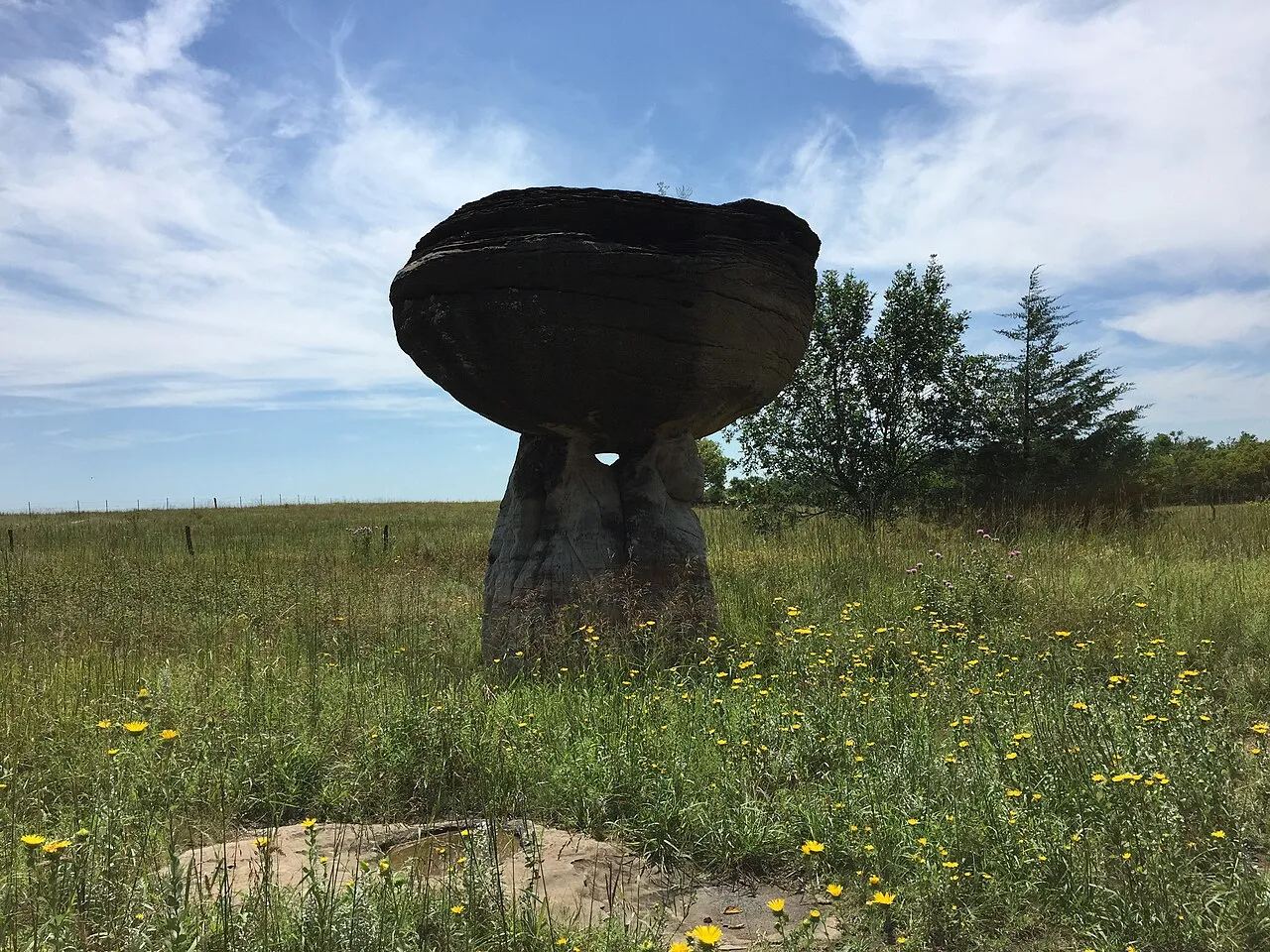
Near Kanopolis, giant stone shapes rise from a small patch of prairie like oversized mushrooms. The five-acre state park is a quick stop, but its unusual formations invite a closer look. Kansas wildlife officials explain that the sandstone and concretions formed from ancient sediments and were shaped over time by erosion.
Use the short walking paths to view the formations from different angles. This is a day-use area without camping, making it easy to pair with a longer outing at nearby Kanopolis State Park. Leave the rock and surrounding plants undisturbed so the next visitor can enjoy them too.
2. Monument Rocks
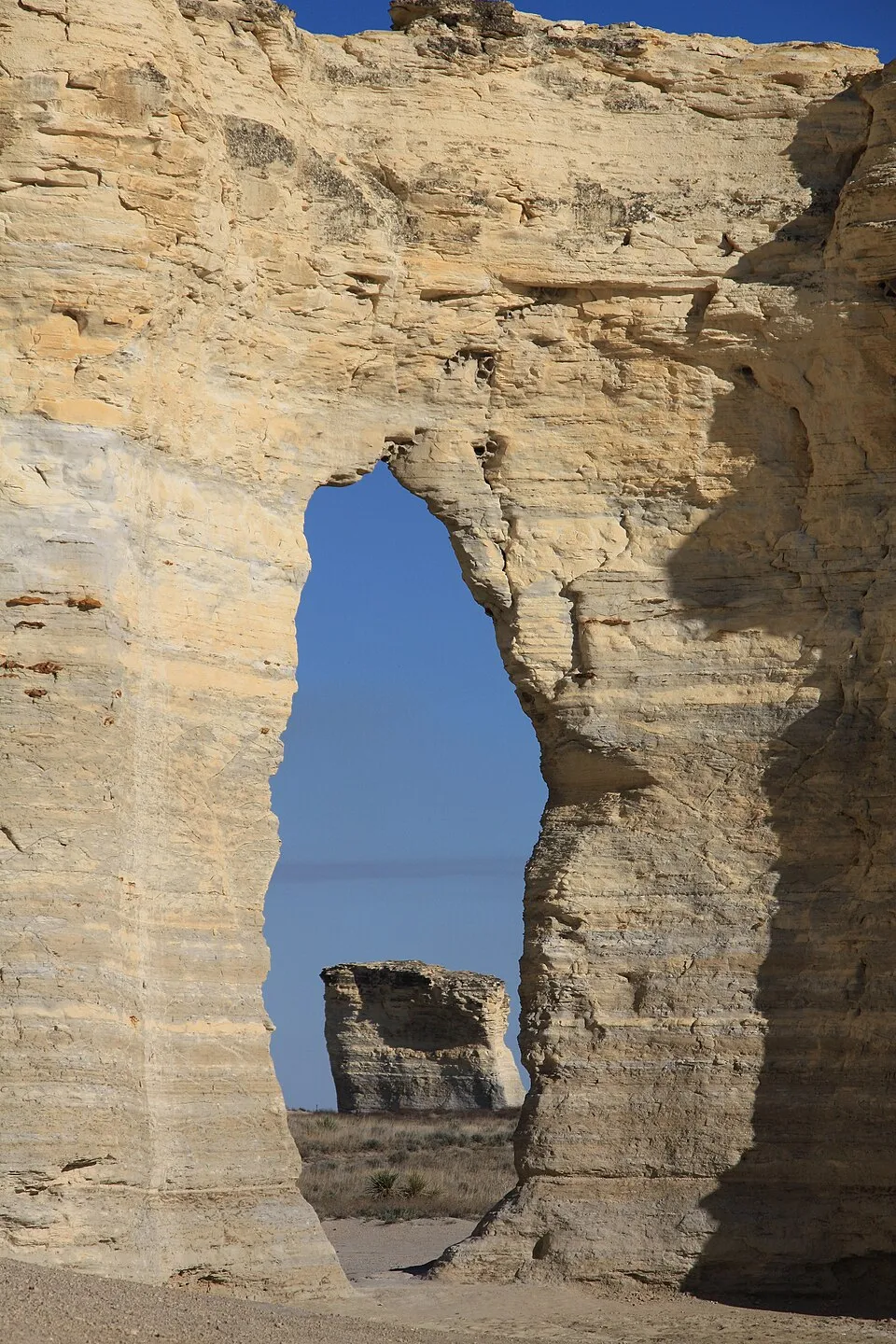
South of Oakley, pale chalk towers and openings rise from the surrounding western Kansas landscape. Often called the Chalk Pyramids, Monument Rocks offers a dramatic view of formations from an ancient inland sea. Stand back and look for the changing shapes as the light moves across the rock.
The formations are on private property whose owners allow public visits during daylight hours. Kansas Tourism asks visitors to respect the land; climbing and collecting are not allowed. The approach uses privately maintained dirt roads that can become difficult after precipitation, so check conditions and turn around if the road is unsuitable for your vehicle.
3. Little Jerusalem Badlands State Park
West of Monument Rocks, Little Jerusalem protects another striking expanse of chalk spires and cliffs. The Nature Conservancy owns the land and partners with Kansas parks officials to provide visitor access. The marked rim trails offer views across formations that look very different as the sun and shadows change.
The Life on the Rocks Trail includes overlooks and a mix of surfaces. Conditions and accessibility differ along its length, so consult the official trail description and map before choosing how far to go. Stay on designated trails; off-trail access is limited to authorized guided outings when offered. A state park vehicle permit is required, and there is no camping in the park.
4. Rock City near Minneapolis
Rock City takes a different geological shape: a collection of large, rounded sandstone concretions scattered across a small park near Minneapolis, Kansas. Instead of towering chalk walls, visitors encounter boulders that seem to have been placed across the grass one by one.
It is a memorable stop for families who enjoy unusual landscapes and photography. Check the park’s current season, admission and rules before making a special trip. Give yourself time to walk among the formations, and follow posted guidance about where visitors may go.
5. Castle Rock
South of Quinter, Castle Rock and the surrounding chalk formations make another western Kansas detour. As at Monument Rocks, the land is privately owned and shared with visitors. Roads are privately maintained and can be rough or muddy, so dry conditions and an appropriate vehicle matter more than an ambitious schedule.
Respect signs and the landowner’s rules, leave gates as you find them and do not collect fossils or damage formations. If recent weather has made access uncertain, check local information and choose another stop. The landscape is fragile, and it is worth protecting the privilege of visiting it.
6. Kanopolis State Park and Horsethief Canyon
For a longer outdoor outing, Kanopolis State Park adds sandstone bluffs, canyon scenery and trails to the list. The park lies in the Smoky Hills and offers routes for different activities; some trails are shared with mountain bikers or horseback riders. Check the current map, seasonal openings and permitted uses before starting.
Horsethief Canyon gives hikers a chance to explore the rugged side of the region, while the reservoir provides a different view of the surrounding hills. Bring water, sturdy footwear and sun protection. Trail surfaces, weather and distance can make a route more demanding than it looks on a map.
Plan for distance and changing conditions
These destinations are not a single short loop. Group nearby stops, check road conditions and confirm opening hours or permit requirements with the managing organization. Carry water and fuel in rural areas, and avoid unpaved approaches after rain when conditions are uncertain.
Each formation has a different story, but the same rule applies everywhere: enjoy the view, stay within allowed areas and leave the landscape as you found it.