Along US Highway 24 in northwestern Kansas, a small town holds a story much larger than its size suggests. Nicodemus was founded in 1877 by Black settlers seeking new opportunities after the Civil War. Today it remains a living community, and its National Historic Site invites travelers to learn about the families, institutions and traditions that shaped it.
A visit does not require a complicated itinerary. Give yourself time to speak with a ranger, explore the exhibits and look carefully at the buildings that remain. These six stops and experiences make a thoughtful introduction.
1. Start at the Township Hall
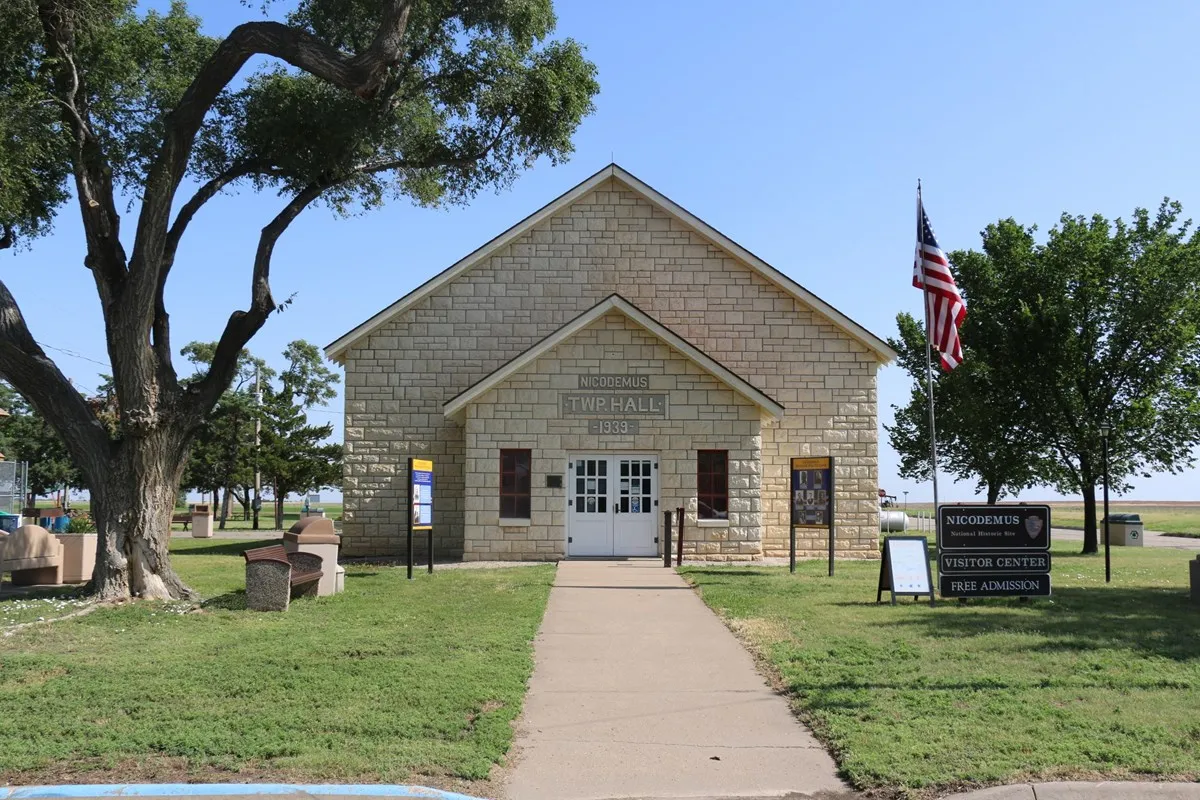
The limestone Township Hall serves as the visitor center, making it the natural first stop. Inside, exhibits and short films introduce the settlement and the people who built a community on the plains. Ask for a brochure and current information before setting out; staff can help explain which buildings are open and where visitors may go.
Nicodemus represents an important chapter in Black homesteading across the Great Plains. The National Park Service describes it as the oldest remaining Black settlement west of the Mississippi River. Its story begins with families, including formerly enslaved people, who left Kentucky during the years following Reconstruction and made difficult journeys to Kansas. Learning about their hopes and challenges before viewing the buildings gives the rest of the visit greater meaning.
2. See the African Methodist Episcopal Church
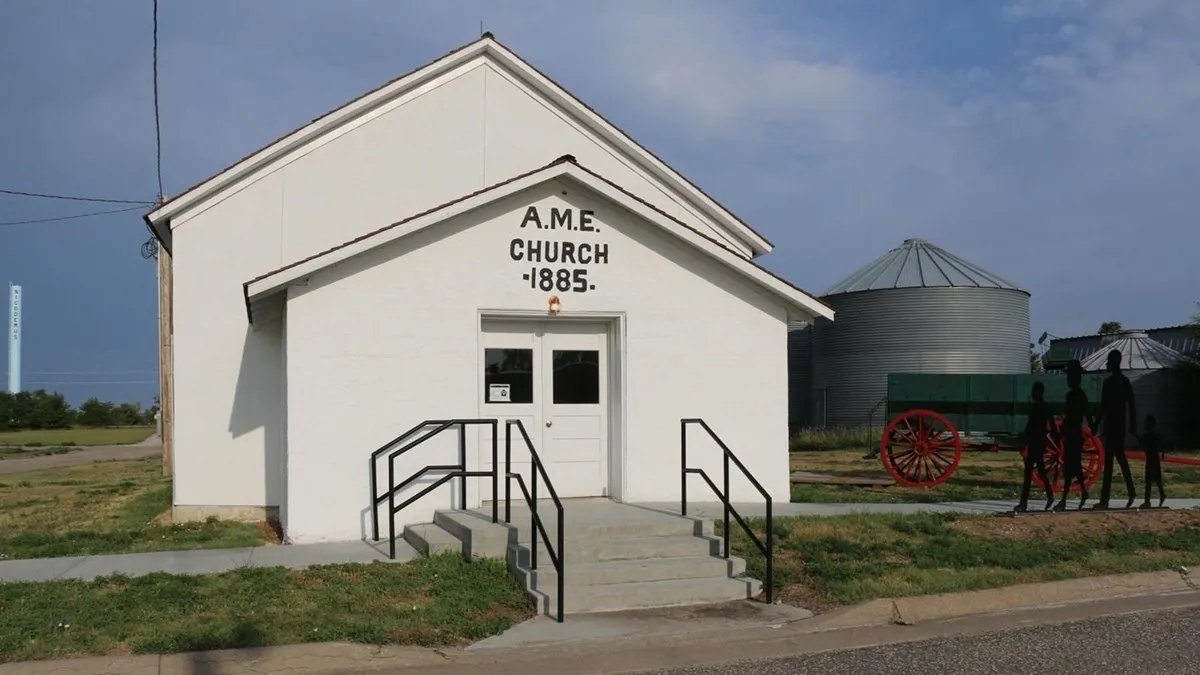
The AME Church is one of two historic buildings that the Park Service identifies as open to the public. Its simple exterior makes it easy to underestimate the role of institutions like this one in community life. Churches offered spaces for worship, gathering and mutual support as residents built lives on the prairie.
Allow time for the exhibits, and check with the visitor center about access before walking over. Opening schedules and temporary closures can change. The current NPS guidance should take precedence over an old travel article or an assumed daily schedule.
3. Follow the five-building story
The historic site encompasses five landmark buildings: the Township Hall, AME Church, First Baptist Church, St. Francis Hotel and the former school. Together they tell a story of civic life, faith, lodging and education rather than a single event. Looking at them as a group helps visitors picture the community that took shape around them.
Not all of the buildings are open for interior tours. Several are privately owned, so view them from public areas and respect signs, fences and neighbors. A self-guided walk or drive can fit a short visit; ask whether a ranger-guided walk is available if you would like more context. The Park Service suggests allowing one to two hours for a more leisurely visit.
4. Listen to the community’s voices
Historic buildings are only part of the experience. Nicodemus is a living community whose descendants continue to preserve and share its heritage. Park Service interviews and oral histories offer a way to hear personal perspectives that a building description cannot fully convey.
Before your trip, explore the site’s community interviews online, or ask a ranger which materials are available during your visit. Approach the stories with curiosity and care: migration, land ownership, family relationships and traditions are all part of a longer history that continues beyond the boundaries of the historic site.
5. Make room for the wider landscape
Nicodemus sits on the high plains between Hill City and Stockton. The open country helps explain both the appeal and the challenges settlers encountered: land offered an opportunity to establish farms and homes, while distance, weather and limited resources made the work demanding. A quiet look across the landscape can add context to what you have learned indoors.
If you have additional time, the Park Service suggests learning about the historic cemetery and a dugout near Stockton. Ask for directions and current access information before adding either stop. Travel respectfully, stay on public routes, and remember that surrounding land and homes may be private.
6. Learn about Homecoming
Nicodemus’s Emancipation Celebration, often called Homecoming, brings descendants back to the community. The Park Service traces the tradition to 1878 and describes it as a gathering with music, food and other events, usually held during the last weekend in July.
If you hope to attend, look for the current year’s schedule from the community organizers and confirm arrangements before traveling. A celebration can offer a window into living traditions; it is also a community gathering, so participate with the same courtesy you would bring to any hometown event.
Know before you go
The historic site is free to enter. As of November 2026, the Park Service lists the visitor center as open Thursday through Monday, with Tuesday and Wednesday closures and additional holiday exceptions. Severe weather and temporary work may also affect access, so check the official visitor information shortly before departure. The grounds and indoor facilities follow different schedules.
Bring water, allow for changing plains weather and plan fuel or food stops along your route. Most of all, leave enough time to listen. The most memorable part of a visit may be the story behind a familiar-looking school, church or town hall—and the people who have kept that story alive.