Fort McHenry looks out across a working harbor, with grass, brick walls and the water all competing for your attention. It is easy to enjoy the setting first and discover the deeper story as you walk: this is the Baltimore fort whose defense during the War of 1812 inspired Francis Scott Key to write the words that became the United States national anthem.
The National Park Service preserves the site as Fort McHenry National Monument and Historic Shrine. A visit can be a compact history lesson, a family outing or a quiet waterfront walk. These are five ways to make the most of it.
1. Start with the visitor center
The Paul S. Sarbanes Visitor and Education Center sits near the main parking lot and offers a useful introduction before you enter the historic fort. Its exhibits connect the Battle of Baltimore, the War of 1812 and the story of the Star-Spangled Banner. A short orientation film helps put the battle in context before you see the landscape itself.
The visitor center and its museum are free to visit. Admission to the Star Fort historic zone is separate; buy a pass at the visitor center or check the park's current instructions for purchasing one ahead of time. If you are traveling with children, ask a ranger about the Junior Ranger activities and the day's available programs. Schedules may change, so don't assume every demonstration is offered every day.
2. Look across the water before entering the fort
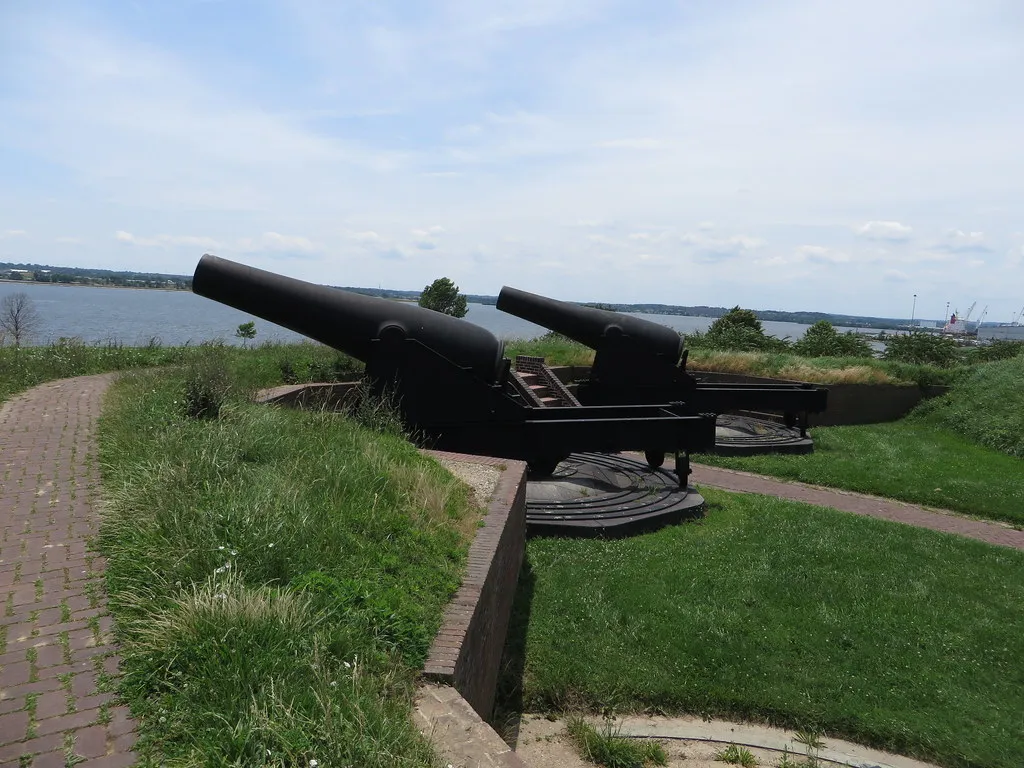
Fort McHenry occupies a point of land projecting into the Patapsco River. The harbor view explains why a fort stood here: ships approaching Baltimore had to contend with defenses positioned near the entrance. Today you may see the activity of a modern port beyond a landscape built for an earlier era.
Take a few minutes to orient yourself. The fort is southeast of Baltimore's Inner Harbor, but it is a distinct stop with its own entrance and parking. The park identifies 2400 East Fort Avenue as its physical address. If you plan to combine the fort with other city attractions, check transportation and parking for each stop instead of assuming everything is a short walk away.
The waterfront also makes a good place to slow down with a sketchbook or camera. Weather on an exposed point can feel different from the city streets, so a wind layer and water are useful even for a relatively short outing. Stay on designated paths and observe any posted restrictions near the water and historic structures.
3. Explore the star fort at your own pace
The fort's historic zone rewards a close look at its shape, brick buildings and earthworks. The five-pointed plan was designed for defense, and walking around it makes the relationship between the walls, harbor and interior spaces easier to understand. Allow time to read the exhibits and look into the historic rooms instead of treating the fort as a single photo backdrop.
The park suggests about an hour for a self-guided tour of the fort. Add time for the visitor center and any ranger program that interests you. For visitors who prefer a shorter trip, the free visitor-center exhibits provide a meaningful introduction even if the paid historic zone isn't part of the day.
The park describes the paved Seawall Trail and the route to the Star Fort as accessible, and says most of the fort interior is accessible. Wheelchairs are available to borrow upon request. Check the park’s accessibility page and ask staff about current routes or temporary closures before your visit.
4. Connect the flag to the battle
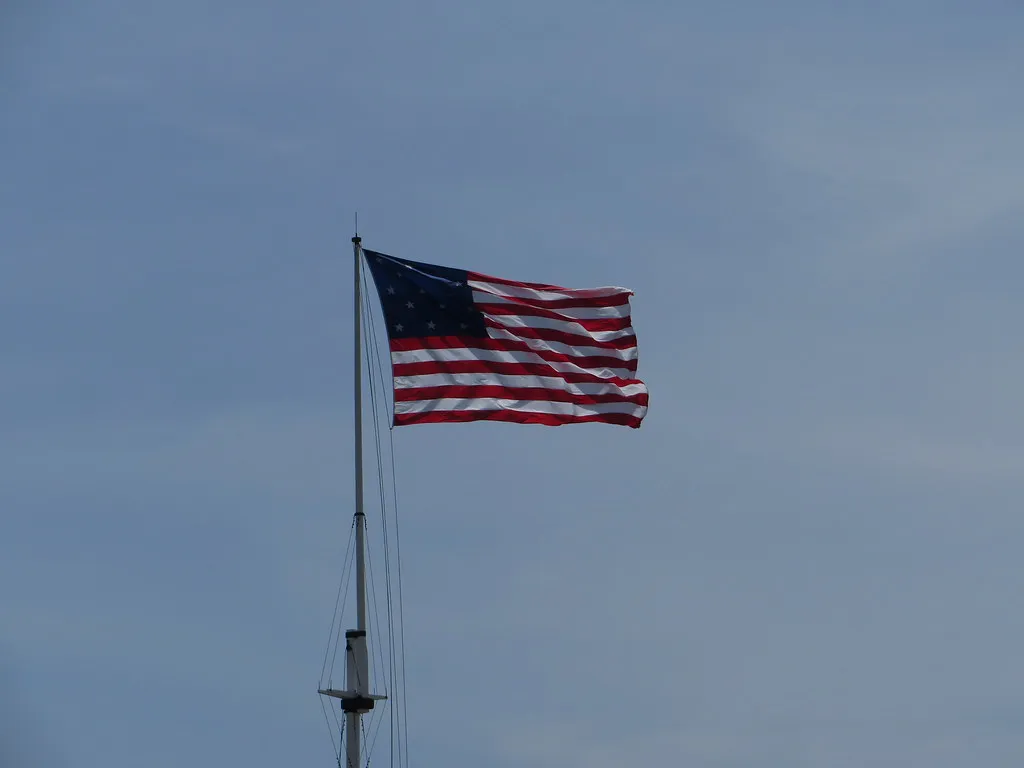
In September 1814, British forces bombarded Fort McHenry during the Battle of Baltimore. From a vessel on the water, Francis Scott Key witnessed the attack and saw the American flag still flying afterward. He wrote a poem in response; set to music and later known as “The Star-Spangled Banner,” it became the national anthem.
The flag flying at the fort today helps tell that story, but the original is preserved elsewhere. The Smithsonian's National Museum of American History in Washington, D.C., cares for the original Star-Spangled Banner. Distinguishing the historic artifact from a flag flying at the fort makes both visits more interesting: one preserves the object, while the other preserves the setting that gave it meaning.
The National Park Service sometimes offers flag programs and other interpretive activities. Ask about the schedule when you arrive; weather, staffing and the season can affect what is offered. Even without a program, the flagstaff and harbor views make a natural place to discuss the battle with younger travelers.
5. Leave room for the rest of the story
The 1814 bombardment is the best-known chapter, but it is not the fort's only one. Exhibits and ranger interpretation can introduce visitors to later periods of military use and the people connected with the site. Ask which parts of the fort are open on the day of your visit and what temporary exhibits or programs are available.
Before leaving, check the park's operating hours and the time when the historic zone stops admitting visitors. Hours and holiday closures can change; the official schedule lists Thanksgiving Day, Christmas Day and New Year's Day among annual closures. Plan to exit before the park gates close, and check the current schedule rather than relying on an old listing.
Fort McHenry works especially well as a half-day stop because it combines a manageable walk with a story that reaches far beyond the harbor. Begin with the film, tour the fort, then pause by the water before heading back into Baltimore. It is a chance to see a familiar national story in the place where it unfolded.