In the St. Francois Mountains of southeast Missouri, enormous rounded granite boulders gather on a rocky outcrop. Some appear to stand in a line, inspiring the name Elephant Rocks State Park. Others seem balanced or scattered across the hill as if a giant had left a collection of stones behind.
The rocks are fun to see, but the park also rewards a closer look at geology, quarrying history and an unusually thoughtful trail. Here are five ways to plan a visit, with practical details that help make the most of a relatively compact park.
1. Meet the granite elephants
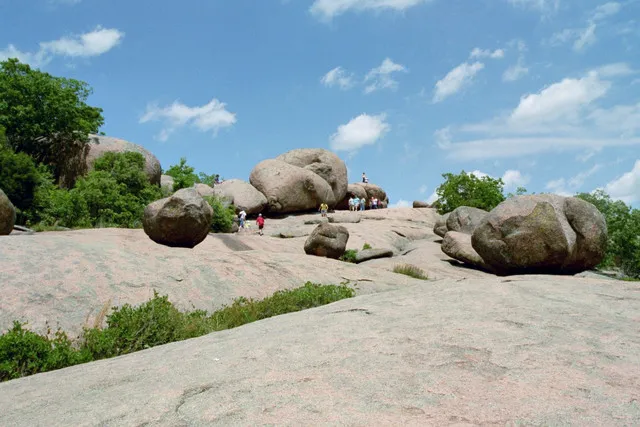
The park's rounded boulders formed from granite roughly 1.5 billion years old, according to Missouri State Parks. Long after molten material cooled underground, weathering and erosion exposed and shaped the stone. The pinkish granite can look especially warm against green trees or a blue sky.
Look for differences in shape and size rather than expecting every boulder to resemble an elephant. Some sit in long rows while others rest individually on the exposed granite. The same landscape can feel different as cloud cover changes or as you approach from another part of the trail.
Families will be drawn toward the rocks, so decide in advance where children can explore safely. Granite can become slippery after rain, and some surfaces have steep edges or narrow gaps. Stay within permitted areas and choose a route that suits the least experienced member of your group.
2. Follow the Braille Trail at a comfortable pace
The park's Braille Trail is an approximately 0.9-mile paved loop designed with visitors with visual or physical disabilities in mind. Interpretive stops include Braille text, and the route passes the major rock area as well as a pond in a former quarry. It is a good introduction even if you do not intend to venture onto the exposed boulders.
Accessibility is specific to each visitor, however. The park says portions of the path slope noticeably and narrow to 28 inches between rock formations. Its accessibility page gives details about grades, surfaces, rest areas and a free off-road track chair that can be reserved in advance. Check that information or call the park before traveling if a particular surface or clearance matters to your group.
Take the loop slowly enough to notice the changes from open rock to shade. A spur leads toward the granite outcrop, while another offers a view of an old quarry. These branches give visitors a choice: stay on the main loop or add short explorations where conditions and ability allow.
3. Find the traces of Missouri's granite industry
The landscape was also a workplace. Missouri red granite was quarried here from the 1860s into the early 1900s, and the park's interpretive material helps visitors connect the natural rock with the people who cut and transported it.
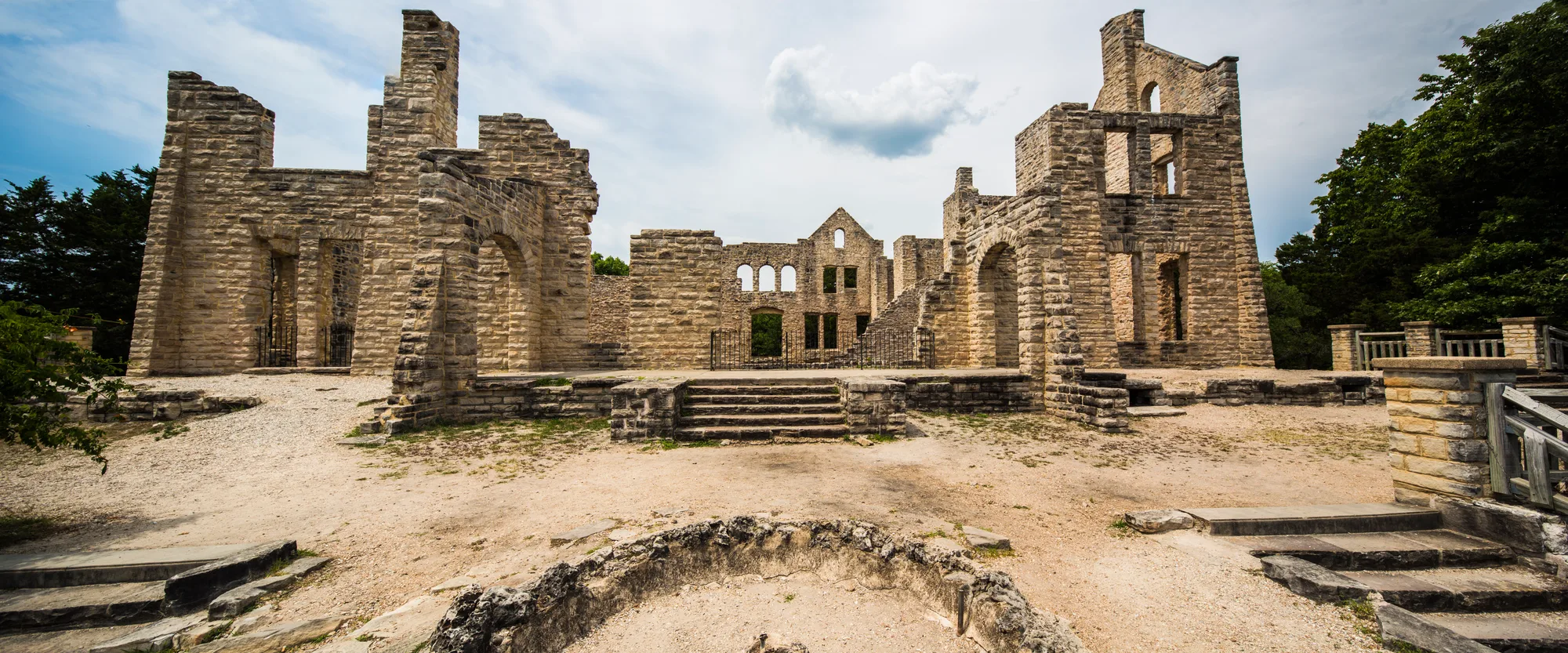
From the Braille Trail, an extension leads to the ruins of a railroad engine house associated with the nearby quarry. Missouri State Parks explains that the building was used to repair rail equipment serving the operation. By the early 1900s, granite cars were regularly carrying stone away from the area.
The park describes a roughly 430-foot paved section to the ruins from the east entrance, followed by natural-surface paths in the wider area. The ruins do not need dramatic embellishment: imagine the work of moving heavy blocks before modern equipment, and look at how the railway made a remote quarry part of a much larger building economy.
4. See the landscape from the outcrop
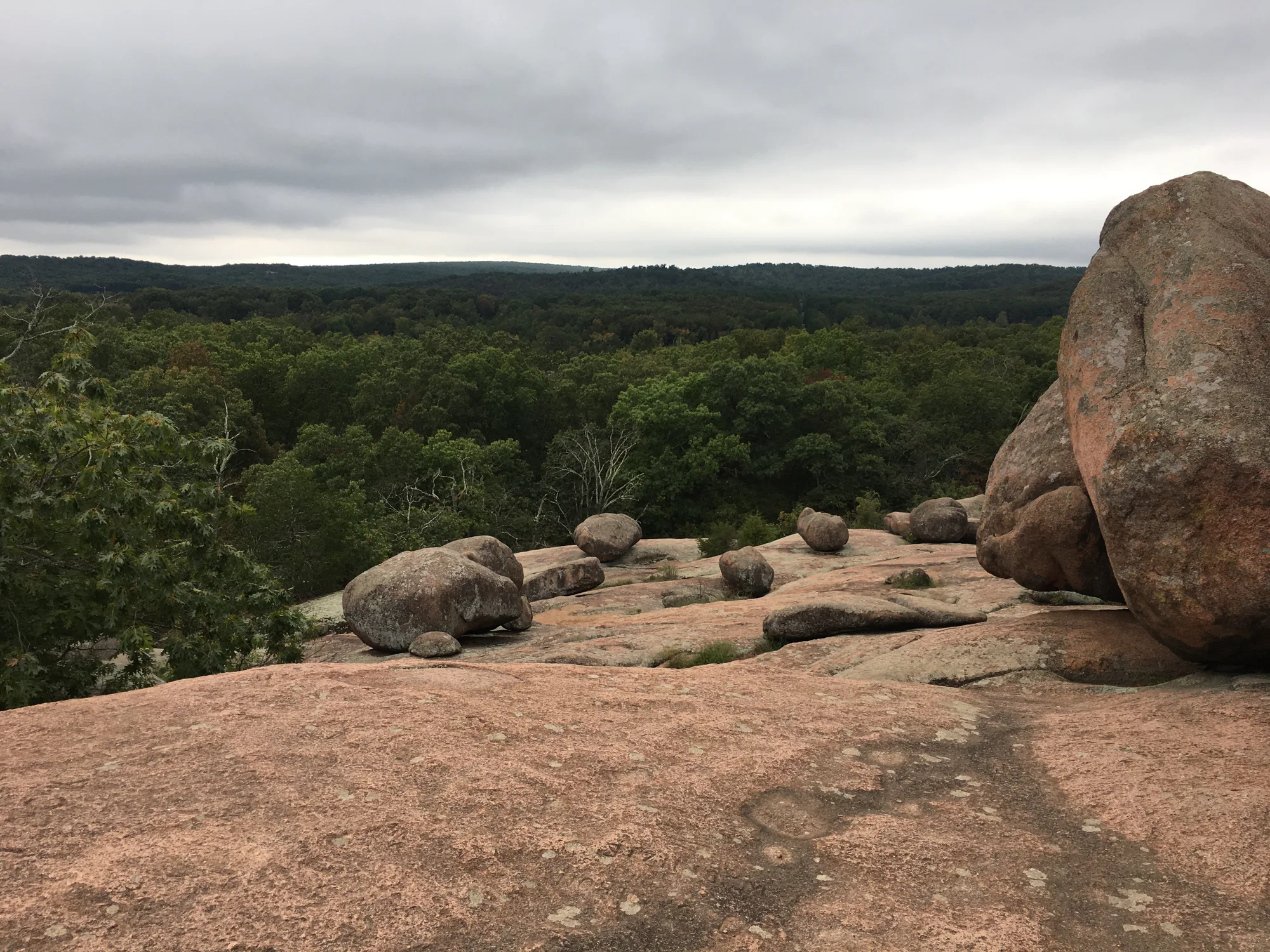
A short spur from the main trail brings visitors toward the granite outcrop, where boulders sit above the surrounding woodland. The view makes the setting easier to understand: open granite underfoot, tree-covered hills beyond and a pattern of rounded stone that is difficult to appreciate from a single roadside photograph.
Footwear matters here. Choose shoes with traction, keep a safe distance from drop-offs and avoid scrambling on wet or icy rock. Climbing and bouldering have their own park rules, so consult the current park map and regulations rather than assuming every formation is open for every activity.
Photography is often best when you give the scene a sense of scale. A trail, tree or person viewed from a respectful distance can show just how large the boulders are. Leave room for other visitors and never move or mark stones to improve a composition.
5. Pack a picnic and leave time for the surrounding region
Elephant Rocks has picnic tables among the trees, making it easy to pause after the loop. Bring drinking water and pack out what you carry in. On warm days, remember that exposed granite offers less shade than the wooded portions of the trail; on colder days, a sunny-looking surface may still be slick.
The park lies near other destinations in the St. Francois Mountains, including Johnson's Shut-Ins and Taum Sauk Mountain. Treat each as a separate stop requiring its own time and current conditions. Johnson's Shut-Ins, for example, can restrict access when river levels are high or parking reaches capacity, while a longer Taum Sauk hike requires more preparation than a short paved loop.
Before you go
Check Missouri State Parks for current hours, alerts and accessibility details before leaving, particularly after storms or during winter weather. If you plan to use the track chair, the park asks visitors to reserve it in advance. Bring a map, sun protection and enough time to enjoy the park without rushing across uneven rock.
The best Elephant Rocks visit combines the playful first impression with the deeper story beneath it: ancient granite, a working quarry, and a trail designed to welcome a wider range of visitors into an unusual Ozark landscape.