Missouri's stretch of Route 66 is a collection of stories told in stone motel walls, neon signs, old downtowns and the landscapes between them. Interstate highways carry most through traffic today, but pieces of the historic road still offer reasons to slow down.
A good Route 66 trip leaves room for detours and does not assume that every historic property operates like a museum. These six ideas highlight places to learn about the road and practical ways to explore it, from Cuba to Carthage. Check current hours and access before leaving, especially if you hope to stay overnight or visit an interior.
1. Start with the Wagon Wheel Motel in Cuba
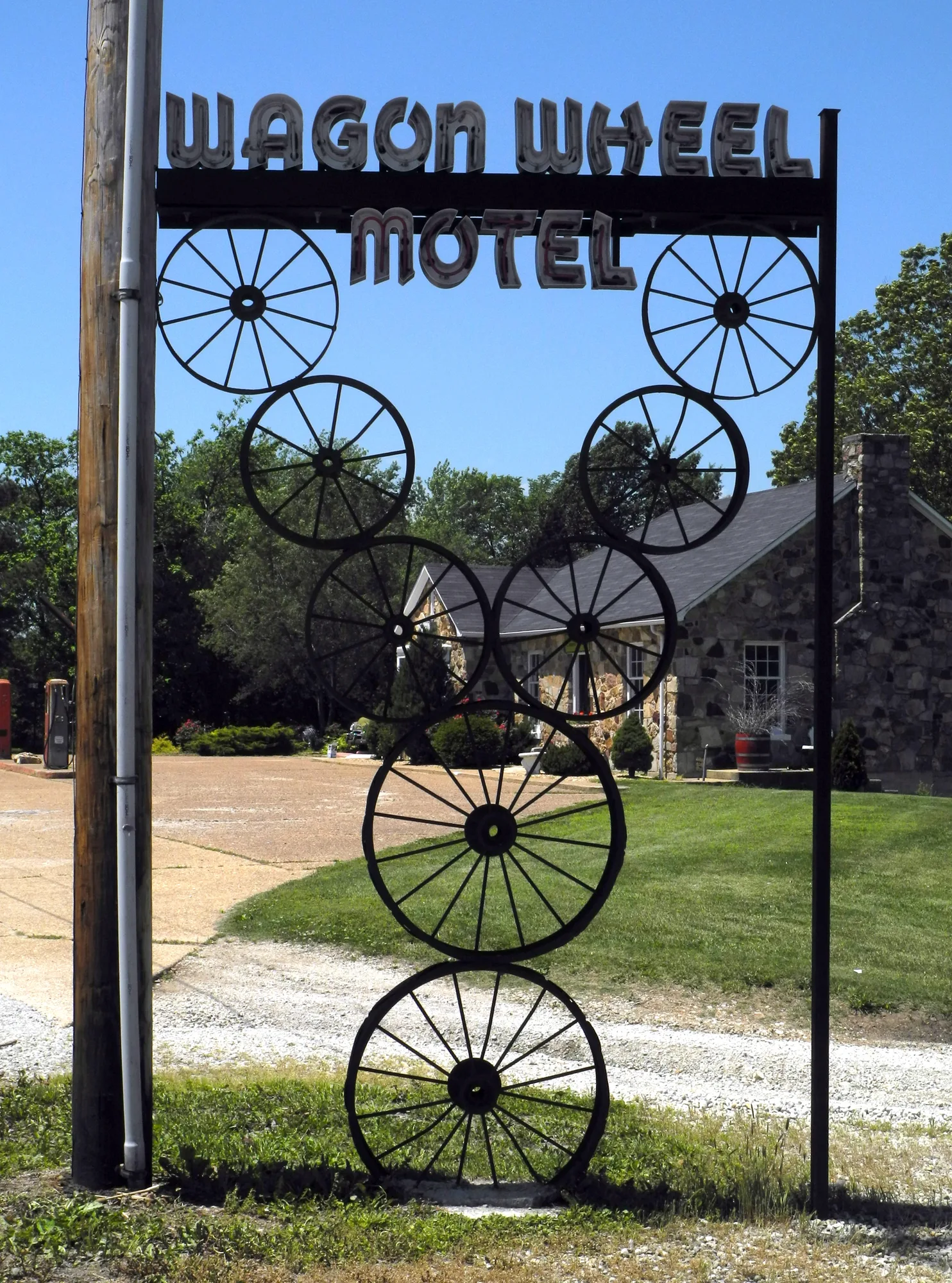
The Wagon Wheel Motel's stone buildings and familiar sign preserve a piece of early automobile travel. According to the National Park Service, the business began in 1936 as a combination of food, fuel and lodging. Its original stone cabins stood back from the road and gave travelers a place to stop when roadside services were often locally owned.
Look at the steep rooflines, stonework and arrangement of the buildings. These details reflect the tastes of the people who built and ran the property rather than a standardized chain design. The motel evolved over the years, and its well-known sign was added after a change in ownership in the 1940s.
It remains a lodging business, so treat it as someone's workplace and guests' temporary home. If you want to stay, contact the operator for availability and current rates. For a brief look at the exterior, park legally, stay in public areas and ask before photographing on private property.
2. Walk Cuba's outdoor murals
Cuba calls itself Route 66 Mural City. Its outdoor murals depict local and national stories, giving visitors another reason to leave the car and look closely at the community around the old highway.
The Missouri tourism office says a mural map is available at the visitor center and some local businesses. Pick up a current copy if possible, then choose a few works that interest you rather than trying to turn a short stop into a race. Read the accompanying information and consider how public art presents history to people who may be passing through for the first time.
Combine the walk with a meal or a visit to a local shop. Cross busy streets at safe locations, give pedestrians room and confirm business hours before depending on a particular stop. The murals can be enjoyed from outdoors, but surrounding storefronts are active businesses with their own schedules.
3. Pause in Lebanon for local road history
Lebanon offers another way to connect the highway to the communities it served. Boswell Route 66 Park features murals interpreting local road heritage, while the Route 66 museum at the Lebanon-Laclede County Library is listed among the region's visitor attractions.
Check the library and museum's current hours before making a special trip. A useful visit pairs the interpretive displays with time to explore the surrounding city: Route 66 was never simply a line on a map. It brought customers, employment and change to the places along its route.
Notice the difference between the highway's celebrated national image and the everyday details in local collections. Photographs, signs and objects can reveal how a cross-country trip looked to the families who operated businesses and the travelers who stopped there.
4. Explore Springfield's Route 66 story
Springfield is a major center for Missouri's Route 66 heritage. Missouri's tourism office highlights historic downtown attractions and landmarks, including the Gillioz Theatre, as part of a wider road-trip itinerary.
The National Park Service also identifies Rock Fountain Court, a group of stone cabins dating to the mid-1940s. The historic property is not open to the public, so appreciate its story through official interpretation and respect the site's private status. Do not enter the grounds or assume that an old roadside building is a visitor attraction.
Springfield has more than a single route to follow. Review a current local map, decide which sites are open when you visit and allow for ordinary city traffic. An evening performance, museum stop or downtown meal can add another dimension to a trip centered on the road.
5. Look for the Boots Court in Carthage
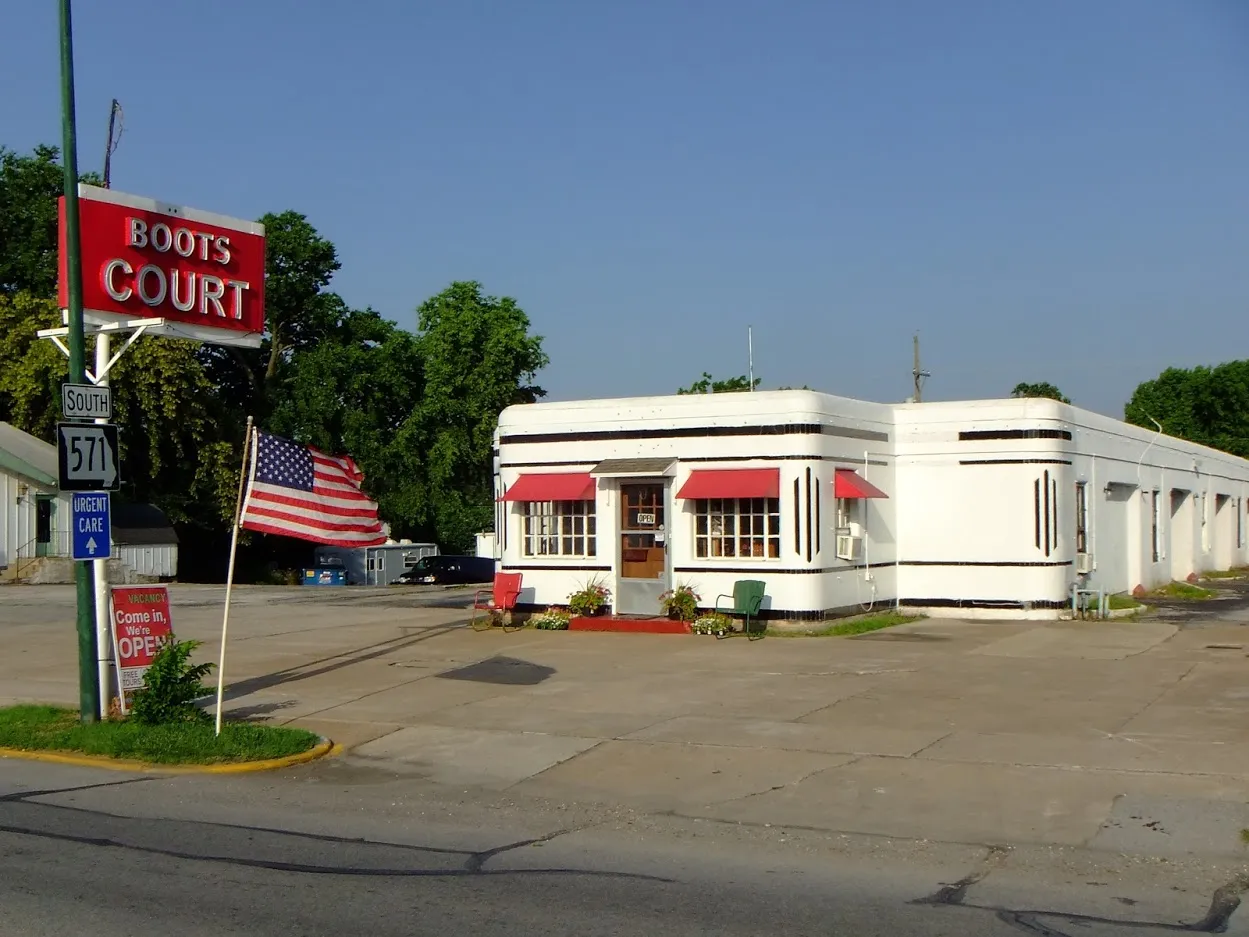
In Carthage, the Boots Court evokes a later stage in roadside lodging design. Its streamlined white building stands in contrast to the rustic stone of Cuba's Wagon Wheel, showing how different owners used architecture to attract motorists.
The National Park Service has supported preservation work at the Boots Motel through its Route 66 program. The building is an opportunity to look at the variety of places that survived along the road, not evidence that every old motel has been preserved in the same condition or operates in the same way.
If an overnight stay interests you, contact the business directly for current availability and policies. Respect guests and any posted limits on photography. A walk around Carthage's historic center can make the motel one part of a broader visit rather than a hurried stop for a single picture.
6. Follow the old road with a flexible plan
Missouri's Route 66 corridor includes many communities between St. Louis and Joplin, and different alignments changed over time. A modern navigation app may favor the interstate, so use an up-to-date Route 66 map and check road conditions before choosing a historic segment.
Distances between stops add up. Consider focusing on one region for a day instead of trying to cover the whole state while also visiting museums and shops. Carry water, stop only where parking is permitted and expect some historic sites to be private, closed or visible only from a public street.
Make the history part of the journey
Neon and classic motels are easy to recognize, but the story is also about families who ran businesses, towns that changed as traffic moved and the work required to preserve surviving places. The National Park Service's Missouri Route 66 resources and the state tourism office provide starting points for checking locations and learning more.
Before your trip, confirm hours, accessibility and any reservations with each operator. With a little flexibility, the most memorable part of the Mother Road may be the conversation or small local discovery between the famous signs.