A bright red mill, a blue spring pool and two rivers winding through wooded hills make Missouri's Ozark National Scenic Riverways an inviting place to slow down. But the park is spread across a broad region, and the best visit starts with understanding the distances between its landmarks.
Established around the Current and Jacks Fork rivers, the riverways protect more than floating routes. Springs, historic buildings, trails and river access points invite visitors to explore on foot as well. These five ideas offer a starting point, whether you have a few hours or are planning a longer trip.
1. See Alley Mill and the spring that powered it
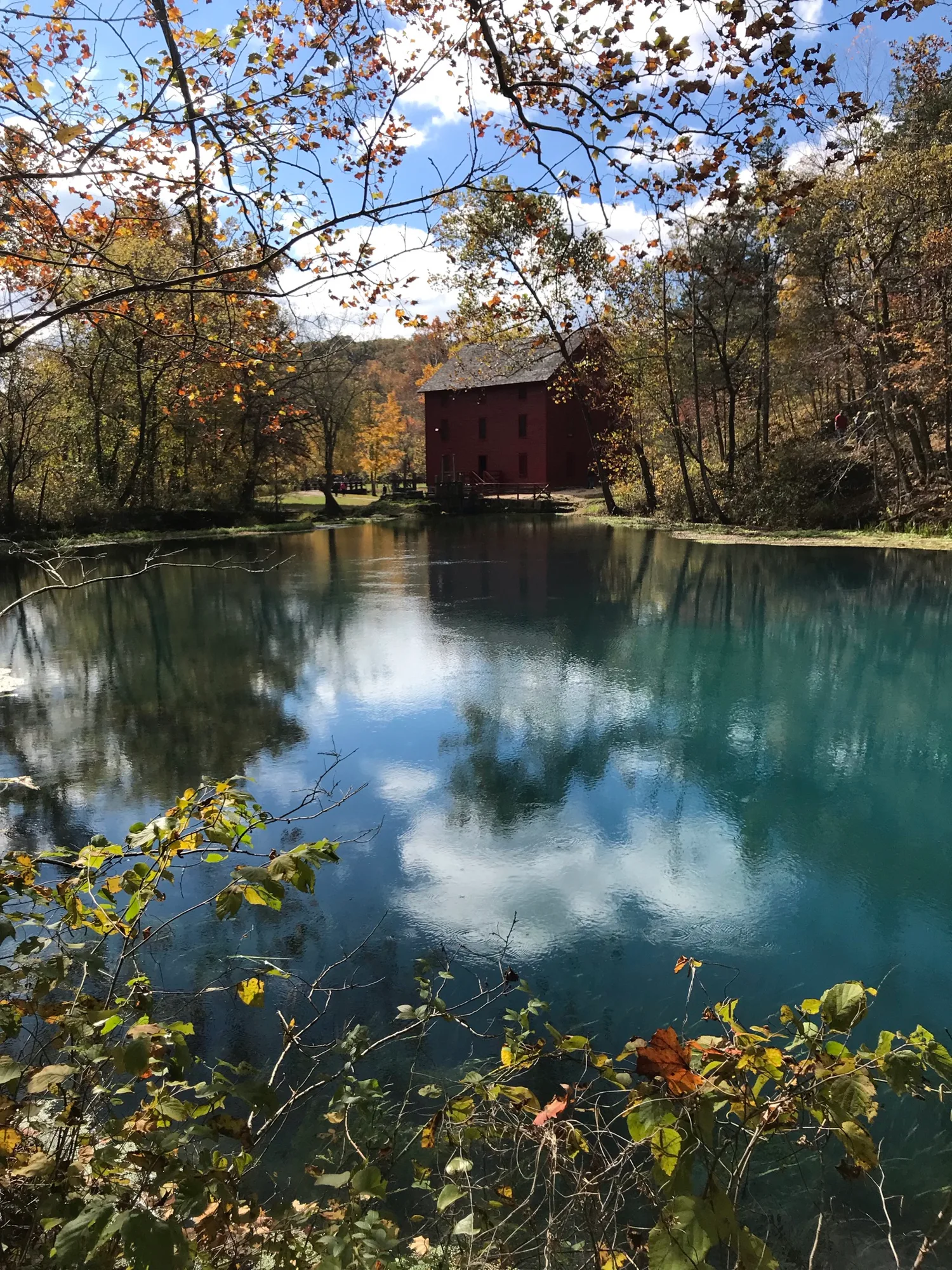
Alley Mill's red walls stand beside a vivid spring pool west of Eminence. It is an unmistakable Ozarks scene, but the mill also tells a practical story: communities once brought grain here to be ground, and the spring supplied the power for the machinery.
Walk the established path around the spring to see how the water and mill relate to one another. The view changes with the light and season, from summer greens to autumn color. Allow time to look beyond the building itself; the spring branch and surrounding trees are as much a part of this setting as the familiar facade.
The National Park Service says the mill and general store generally operate seasonally, with hours subject to change. The outdoor landscape and an open building are different experiences, so check current visitor-center information before counting on an interior tour. Stay out of the spring and its branch, where entry is prohibited under park regulations.
2. Watch the water at Big Spring
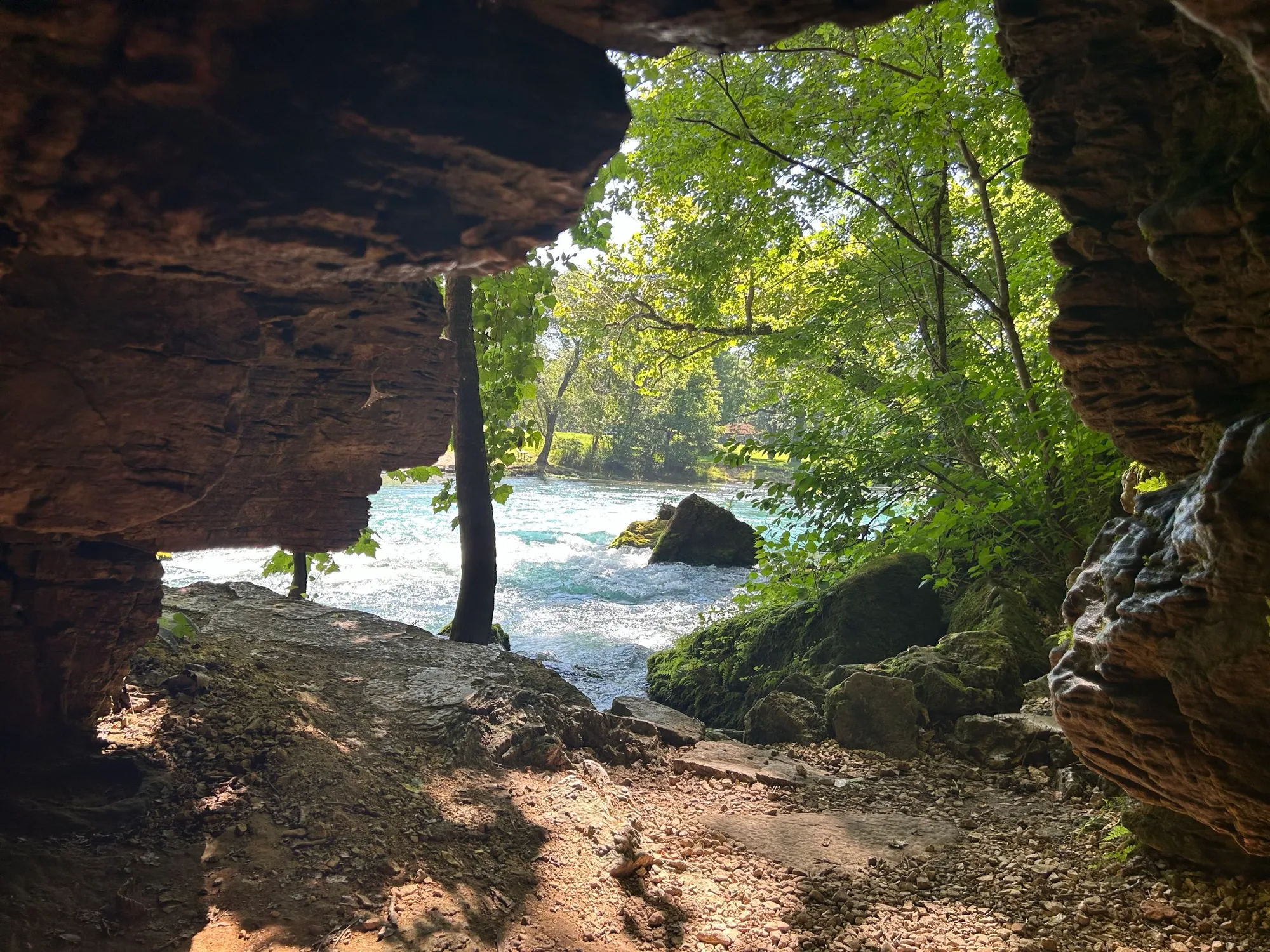
South of Van Buren, Big Spring pours from the base of a bluff toward the Current River. The scale is easier to appreciate in person than in a number: watch the moving water, its color and the way it changes as it leaves the rock and travels downstream.
The area was a Missouri state park before becoming part of the national riverways. Its historic district also preserves the work of the Civilian Conservation Corps, including the entrance station. The National Park Service identifies that station as a year-round visitor contact point, although individual services and hours can change.
Approach the spring from established walks and overlooks. A short visit can be rewarding, but do not confuse the spring branch with an open swimming area. Bring a picnic if you plan to linger, check seasonal facilities and give other visitors room to enjoy the overlook.
3. Take the accessible path to Round Spring
Round Spring, north of Eminence, rises in a nearly circular pool before flowing beneath a natural bridge toward the Current River. The park describes a paved accessible path to the spring, making it a useful option for groups looking for scenery without committing to a long hike.
Pause at the water's edge to watch for birds, but keep a respectful distance from any wildlife. The National Park Service prohibits people and pets from swimming or wading in the spring or its branch. Those protections help keep the spring habitat intact and are worth explaining to children before you reach the water.
The surrounding area includes a picnic area, campground and river access. Camping requires a reservation according to the park's visitor information. Round Spring Cave has a separate, seasonal ranger-led tour program; check current availability before building your itinerary around a tour rather than assuming that cave access is always offered.
4. Float a section of the Current or Jacks Fork
A river trip changes the perspective completely. Instead of looking down at the water from a bank, you move past wooded slopes and gravel bars at the river's pace. The Current and Jacks Fork both offer opportunities for paddling, but conditions and trip lengths vary considerably by section and season.
Choose a launch and takeout that match your experience, water level and available daylight. Consult current National Park Service river information and an authorized outfitter about conditions, shuttle arrangements, rentals and any required gear. Wear a properly fitted life jacket and make sure everyone in the group understands how to handle moving water.
Recent rain can change river conditions quickly. Avoid paddling into spring branches or other closed areas, and keep food and trash secured. The park's regulations also restrict glass containers in certain river-use areas; review the current rules before packing a cooler. A shorter, well-planned float leaves more room to enjoy the scenery than an overambitious itinerary.
5. Build a day around one district
The riverways are not a single compact overlook. Big Spring, Alley Spring and Round Spring serve different stretches of the park, with visitor contact stations in each district. Roads wind through the Ozarks, and driving between stops can take longer than a quick glance at a map suggests.
For a first trip, choose one district as your anchor and add another stop only if the drive and daylight make sense. A Big Spring visit pairs well with time around Van Buren; Alley Spring is a natural starting point near Eminence. Round Spring gives visitors on the upper Current another combination of scenery, picnic space and seasonal ranger information.
Download directions or a map before leaving reliable service. Cell coverage is not dependable everywhere, and seasonal buildings, roads and trails may have different operating hours. In winter or after storms, check the park's alerts before leaving town. Wear sturdy shoes for uneven paths and carry drinking water even on a short walk.
Keep the springs protected
The clear water is part of what makes this region memorable, and the rules are designed to keep it that way. Park regulations prohibit entry into springs and spring branches within the riverways, subject to the specific exceptions the park lists. Enjoy swimming and boating only where permitted, respect signs and leave artifacts and natural features in place.
Before traveling, consult the National Park Service for current alerts, visitor-center schedules, river conditions and cave-tour information. With a little planning, the Ozark riverways can be a memorable day of overlooks and history or the beginning of a longer float through southern Missouri.