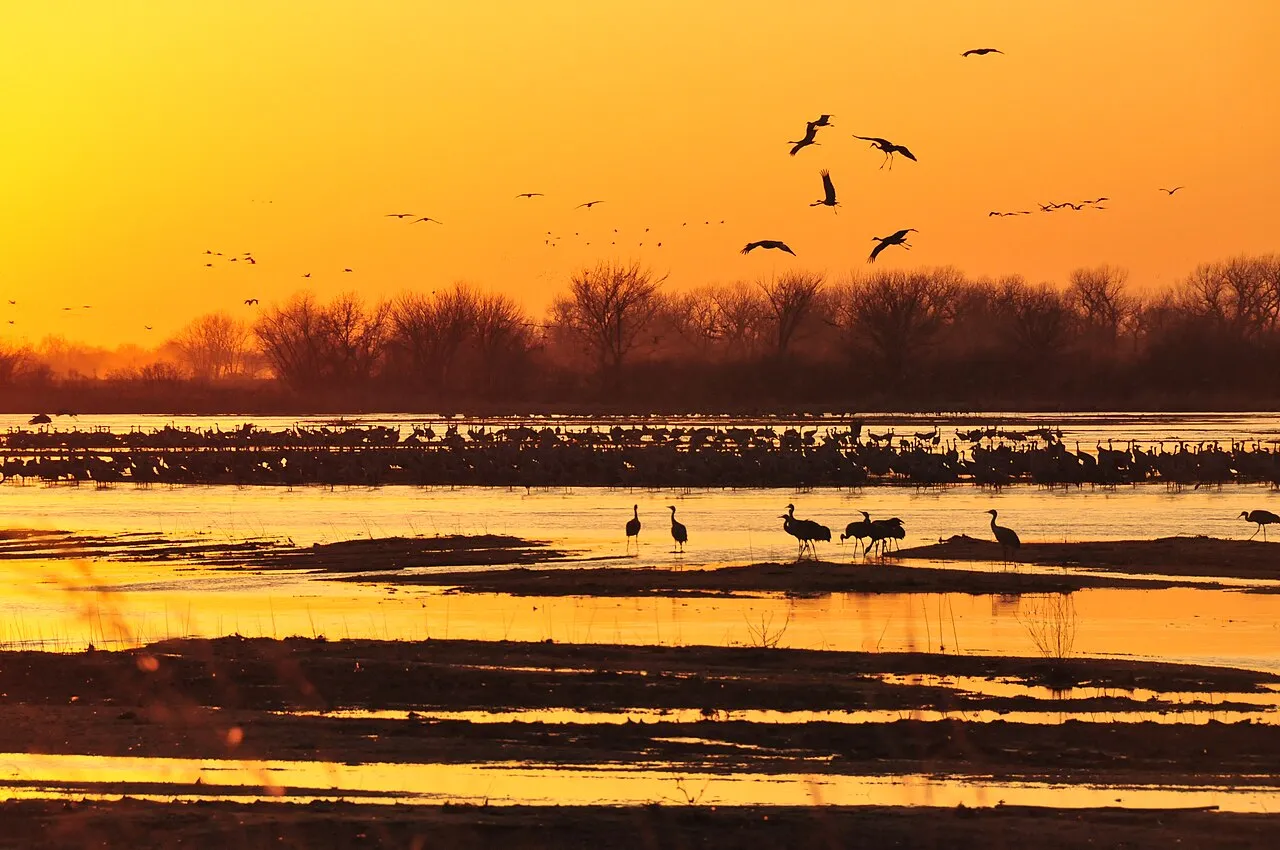
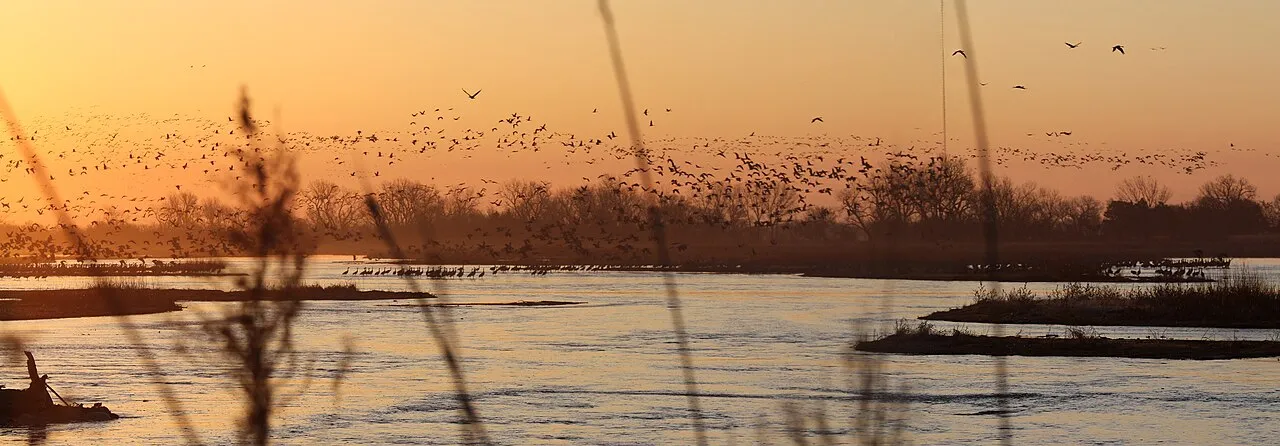
Just before sunrise, the Platte River can seem to come alive with sound. Sandhill cranes gather on shallow water and sandbars during their spring migration, then lift off toward nearby feeding grounds. In central Nebraska, this annual stopover gives visitors an opportunity to witness a remarkable wildlife movement—if they plan carefully and give the birds space.
The Kearney area is a useful base for a first trip. Here are seven things to know before planning a crane-viewing visit, from choosing the season to finding a responsible place to watch.
1. Plan for spring migration
The U.S. Fish and Wildlife Service says sandhill cranes concentrate along the Platte between Overton and Grand Island from early March to mid-April. Timing and numbers vary with weather and migration conditions, so no single date guarantees a particular view. A few days in the area gives you more flexibility than a tightly scheduled stop.
For 2027, Audubon lists guided crane experiences at Rowe Sanctuary from March 3 through April 6, with some photography and indoor-viewing options on selected dates. Check the sanctuary’s latest calendar before booking because offerings can change.
2. Reserve a guided viewing experience
Rowe Sanctuary offers guided experiences from viewing stations near the Platte. Reservations are required for these tours, which are designed around the birds’ roosting behavior. Review the descriptions carefully: a general guided outing and an overnight photography experience involve different commitments.
Wildlife does not follow a visitor’s schedule. A guided outing improves your chance to learn from experienced staff, but the exact number and position of the birds will differ each day. Read the operator’s instructions before you go and arrive at the requested time.
3. Understand the rhythm of the day
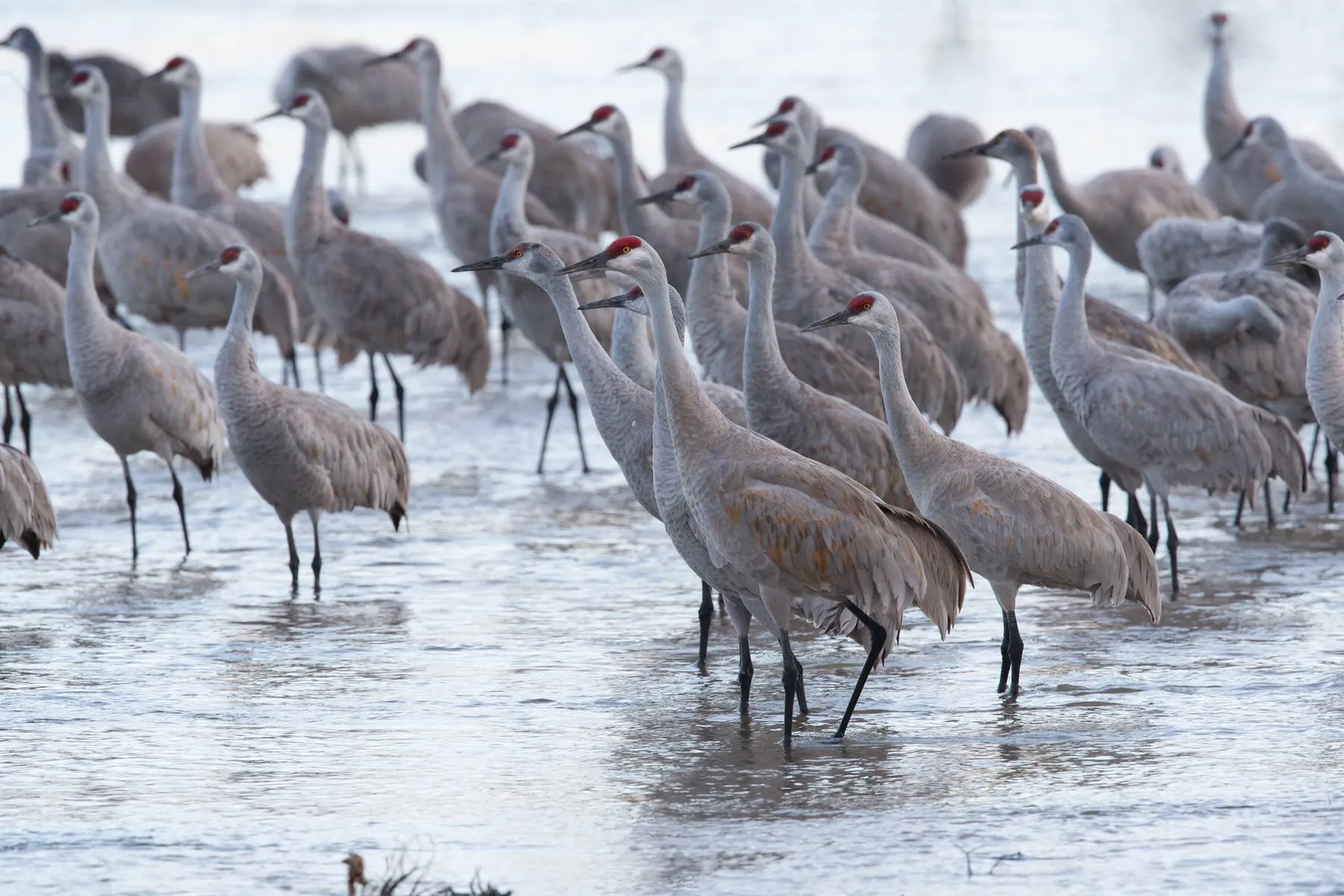
Many cranes use the shallow river and sandbars as nighttime roosts, then spread into nearby fields during daylight to feed. The low light around dawn and dusk can be particularly memorable, both for the view and for the sound of birds calling overhead.
A morning tour requires an early start, and an evening outing may end after dark. Give yourself extra driving time and keep your schedule flexible. If you are watching from a public place during the day, binoculars can make a distant flock easier to appreciate without approaching it.
4. Use designated public viewing areas
Not every stretch of river is open to visitors. Much of the land along the Platte is privately owned, and disturbing cranes at a roost can cause them to expend valuable energy. Visit Kearney publishes information on public viewing locations and etiquette; use those resources to identify legal, safe places to stop.
Rowe Sanctuary cautions visitors not to plan on watching cranes on the river from its trails during crane season, when trail use is limited to protect roosting birds. Follow posted signs and staff directions, and never enter a field, riverbank or road shoulder where stopping is unsafe or prohibited.
5. Pack for cold and changing weather
March and early April can be cold, especially before sunrise. Audubon recommends clothing that can be layered and notes that temperatures regularly fall below freezing. Warm footwear, gloves and a hat can make a long wait more comfortable; dark outerwear may be recommended for guided tours.
Bring binoculars if you have them, but check the specific rules for cameras, tripods, phones and bags on your chosen outing. Turn off anything that might flash or make noise when instructed, and avoid playing bird calls or using drones to get closer.
6. Be a considerate wildlife watcher
Keep a respectful distance, speak quietly and let the birds behave naturally. If a flock changes its behavior or takes flight because people are approaching, back away. Use your vehicle as a viewing blind only where it is legal and safe to stop, and do not block driveways or farm traffic.
Remember that an animal’s welfare is more important than a close photograph. A distant view through binoculars can be every bit as memorable when the sky fills with birds.
7. Make Kearney your base
Rowe Sanctuary is about 20 miles east of Kearney, according to Audubon. The city offers lodging, food and other attractions, while Grand Island, Hastings and Minden are alternatives for visitors planning a wider central Nebraska trip.
March is a busy period, so reserve lodging early if you can. Build in a little time to visit the sanctuary’s center or explore the area outside your viewing session; the trip is more enjoyable when you are not rushing between a hotel and a predawn departure.
Before you go
Check current tour availability, weather, access restrictions and viewing etiquette shortly before travel. Wildlife conditions change from year to year, and responsible observation helps protect the river corridor that makes this migration stop possible.