A covered bridge can make an ordinary New Hampshire drive feel like a small journey through time. Timber trusses disappear into a shaded interior, a river moves underneath, and a narrow portal frames the view on the other side. Each bridge also has a practical story: it was built to connect communities, repaired after hard use, and cared for by people who wanted it to keep serving its place.
These five bridges are spread across the state, so think of them as ideas for several trips rather than one hurried circuit. Conditions and traffic restrictions change. Before driving through any historic bridge, check the current signs for height, weight, width and vehicle limitations, and use safe legal parking for photographs.
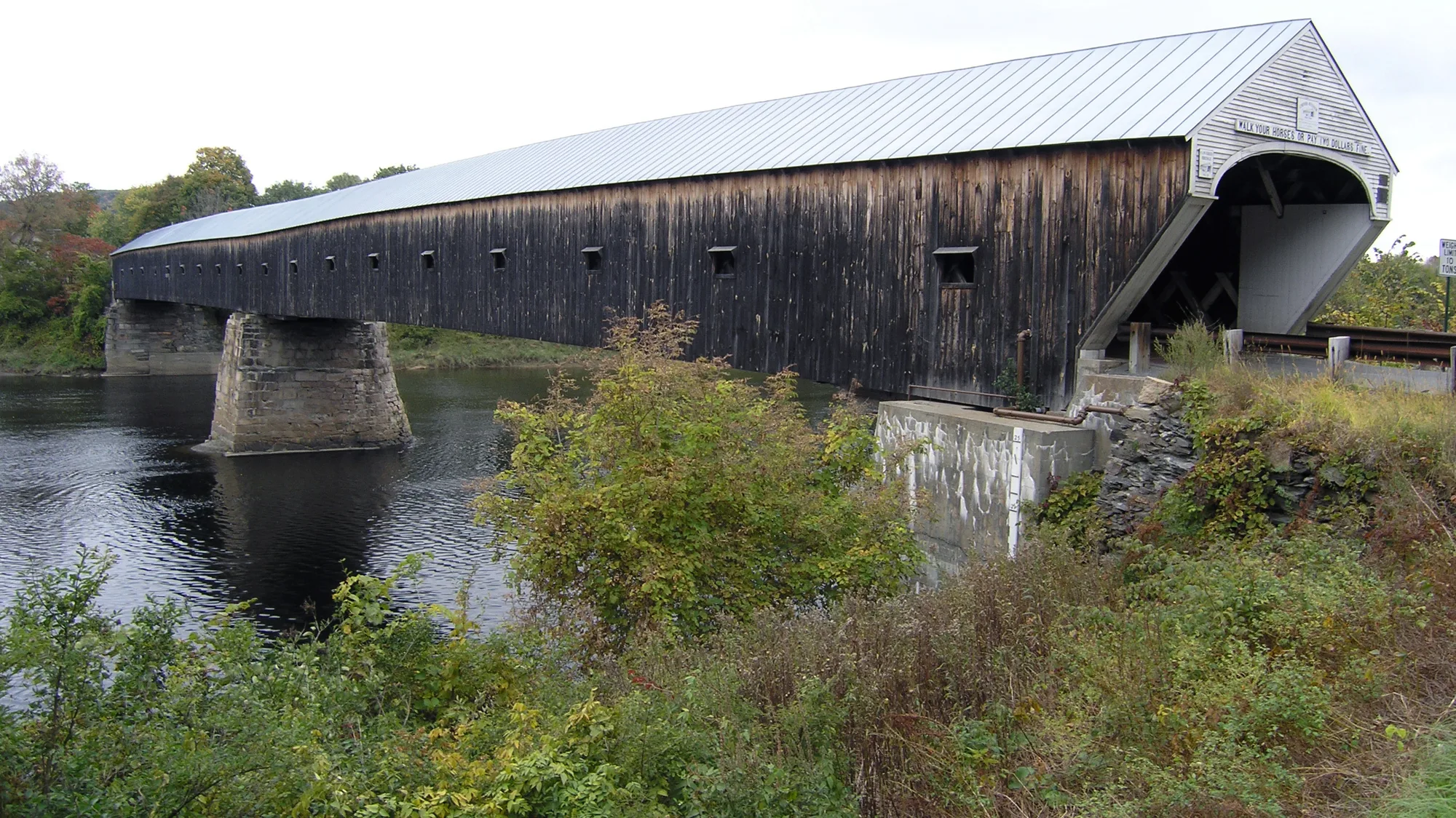
1. Cornish–Windsor Covered Bridge
Spanning the Connecticut River between Cornish, New Hampshire, and Windsor, Vermont, this long timber bridge makes the state line part of the experience. The New Hampshire Division of Historical Resources dates the present structure to 1866 and identifies its two-span Town lattice truss. Earlier bridges on the site were lost to flooding, and the present bridge has undergone major reconstruction.
Take a moment to appreciate both the length of the crossing and the repeating timber pattern inside. The bridge is an active transportation route, so obey posted signs and yield to traffic. The National Park Service advises that the covered bridge is closed to RVs, trucks and buses; confirm current restrictions before selecting your route. A visit can pair nicely with the historic gardens and sculptures at nearby Saint-Gaudens National Historical Park, whose buildings operate seasonally.
2. Albany Covered Bridge
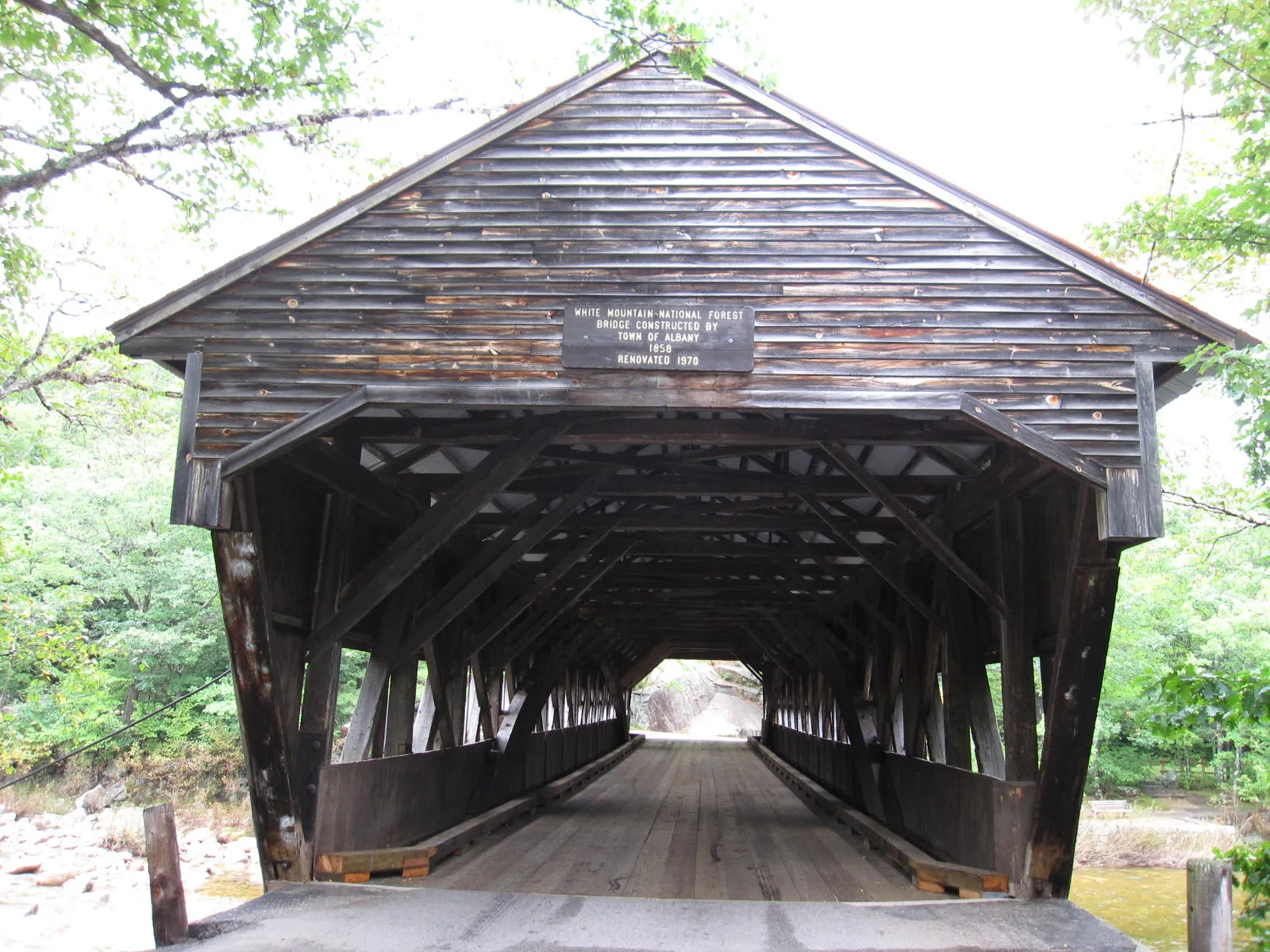
Just off the Kancamagus Highway near Conway, Albany Covered Bridge crosses the Swift River in the White Mountain National Forest. The state's bridge inventory dates the present structure to 1858, after an earlier bridge was destroyed by a windstorm. Its Paddleford truss and added arches are easier to appreciate when you stop and look through the portal rather than driving straight past.
Use the designated recreation parking area and watch for other visitors and vehicles. This stop combines well with a Kancamagus Highway drive, but do not let a bridge photograph distract from moving water or traffic. Check current Forest Service notices and posted vehicle limits; if your vehicle does not fit the signs, enjoy the structure from an appropriate public viewing area.
3. Bath Covered Bridge
Bath's bridge crosses the Ammonoosuc River west of Route 302. The state dates the present structure to 1832 and records a long sequence of earlier crossings lost to floods and fire. Its multiple spans and enclosed sidewalk distinguish it from shorter one-span bridges elsewhere in the state.
The structure remains a piece of local infrastructure as well as a landmark. Parking and safe pedestrian access deserve as much attention as the view. Review the current signs and town information, be considerate of residents and do not stop in the roadway. Nearby Bath is worth a slower look, but check individual business hours rather than assuming every stop will be open.
4. Blair Covered Bridge, Campton
Blair Bridge spans the Pemigewasset River on Blair Road in Campton. The state inventory dates the current bridge to 1869 and describes a two-span Long truss with arches. Repairs and rebuilding over the years are part of its story: a historic bridge survives through maintenance, not by remaining untouched.
Look for a safe legal place to stop before taking photographs and leave room for traffic. The river and wooded hills provide context for why a crossing mattered here, but banks and roadsides may be uneven. Follow posted restrictions and do not assume the dimensions or weight limits in a historical publication are still current.
5. Swift River Bridge, Conway
Conway's Swift River Bridge has a dramatic history. The state's account describes an earlier bridge being swept away by high water in 1869 and colliding downstream with the Saco River covered bridge. Salvaged timber was used in building the replacement, which the state dates to 1870.
The historic structure was bypassed by a newer bridge and the state's inventory lists it as closed to vehicles. Check the town's current guidance for pedestrian access and approach from a legal public area. This is a useful reminder that a bridge can remain a local landmark even after its role in everyday traffic changes.
How to plan a covered-bridge day
Choose a cluster that matches your route and interests. Albany and Conway can fit into a White Mountains outing; Cornish pairs with the Connecticut River valley; Bath and Campton make sense as stops on other northern or central New Hampshire drives. A map and a little flexibility are more useful than trying to cross the entire state for a checklist.
Historic bridges are often narrow and can be closed for maintenance, weather or repairs. Verify local notices before leaving, respect private property and never assume there is room to park at the bridge itself. Photograph from a safe place, give way to other road users, and avoid touching or climbing on the structure.
Look closely at the differences in each bridge's trusses, portals and river setting. They are practical details, but they are also what give each crossing its own character.