Portsmouth is the kind of New Hampshire city that rewards a walk with no hurry. A few blocks can take you from brick storefronts to a waterfront garden, a historic neighborhood and a memorial that asks visitors to stop and remember people whose stories were too long overlooked.
These six stops offer a varied first day in the city's historic center. Some are public outdoor spaces; others are museums with admission and seasonal hours. Check each operator's current information, choose comfortable shoes and allow extra time for parking, particularly during events.
1. Get oriented in Market Square
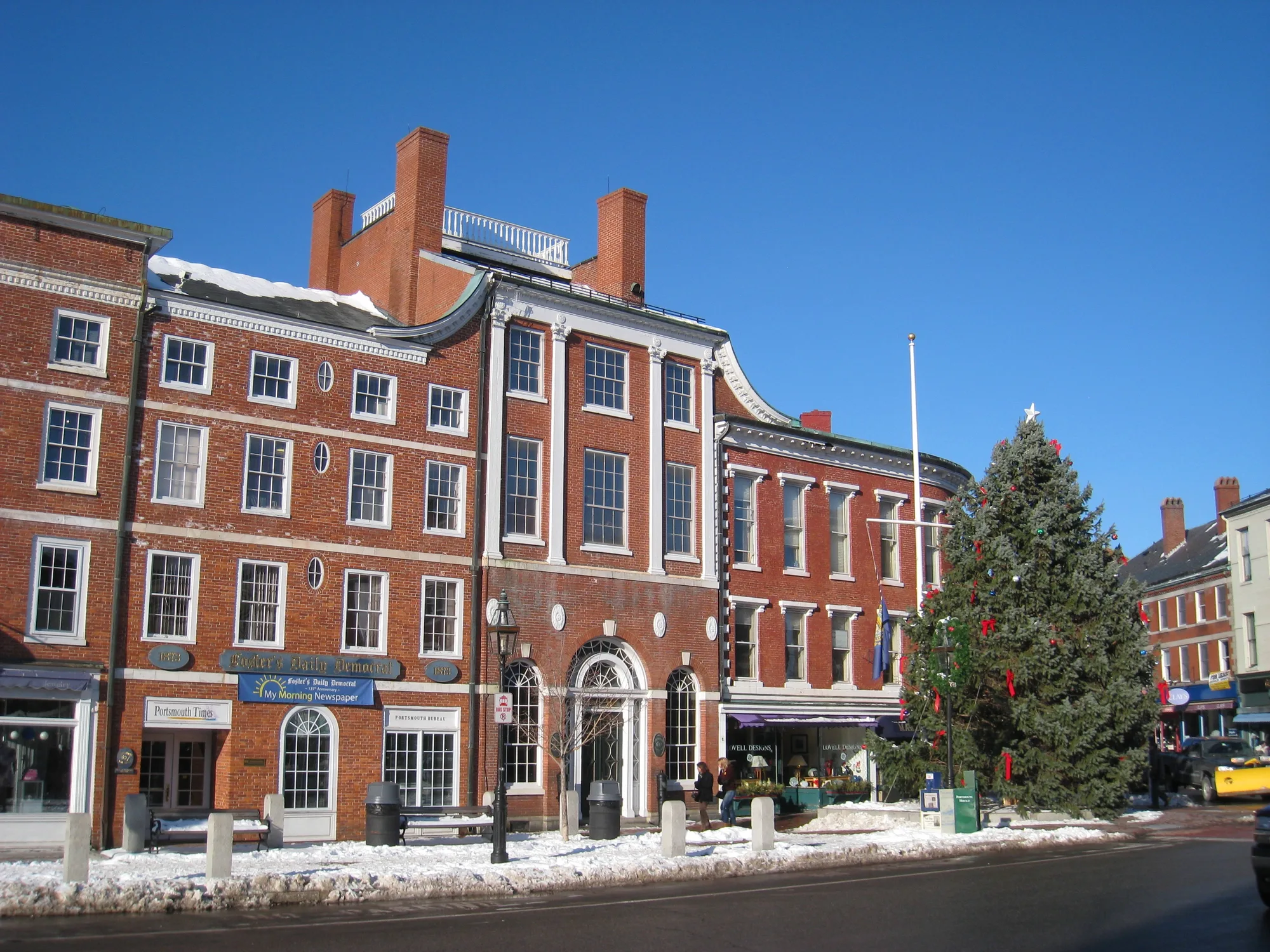
Market Square is a convenient place to begin. Look up from the storefronts to see the upper stories, brickwork and varied rooflines that give the center its character. The square is also a useful point from which to explore the surrounding streets on foot, with places to pause for a meal or a warm drink along the way.
Take your time at intersections and use marked crossings: this is a working downtown, not a pedestrian-only museum. Shop and restaurant hours change, so check any place you particularly want to visit. The photograph below shows the square in winter in 2009; individual businesses and displays may have changed since then.
2. Walk toward the Piscataqua at Prescott Park
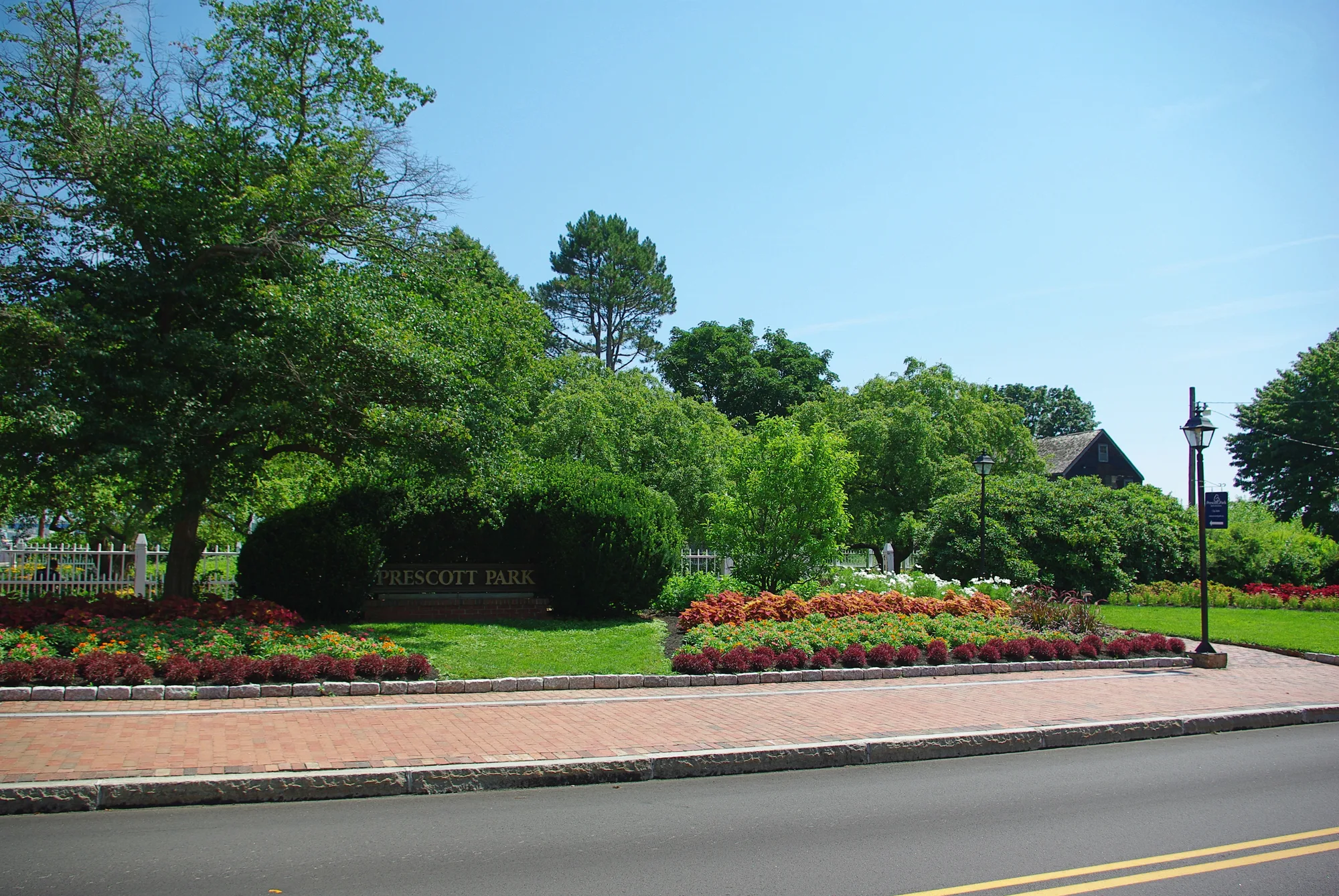
Prescott Park offers a change of pace beside the river. Paths lead past lawns, formal gardens and waterfront views. The city traces the park to the generosity of sisters Josie and Mary Prescott, who wanted this part of the waterfront to become a place for public enjoyment.
In the growing season, look for the plantings on the South Lawn and around the formal garden. The city sometimes offers seasonal garden tours, while park events can affect access or parking. Even outside the flowering months, the riverfront makes a pleasant place to pause and watch the changing light.
3. Explore Strawbery Banke's Puddle Dock neighborhood
Across from the park, Strawbery Banke Museum interprets centuries of life in the Puddle Dock neighborhood through houses, gardens, exhibits and demonstrations. Most of the historic houses remain on their original sites, allowing visitors to move through a neighborhood rather than viewing a collection of unrelated buildings.
The museum tells stories of Indigenous peoples connected to this place, past and present, as well as the families, workers, immigrants and craftspeople who lived here. Regular self-guided visits are seasonal. The museum says the 2026 season has ended and regular admission is scheduled to resume May 1, 2027; guided tours and special programs may operate in the meantime. Check its calendar and ticket details before setting out.
4. Spend a quiet moment at the African Burying Ground
On Chestnut Street between Court and State streets, the African Burying Ground Memorial Park marks a sacred place rediscovered during a city infrastructure project in 2003. The city dedicated the memorial in 2015 to honor people buried there and to acknowledge a history that had been obscured as the city grew around the site.
Approach it as a place of remembrance. Read the interpretation, give others room and be thoughtful about photography. The memorial is an essential part of understanding Portsmouth's past, including the lives of people of African descent in a city whose familiar historic buildings tell only part of the story.
5. Consider a visit to the John Paul Jones House
The Portsmouth Historical Society operates the John Paul Jones House Museum, an eighteenth-century house associated with the naval officer. Built in 1758, the house offers a chance to look beyond a street-facing facade and learn more about the people and history connected to it.
House-museum hours, tours and admission can change by season, so consult the Historical Society before making it the centerpiece of your day. If the interior is closed, avoid assuming it is accessible: continue your walk and plan a return visit when tours are available.
6. Leave space for a longer look
Portsmouth's appeal is in the connections between stops. The river explains something about the city's maritime life; the old neighborhood adds stories of homes and work; the burying ground memorial makes space for histories that were neglected. A little extra time lets you see those relationships rather than simply collecting attractions.
Use public parking where appropriate and check posted restrictions. Portsmouth's museum notes that on-site parking can be limited, especially during special events, and points visitors to city garages and other public options. Dress for wind near the water, particularly in colder months, and check accessibility information directly with each site if you need a specific route or facility.
A first visit can comfortably pair Market Square, Prescott Park and one museum or memorial. Add a meal and a few unplanned detours, and the day becomes a fuller introduction to the city than any single stop could provide.