Gettysburg asks visitors to do two things at once: take in a wide landscape and pay attention to individual lives. A first visit can feel overwhelming, especially when a map presents more stops than an afternoon can comfortably hold. The answer is not to rush between monuments. It is to choose a few places, understand how they connect, and leave time to listen.
The National Park Service's self-guided auto tour offers an introduction to the battlefield, while separate walking tours explore the national cemetery, Little Round Top, and other subjects. These six ideas can help you shape a visit around the time and mobility your group has available.
Gettysburg is a place of remembrance as well as a destination. Stay on established paths, respect graves and monuments, and check current park alerts before your visit. Access, parking, and programs may change.
1. Start with the Museum and Visitor Center
The National Park Service identifies the Gettysburg National Military Park Museum and Visitor Center as a starting place for a battlefield visit. Begin there to orient yourself before deciding how much of the park to cover. A map and a short conversation with staff can help turn a long list of unfamiliar place names into a route that makes sense for your day.
Ask about current ranger programs, parking, accessibility, and the time needed for activities you want to include. The visitor center is also where you can learn about the museum, film, and cyclorama painting. Some experiences require tickets, so check the current details with the park or its visitor-center partner rather than assuming every part of the building has the same admission arrangement.
Families and groups do not all need the same schedule. A visitor who wants a broad overview might spend more time on the driving route, while someone with a particular historical interest may choose one guided program and a longer stop at a single part of the battlefield.
2. Follow the battlefield auto tour at your own pace
The park's app lists the Gettysburg auto tour as a two-to-three-hour driving experience. That estimate is useful for setting expectations: the route is a substantial part of a day, not a quick loop to squeeze in between other reservations. Build in extra time for parking, reading the wayside exhibits, and any walks you choose to add.
Download or obtain your route information before leaving the visitor center and follow park directions as well as your navigation app. The marked tour organizes a large landscape into a sequence, helping visitors understand how events unfolded over the battle's three days in July 1863. You can also choose to focus on a few stops and return another time; there is no prize for seeing every marker in a hurry.
Roads, parking areas, and visitor services can have seasonal hours or temporary closures. The park's alert page is the right place to check on the day of your trip. If you are traveling with a bus or recreational vehicle, check the parking guidance for your vehicle before choosing stops.
3. Walk thoughtfully at Little Round Top
Little Round Top is Auto Tour Stop 8 and one of the most familiar names on the battlefield. The park explains that fighting for the position took place on July 2, 1863, and that Union forces ultimately repelled Confederate attacks there. The rocky summit also makes the physical landscape easier to understand: elevation and exposed terrain mattered to the people who fought here.
The park's Little Round Top virtual tour describes eight main stops and suggests roughly 30 to 90 minutes. Paths include paved and compressed-dirt sections, and not all are accessible. Review the park's accessibility and parking information before deciding how much walking your group wants to do.
There is more to a respectful visit than avoiding litter. The park asks visitors not to climb or sit on monuments, markers, stone walls, or cannon. Use established paths and leave the landscape in good condition for the next visitor.
4. Read the names at the Pennsylvania Memorial
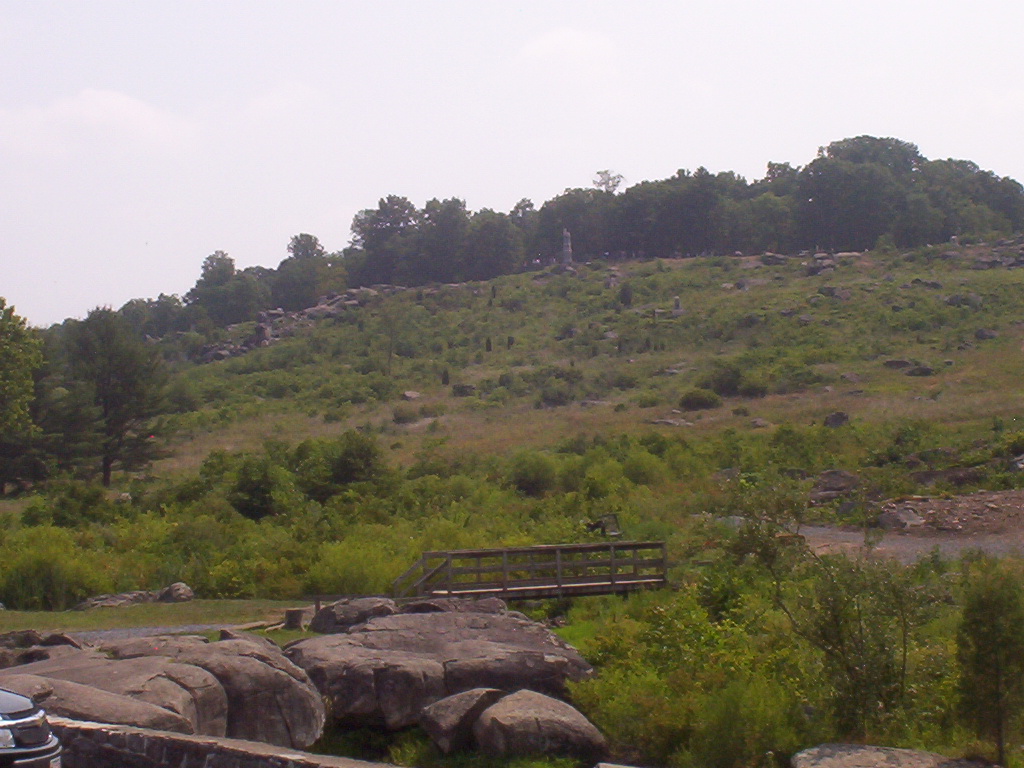
The Pennsylvania Memorial, Auto Tour Stop 12, is the largest monument on the battlefield, according to the park. Dedicated in 1910, it is a later act of remembrance: a structure created decades after the battle to honor Pennsylvanians associated with the fighting.
The park says bronze tablets around and inside the memorial bear the names of more than 34,400 Pennsylvania soldiers believed to have been present. Reading the names changes the scale of the experience. The memorial is large, but its details point back to people whose stories cannot be reduced to a single view across the field.
The park offers a searchable database for the memorial. If your family has a possible connection, use it as a starting point for further research, and check names and units against additional records before drawing a conclusion. Spellings and historical records can be complicated.
As of the park alert reviewed for this story, the observation deck was closed during a nearby renovation project. Do not assume the interior stairs or deck will be accessible on your visit; consult the current alerts for the latest status.
5. Make time for Gettysburg National Cemetery
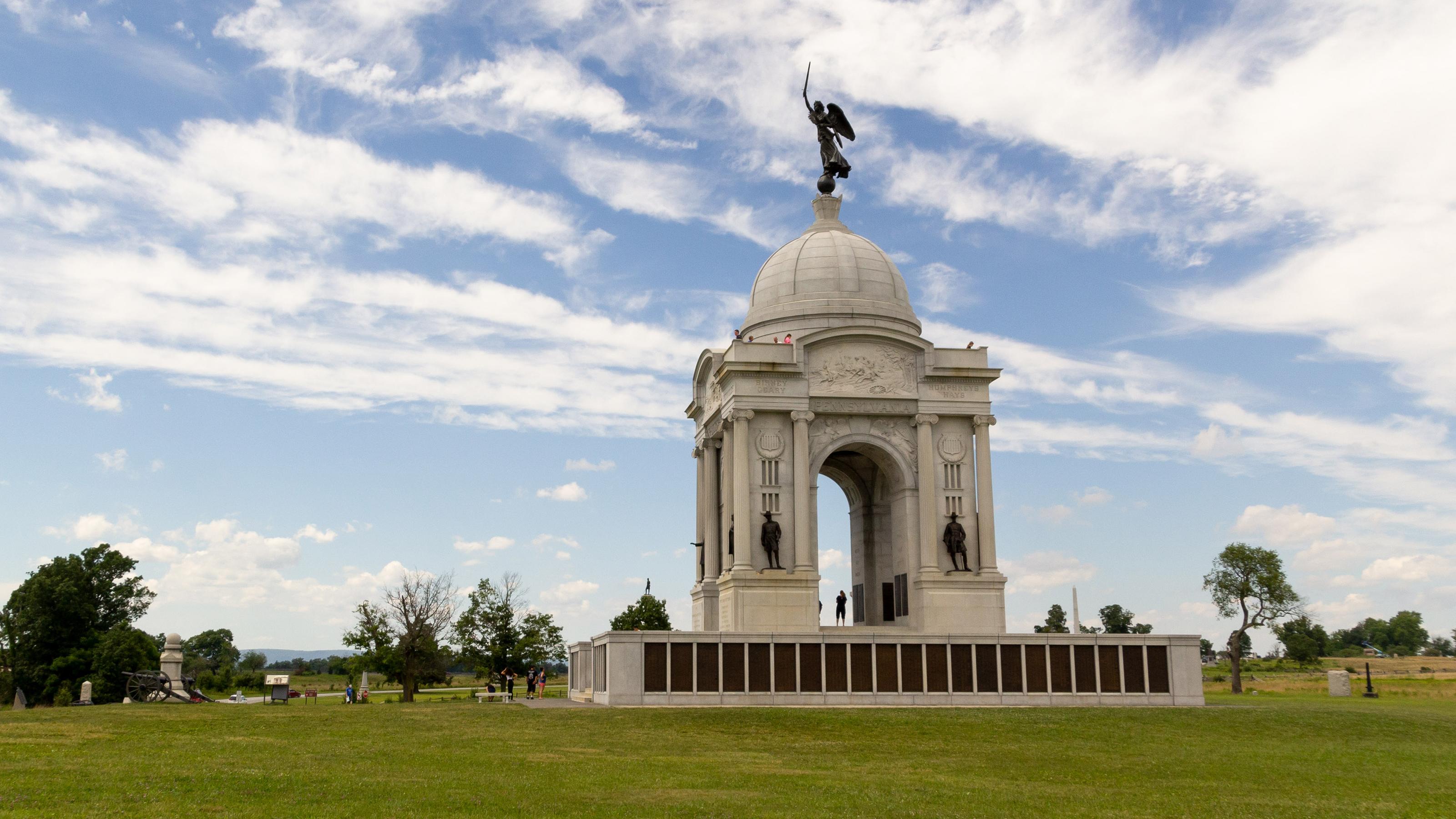
The national cemetery is a place to slow down and consider the battle's aftermath. The park's cemetery tour begins at the Taneytown Road entrance; visitors can follow a path from the visitor center or use the adjacent cemetery parking area. The park's app lists a cemetery walking tour of approximately 30 to 45 minutes.
President Abraham Lincoln delivered the Gettysburg Address during the cemetery's dedication ceremonies on November 19, 1863, several months after the battle. The park's virtual tour places that speech in the context of the work of establishing a burial ground and the people commemorated there.
The cemetery is a burial place. Speak and move with the same care you would bring to any active place of remembrance. Before you go, check current cemetery hours and accessibility information, which may differ from other park facilities.
6. Choose one additional perspective
A battlefield visit becomes richer when it makes room for more than one story. The park's app includes a walking tour about Gettysburg's African American community, as well as tours of Cemetery Ridge and the East Cavalry Battlefield. Select one that fits your available time and interests rather than treating all of them as mandatory additions.
You can also look for a current ranger-led program or a tour with a licensed battlefield guide. Schedules, fees, and availability vary, so confirm details through the park or visitor center. If you cannot travel to every location, the park's virtual tours offer another way to explore the setting and interpretation.
Before you go
Review the park's current alerts, hours, and accessibility pages, download the information you need, and allow more time than a map alone suggests. Gettysburg is not a checklist of photo stops. A considered visit gives you space to understand the battle, its aftermath, and the people whose lives are remembered here.