A waterfall outing can mean a demanding day of steep stone steps—or a shorter introduction to a wooded creek. At Ricketts Glen State Park in northeastern Pennsylvania, the difference depends on the route you choose before you set out.
The park is known for 22 named waterfalls. Twenty-one are on the Falls Trail System in the Glens Natural Area, while Adams Falls sits near the Evergreen parking area. These five ideas are different ways to experience the same park; some overlap, so they are not five separate day trips.
There is one detail to put ahead of any waterfall checklist: Pennsylvania's Department of Conservation and Natural Resources calls the Falls Trail its most difficult hiking category. The path is steep, rocky, and can be slippery. Check the park's current alerts and trail guidance before traveling, particularly in cold weather.
1. Start with the tallest waterfall: Ganoga Falls
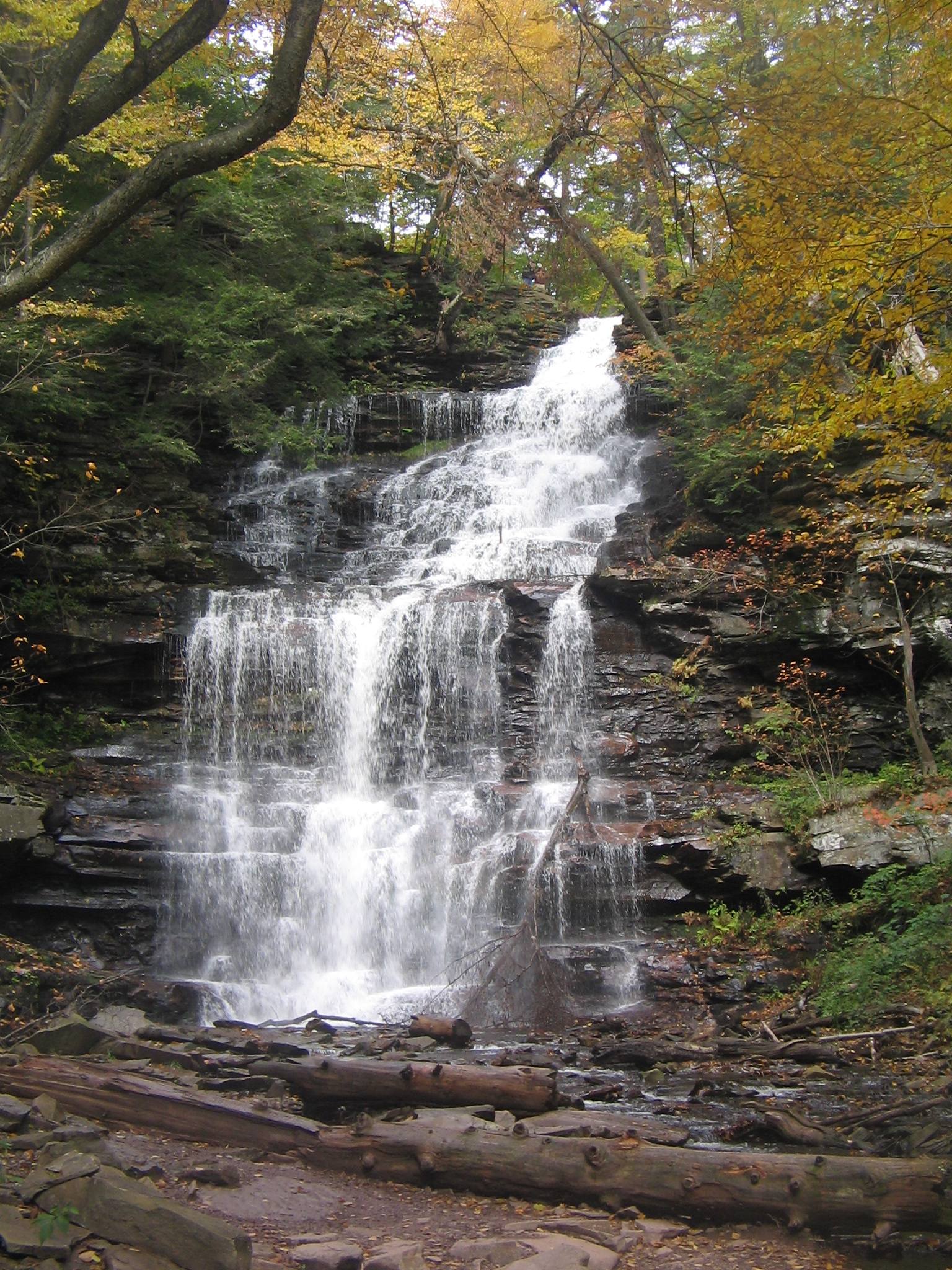
Ganoga Falls drops 94 feet, making it the highest of the park's named waterfalls. It is a striking goal for hikers prepared for the Falls Trail's uneven footing and elevation changes. This is the kind of place where the photograph makes the reward obvious but does not show the work required to get there and back.
Plan your route with the park's map rather than treating the falls as a simple roadside stop. Decide which trailhead suits your group, how much distance you can manage, and how much daylight you have. If the trail is wet or icy, the same stones that make the gorge beautiful can make a descent more challenging.
The park identifies Lake Rose Trailhead as the closest access to the Falls Trail, but the lot can fill quickly at busy times. A nearby starting point does not make the entire hike easy. Check the park's current access information, carry water, and wear footwear suited to rocky ground.
2. Choose the upper loop for a concentrated waterfall hike
If your group is ready for a serious hike but does not intend to cover the entire trail system, the park describes a 3.2-mile loop using the Highland Trail and the Glen Leigh and Ganoga Glen sides. The park says this route reaches most of the waterfalls. Check the map for the access route from your chosen parking area, since the distance you actually walk depends on where you begin and the route you take.
Shorter is not the same as gentle. The trail system remains a strenuous outing, and hikers should expect uneven surfaces and steep sections. Allow time for careful footing and for other hikers at narrow spots. The best pace is the one that lets everyone in your group move comfortably and pay attention to the path.
For a first visit, use the official trail guide to understand how the two glens and Highland Trail connect. If the weather, trail conditions, or your group's experience make the route a poor fit, save it for another day rather than assuming you must complete a loop to enjoy the park.
3. Take the longer view on the full Falls Trail
The full loop covers 7.2 miles when both the upper and lower sections are included, according to the park. It is a more ambitious way to see the gorge and demands more time, stamina, and planning than a short waterfall stop.
Start by looking at the trailhead choices. Lake Rose offers the closest access to the waterfall trail, while the park says the access from the parking areas along PA 118 involves a longer approach to the first waterfall upstream. The route you choose affects your day well before you reach the most photographed scenery.
Build in time for breaks and a realistic turnaround. Keep to the marked trail, leave room for other visitors, and follow any temporary closures. The park warns that the trail is closed in winter except to properly equipped ice climbers and hikers; the current park notice should guide your decision, not the date on an old social post.
4. Look for the landscape between the falls
The waterfalls get the headlines, but the route between them helps explain why this park is memorable. The state describes old-growth timber in the glens and a landscape shaped by streams cutting through rock. Slow down where it is safe to do so and look at the creek, the trees, and the way the gorge changes as the path moves through it.
The Highland Trail links the two glens and crosses Midway Crevasse, a feature the park describes in its geological interpretation. It can be part of the upper loop rather than a separate stop to add on automatically. Consult the park map and choose a route before entering the trail system.
A woodland walk also rewards the small practical decisions: carry out what you bring, stay on designated paths, and keep the group together. Resist the urge to step beyond the trail for a better angle; a photograph is not worth a fall or damage to a fragile place.
5. Visit Adams Falls for a different starting point
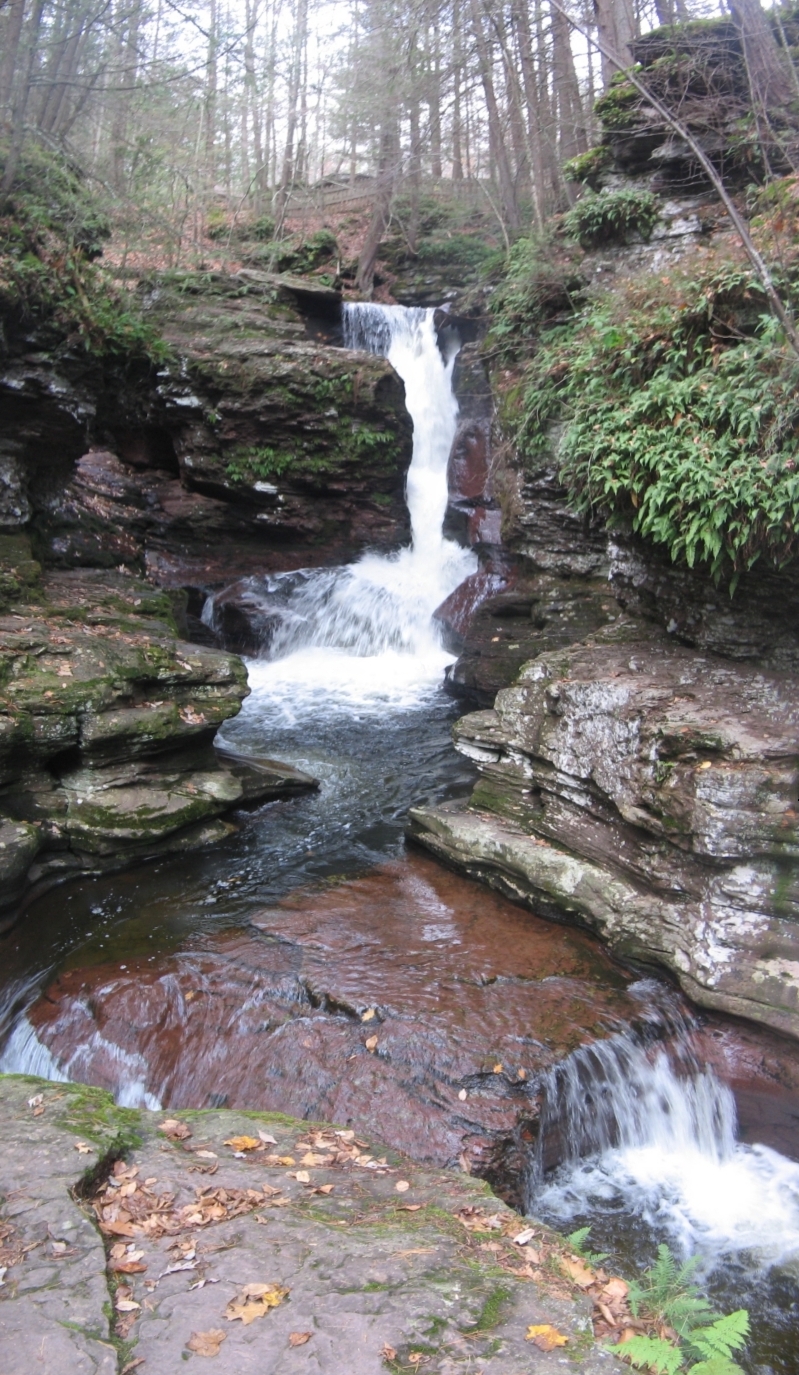
Adams Falls is the park's 22nd named waterfall and sits a few hundred feet from the Evergreen parking area off PA 118, according to the park's sightseeing information. The Evergreen Trail starts at that parking area and descends to the falls; the state describes the full Evergreen loop as one mile and rates it easiest.
That makes Adams Falls a useful option to investigate if the strenuous gorge route does not suit your plans. It does not mean the path is step-free or suitable for every visitor. Check the park's current accessibility information and trail conditions, and ask the park office about your group's particular needs before setting out.
Before you go
Ricketts Glen's park office lists its address as 695 State Route 487, Benton, Pennsylvania. The park is open daily from sunrise to sunset, while specific facilities and trail access have their own conditions. The state cautions that the section of PA 487 between Red Rock and the Lake Jean area is steep.
Review the official sightseeing page, hiking page, and current park alerts for route changes and seasonal restrictions. Choose the experience that matches your group, not the number of waterfalls you hope to count. A well-planned visit leaves more attention for the place itself.