Pennsylvania's covered bridges make the journey part of the attraction. A road narrows beside a creek, a timber portal appears between the trees, and for a few moments the crossing feels like a different kind of travel. Some bridges still carry everyday traffic; others are best enjoyed on foot in a park or historic setting.
These seven crossings are spread across the state, so plan a regional outing instead of trying to visit them all at once. Respect posted weight, height and traffic limits, and never stop in a travel lane for a photo. Many historic bridges are on narrow roads with little or no safe parking; local tourism officials specifically recommend choosing established parking areas.
1. Loux Covered Bridge: A Bucks County Backroad Stop

In Plumstead Township, Loux Covered Bridge crosses Cabin Run Creek amid the backroads of Bucks County. The county tourism office dates the bridge to 1874 and notes a detail that can confuse first-time visitors: a nearby stone marker identifies it as “Cabin Run Bridge,” but the separate Cabin Run Covered Bridge crosses the same creek downstream.
That distinction makes a useful theme for a small regional drive. Rather than racing from bridge to bridge, let the roads lead you through the surrounding countryside and pair the outing with time in a nearby town. The two crossings are close enough to compare, but they remain working parts of the local road network rather than outdoor exhibits.
Check current access and obey posted vehicle limits. If there is nowhere legal and safe to pull off, enjoy the bridge from the car and continue to a park or town for your next stop. Leave room for residents and other drivers on the narrow approaches.
2. Cabin Run Covered Bridge: Another Crossing of the Same Creek

Cabin Run Covered Bridge gives you a second look at the waterway that passes beneath Loux. Its setting and timber structure make it a natural companion to the earlier stop, but take care not to assume the two are the same bridge. Visit Bucks County identifies both and publishes a self-guided route through the region.
Approach slowly and read the signs before entering. The tourism office lists height, width and weight limits for Cabin Run; the posted signs on site and current official notices should control your decision, especially if you are driving a large vehicle. A small historic crossing can be beautiful without being suitable for every car, trailer or delivery vehicle.

The area's quiet roads are part of its appeal. Share them with local traffic, cyclists and pedestrians, and plan photo stops only where parking is permitted. A simple creekside crossing becomes more interesting when you consider the generations of practical journeys that have passed through it.
3. Pine Valley Covered Bridge: A Crossing Beside a Park
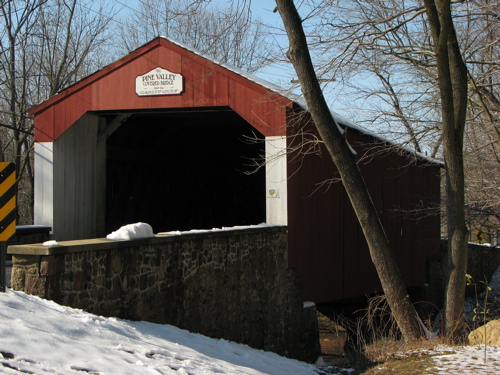
Pine Valley Covered Bridge in New Britain Township has carried travelers across Pine Creek Run since the 19th century. Visit Bucks County dates its completion to 1842 and describes it as one of the county's oldest covered bridges. It remains a busy crossing, which makes it especially important to treat the structure as a road first.
Nearby Covered Bridge Park provides a reason to stop for more than a drive-through. Check the park's current hours and parking arrangements, then enjoy a walk or a picnic where allowed. From a safe vantage point you can take in the bridge's form without standing in the path of traffic.

The county notes that the bridge is often lit at dusk, but lighting and access can change. If you visit late in the day, be visible, stay on designated paths and avoid blocking the bridge entrance. A calm look from a safe place is far more rewarding than trying to make a quick roadside stop.
4. Schofield Ford Covered Bridge: A Walk in Tyler State Park

Schofield Ford Covered Bridge in Tyler State Park offers a different experience from the road bridges on this list. The current bridge opened in 1997 after the earlier structure was destroyed by fire. Its setting makes it a good choice for visitors who would rather combine bridge watching with a park walk.
Consult the current state-park map before choosing a trail and parking area. Paths can vary in surface, distance and grade, and weather may make a longer loop more demanding than expected. Check the latest accessibility information if a level route or particular surface is important for your group.

Give yourself time to notice the timber structure and the creek landscape around it. Keep to designated paths and follow park rules, particularly after heavy rain or icy weather. Because this is a replacement bridge, its story is also about a community's decision to rebuild a familiar crossing.
5. King's Covered Bridge: A Somerset County Crossing

In Somerset County, King's Covered Bridge crosses Laurel Hill Creek in a landscape of farms, wooded hills and winding roads. Pennsylvania's tourism office dates the original bridge to 1906 and notes that it was rebuilt in 2008. That distinction is part of the story of keeping a familiar crossing in use.
The bridge can be paired with Lower Humbert Bridge for a Laurel Highlands outing. Barronvale Bridge nearby stands on private land, according to PennDOT; do not enter the property without permission. Distances on a map may look modest, but narrow roads and time spent exploring can make the trip longer than expected. Check current local road notices before setting off.

Historic bridges and their approaches may be close to private property. Do not enter a driveway, field or bridge approach unless it is clearly open to visitors, and do not block the road. A view from a public, permitted location is the right way to appreciate the structure and its setting.
6. Claycomb Covered Bridge: A Gateway to Old Bedford Village
Claycomb Covered Bridge makes a natural introduction to Old Bedford Village. The bridge was built in 1880 and later moved to its present location, according to Pennsylvania's tourism office. That history is part of the appeal: the structure has served different places while retaining a connection to the craft of covered-bridge building.
The village adds a living-history dimension to the outing, but its buildings and programs operate on their own schedule. Its visitor page says regular hours end October 31 and the village closes for winter except special events. Check current admission, open days and event information before assuming you can visit the grounds or cross by car. Special events may change ordinary access.
Set aside enough time to look beyond the bridge if the village is open. The stop can fit into a broader Bedford-area trip with a meal or a walk downtown. As at any historic site, follow staff instructions and leave the buildings and artifacts undisturbed.
7. Pomeroy-Academia Covered Bridge: A Long Crossing in Juniata County

The Pomeroy-Academia Covered Bridge in Juniata County is notable for its length and its place in the community's history. Pennsylvania's America250 information identifies it as the state's longest remaining covered bridge. Its long timber interior offers a sense of scale that a small roadside span cannot quite provide.
Before visiting, check the current local rules for parking and access. A bridge's age, length or appearance does not tell you whether it is open to vehicles, and restoration projects can alter access. Follow signs and avoid assuming that directions in an old travel post still apply.

This is a good stop to pair with a quiet drive through the Juniata Valley, allowing extra time for local roads and changing weather. Respect nearby properties and treat the bridge as a historic structure to be preserved, not a backdrop that requires climbing on timbers or entering closed areas.
Before You Go
Confirm bridge and road status, vehicle restrictions, park hours and safe parking before traveling. Many bridges are narrow, active crossings; yield to traffic and never stop on the roadway or inside a bridge. Respect private property, observe posted rules and leave historic timber and surrounding landscapes undisturbed.