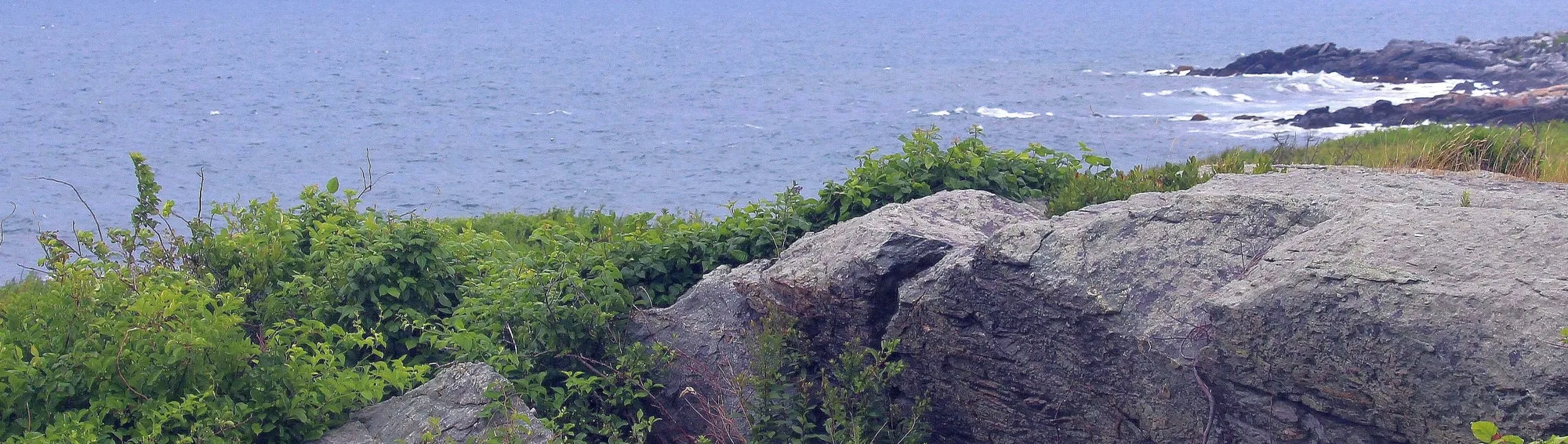
On Newport's eastern shore, a public path brings together Atlantic waves, rocky cliffs and glimpses of the city's Gilded Age architecture. The Cliff Walk is one of Rhode Island's best-known outings, but a satisfying visit does not require walking every mile. Choosing an open section and understanding the terrain can make the day much more enjoyable.
The route is roughly 3.5 miles long and has several public access points. Conditions and closures can change, and some stretches are substantially more difficult than others. Check the City of Newport's current Cliff Walk information before setting out, then decide whether your group wants a short seaside stroll or a longer, more challenging outing.
1. Begin near Easton's Beach
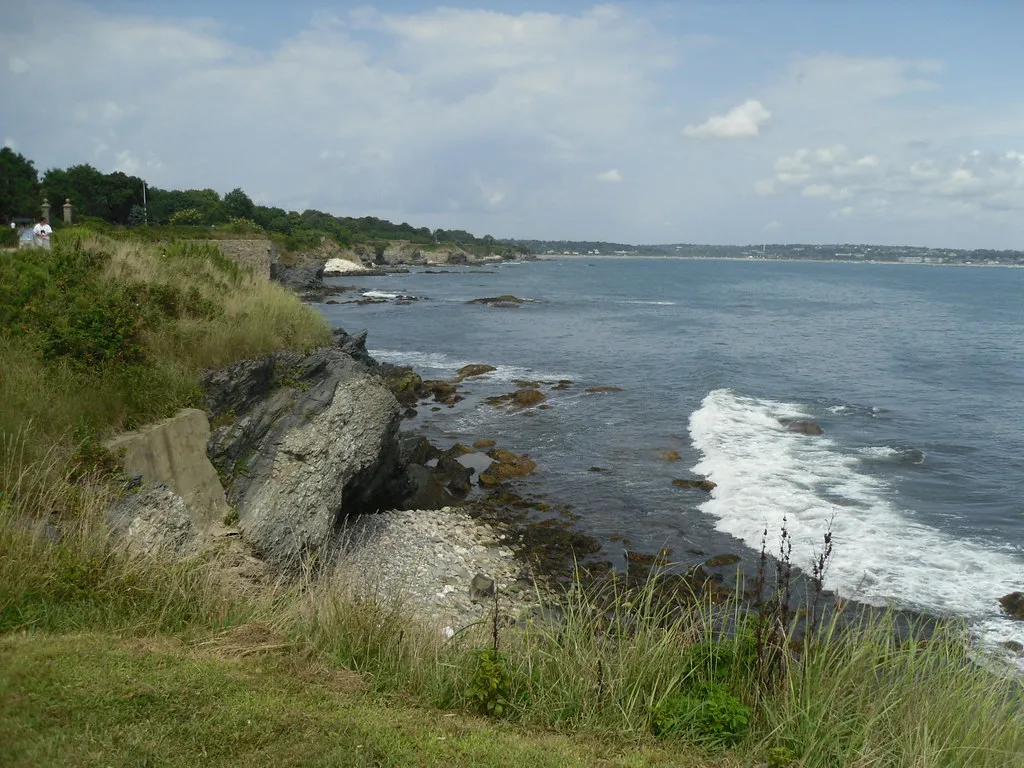
The northern end near Memorial Boulevard and Easton's Beach is a convenient starting point for many visitors. From here the path follows the coastline south toward Narragansett Avenue and the Forty Steps. This northern section is generally the easier part of the route, with a paved surface and views across the water.
Even on the easier section, weather matters. Wind can make a mild day feel cool, ocean spray can reach exposed areas, and wet or icy pavement deserves caution. Wear shoes with reliable traction, carry water and turn back if conditions become uncomfortable. Stay behind barriers and away from cliff edges.
Check parking restrictions carefully. The city identifies parking near Easton's Beach and Forty Steps, but spaces and rules vary by location and season. Read the signs where you park and do not rely on an old travel post to describe current fees or time limits.
2. Pause at the Forty Steps
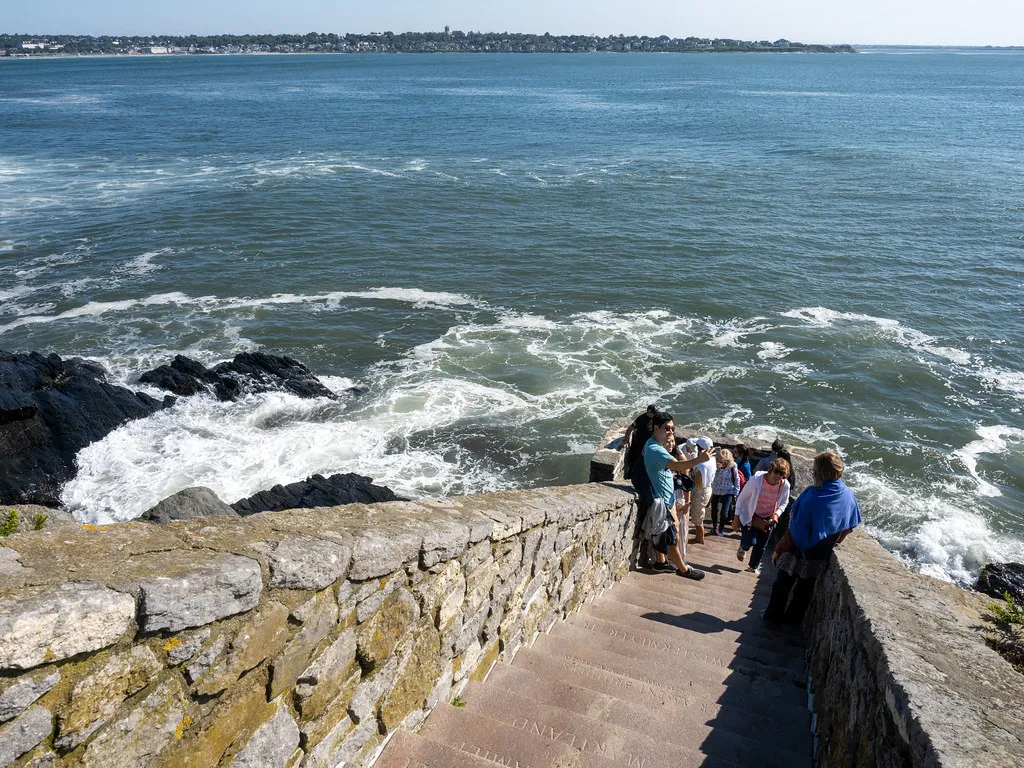
The Forty Steps descend toward the rocky shore at the end of Narragansett Avenue. They are a natural place to stop, take in the ocean and consider how the coast has shaped the city. Newport's history includes the wealthy families whose summer houses stand nearby and the workers who maintained those properties and lived their own lives around them.
The staircase is steep and exposed. A view from the upper area may be a better choice for visitors who do not want to negotiate the steps, and rough surf or slippery conditions are good reasons to keep your distance. Never climb onto rocks close to breaking waves for a photograph.
The city notes that seasonal water stations are available for people and pets at this access point. Do not count on them being operating during every visit; bringing your own water is a sensible habit, particularly in hot weather or the off-season.
3. Check the current detour before continuing south
The Cliff Walk is not necessarily a continuous, uninterrupted coastal path. A section between Narragansett Avenue and Webster Street has been closed following a 2022 collapse. In 2026, visitors have been directed around the affected area by a signed street detour. Repair planning has continued, so consult the city's latest notices and obey barriers rather than relying on an older map.
This matters when planning a point-to-point walk. A detour can add street crossings and change the character of the route, and a visitor who wants to avoid it can instead walk north from Forty Steps toward Easton's Beach and return the same way. Check current conditions on the day of your trip, since construction and storm damage can alter access.
The path is a public shoreline route, but the neighboring homes and grounds are private or separately managed. Stay on the public route and respect signs. Views of an estate from the walk do not include admission to its interior or gardens; if a house tour is important to you, check the individual operator's ticket and opening information.
4. Choose the southern terrain with care
Farther south, portions of Cliff Walk become rougher and require negotiating uneven ground and rocks. This is a different experience from the paved northern stretch. It may not be suitable for every visitor, especially in wet weather or for anyone who needs a smooth, step-free path.
Consult the city's access-point information and map before committing to a longer route. Know where you can leave the walk, allow enough daylight and arrange a return plan. Cell service and a phone map are helpful, but they do not replace attention to the path, warning signs and the weather in front of you.
If you are uncertain about the terrain, choose the northern section and enjoy it slowly. There is no prize for finishing the full route, and a shorter out-and-back can provide the ocean views that brought you to Newport in the first place.
5. Make the walk part of a relaxed Newport day
Pair an open section of Cliff Walk with lunch in town or a separately booked historic attraction. Give yourself time to return to your car or transportation, particularly during events when Newport can be busy. The city provides information on public entrances and parking, and local attractions publish their own operating schedules.
Dogs are welcome under the city's posted rules; keep them leashed and under control and clean up after them. Families should keep children close on the coastal path and around steps. Anyone needing detailed accessibility information should contact the city about the particular section they plan to visit, since the route's surfaces and grades vary.
The best plan is a flexible one: check closures, start with a manageable stretch and make room to enjoy the sea air. Newport's shoreline is memorable whether you walk for half an hour or build an entire day around it.