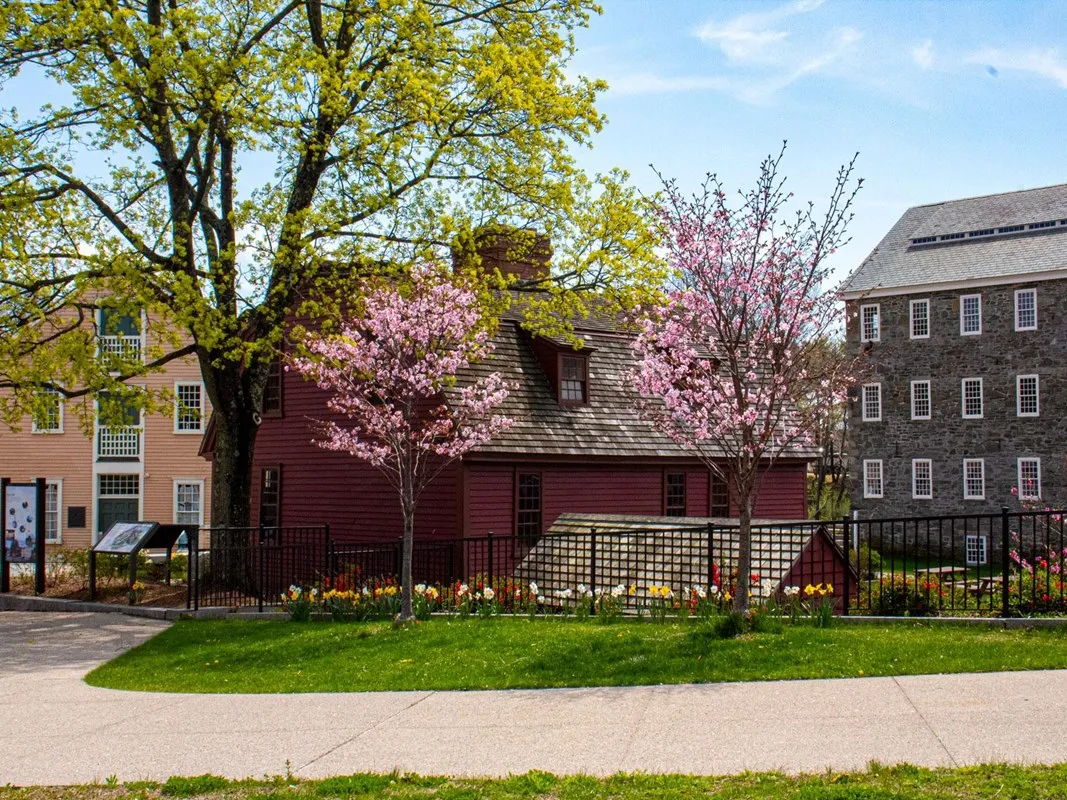
In the middle of Providence, a small national memorial offers a place to pause over a large idea: freedom of conscience. Roger Williams National Memorial connects an urban green space with the story of a seventeenth-century settlement and the people whose lives and land were involved in its founding.
The memorial is an easy stop to combine with a wider day in the city, but it deserves more than a quick glance. Its paths, well and exhibits invite visitors to ask how a settlement became a city and how a principle of religious liberty developed alongside the complicated realities of colonial history.
1. Start at the visitor center
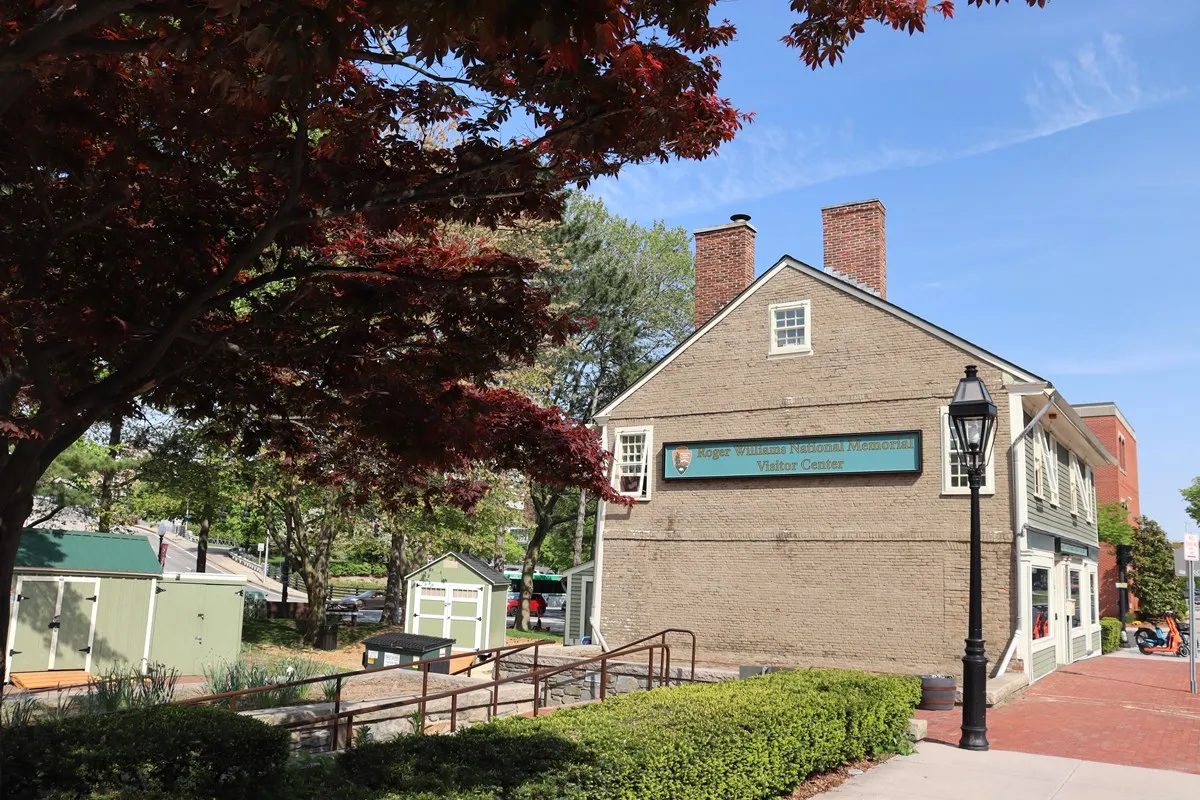
The National Park Service visitor center is at 282 North Main Street. Inside, visitors can find exhibits and a short introductory film about Roger Williams and the memorial. Start here if it is open; staff can point out current programs, explain the site and help orient you before a walk through the grounds.
The park lists the grounds open daily from dawn to dusk. Visitor center hours are more limited and can change with the season or holidays, so check the park's current page before traveling. As of November 2026 the visitor-center page lists Thursday through Sunday hours, 10 a.m. to 4 p.m., with Thanksgiving and Christmas closures. Confirm before setting out rather than assuming the building follows the grounds schedule.
There is a free visitor parking lot with a two-hour limit, according to the park. That can be enough for the memorial itself, but it is not an all-day parking plan for exploring Providence. Read posted signs and make separate arrangements if your itinerary continues elsewhere in the city.
2. Follow the paths through the memorial
The memorial's lawns and paths give the site a quieter character than the streets around it. Interpretive panels help explain Williams's life and ideas, while benches offer room to sit and read. Leave enough time to explore at an unhurried pace, especially if children are working through the park's Junior Ranger materials.
Williams was banished from Massachusetts and founded Providence in 1636. The National Park Service explains that Native people helped him after his banishment. The story of Providence is therefore also a story of Indigenous homelands, relationships and change; it should not be told as though the place was empty before European settlement.
As you walk, consider what freedom of conscience meant to Williams and how ideas about religious liberty have been interpreted and contested over time. The memorial can be a useful beginning for a conversation, including questions about whose freedoms were protected and whose experiences were left out of early accounts.
3. Find the historic spring and Hahn Memorial
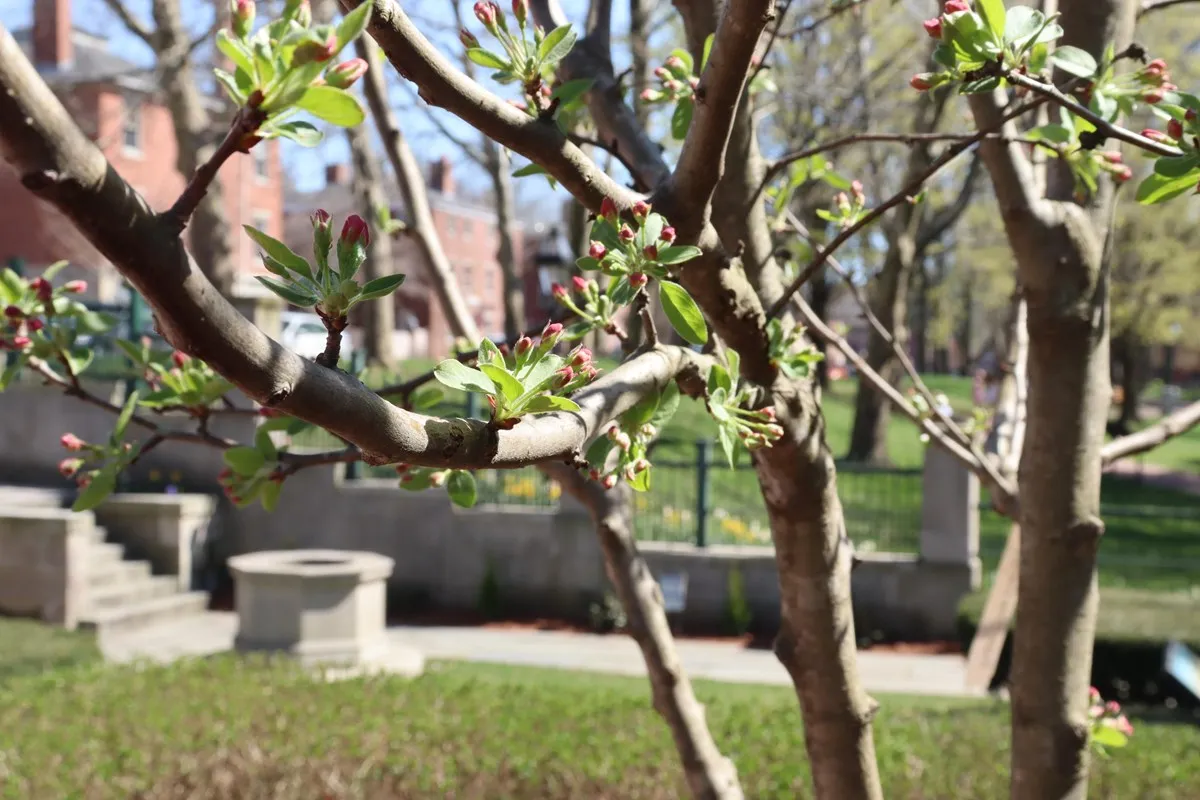
A well within the Hahn Memorial marks the site of a freshwater spring associated with the early settlement. The spring is no longer active, but the marker helps visitors imagine why access to water mattered to people living here. Read the nearby interpretation to understand both the natural feature and the later memorial built around it.
The Hahn Memorial also commemorates Isaac Hahn, whom the National Park Service identifies as the first person of Jewish faith elected to public office from Providence. That additional layer brings the theme of religious freedom into a later chapter of the city's history. Seasonal closures can affect access to the enclosed area, so check signs and ask a ranger if it is a priority.
The memorial landscape includes other commemorative spaces and gardens. Their appearance changes with the seasons, and plantings may look quite different from photographs taken in summer. A winter visit can still be worthwhile, but bring a warm layer and check walking conditions after snow or ice.
4. Connect the visit with the city around it
Providence offers many ways to extend a history-focused day beyond the memorial. Use a current map to choose a walk that fits your group, then leave time for lunch or a stop at another attraction. The National Park Service notes that historic Providence can be explored within the surrounding area, but individual museums, historic houses and businesses set their own hours and admission policies.
Rather than assuming every site is open, pick one additional destination and check its official schedule. City walking routes can include hills, street crossings and uneven historic surfaces. Allow extra time for your group, wear comfortable shoes and consider transit or a short drive when that makes the day more accessible.
Visitors interested in the region's Native history can seek out interpretation by Indigenous communities and institutions alongside colonial-era sources. Listening to those perspectives adds depth to the story of the land and its people before and after Providence was founded.
5. Plan a low-pressure visit
For a short outing, allow time for the visitor center if open, a slow circuit of the grounds and the spring. For a longer day, pair the memorial with a meal and a separate city attraction. Ask park staff about current accessible routes, public restrooms and programs; facilities and staffing can change.
The memorial's small size is an advantage. It leaves room to notice details and to think about the relationship between a national ideal and the people who lived with its consequences. The best souvenir may be a better question to carry into the rest of your Providence visit.