Off the South Carolina coast near Awendaw, Bulls Island offers a day among salt marshes, maritime forest and a changing Atlantic shoreline. The island is part of Cape Romain National Wildlife Refuge and is reached by boat, making it a different kind of beach trip: there are no shops to replace forgotten supplies, and the ferry's return time shapes the day.
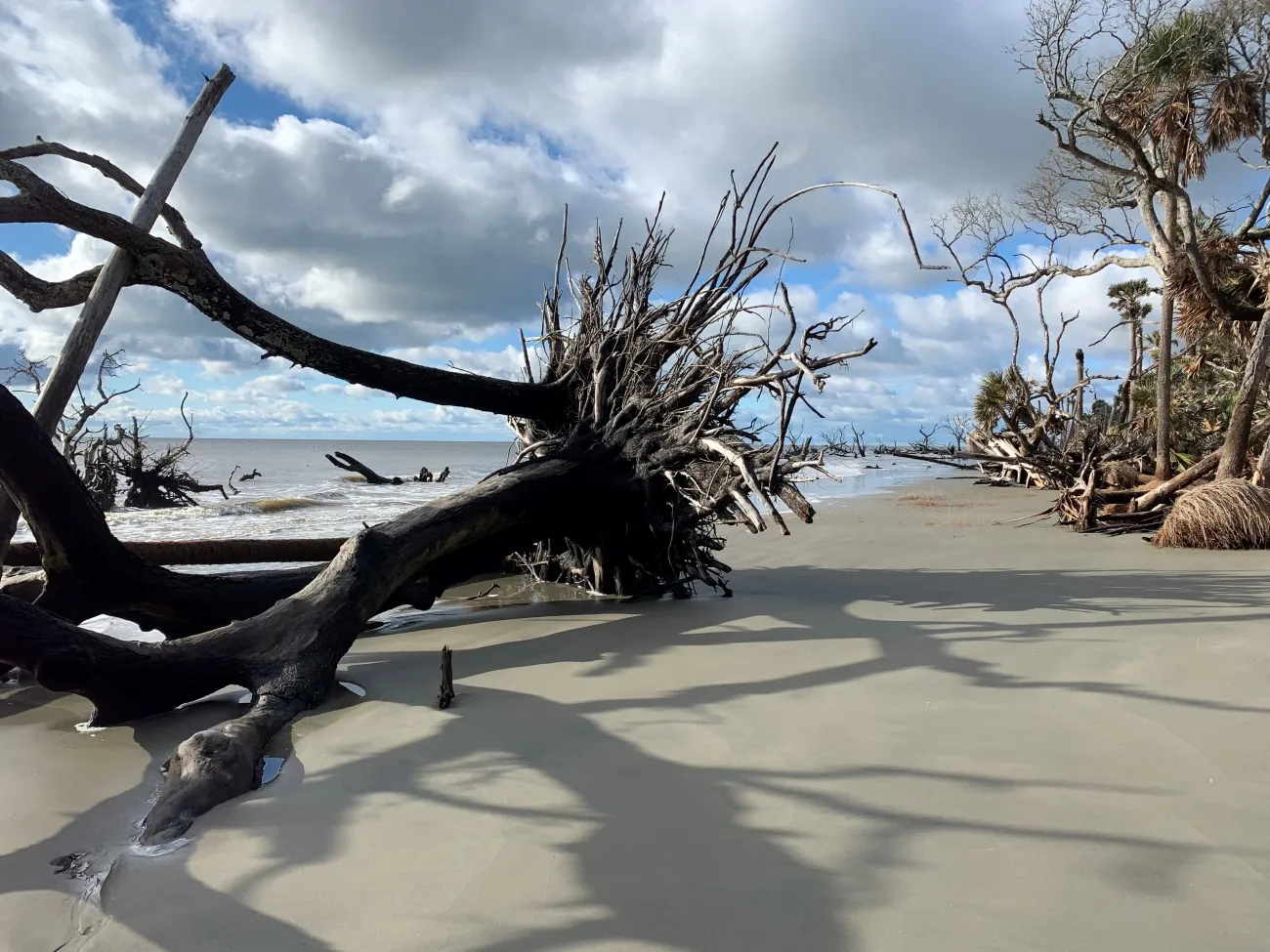
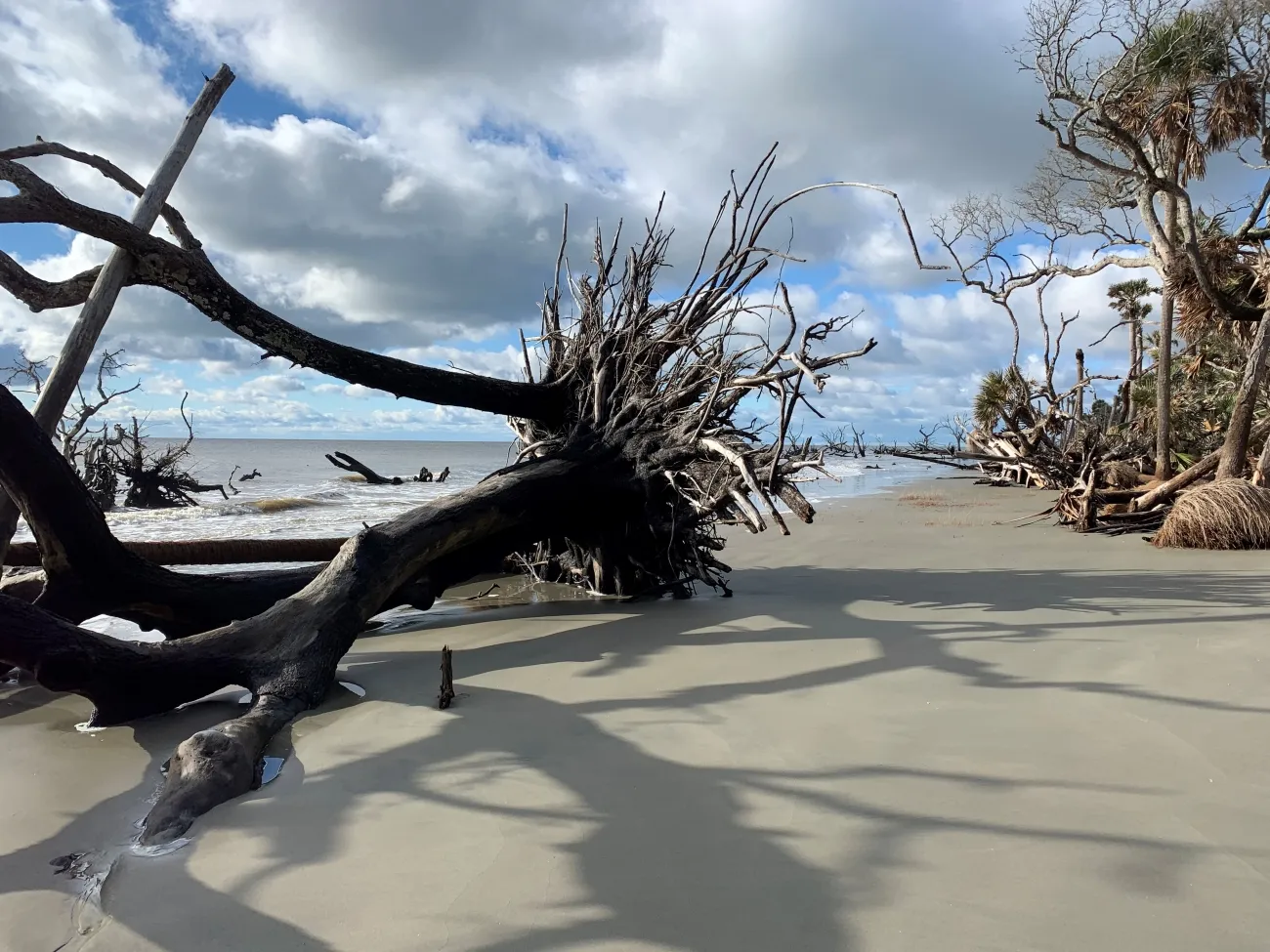
Boneyard Beach, with weathered trees along the shore, is the island's best-known image. But the refuge also protects habitat for migratory birds and sea turtles. Plan around wildlife, tides and your own walking ability, and check current conditions before booking transportation.
1. Arrange the boat before you go
Cape Romain's barrier islands are accessible by boat. The refuge identifies Coastal Expeditions as its authorized Bulls Island ferry concessioner; check the operator's current schedule, prices, reservations and departure instructions before traveling. Services can change with season, weather and tides.
Garris Landing is an access point near Awendaw. The refuge does not charge an entrance fee, but transportation has a separate cost. Record the return departure time and leave a generous margin to reach the dock. If you are traveling by private boat or kayak, check current refuge rules, landing restrictions, tides and marine conditions; the crossing requires appropriate equipment and experience.
2. Give the walk to the beach enough time
From the dock, the refuge's island map lists the front beach at approximately 1.5 miles one way. Boneyard Beach is farther along the shoreline, so the total outing can be substantially longer. Distances vary with your chosen route and where you turn around; ask the ferry operator and use a current map rather than assuming the beach is next to the dock.
Carry drinking water, snacks, sun protection, insect repellent and shoes suited to walking on unpaved paths and sand. There are limited facilities, and weather can feel more intense on an exposed coast. A shorter forest walk or a visit to the nearer beach may be a better choice for some groups.
3. Look closely at Boneyard Beach
At Boneyard Beach, wind, salt water and erosion have exposed and weathered trees, leaving pale trunks and limbs on the sand. The scene changes with tides and coastal processes; the exact view in a photograph may not be what you find. Low tide can reveal more beach, but check both tide and ferry schedules when planning.
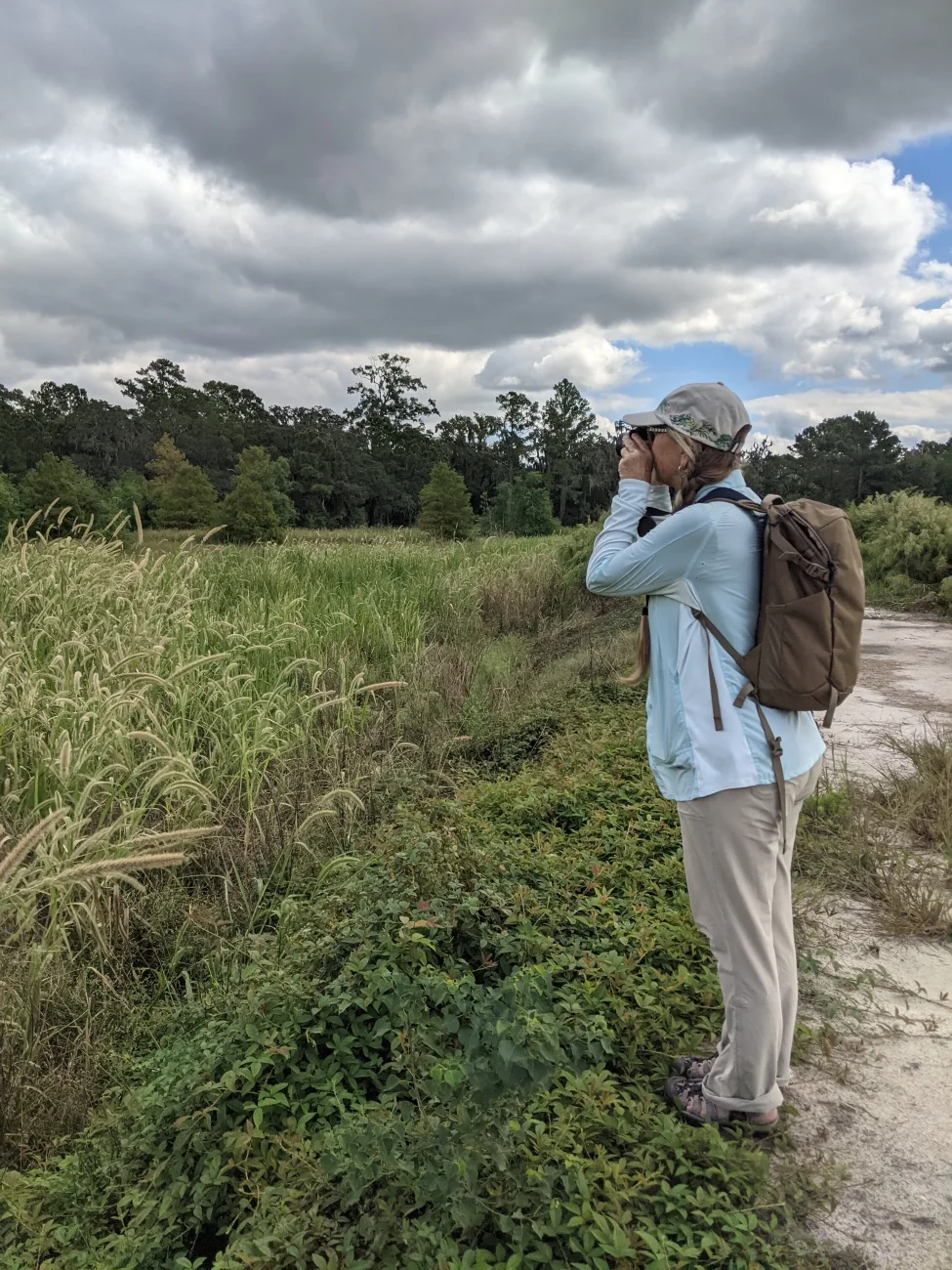
Avoid climbing on unstable wood, keep clear of the water's edge during rough conditions and give nesting or resting wildlife a wide berth. Do not move natural features for a photograph. A longer lens lets you capture the landscape and shorebirds without disturbing them.
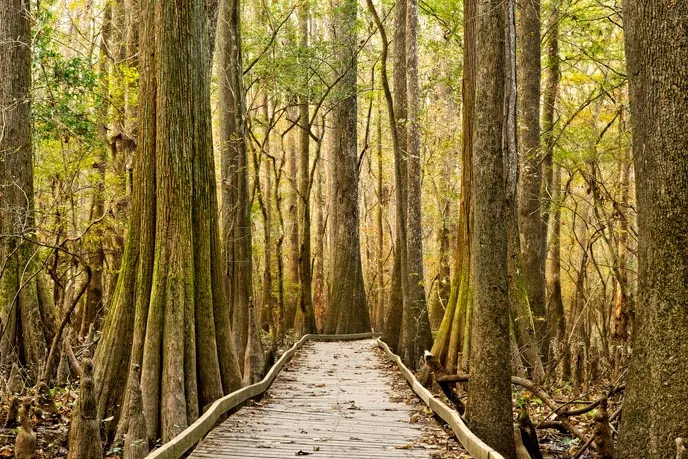
4. Explore maritime forest and wildlife habitat
The refuge describes two designated hiking trails and miles of unpaved service roads on Bulls Island. The half-mile Middens Trail and two-mile Turkey Walk Trail offer alternatives to spending the whole visit on sand. Ask for a current map and check whether trail distances are one way or a loop before choosing a route.
Salt marsh, ponds and maritime forest support birds and other wildlife, but sightings are never guaranteed. Observe quietly from open routes and leave cultural features undisturbed. The refuge notes evidence of earlier Sewee use of the area's resources; shells and archaeological materials in such places are part of a protected landscape, not souvenirs to collect.
5. Follow refuge rules and seasonal closures
Cape Romain is open during daylight hours, sunrise to sunset. Pets are not allowed on refuge islands or the Garris Landing pier. Camping is prohibited, and bicycles are restricted to Bulls Island service roads rather than the beach or designated hiking trails. Shell collectors may take only a small bag of unoccupied shells for personal use; check current regulations before collecting.
Closures protect nesting birds. Marsh Island and White Banks Islands have seasonal restrictions, and other posted areas may close as wildlife needs change. Stay outside ropes and signs, never approach nests, and follow staff instructions. The refuge headquarters can provide current guidance at 843-928-3264.
6. Consider a mainland stop at Sewee
If the ferry is full, conditions are unsuitable, or an island hike is too demanding, the Sewee Visitor and Environmental Education Center near Awendaw provides a mainland alternative. The refuge lists visitor center hours Wednesday through Saturday as staffing allows; call ahead and check holiday closures. Its grounds, Nebo Trail and ponds are generally available to pedestrians during daylight even when the front gate is closed.
Whether you choose the island or mainland, bring a flexible plan. Check the weather, ferry and refuge alerts immediately before departure, carry out your trash and leave the coast as you found it. The best visit leaves room for both a memorable landscape and the wildlife that depends on it.