The rocket that rises above Huntsville is hard to miss, but the most rewarding part of a visit to the U.S. Space & Rocket Center happens when you slow down enough to understand what you are seeing. Inside the museum, a Saturn V stretches across a hall; outside, Rocket Park brings several generations of launch vehicles into view.
The center is a Smithsonian Affiliate and the official visitor center for NASA’s Marshall Space Flight Center. It is separately operated rather than part of NASA, a distinction that helps when planning tickets and tours. Here are five ways to make a first visit more rewarding, whether your group includes a longtime space enthusiast or a child seeing a rocket for the first time.
1. Give the Saturn V Hall enough time
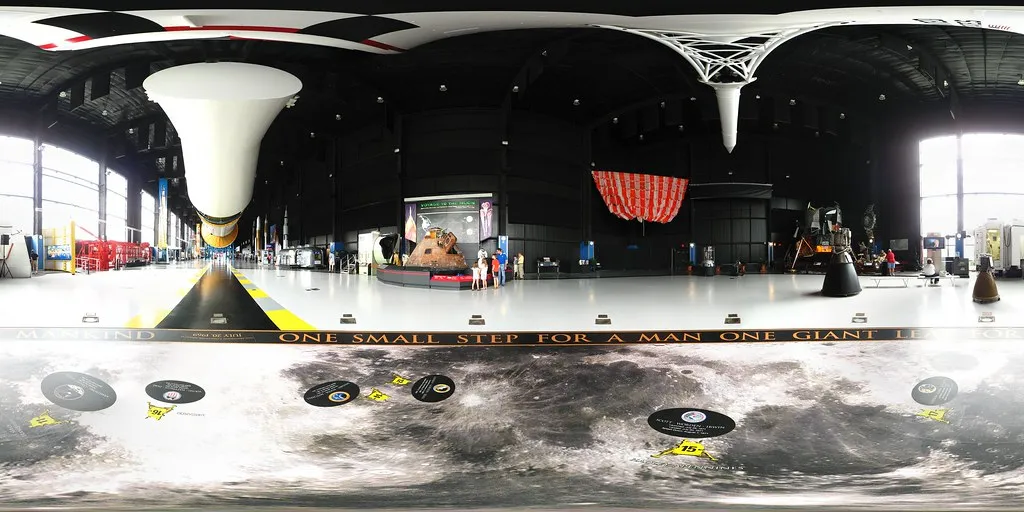
Start with the Davidson Center for Space Exploration and its Saturn V Hall. The museum identifies the rocket displayed there as one of three real Saturn V rockets remaining in the world. Walk the length of the exhibit if you can: the scale is easier to appreciate when you compare one end with the other instead of trying to take it all in from a single photograph.
Look for the stages and engines, then use the interpretation in the hall to connect the hardware with the enormous job of sending people toward the Moon. A useful question for younger visitors is how a vehicle this large could carry people, fuel and equipment while still leaving Earth. The exhibits provide starting points for that conversation without requiring anyone to understand every engineering detail.
Do not confuse the indoor vehicle with the tall outdoor Saturn V replica visible around Huntsville. Both make impressive photographs, but they have different roles in the museum experience. The panoramic historical photographs in this guide show earlier views of the hall and park; exhibits and access can change.
2. Walk through Rocket Park
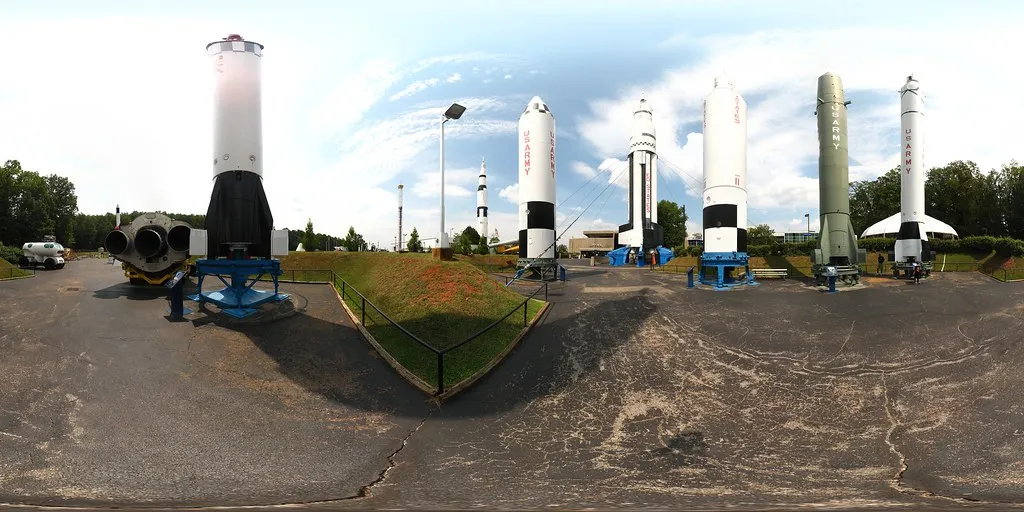
Rocket Park moves the story outdoors. The center lists vehicles including the Mercury-Redstone, Juno II, Jupiter and Saturn I among the displays on Rocket Row. Seeing their different shapes and sizes together makes the progression of rocketry easier to picture than a list of dates alone.
Read a few signs closely rather than trying to memorize every name. Ask what each rocket was intended to do, where its engines fit and how its proportions compare with its neighbors. That approach gives children a simple challenge and leaves room for adults to follow their own interests.
Alabama weather matters here. Bring water and sun protection in warm conditions, allow extra time to return indoors, and check the forecast for rain or storms. Outdoor attractions and simulator availability can change, so consult the museum’s plan-your-day page before promising a particular experience.
3. Explore the exhibits beyond the largest rocket
The center’s current activity list includes exhibits about the International Space Station, space culture and solar-sail technology. A smaller display can be a welcome change of pace after the spectacle of the Saturn V. Choose an exhibit that matches your group’s interests and use its interpretation to follow one idea in depth.
For a family visit, alternate visual displays with hands-on opportunities where available. Ask everyone to pick one object they would like to learn more about, then compare choices over lunch. That keeps the experience personal and helps prevent museum fatigue from turning into a race through the galleries.
Temporary exhibits, simulators and programs can close or change. Check the official daily information and any age, height or other restrictions in advance. Do not build a trip around an attraction solely because it appears in an older photograph.
4. Decide whether to add a planetarium show
The center offers planetarium programming, with schedules and ticket terms that can differ from general museum admission. If a show is important to your group, check the current program, timing and price before purchasing. Leave enough time to reach the theater and avoid booking the day so tightly that a late lunch or long look at an exhibit becomes stressful.
A show can give tired feet a break and add another way to think about the sky. It is also optional: a visitor who prefers to spend more time in the halls and outdoor displays can still have a substantial day. Ask about accessibility and sensory needs directly when making plans.
Space Camp is a separate experience, not something every general-admission visitor automatically joins. Families interested in a future camp should review the center’s current age requirements, dates and registration details separately.
5. Plan around hours, food and the weather
The museum publishes seasonal hours, holiday closures and current admission prices on its official site. Check those details close to departure rather than relying on a fixed schedule. As of November 2026, the center lists shorter winter hours through February 28, 2027, and its activity page says the area around the Pathfinder Shuttle Stack is closed to foot traffic during improvement work. Recheck both notices before visiting.
Allow a comfortable block of time for the indoor hall, outdoor displays and any show, with a break for food or water. The center lists dining information online; check current service times and any rules about outside food if those details matter to your party. Comfortable shoes help because the museum experience is spread across more than one area.
Huntsville has plenty more to explore, but resist the urge to schedule every hour. One well-paced visit can turn a familiar silhouette on the skyline into a much richer story about the people, machines and decisions behind spaceflight.