At Florissant Fossil Beds National Monument, an ordinary-looking mountain meadow holds evidence of a remarkably different Colorado. Petrified redwood stumps and delicate fossils tell a story of a landscape that existed long before the modern forest and the nearby homesteads.
The monument, about 35 miles west of Colorado Springs, can make a rewarding half-day outing. These five ideas offer a first look at the fossils, trails and human history. Check current hours and conditions before traveling, especially when snow or storms are possible.
1. Begin at the Visitor Center
Start inside to understand what you will see outside. The National Park Service says the visitor center has a museum with fossil exhibits, a theater and a bookstore. Fragile fossils of insects, plants, spiders and fish are best viewed in the exhibits rather than expected along the outdoor trail.
Ask for a trail map and current advice about surfaces and weather. The monument sits at high elevation, and a route that sounds short can still feel different to someone arriving from lower ground. Restrooms, current program information and a ranger's suggestions can help you shape a visit that suits everyone in your group.
If children are traveling with you, ask about the Junior Ranger program. It can turn a walk into a series of observations without requiring the family to cover every trail in the park.
2. See the Petrified Redwood Stumps
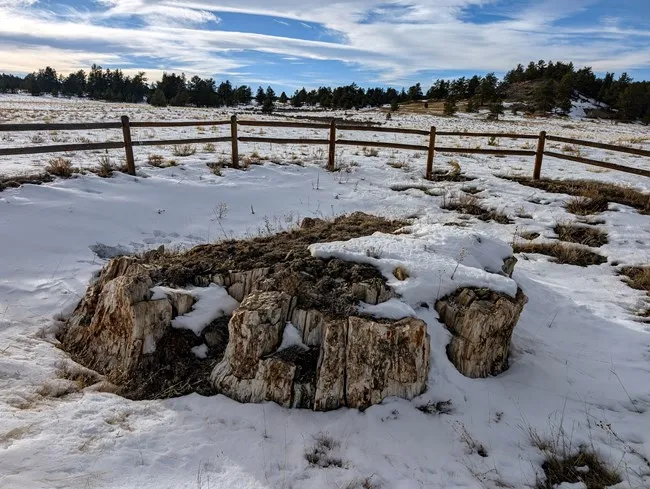
Behind the visitor center, outdoor exhibits introduce some of the monument's most striking fossils: enormous petrified redwood stumps. The one-mile Petrified Forest Loop passes additional stumps, an historic excavation site and a geologic timeline exhibit.
The park describes the gravel loop as relatively flat and mostly open to the weather. Bring sun protection and water, and ask about current accessibility or winter footing before starting. The photo above shows a stump in snow; conditions on the trail will vary by season.
Take time to compare the forms of the stumps and imagine a forest very different from the one around you. The fossils here are from the late Eocene, roughly 34 million years ago. They do not represent dinosaurs, which disappeared much earlier.
3. Look for the Details in the Fossil Exhibits
The large stumps are only part of the story. Florissant's fossil beds are also known for smaller, delicate evidence of plants and animals. Indoors, look closely at exhibits of leaves, insects and other specimens, and consider how much information can be preserved in an impression that might fit in the palm of a hand.
Programs and the Fossil Learning Lab may be offered seasonally. Ask at the visitor center or check the current calendar; do not assume a particular demonstration is available every day. A ranger can help explain how scientists study the fossils and why the site is protected.
Leave every fossil, rock and natural object where you find it. The monument prohibits collecting natural or cultural features. A photograph, sketch or note makes a much better keepsake than removing evidence from a place set aside for everyone.
4. Walk the Ponderosa Loop or Geologic Trail
For a different perspective, the Ponderosa Loop travels through the living forest. The park describes this half-mile self-guided loop as its shortest trail and wheelchair accessible. Confirm present conditions, especially after snow or rain, because accessibility depends on the surface and your individual needs.
The Geologic Trail offers a longer look at the valley's history and can be combined with the Petrified Forest Loop. It crosses Teller County Road 1 and climbs toward a viewpoint, so review the map and choose a turnaround point before leaving. Both routes are opportunities to compare today's forest and landscape with the evidence of older environments.
Stay on designated routes, carry water and keep an eye on the weather. The park does not allow pets on its trails; its FAQ limits them to the parking lot and designated pet exercise area, with leash rules.
5. Visit the Hornbek Homestead Grounds
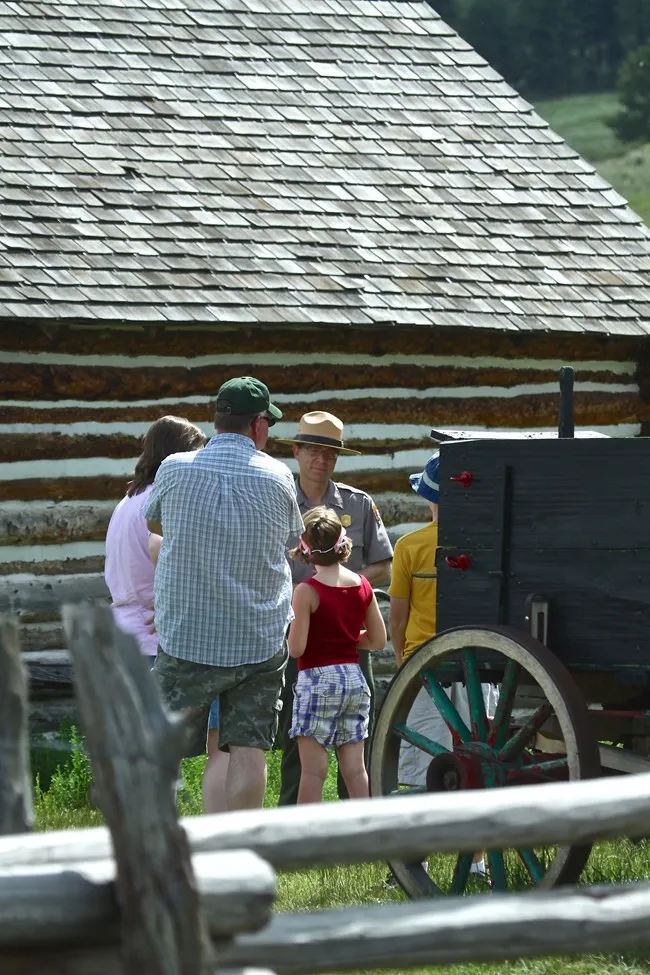
The 1878 Hornbek Homestead adds a different chapter to the day. Adeline Hornbek established a home and ranch in the Florissant Valley after arriving with her children in the 1870s. Wayside exhibits and a self-guided brochure explain aspects of homesteading and ranching history.
The grounds are about a mile north of the visitor center entrance road. Check the current access information before traveling between the two locations, and do not assume historic buildings are open for entry. The photograph above shows visitors at the homestead; staffing and activities vary.
Allow a few quiet minutes to look at the valley around the buildings. The protected landscape contains both a much older fossil record and the more recent stories of people who lived and worked here.
Before You Go
Confirm visitor-center hours, fees, trail conditions and weather with Florissant Fossil Beds National Monument. Bring water, layers and sun protection, and leave fossils and other resources undisturbed.