At Great Sand Dunes National Park and Preserve, the first view can seem almost improbable: broad waves of sand rise in front of the Sangre de Cristo Mountains, with grasslands and seasonal water at their feet. It is a landscape that invites both a closer look and a little planning.
These five ideas can help first-time visitors choose an outing that fits the weather and their energy. The dunes are beautiful in every season, but summer heat, winter cold, wind and a changing creek make one visit different from the next.
1. Walk Onto the Dunefield
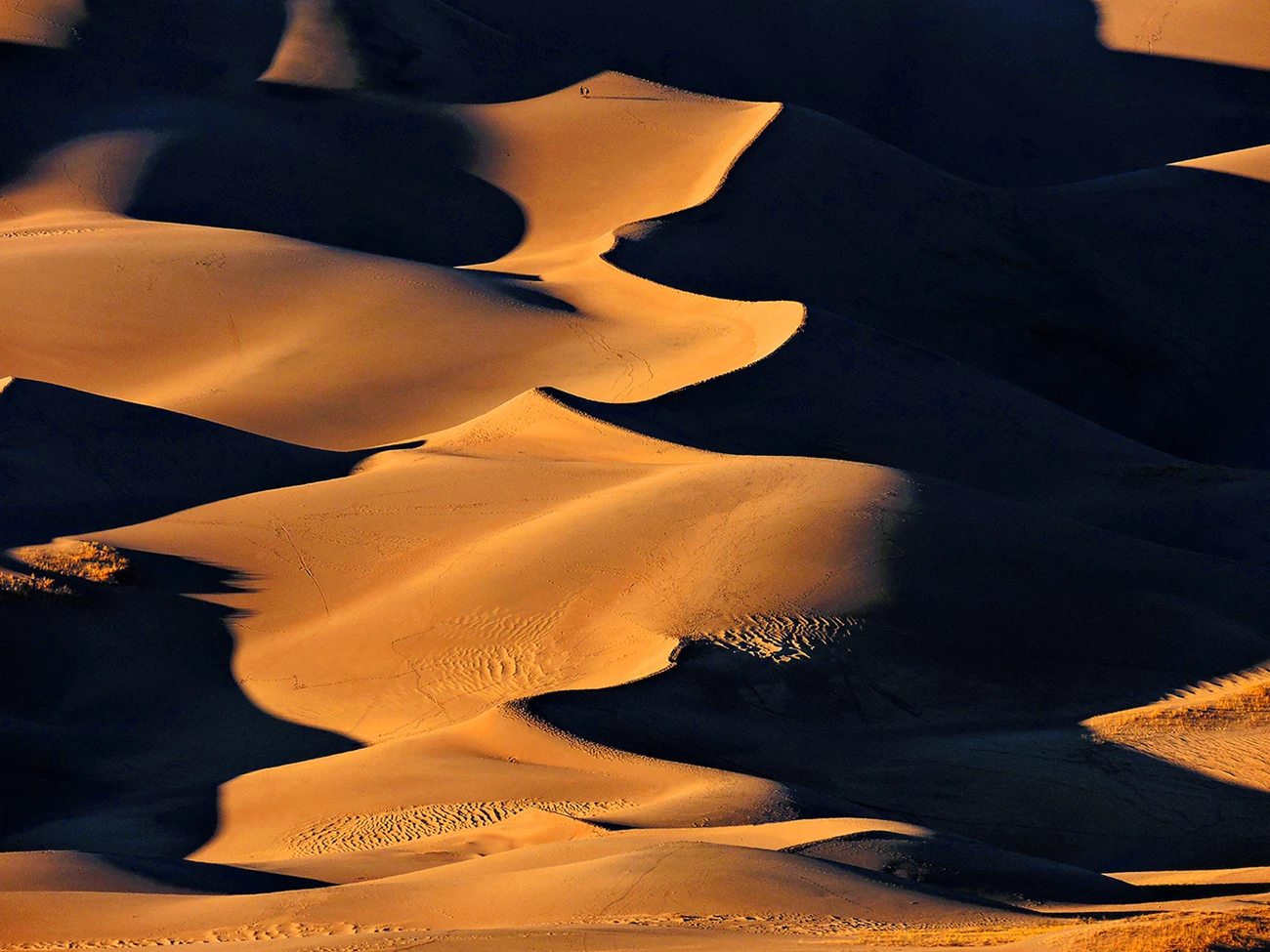
The main Dunes Parking Area is a starting point for exploring the sand. There is no need to aim for the highest visible ridge on a first visit. Walking uphill in loose sand can be much more tiring than walking the same distance on a firm trail, so choose a turnaround point that leaves enough energy for the return.
The National Park Service notes that sand surface temperatures can exceed 150 degrees Fahrenheit on summer afternoons. In hot weather, plan your dune time for early morning or evening, wear appropriate closed-toe footwear and carry water. Summer storms can bring lightning and wind, so check the forecast and be ready to leave exposed dunes when conditions deteriorate.
Once you are on the sand, look for the small patterns as well as the enormous ridges. Wind and shifting light change the shapes and shadows throughout the day. Keep your group together; the lack of a fixed trail can make distances and directions harder to judge.
2. Check Medano Creek Before Promising a Beach Day
Medano Creek can bring a seasonal ribbon of water to the edge of the dunefield. In some spring conditions, visitors may see the flowing waves known as surge flow. At other times the creek bed near the main parking area can be dry, so a photograph from a different season is not a reliable forecast for your trip.
Use the park's current creek information and forecast flow before leaving. A flow gauge measures water upstream and does not necessarily represent the depth at the main visitor area. Even a dry creek bed can be an interesting place to see tracks and the contrast between sand and mountains, but set family expectations accordingly.
Some upstream access points lie along a primitive road that requires high-clearance four-wheel drive. Do not assume an all-wheel-drive passenger vehicle is suitable; read the park's current road requirements and conditions before considering that route.
3. Try Sand Sledding With the Right Equipment
Sand sledding and sandboarding are popular ways to experience the dunefield, but the equipment matters. The park says boards and sleds designed for sand have slick bases and special wax; ordinary snow sleds and cardboard generally do not work well on dry sand. The National Park Service does not rent sand equipment inside the park, so arrange rentals before arriving and check shop hours.
Reaching suitable slopes requires a walk across sand. The park estimates at least 0.7 mile from the main parking area to small or medium slopes, with the first high ridge farther away. Choose a slope with a safe runout, stay away from vegetation, and consider the heat and the effort required to climb back up after each ride.
Sand conditions can change after rain or melting snow. Read the park's current safety guidance, keep footwear available for hot sand and choose a less ambitious hill if anyone in the group is uncertain.
4. Explore Beyond the Dunes
Sand is the star, but Great Sand Dunes also protects grasslands, wetlands, forests and mountain terrain. A visit to the visitor center can help you decide whether a nearby nature walk or a longer trail makes sense for the day. Ask about surface conditions, distance and seasonal closures before committing.
Different elevations bring different weather. A clear valley morning can become windy or stormy later, and a forest trail may retain snow after lower areas have warmed. Carry water and clothing for changing temperatures, and let someone know your plan if you are taking a longer hike.
5. Return for Different Light or a Different Season
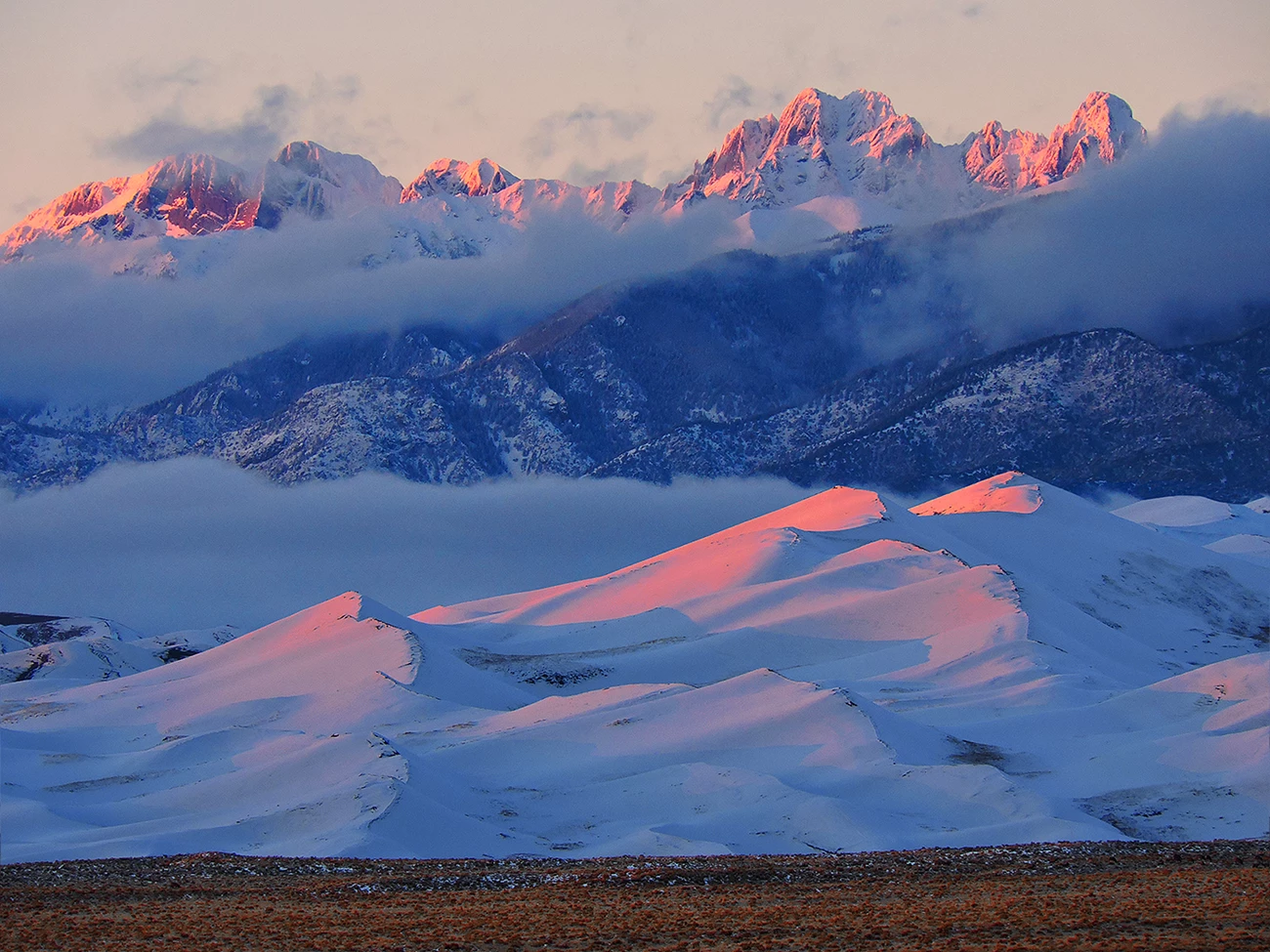
Early and late light can emphasize the dunes' curves, while autumn cottonwoods and winter snow bring entirely different colors to the park. The photograph above shows snow on Star Dune and the Crestone Peaks; it represents a winter scene, not conditions visitors should expect year-round.
If you stay after dark, check the forecast and come prepared for cold temperatures. Give your eyes time to adjust and follow park guidance about protecting night skies and respecting other visitors. The landscape can be difficult to navigate without daylight, so know your route back before venturing out.
Before You Go
Great Sand Dunes is open year-round, but services and road conditions vary. Confirm current alerts, creek flow, weather, fees and visitor-center hours with the park. Bring water, sun protection and layers, and plan a shorter outing when conditions or the group's energy call for it.