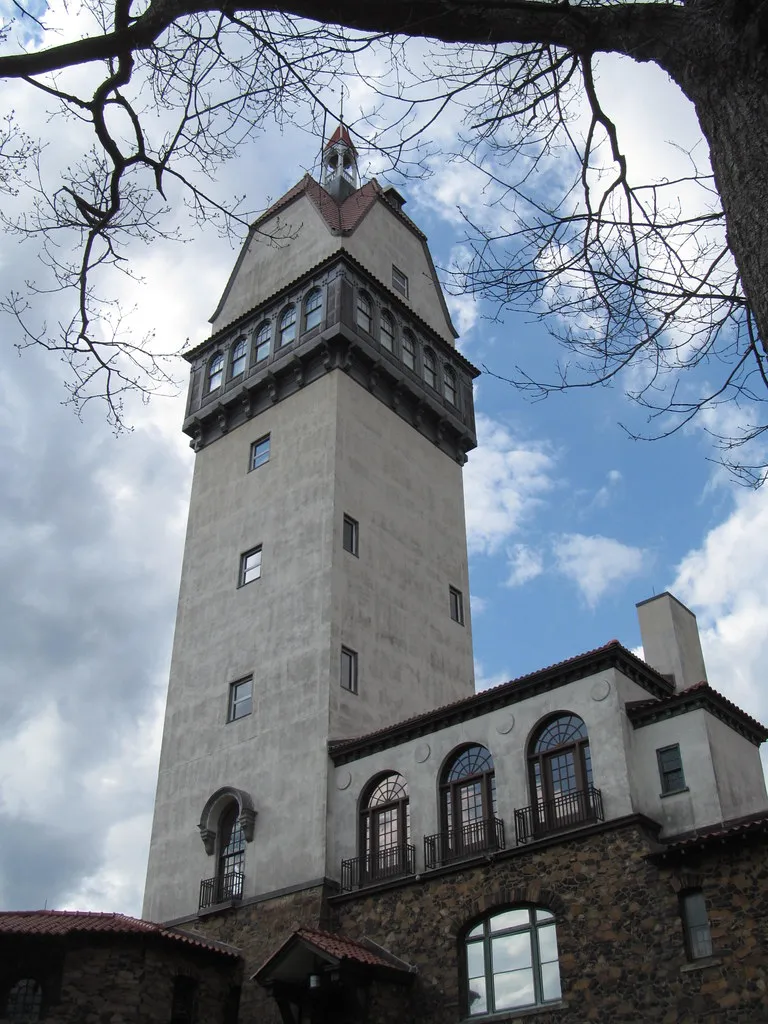
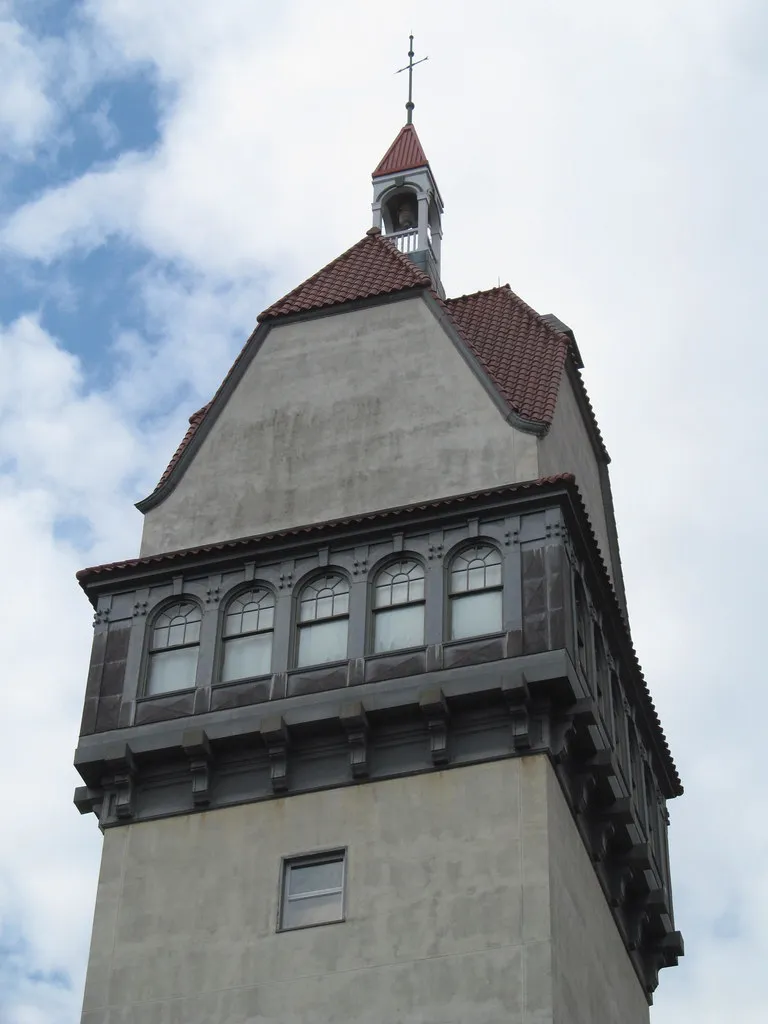
From below Talcott Mountain, Heublein Tower looks like the sort of building that ought to come with a fairy tale. Its steep red roof and tall walls rise above a wooded ridge in Simsbury, Connecticut, but this landmark began as something more personal: a summer home built by businessman Gilbert Heublein in 1914.
Today it is the destination for a popular state-park hike. The route pairs a rewarding ridge walk with a view-filled summit and a historic house museum that opens seasonally. Here is what to know before making the climb, including one important detail: the tower is reached by walking trail, with no vehicle access to the building.
1. The Trail Builds a Day Trip Around the View
Connecticut State Parks describes the yellow-blazed Tower Trail as a moderate 2.5-mile out-and-back route. It starts with an initial climb, then levels out along a ridge with views toward Simsbury and Avon before continuing uphill to the tower. Those changes in terrain give the walk a satisfying rhythm: effort first, then opportunities to slow down and look across the valley.
Allow enough time for the climb, a break at the summit and a careful return before the park closes. Bring drinking water and shoes suited to the conditions. After rain or during cold weather, expect the trail to feel different from a dry summer afternoon, and check current park notices before leaving home.
The walk is not a drive-up attraction. Anyone in your group who cannot comfortably manage the trail should know that limitation in advance, rather than discovering it at the parking area.
2. A Summer Home Became a Remarkable Landmark
Heublein Tower was built as a summer retreat, and the state's park history connects it to Gilbert Heublein's promise to build his wife a castle on the mountain. The result was a 165-foot tower designed to withstand strong winds, with reinforced concrete and iron girders anchored into the mountain's bedrock.
The building's history reaches beyond the family that commissioned it. Connecticut State Parks recounts later changes in ownership, a proposal connected with the Hartford Times and a development threat before conservationists and public agencies helped preserve the property. The state purchased it in 1966, and the park opened after renovation in 1974.
That history gives the destination a different character from a simple lookout. You are walking toward a place shaped by private ambition, public preservation and decades of people coming up the mountain to see the landscape.
3. The Museum Has a Shorter Season Than the Park
The park lists the grounds as open daily from 8 a.m. to sunset, but the tower museum follows its own schedule. Connecticut State Parks says the museum generally opens Memorial Day weekend through October 31, with seasonal hours on Fridays through Mondays. Confirm the current schedule before traveling, especially around the beginning or end of the season.
As of November 16, 2026, that listed museum season has ended. A visit now should be planned around the trail and outdoor surroundings, not on the assumption that the building is open. Hours can change, and special closures are possible, so check the park directly for the day of your trip.
When the museum is open, the state says visitors can climb six flights to the observation level. Consider the stairs as well as the trail when deciding whether the full experience suits your party. The museum does not permit pets, food, drink or walking sticks inside; leashed pets are allowed in the park under its posted rules.
4. The Summit Reveals More Than One Connecticut Landscape
The tower stands on a high promontory overlooking the Farmington River Valley. The park describes views that can include the Hartford skyline and more distant landscapes when visibility is good. What you can see depends on weather, haze, foliage and whether the observation level is open, so treat distant landmarks as possibilities rather than guarantees.
Even a cloudy day can change how you read the ridge: fields, neighborhoods and wooded slopes reveal the relationship between the valley and the mountain above it. A compact pair of binoculars can be useful, but so can a simple pause to notice the scale of the landscape before heading back down.
Stay on established routes and respect the edges. A memorable view is easier to enjoy from a stable, permitted spot than from a risky shortcut toward a ledge.
5. The Park Offers Nature Between the Landmarks
The tower may be the reason to visit, but the walk itself changes with the season. Connecticut's park guide notes spring wildflowers and birds, along with wildlife such as deer and foxes. Fall color brings its own appeal, while winter demands extra attention to footing, temperature and daylight.
Give animals distance and never feed them. The state also provides bear guidance for visitors, so review it before hiking and follow current instructions if you encounter wildlife. Carry out what you bring in and stay on marked trails to protect the surrounding habitat.
If the day leaves room for more exploring, Simsbury and Avon offer places to continue the outing after the descent. Check individual businesses and attractions directly for hours rather than assuming that a park trip and an indoor stop share the same schedule.
Before You Go
Check the official park page for current hours, parking, alerts and fees. Connecticut State Parks lists the tower as reachable only by trail, and its museum schedule differs from the grounds. Dress for the season, bring water, and turn back if weather or trail conditions make the walk unsuitable for your group.