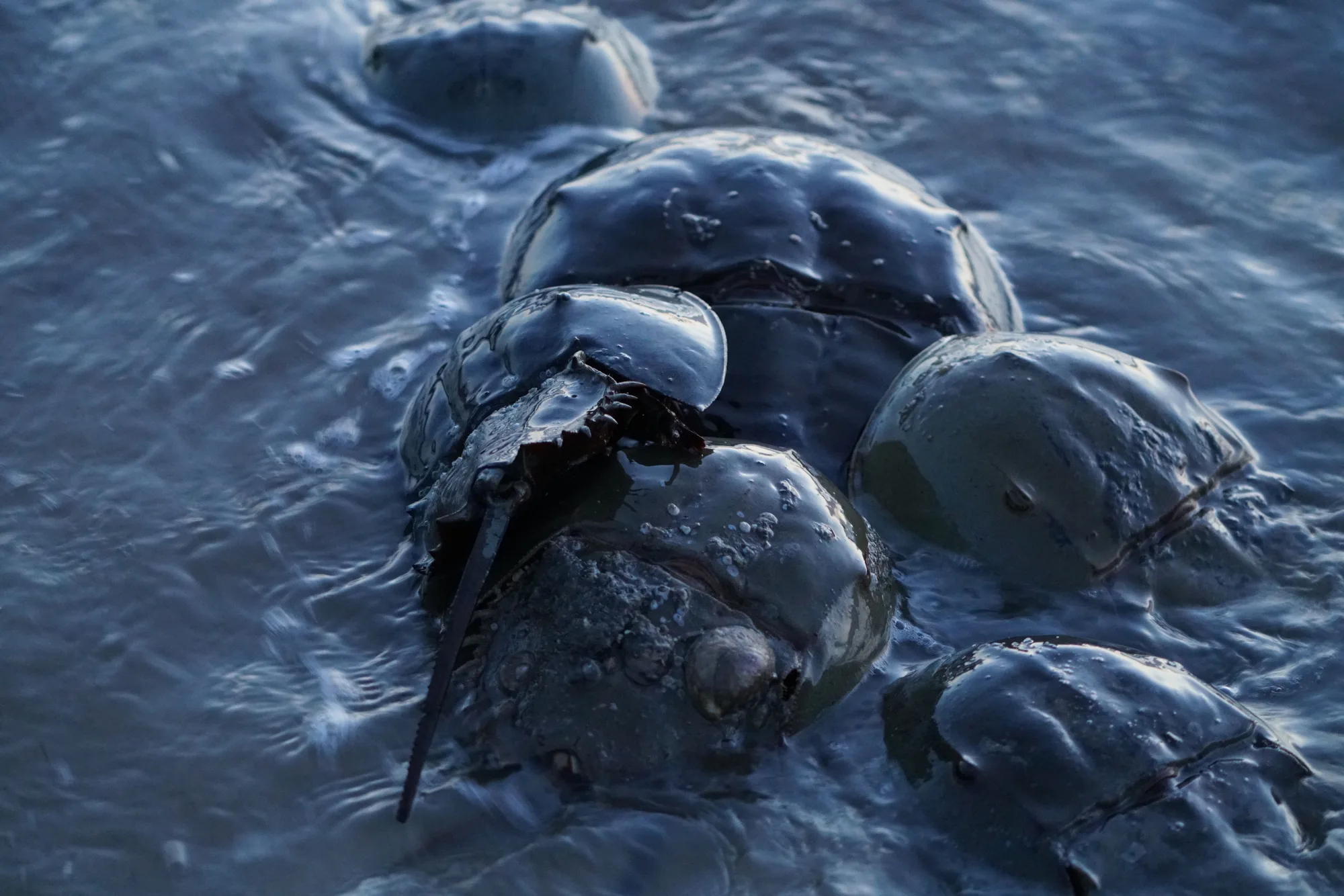
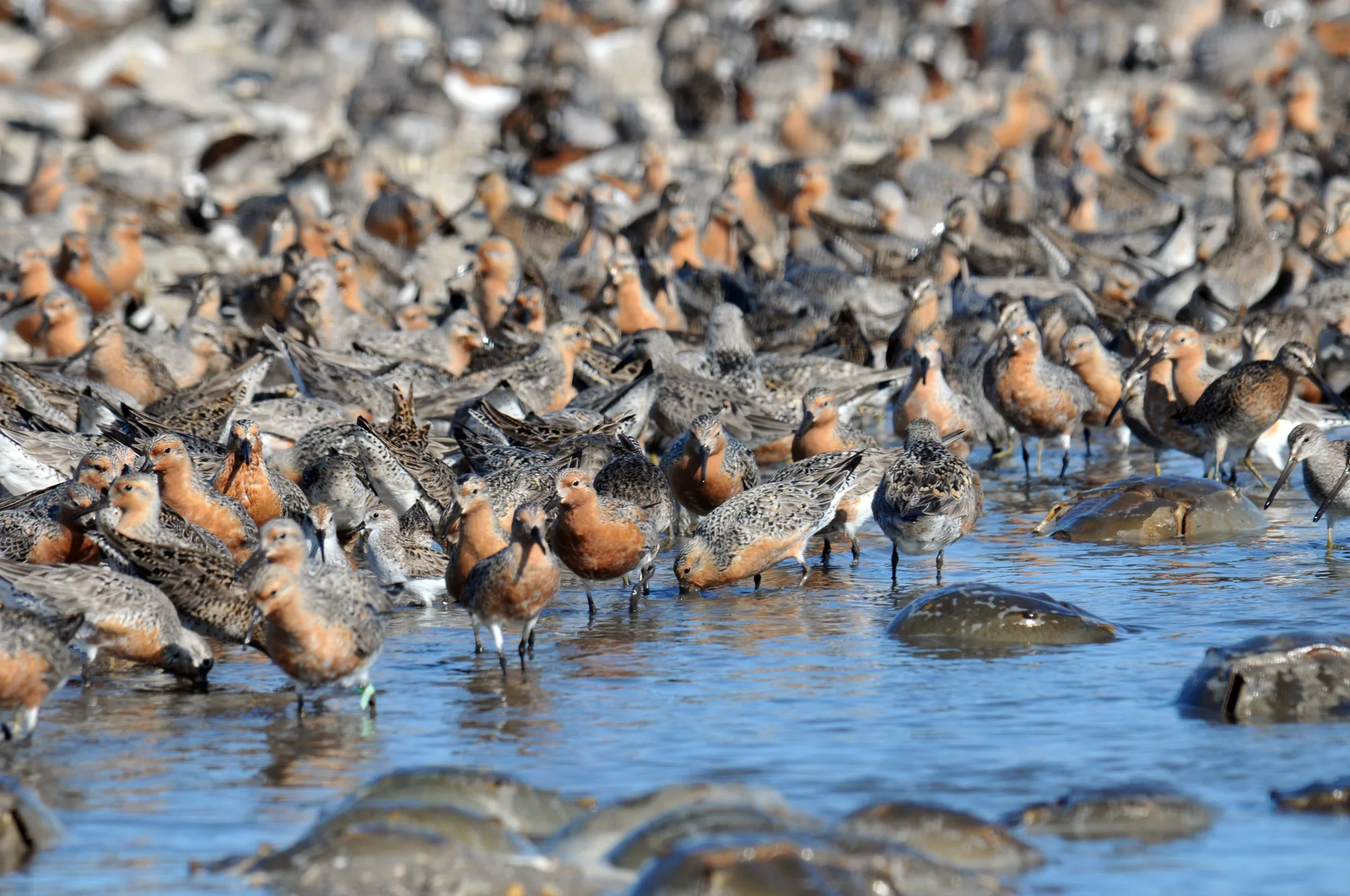
Every spring, Delaware Bay becomes the meeting place for two very different travelers. Horseshoe crabs come ashore to spawn, while migratory shorebirds stop along the bay to feed. The spectacle can be memorable, but it is also a sensitive time for the animals that depend on these beaches.
Delaware’s Department of Natural Resources and Environmental Control recommends several places to observe the seasonal event, including the DuPont Nature Center, Slaughter Beach, Kitts Hummock and Pickering Beach. Their appeal is not limited to the spring rush: a quiet bay view can be rewarding in other seasons, even when the crabs and migratory birds are absent.
Plan around the wildlife rather than expecting a guaranteed show. Spawning generally peaks in May and June, particularly around high tides near the new and full moons. Weather and water conditions matter, and some beaches have seasonal restrictions to protect birds. Check current local access rules and tides before you go.
1. DuPont Nature Center at Mispillion Harbor
For a first visit, the DuPont Nature Center offers a useful combination of interpretation and a view across Mispillion Harbor. DNREC describes the protected, shallow harbor as an important place for horseshoe crabs to gather in spring. The center’s observation deck lets visitors look across the shoreline and water without walking into the habitat.
Bring binoculars and give yourself time to watch. In spring, look for horseshoe crabs near the shore and migratory birds feeding nearby; the exact number varies with the tide, weather and date. Interpretive exhibits can help explain why crab eggs matter to migrating shorebirds.
The center itself operates seasonally, and its schedule varies by month. DNREC says the accessible observation deck remains open from dawn to dusk even when the building is closed. Confirm the latest hours and any access notices before your trip. The department also provides a live camera, a useful alternative when a visit in person is not practical.
2. Slaughter Beach
Slaughter Beach is one of the Delaware Bay communities DNREC recommends for horseshoe-crab viewing. Come with modest expectations and a willingness to adjust: a beach can look very different from one high tide to the next, and rough surf may delay spawning. Warm clothing is useful even on a mild inland day because the bay can be cool and breezy.
This is a residential community as well as wildlife habitat. Use only legal public access points, respect posted signs and private property, and leave room for local residents. Check town rules and temporary closures before visiting rather than assuming that every stretch of shoreline is open.
If you are watching birds, remain far enough away that they continue feeding or resting. The U.S. Fish and Wildlife Service recommends a buffer of at least 400 feet for rufa red knots during passive beach activities. Binoculars or a long lens are better companions than an attempt at a closer photograph.
3. Kitts Hummock
Kitts Hummock, along the bay south of Dover, is another location identified by DNREC for seeing horseshoe crabs and shorebirds. It offers a different atmosphere from a busy ocean resort: a smaller bay community, a broad horizon and the possibility of watching the tide change over the shallows.
The spring gathering is seasonal. DNREC says the main spawning period usually falls in May and June, while the best shorebird viewing is generally from mid-May into early June. Those are useful planning windows, not promises that wildlife will be present at a particular moment. An outing can still be enjoyable as a quiet walk where public access is allowed.
Bring water, sturdy footwear and insect protection; biting flies can be troublesome. Keep voices low near homes, take all litter away and check local rules before choosing where to enter the beach. If access is restricted for nesting or migrating birds, observe the closure and choose a permitted viewpoint.
4. Pickering Beach
Near Little Creek, Pickering Beach rounds out DNREC’s recommended places for viewing the annual arrival. Like the other sites, it is best approached as a wildlife-watching destination rather than a place to chase down animals. Look from a respectful distance and use binoculars to follow activity in the water or along the sand.
A high tide close to a new or full moon can improve the chance of seeing spawning, but weather, surf and the animals themselves determine what happens. Check tide information before setting out and leave extra time if you are trying to combine this stop with another location. If you visit at night, DNREC recommends pointing flashlights down and keeping voices low near residences.
The most useful thing a visitor can do is make space. Do not crowd shorebirds, disturb nests or handle horseshoe crabs for photographs. The Fish and Wildlife Service notes that handling horseshoe crabs is subject to state rules and recommends doing so only as part of an organized program. If you would like to help with monitoring, look for an official survey and its required training.
How to Plan a Wildlife-Friendly Visit
Start by checking the tide, the forecast and the current rules for your chosen public access point. DNREC notes that nighttime high tides can bring strong spawning activity and allow shorebirds to feed with less disturbance during the day; use discretion, bring a light and respect local nighttime access rules. For daytime birdwatching, keep a generous distance and use the DuPont Nature Center deck when available.
Leave dogs at home when practical, or follow local leash rules where dogs are allowed. Never drive over animals or into restricted habitat. A good visit leaves the beach as useful to wildlife as it was before you arrived.