Delaware is small enough that a day’s drive can connect riverside landscapes, colonial-era buildings and the place where the state took a defining step in American history. But the stories are not all contained in one museum. First State National Historical Park is a collection of places spread across northern and central Delaware, interpreted in partnership with state, nonprofit and local organizations.
That makes the park especially good for curious travelers. You might start with a walk near the Brandywine, visit a historic site in Wilmington, and finish among the brick buildings of New Castle or Dover. These five stops cover different chapters of the region’s past; they are not intended as a complete inventory of the park.
Opening times, reservations and fees vary by site and operator. Check the National Park Service and individual partners before setting out, especially when a visit depends on a guided tour.
1. Brandywine Valley: Begin Outdoors
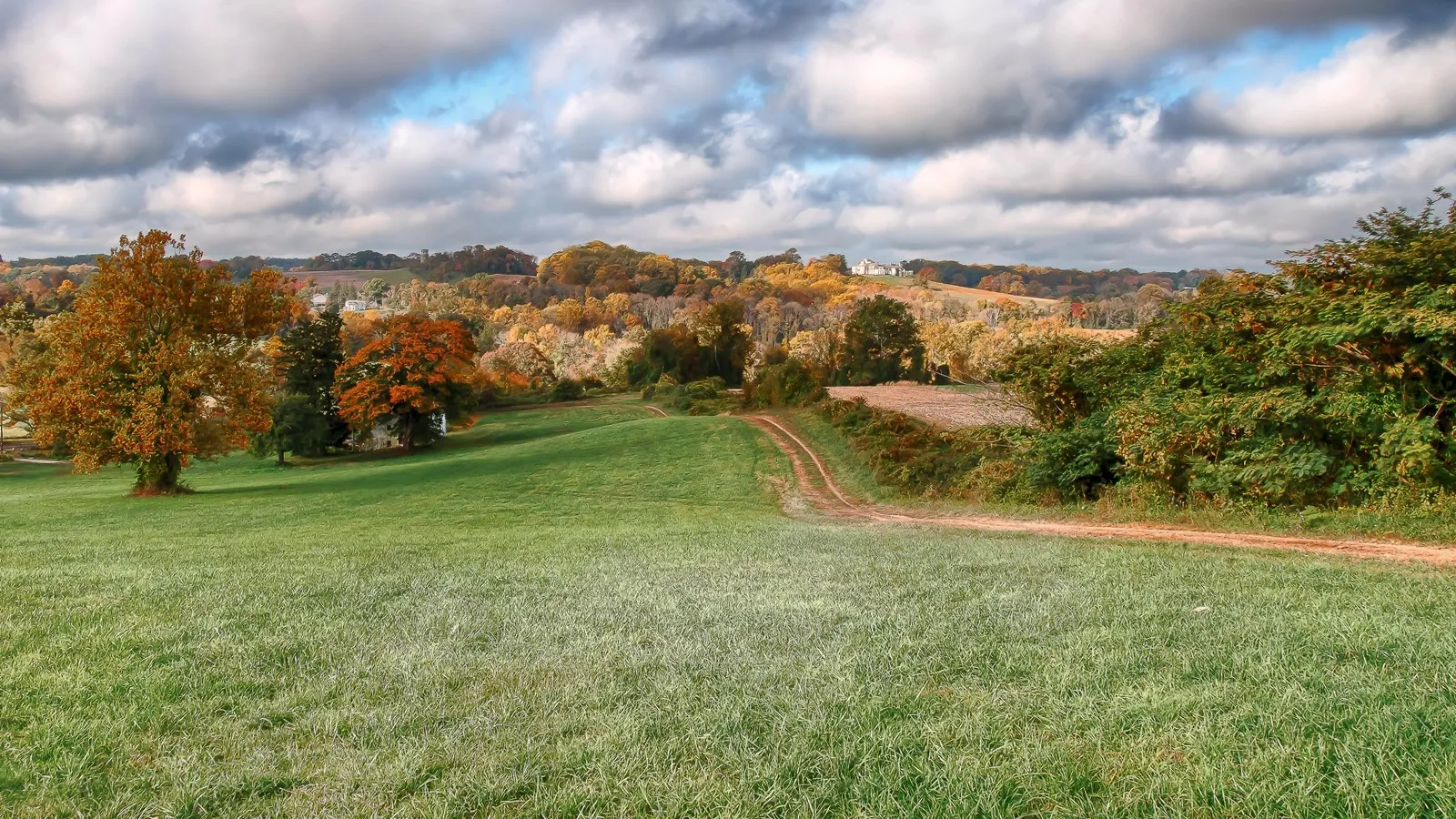
First State National Historical Park protects land in the Brandywine Valley north of Wilmington, with some acreage extending into Pennsylvania. The National Park Service describes more than 20 miles of trails through the area, giving visitors a chance to combine history with a walk beside the Brandywine or through the surrounding landscape.
Choose a route that fits your time and ability rather than assuming every trail offers the same terrain. Download a map, check the weather and wear shoes suited to uneven ground. A short walk can be enough to introduce the place; hikers who want a longer outing should plan the route in advance.
The valley’s history stretches beyond any one era. The park connects its landscape with Native American history, early Quaker settlement and later efforts to preserve open space. Be mindful that the national park area crosses a state boundary, and follow signs marking where you may walk or park.
2. Old Swedes Historic Site: A Wilmington Landmark
In Wilmington, Old Swedes Historic Site preserves a church and burial ground connected to the region’s early Swedish and Finnish settlers. The National Park Service dates the church to 1699 and notes that it remains in use for worship. It is a chance to think about the lives of individual people who lived here, rather than treating early Delaware history as a series of dates alone.
The site is operated by a partner organization. The Park Service lists guided tours and a self-guided cemetery option, with fees and advance reservations for some experiences. Seasonal closures and the schedule can change, so contact the operator or consult the current NPS listing before you go. Respect worship services, graves and other visitors while exploring.
Pair the stop with Fort Christina, another Wilmington place associated with the New Sweden colony, if opening hours allow. They are distinct sites, each with its own visitor arrangements, so check both instead of assuming access at one guarantees access at the other.
3. New Castle Court House Museum: A State Takes Shape
The New Castle Court House Museum sits in the historic heart of New Castle. Built in 1732, the building served the courts and assembly of the Three Lower Counties of Pennsylvania. The Park Service identifies it as Delaware’s first state house after independence, making it a useful place to begin understanding how the state’s government developed.
The courthouse also preserves a later and more difficult chapter: the 1848 trial of Underground Railroad participants Thomas Garrett and John Hunn, who were found to have violated federal law by assisting freedom seekers. Ask about the interpretation available during your visit and leave time to understand the people whose lives were affected by slavery and the struggle against it.
The Delaware Division of Historical and Cultural Affairs interprets the museum, and guided tours follow an operating schedule. Verify the current schedule and holiday closures before arriving. Outside, New Castle’s compact historic center makes a pleasant place for a careful walk on public sidewalks, with the courthouse as an anchor.
4. The Dover Green: Where Delaware Became the First State
In downtown Dover, the Green is a modest public space with an outsized place in state history. On December 7, 1787, a Delaware convention met at the Golden Fleece Tavern on the Green and ratified the United States Constitution. Delaware’s early ratification is the source of its “First State” nickname. The tavern itself no longer stands, but the Green remains a place to orient yourself to the historic district.
Look around at the surrounding civic buildings and imagine how a public square served as a place of gathering, debate and community life. NPS also connects the Green to later public debates over women’s suffrage, a useful reminder that the work of defining political participation continued long after the Constitution was ratified.
Allow time to read interpretive information and check whether nearby museums or ranger programs are open. The Green is a place to walk and reflect; opening hours for surrounding buildings are separate and should be verified with each operator.
5. John Dickinson Plantation: A More Complete View of the Past
South of Dover, the John Dickinson Plantation adds another dimension to Delaware’s founding-era history. The property is associated with John Dickinson, but the National Park Service and its state partner also interpret the lives and labor of people who lived and worked there, including enslaved people. Approach the visit with room for those stories as well as the history of the household.
Dickinson inherited the property and granted freedom to the people he enslaved in 1785, according to the National Park Service. That fact sits within a broader history of enslavement and gradual change in Delaware; a visit is an opportunity to ask how people experienced those changes rather than reducing them to a single date.
The site is managed by a state partner and offers interpretation subject to its own schedule. Check current tours, accessibility and holiday closures before visiting. Because the plantation is separate from downtown Dover, account for the extra drive and allow enough time to explore without rushing.
Make the Most of the Trip
These stops can be spread over more than one day, especially if you want to take tours or hike. Start with the National Park Service’s site list and then verify details with each operating partner. Bring comfortable shoes, water and a map, and remember that historic buildings and trails may have different accessibility arrangements.