At Hawaiʻi Volcanoes National Park, the landscape is never quite a finished picture. A caldera view can change with clouds and volcanic activity; a short walk may pass from rainforest into a lava tube. This is a place to arrive with curiosity, flexibility and respect for both the land and the Native Hawaiian traditions connected to it.
The park is on the Island of Hawaiʻi. Volcanic activity, gas, weather and construction can change access quickly, so check the National Park Service’s current alerts before leaving and again when you arrive. These five ideas provide a first-visit framework, not a promise that every stop will be open or that lava will be visible.
1. Begin with the park’s latest conditions
Start at the current visitor information location and ask a ranger which overlooks and trails are open that day. Park facilities have been affected by summit construction and volcanic changes, so verify the current location and hours rather than relying on an old map. Download the park map in advance and allow extra travel time when parking is busy.
In October 2026 the park announced temporary closures of Halemaʻumaʻu Trail and part of Byron Ledge Trail because of increased seismic activity and rockfall risk; some Keanakākoʻi-side viewing areas had also closed. These are dated notices, not a prediction of the conditions on your trip. Consult the live alerts and obey every closure, barrier and ranger instruction.
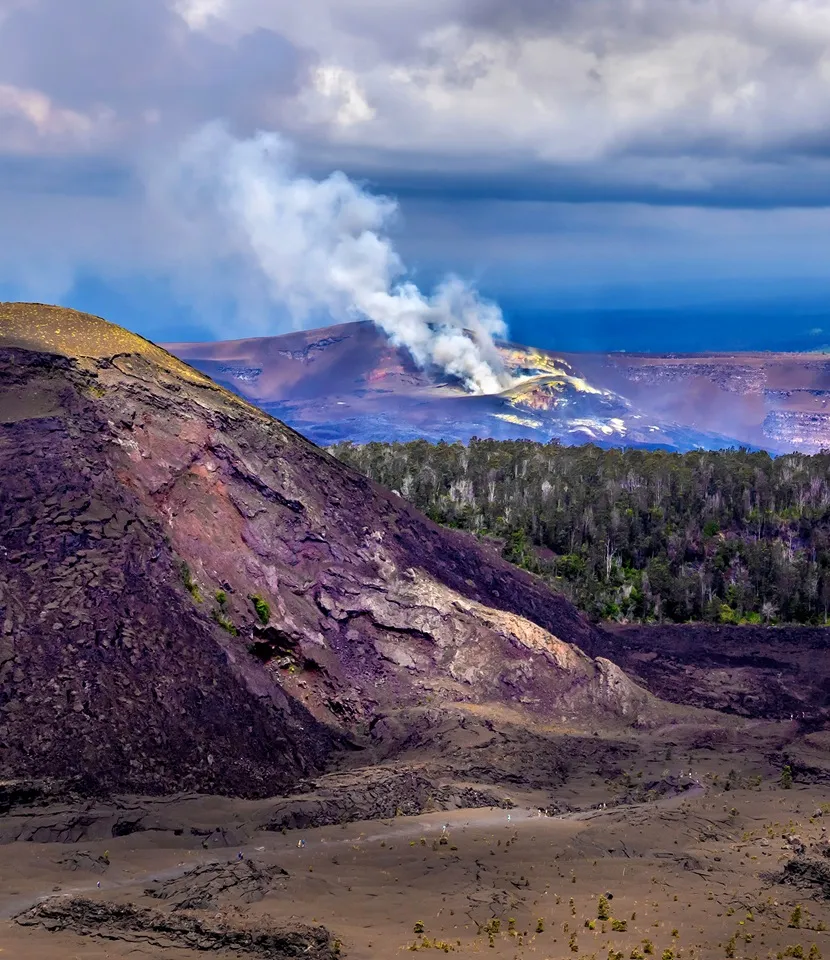
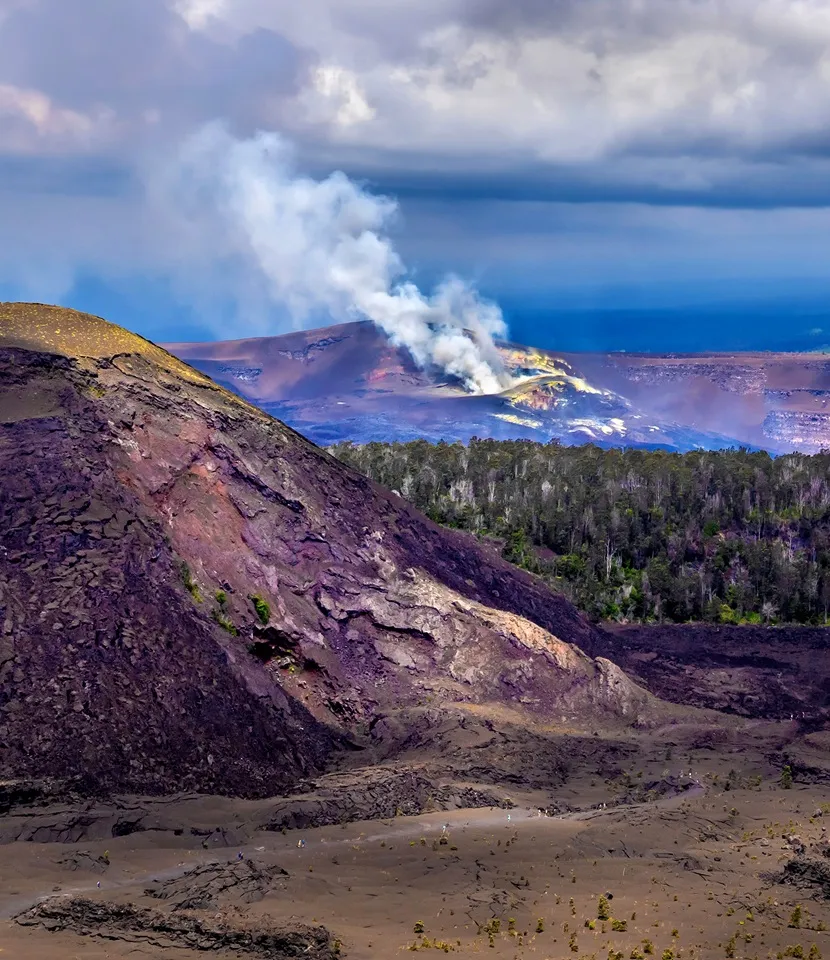
An active eruption is never guaranteed. Even when activity occurs, visibility depends on conditions and safe access. The photograph of the summit in this guide documents an earlier moment and does not show what visitors will necessarily see today.
2. Look across Kīlauea from an open overlook
An authorized caldera overlook is a good way to appreciate the scale of Kīlauea without assuming that a long hike is necessary. Uēkahuna and Kīlauea Overlook are among locations the park has identified for views when conditions allow. Ask staff which is open and suitable at the time of your visit.
Stay behind walls and barriers and away from unstable cliff edges. Volcanic terrain can change suddenly; do not enter closed areas, step over a barrier or stop in the road for a photograph. Weather can obscure a view as quickly as it clears, so a cloudy summit is a reason to adjust your day rather than seek an unsafe vantage point.
The park describes Uēkahuna as a place deeply revered by generations of Native Hawaiians. Read the interpretation, listen to ranger programs and treat the landscape as a place of living cultural significance, not only a dramatic background.
3. Walk to Nāhuku when conditions permit
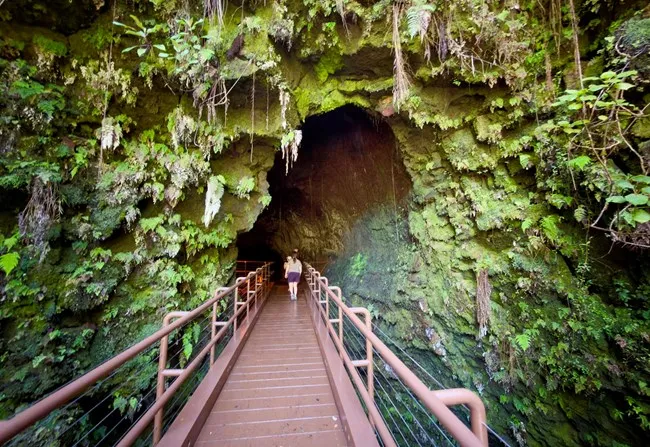
Nāhuku, also known as Thurston Lava Tube, offers a different perspective on volcanic landscapes. The National Park Service describes a rainforest approach and an underground passage left after a river of lava drained away. A 2026 park photograph shows visitors using a newly installed bridge; verify the present route and any closures before going.
The park warns of low ceilings, rockfall, standing water, tripping hazards and low light. Wear sturdy footwear, watch your head and bring a light if visiting outside the published lighting hours. Parking is limited, so follow current parking guidance and use designated trails rather than walking along Crater Rim Drive.
Do not touch the tube walls or the roots hanging from the ceiling. Fragile ecosystems live in these underground environments, and some lava tubes also have important cultural and burial associations. Enter only areas the park explicitly opens to visitors.
4. Notice steam, gas and the limits of a viewpoint
At the summit, ground water heated by hot rocks can rise as steam. Other areas release volcanic gases as well. These processes are fascinating to observe from an authorized route, but the park emphasizes that air quality can change and volcanic gases may be hazardous, particularly for sensitive visitors.
Check the park’s air-quality information and leave the area if conditions or symptoms make it necessary. Families with young children and people with respiratory or heart conditions should review park guidance before choosing a route. Never approach a vent or step off a designated path to investigate steam.
An interpretive sign or ranger conversation can help distinguish water vapor from volcanic gas and explain why a landscape that appears quiet still requires care. The point is not to get as close as possible; a safer view can provide a richer understanding of what is happening below.
5. Leave room for an alternative plan
If the summit is crowded or an area closes, ask rangers about another open part of the park. Crater Rim and Chain of Craters roads serve different landscapes, but road and trail access depend on current conditions. Allow more time than a map suggests and check fuel, water, weather and parking before setting out.
Stay on marked routes, carry out litter and leave rocks and other natural or cultural materials in place. The park offers ranger-led programs when available; check its current calendar rather than assuming a tour runs every day. A short stop with good interpretation may be more rewarding than a long drive toward a closed attraction.
Bring rain gear and a layer for cooler summit weather, even if the coast is warm. Above all, make the current park alerts part of the itinerary. Hawaiʻi Volcanoes is compelling because it changes, and a flexible visit respects that reality.