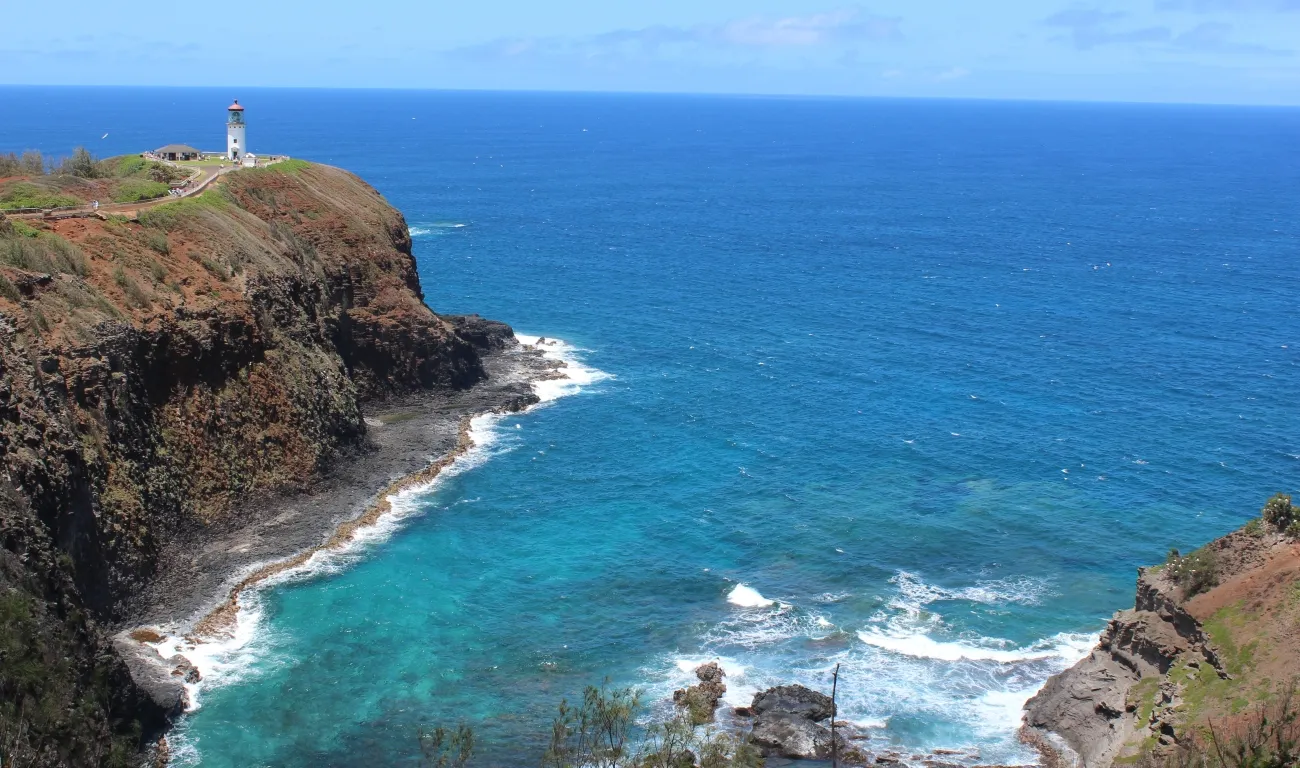
On Kauaʻi’s north shore, Kīlauea Point National Wildlife Refuge protects a headland where seabirds nest above the Pacific. The historic Daniel K. Inouye Kīlauea Point Lighthouse gives the overlook a familiar silhouette, but the refuge’s wildlife is the reason to slow down and look beyond the landmark.
This is a small, carefully managed place, so advance planning matters. These six tips will help you arrange entry, understand the landscape and watch wildlife without disturbing it.
1. Make a reservation before driving to the refuge
The U.S. Fish and Wildlife Service requires reservations for adults age 16 and older. Book through Recreation.gov and select the entry option that matches your circumstances. Accepted federal passes and a Hawaiʻi-resident Kamaʻāina pass have their own instructions; a pass does not remove the need for a reservation.
As of the refuge’s current visitor information, tickets are available up to two months ahead. Check the booking page for the current fee, arrival window and identification requirements. Make sure the whole party is accounted for and keep your confirmation accessible, especially if mobile service becomes unreliable.
The refuge lists its regular visitor days as Wednesday through Saturday, with an arrival cutoff before closing. Holiday closures and special events can change the schedule. Confirm the current hours before setting out rather than relying on a general travel itinerary or an old review.
2. Arrive by vehicle or bicycle
The refuge says visitors must arrive in a vehicle or on a bicycle: walking into the refuge is not permitted because the entrance drive is steep and narrow. There is no additional parking fee according to current visitor information. Follow staff directions and do not stop or park in places that obstruct the road.
From the parking area, the path to the point is paved and has a slight uphill grade. The refuge describes the walk as about five minutes and offers a golf cart by request for visitors needing assistance. Contact the refuge in advance if a particular accessibility arrangement is essential to your visit.
Bring water, sun protection and a light layer for wind or passing rain. A short paved walk can feel exposed on a coastal headland. Give yourself enough time within the reservation window to move at your own pace and read the interpretive signs.
3. Start with the lighthouse’s maritime story
The lighthouse was built in 1913 to help guide ships near Kauaʻi’s north shore. Its historic light station is listed on the National Register of Historic Places, and the refuge describes the landmark as part of a broader effort to preserve the headland’s cultural and natural history.
From the public viewing areas, take time to see how the point projects into the ocean and why a navigational light mattered here. Interpretive signs can connect the building to the people who maintained it and the ships that depended on it.
Do not assume the lighthouse interior is open. Programs and access may vary; consult the refuge’s current events and visitor information. A worthwhile visit does not depend on entering the building, since the coastal views and bird colonies can be observed from approved areas.
4. Watch the seabirds from a respectful distance
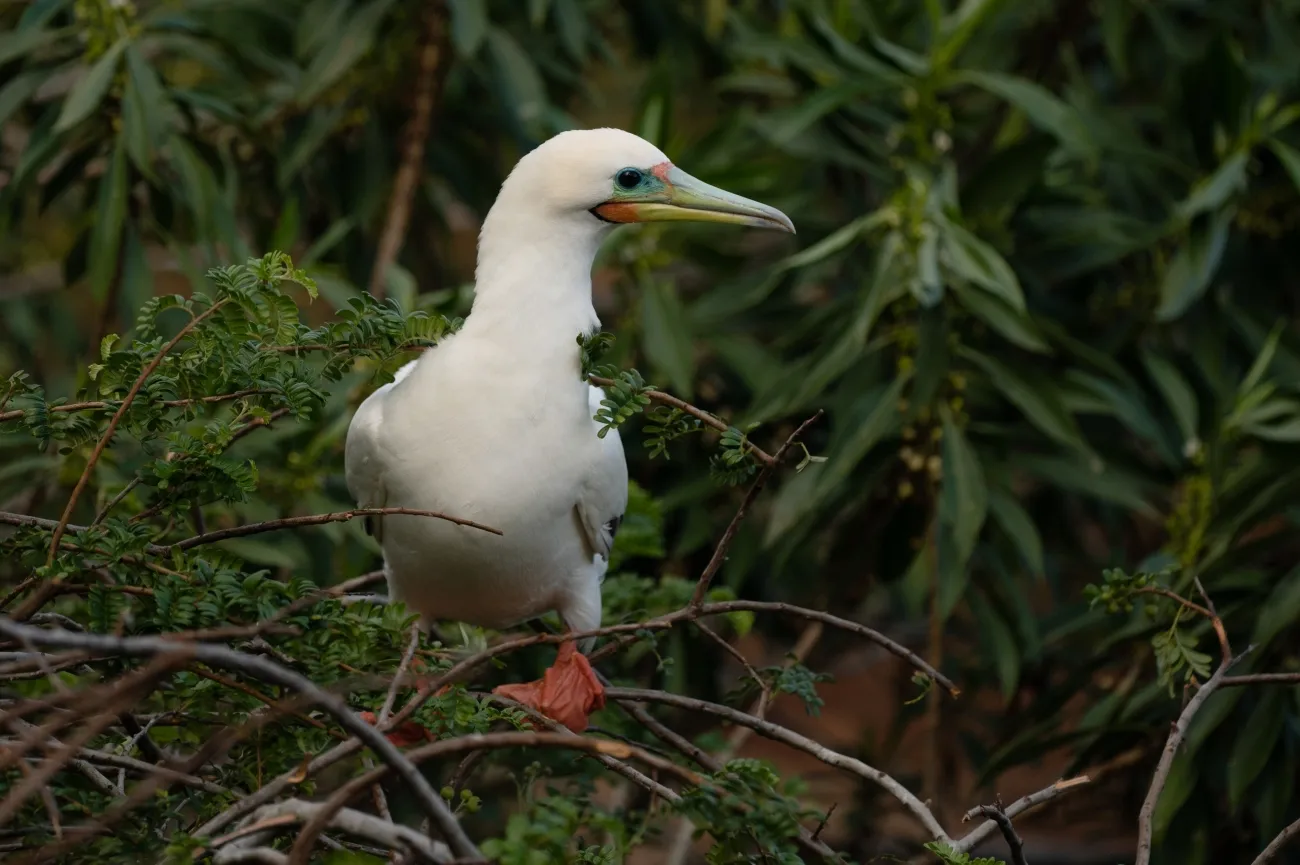
Kīlauea Point is home to one of the world’s largest colonies of red-footed boobies, called ʻā in Hawaiian. The refuge also identifies species such as ʻiwa, or great frigatebirds, and mōlī, or Laysan albatrosses. What you see depends on season, weather and the birds’ natural movements; no sighting is guaranteed.
Bring binoculars and let the birds come into view rather than trying to approach a nest. Stay on visitor paths and behind barriers, keep voices low and follow instructions from refuge staff. Never feed wildlife or use food to draw an animal closer for a photograph.
Look at the sky as well as the cliffs. Birds may glide on air currents above the water, while nesting birds can be difficult to spot among vegetation. A few quiet minutes in one place often reveal more activity than a hurried walk between viewpoints.
5. Look for nēnē and offshore wildlife
Nēnē, Hawaiʻi’s native goose and state bird, are among the animals associated with the refuge. They may be encountered near visitor areas, so drive slowly and give them the right of way. Do not approach, touch or feed them, even if they seem accustomed to people.
The refuge also notes that visitors may see marine wildlife, including Hawaiian monk seals or dolphins, from the headland. Such encounters are unpredictable and should be enjoyed from a distance. Binoculars are useful for scanning the water without disturbing animals or moving beyond designated viewing areas.
Keep children close near roads and overlooks. The cliffs and ocean below are dramatic, and wind can make exposed spots feel less stable than they appear. Barriers protect visitors as well as nesting habitat; remain behind them even when another angle looks tempting.
6. Give the refuge time without crowding the day
This is a compact stop, but a reservation is more rewarding when it leaves room to observe. Consider arriving with enough time to walk the path, read about the lighthouse and spend a quiet interval watching birds. Refuge staff and volunteers may be able to point out seasonal activity or explain conservation work.
Carry out your litter and leave plants, feathers and other natural materials where they belong. Keep food secured and follow all posted rules. These modest choices support the habitat that makes the visit possible.
Before traveling, recheck the refuge’s official hours, reservation and accessibility pages. Conditions and programs can change, and wildlife follows its own timetable. The best plan combines preparation with patience.