Between the Kona coast and dark lava fields, Kaloko-Honokōhau National Historical Park tells a story of Hawaiian knowledge, food systems and community. Fishponds, a fishtrap, coastal trails and a white-sand beach sit within a landscape that continues to hold cultural meaning.
This is a place to visit slowly. Begin at the park’s Hale Hoʻokipa visitor center, ask about current conditions and use the park’s interpretation to understand what you are seeing. These five stops and perspectives can shape a thoughtful first visit.
1. Learn how people sustained life on the coast
The lava landscape can seem dry and difficult, but Hawaiian communities developed deep knowledge of the resources connecting mountain and sea. The park protects evidence of settlement and food production, including fishponds and a fishtrap that demonstrate generations of observation and care.
At the visitor center, ask for a map and current guidance before choosing a route. The park has more than one entrance, and the visitor center parking area, Kaloko Road gate and harbor-side access do not all follow the same schedule. Check the official hours and make sure your vehicle is out of its parking area before that area closes.
Carry water, sun protection and sturdy shoes. Lava can be uneven and sharp, and exposed paths can become hot. Choose a route that fits the group’s mobility and the day’s conditions; the visitor center and restrooms are accessible, and the park says Kaloko Fishpond can be reached by car.
2. Look closely at Kaloko Fishpond
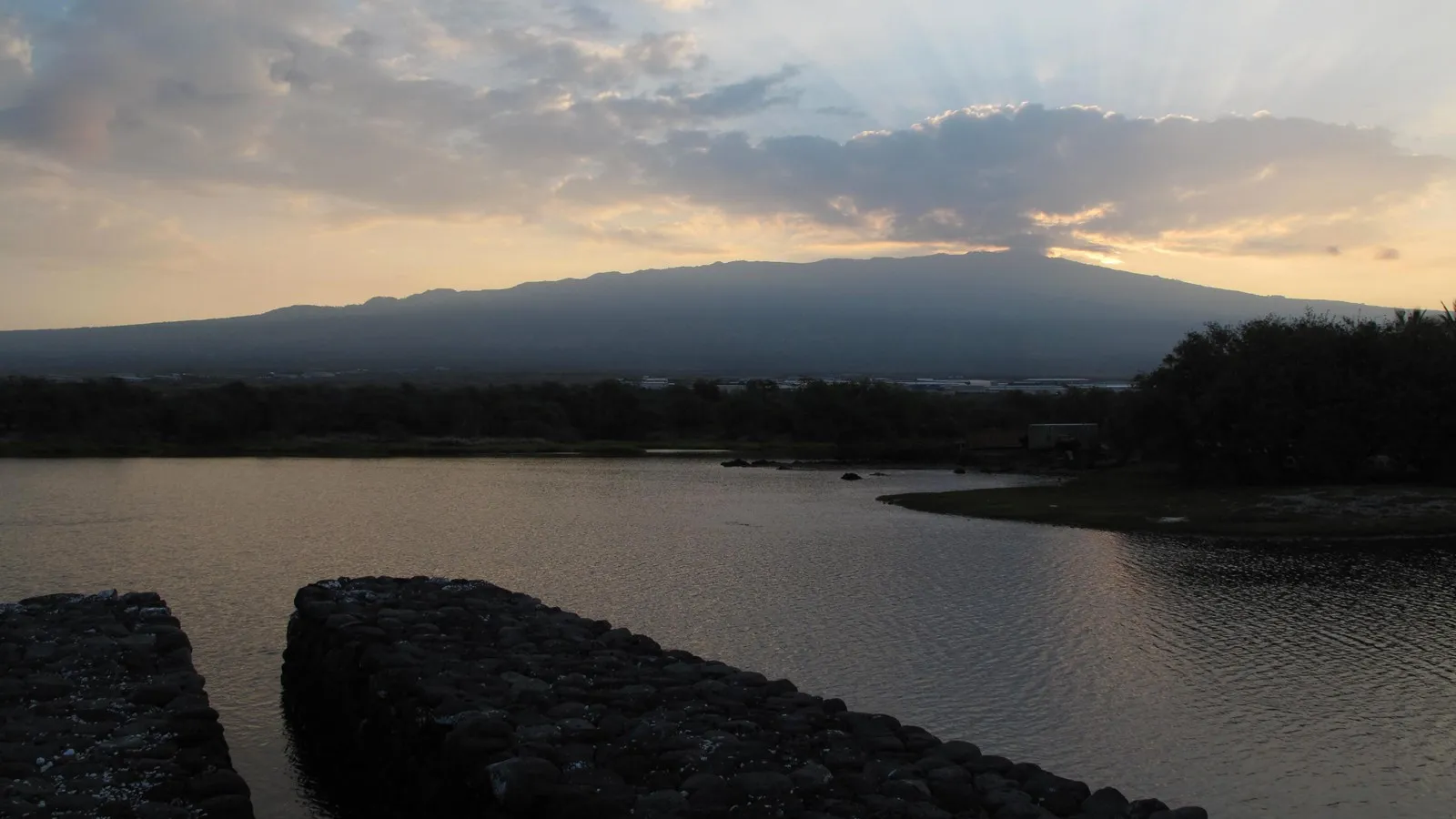
Kaloko is a loko kuapā, a fishpond with a carefully constructed stone seawall. The National Park Service describes the kuapā as built from water-worn lava stones stacked without mortar. Channels and mākāhā, or sluice gates, helped manage the exchange of water and fish.
Rather than seeing the wall as a decorative boundary, consider it an example of aquaculture and resource management. Its design reflects an understanding of tides, coastal conditions and the needs of the community. The park also connects the pond with the history of Kamehameha I.
Observe from permitted areas and leave stones and structures in place. Restoration and stewardship are ongoing, and what looks like a loose rock may be part of a cultural feature. Follow any closure signs and ask staff before entering areas where access is unclear.
3. Visit Honokōhau Beach and the ʻAiʻōpio Fishtrap
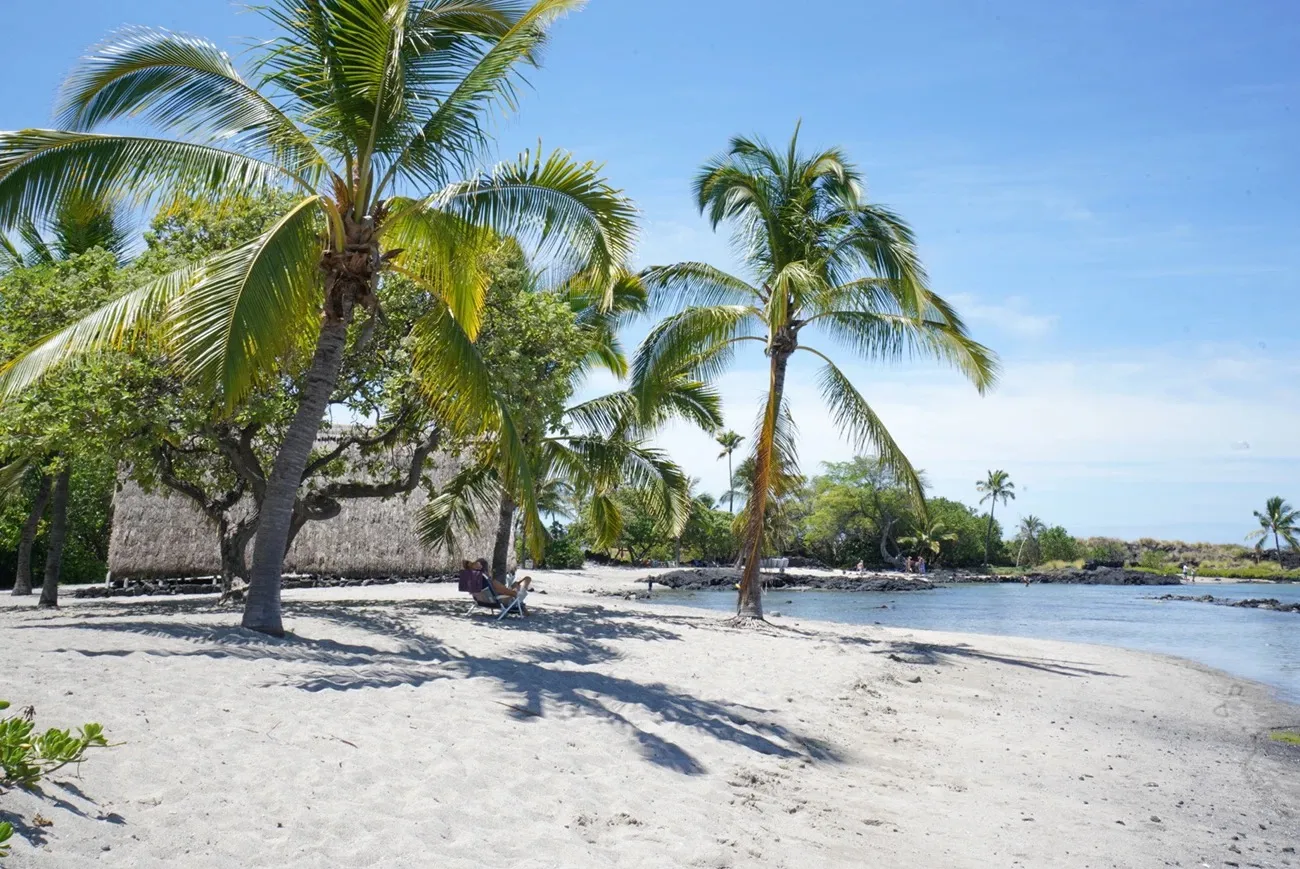
Honokōhau Beach stretches north from the boat harbor, with pale coral sand meeting dark lava. In the shallow water lies ʻAiʻōpio Fishtrap, where reef fish were captured for food. A heiau, or temple, stands nearby; together these features show that the beach is more than a scenic shoreline.
The harbor-side entrance offers a shorter walk to the beach and fishtrap than the route from the visitor center. Confirm directions and parking rules with the NPS before arrival. Paths and conditions can change, and it is worth knowing which entrance is most suitable for your group.
Keep a respectful distance from cultural structures and remain on permitted paths. Do not climb walls, move rocks or disturb offerings. Read the park’s signs and let the interpretation guide you through the history rather than treating every structure as a place to explore physically.
4. Give honu and wetland birds room
Honu, Hawaiian green sea turtles, frequent Honokōhau Beach to feed and bask. Sightings are never guaranteed, and a resting turtle needs space. The park’s wildlife guidance asks visitors to stay at least 20 feet away; never touch, feed, surround or pursue an animal. If a turtle approaches you, move away calmly.
ʻAimakapā Fishpond and its wetlands also provide habitat for birds, including migratory species. Bring binoculars and observe from authorized routes rather than entering sensitive areas. Quiet observation protects the animals and often reveals behavior that a closer, noisier approach would interrupt.
Stay aware of the ocean as well as wildlife. Waves, currents and slippery rock can be hazardous even on an attractive day. Read signs, supervise children and avoid turning a wildlife encounter into a reason to cross a barrier.
5. Leave time to understand a living place
The park describes Kaloko-Honokōhau as a wahi pana, a celebrated place where Hawaiian culture continues to flourish. A ranger program or cultural activity, when offered, can deepen a visit. Check the park calendar and ask at the visitor center; schedules depend on staffing and conditions.
Listen respectfully to cultural practitioners, ask permission before taking close photographs and leave room for others to practice or reflect. Carry out litter and do not remove shells, plants, feathers or stones. Small acts of care help protect a place shared by communities, wildlife and visitors.
Before setting out, review official alerts, hours and accessibility guidance. Camping is not permitted in the park. A flexible itinerary with water breaks and time for interpretation will reveal far more than a hurried stop at the shoreline alone.