On the Kona coast of Hawaiʻi Island, Puʻuhonua o Hōnaunau National Historical Park preserves a landscape that is both a window into Hawaiian history and a place of continuing cultural significance. Stone walls, temple sites, canoe landings and coastal trails tell different parts of a story best approached slowly and respectfully.
Start at the visitor center and use the National Park Service’s walking guide or audio tour. These seven features can help you understand what you are seeing and decide how to spend your time, while remembering that this is a living cultural landscape rather than a collection of photo stops.
1. The idea of puʻuhonua
Puʻuhonua means a place of refuge. Under the traditional kapu system, breaking certain sacred laws could carry the penalty of death. Someone who reached a puʻuhonua could seek absolution from a priest; the site also offered protection to defeated warriors and civilians in times of conflict.
That history gives the park’s name a meaning deeper than its coastal beauty. The National Park Service describes the site as a spiritual sanctuary that continues to be significant today. Allow time for the interpretation at the visitor center before walking through the grounds, and follow the park’s guidance about respectful conduct.
2. The Royal Grounds
The Royal Grounds were associated with Hawaiian aliʻi, or chiefs. The park’s half-mile self-guided walk introduces the area and the neighboring puʻuhonua. Along the way, interpretation explains how the land and sea supported daily life, ceremony and travel.
Look for royal fishponds and the canoe hālau, structures used for storing canoes and providing working space. These features are parts of an interconnected landscape. Stay on designated paths, leave rocks and cultural objects in place, and avoid entering restricted areas to improve a photograph.
3. Keoneʻele Cove
Keoneʻele Cove was a protected canoe landing for aliʻi. Its sheltered water and position beside the Royal Grounds make it a useful place to think about the importance of ocean travel in Hawaiian history. A canoe was a means of connection among communities, resources and places of ceremony.
The park notes that honu, or Hawaiian green sea turtles, sometimes rest on the shoreline. If you see one, give it plenty of space and do not touch or feed it. Ocean access is not allowed within the sacred park grounds; check the park’s current guidance rather than assuming a visible cove is a swimming area.
4. The Great Wall
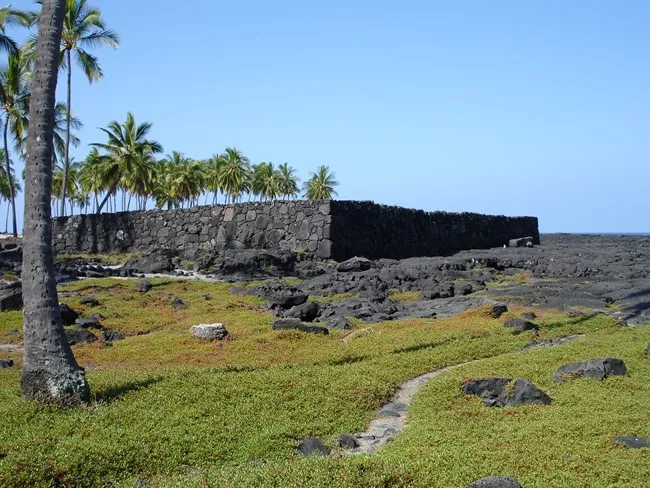
The pā puʻuhonua, or Great Wall, separates part of the refuge from the Royal Grounds. The park describes the roughly 400-year-old structure as dry-set masonry: stones were fitted together without mortar. Its scale is impressive, but its cultural role is more important than any measurement.
Walk alongside the wall where the route allows, without climbing or moving stones. Restoration and ongoing care help preserve the structure, and the park asks everyone to treat the surrounding grounds as sacred. A quiet pace gives you time to notice the skill involved in placing the stones and maintaining the site.
5. Hale o Keawe and ʻĀleʻaleʻa
Hale o Keawe is a heiau and royal mausoleum associated with chiefs of the Keawe line. Wooden kiʻi stand around the structure. The nearby ʻĀleʻaleʻa heiau platform is believed to have been a principal temple of the refuge before Hale o Keawe was built, according to the park.
These are sacred places, not ruins to explore freely. Read the interpretation from the visitor route, observe barriers and do not touch the structures or offerings. Park staff and cultural practitioners are better guides to their meaning than assumptions based on appearance alone.
6. The 1871 Trail
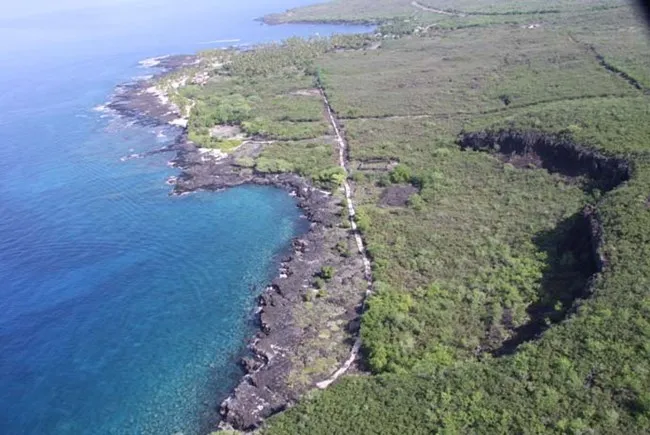
For a longer outing, the park identifies the 1871 Trail toward Kiʻilae Village as an option beyond the main walking tour. The trail forms part of a wider historic coastal route; the NPS explains that such paths connected villages, religious sites and resources. Its name refers to improvements recorded in 1871, not to the beginning of travel through this landscape.
Check trail conditions and distance with a ranger before setting out. Uneven lava, heat and sun exposure make sturdy footwear, water and sun protection important. Stay on the established route, leave archaeological features undisturbed, and turn back if weather or your group’s readiness makes the walk unsuitable.
7. Cultural demonstrations and a picnic-area pause
The park says cultural demonstrations take place frequently, although activities and staffing vary. Ask at the visitor center what is offered during your visit. Watching and listening respectfully can add context that a sign alone cannot provide; ask permission before taking close photographs of a demonstrator.
The separate picnic area offers shade and a place to pause. Use the designated area and follow the posted restrictions for each part of the park, since activities appropriate at a picnic table may not be appropriate within the Royal Grounds or puʻuhonua. Carry out what you bring and leave the coast undisturbed.
Before traveling, check the NPS alerts, operating hours and entrance information. The park gates and visitor center have different schedules, and access can change. Give yourself a flexible block of time: a thoughtful visit can be more rewarding than trying to fit the site between several rushed stops.