In southern Idaho, granite towers rise above sagebrush and juniper in a landscape that California Trail emigrants once likened to a city of stone. City of Rocks National Reserve still invites that kind of imagination, but it is also a place of Indigenous history, distinctive geology, climbing, quiet campsites, and high-desert wildlife.
You do not have to be a climber to enjoy the reserve. A scenic drive, a short walk, and time to read the landscape can make a rewarding first visit. These five ideas will help you plan a day near Almo.
1. Start With the Visitor Center in Almo
The visitor center for City of Rocks National Reserve and neighboring Castle Rocks State Park is in the community of Almo, just outside the reserve. Stop for a map, trail suggestions, current road conditions, and advice on seasonal services. There is no entrance fee for City of Rocks, though camping and some other services have separate charges.
Much of the reserve is reached by unpaved roads. Conditions can change after rain or snow, and distances can feel longer when you are driving slowly around bends and sharing the road with other visitors. Check your route and vehicle requirements before leaving the visitor center, especially if traveling outside the busiest season.
Carry water, sun protection, and layers. High-desert weather can change quickly, and a clear morning does not guarantee a warm evening. Cell coverage may be limited, so save maps and reservation details before the drive.
2. See the Twin Sisters and the Granite Landscape
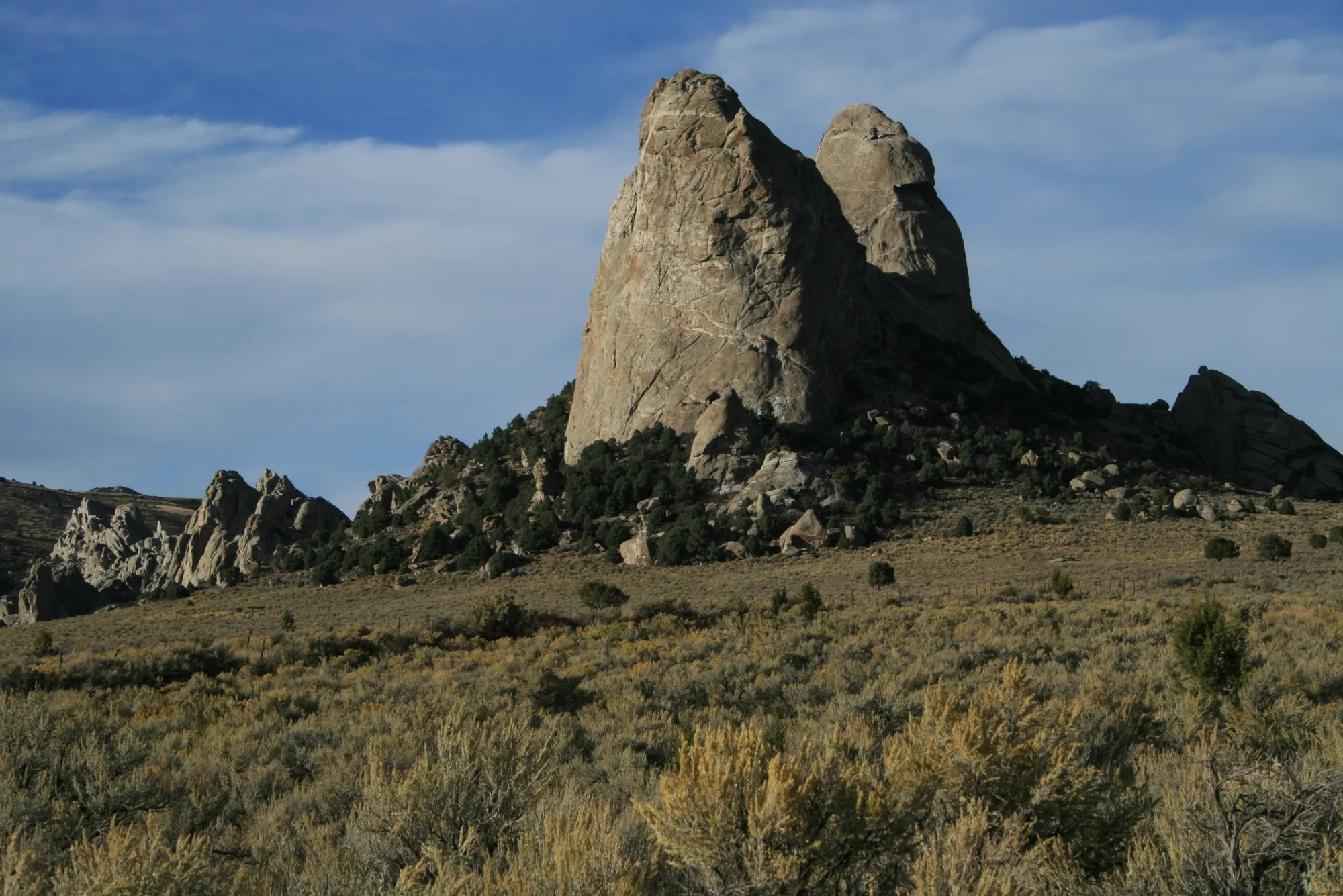
The Twin Sisters are among the reserve’s recognizable formations: two granite pinnacles rising above the basin. Their similar appearance hides an enormous difference in age. The National Park Service says the southern formation comes from rock as old as about 2.5 billion years, while the northern formation is part of a much younger granite body dating to about 28 million years ago.
The formations also served as a landmark for travelers on the California Trail. Look at them from an appropriate viewpoint and consider how their silhouettes might have appeared to people crossing an unfamiliar landscape by wagon. The reserve offers geological interpretation through its visitor center and National Park Service app.
Climbing is prohibited on Twin Sisters and on several protected historic rocks. Follow posted signs and the park’s current climbing rules, and do not carve names or leave marks on the stone. A photograph from a legal viewpoint is a better souvenir than damage that lasts for generations.
3. Look for California Trail History
At Register Rock, emigrants left names written in axle grease as they traveled toward California. The National Park Service identifies signatures by A. Freeman and D. Tickner dated June 12, 1850. A wayside exhibit helps visitors locate the marks and understand why travelers stopped here.
These traces are fragile historical records. Look without touching, do not add your own name, and respect barriers and closures. The reserve also preserves parts of the California Trail landscape and other reminders of overland migration, so ask staff which stops are accessible and appropriate for your vehicle and available time.
The story did not begin with wagon travelers. The National Park Service notes that Shoshone people camped in this landscape before the California Trail era. Seek out interpretation of Indigenous connections as well as the emigrant accounts to understand a fuller history of the reserve.
4. Choose a Walk or a Scenic Drive
Gravel roads wind among formations and historic sites, giving drivers a way to see the reserve without committing to a long hike. If you prefer to explore on foot, ask at the visitor center for a trail that matches your group’s ability, the weather, and the time you have. Trails lead toward overlooks and features such as arches and windows, but surfaces can be uneven and exposed.
Carry a paper or downloaded map, sturdy footwear, and more water than you expect to need. Stay on designated routes, leave gates as you find them, and respect private property near the reserve. For technical climbing, use proper skills and equipment and review the park’s current restrictions; some formations and historic areas are closed to climbing.
Good places to stop are the ones where you can park safely without blocking the narrow road. Give other visitors and wildlife space, and avoid driving onto vegetation or creating new tracks.
5. Stay for the Quiet and the Night Sky

City of Rocks supports a variety of wildlife among its sagebrush, rock, and woodland habitats. A motion-sensor camera captured the bobcat pictured here; such a photograph is a reminder that animals use the reserve even when visitors do not see them. Watch from a distance, never feed wildlife, and keep food and trash secured.
The reserve is also recognized as an International Dark Sky Park. If you plan to stay after sunset or camp, check current campsite availability and regulations, bring a light for safe movement, and use it thoughtfully around other visitors. Reserve sites as required and confirm seasonal water and restroom availability in advance.
Before leaving, check the National Park Service’s visitor information, activities guide, Register Rock information, and current climbing rules. A little preparation gives you more time to enjoy this unusual Idaho landscape.