Boston's Freedom Trail connects centuries of history along a roughly 2.5-mile route from Boston Common to Charlestown. A red line or brick path helps guide walkers past meeting houses, burial grounds and the harbor, but the most interesting visit involves more than following the line. Each site has its own story, operator and schedule.
These seven stops are a manageable introduction, not the full list of 16 official sites. Wear comfortable shoes, allow time for exhibits and check individual opening hours before setting out. Some historic interiors charge admission, and accessibility differs from site to site.
1. Boston Common and the State House
Begin at Boston Common, a public park established in 1634. Its long history includes uses that changed as Boston grew. Across the street, the Massachusetts State House has served as the seat of state government since 1798. The contrast between an open public landscape and the working government building makes a useful starting point for thinking about how civic life evolves.
Use a current trail map to orient yourself before following the route downtown. If you want to enter the State House or join a tour, check the state's visitor information for current schedules and security requirements. The park and surrounding sidewalks are also a place to take a break before the busier streets ahead.
2. Granary Burying Ground
Granary Burying Ground, established in 1660, contains markers associated with many people from Boston's early history, including Paul Revere, Samuel Adams and John Hancock. The Freedom Trail Foundation notes that the number of markers is much smaller than the estimated number of people buried there, and that stones were rearranged in the nineteenth century.
This is an active place of remembrance as well as a historic site. Stay on paths, do not touch fragile markers and give other visitors room. The City of Boston manages the ground, so check its current access and opening hours. An accessible entrance is identified in the trail's access information.
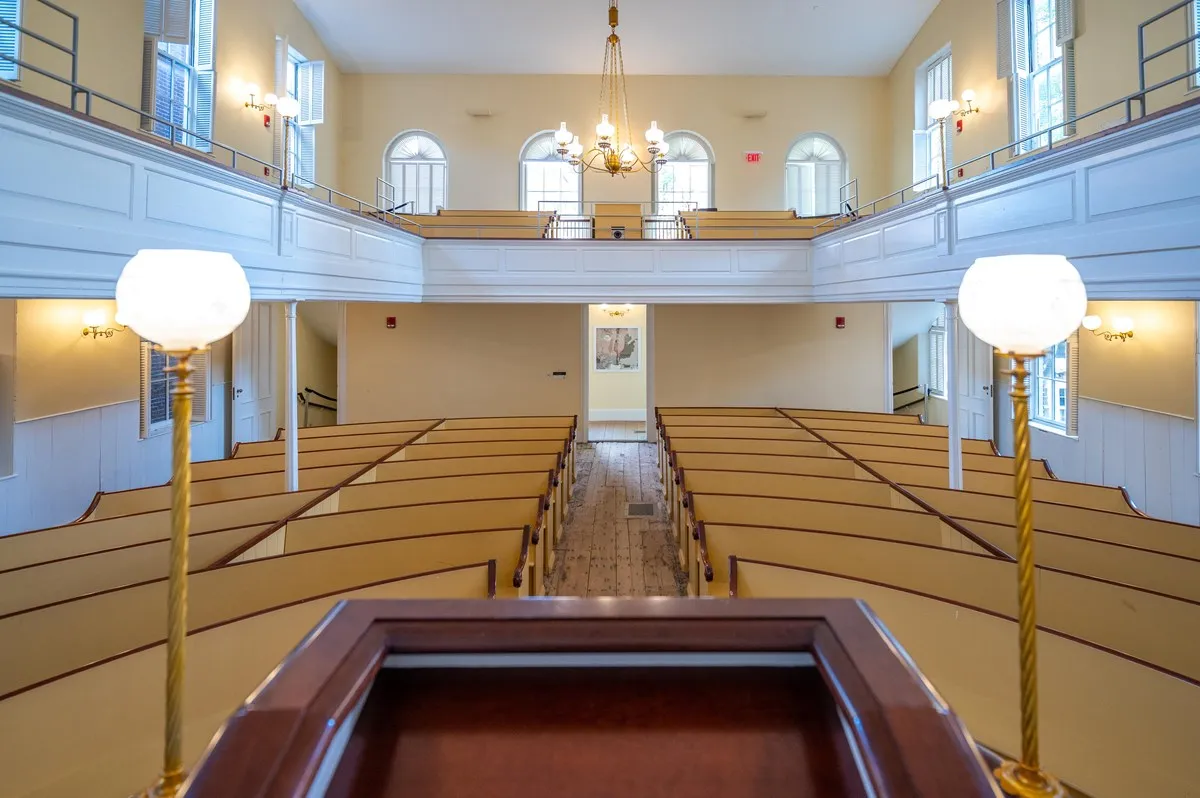
3. Old South Meeting House and Old State House
These downtown buildings help explain the public debates and tensions preceding the Revolution. The Old South Meeting House hosted the gathering that preceded the Boston Tea Party. At the Old State House, the Declaration of Independence was read publicly to Bostonians from the balcony in July 1776.
The sites are operated by independent organizations and may charge admission. Check their current hours and tickets if you want to visit inside; the Old State House interior is accessible only by stairs according to the NPS. Outside, pay attention to traffic and cross at marked crossings: the route runs through a working city, not a closed museum campus.
4. Faneuil Hall
Faneuil Hall has served as a marketplace and meeting place. Its Great Hall is operated as a historic site through a partnership between the city and the National Park Service. The hall's history includes debate over liberty and abolition, and its origins are also connected to Peter Faneuil's wealth and involvement in the transatlantic slave trade. Ask staff about programs that explore the full history.
The Great Hall can close for city-permitted events, and its hours change seasonally. Check the park's current page before planning an interior visit. It is also a useful point to pause for food or rest before continuing toward the North End.
5. The North End and Old North Church
The trail continues into the North End, where the Paul Revere House and Old North Church are among the historic stops. Old North is associated with the lantern signal sent in April 1775; the Paul Revere House offers a look at a surviving early Boston home and the family and community connected with it.
Both are independently operated sites with their own schedules and possible admission charges. Reserve or verify hours with each operator, and allow time to explore the neighborhood respectfully. Sidewalks can be crowded or uneven, and a short accessible detour may be needed along parts of the route.
6. Charlestown Navy Yard and USS Constitution
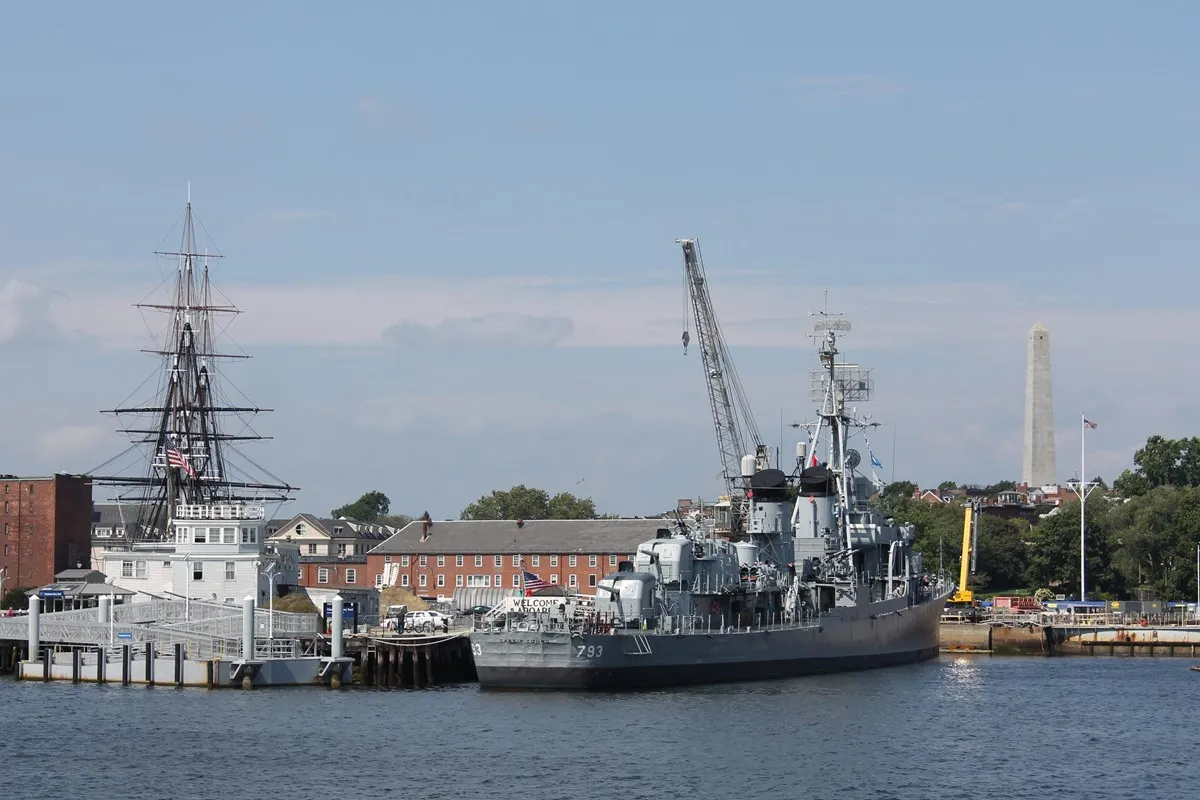
Cross toward Charlestown to reach the Navy Yard, where USS Constitution is maintained by the U.S. Navy as an active commissioned ship. The NPS visitor center at the yard provides orientation and access through a security checkpoint. Photo identification may be required for adults; check current Navy and park requirements before arriving.
The ship's hours vary by season and may change with weather. Historic vessels have limited accessibility, while the yard visitor center and USS Constitution Museum offer additional ways to learn about the site. The museum is operated separately, so check its own hours and admission information.
7. Bunker Hill Monument
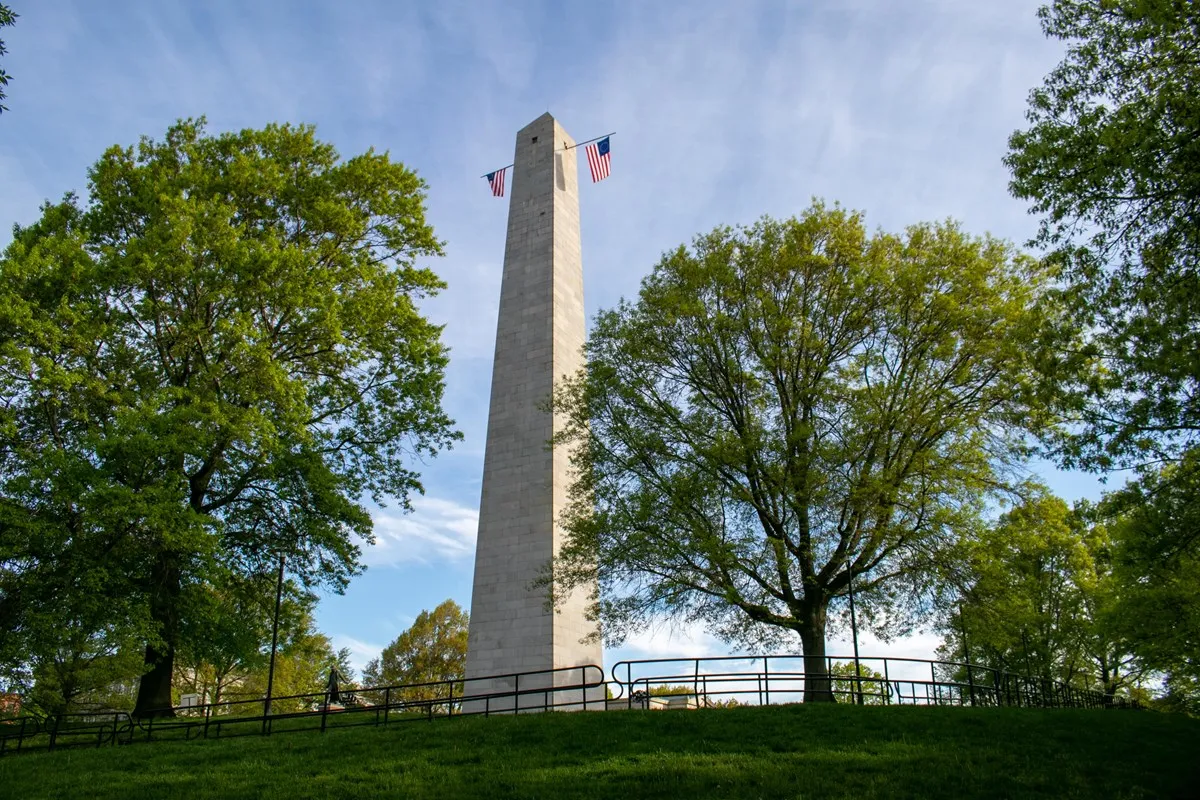
The Bunker Hill Monument commemorates the June 1775 battle. The lodge and monument base are accessible, and the museum has an elevator. Reaching the top, however, requires climbing 294 stairs in a narrow spiral; the monument can close to climbing for weather or safety reasons. The NPS also provides live views for visitors who do not climb.
Check the latest monument and museum hours, which are not necessarily the same as the grounds. From the Navy Yard, the NPS estimates a 10- to 15-minute walk along the trail. If time is short, divide the route over two days. Boston's Black Heritage Trail is another valuable nearby route that broadens the story of freedom beyond the Revolution.