At the edge of Deer Lodge, Montana, Grant-Kohrs Ranch National Historic Site offers an unusually tangible look at the work behind the cattle-ranching stories of the American West. A white ranch house, bunkhouses, barns, hayfields and working livestock remain part of the landscape.
The National Park Service manages the property as a working ranch as well as a historic site. That means a visit can reveal both the lives of the families who owned it and the daily labor of ranch hands who cared for animals, maintained equipment and brought in hay. Here are five ways to explore it.
1. Start with a ranger and the ranch house
Begin at the visitor center, where staff can provide a map and explain the day’s programs. The park lists 251 Grant Circle in Deer Lodge as its physical address. Admission is free, but check current hours and tour availability before you arrive, especially around holidays or in winter.
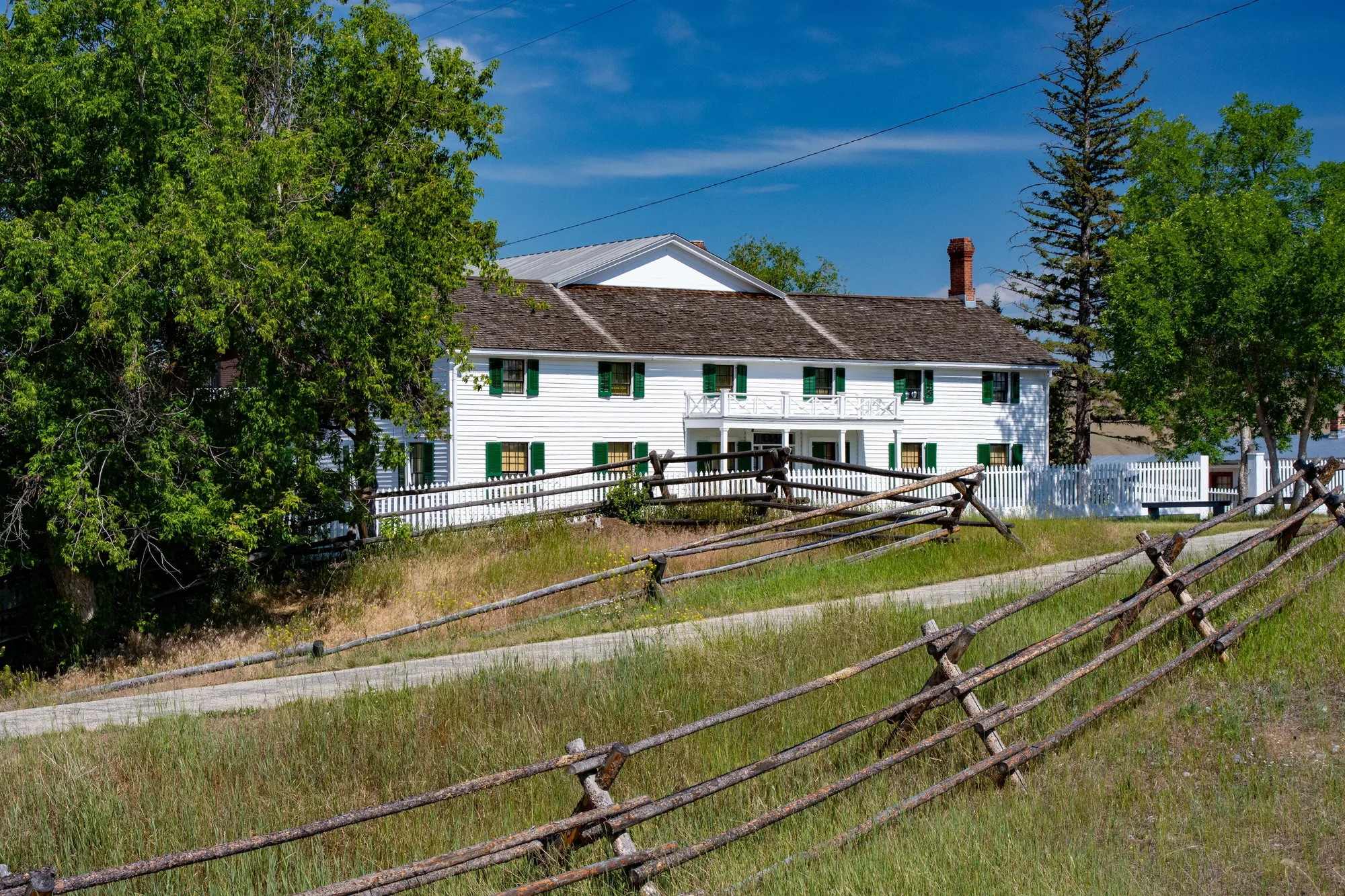
Johnny Grant built the original ranch house in 1862, using the lower floor as a trading post and the upper floor as a residence. Conrad Kohrs purchased the house in 1866, and an 1890 brick addition expanded the family home. The preserved furnishings and rooms offer a window into several generations of ranch life.
The interior is accessible only by guided tour. The park says tickets are free and available at the visitor center on the day of the visit, with tours dependent on staffing and limited in size. In summer they can fill quickly, so ask about availability when you arrive and use any waiting time to explore the grounds.
2. Walk through bunkhouse row
A ranch of this scale depended on many workers. Bunkhouse Row, built across the early twentieth century, housed ranch hands who ate and slept here. The park’s brochure describes evenings spent sharing stories, mending gear and playing cards after the workday.
Look for the practical details of the buildings: their simple forms, the paths between them and their relationship to the barns and work areas. These spaces help balance the more formal story told by the main house. Ask which interiors are currently open and respect any closed rooms or preservation work.
The ranch also employed people whose experiences are not always part of the familiar cowboy image. An added room on the ice house and tack room served as a summer home for Ham Sam, a Chinese cook, according to the park’s brochure. Details like this make the site’s social history richer than a single legend.
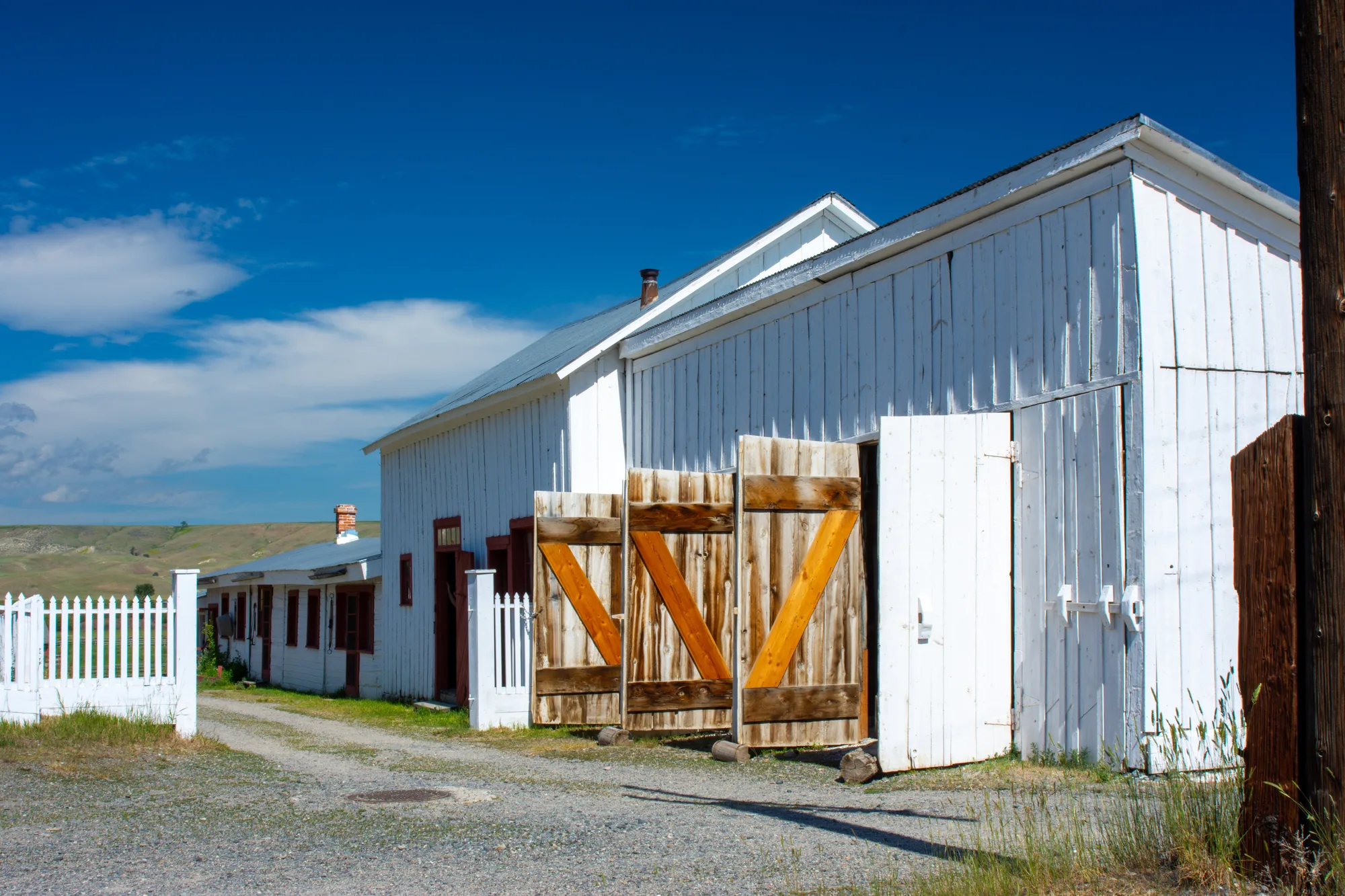
3. Explore the barns and horse-drawn equipment
The self-guided historic area includes a draft horse barn that the park says has been in use since 1870, and an 1883 Thoroughbred Barn that houses a collection of horse-drawn vehicles. Both show how closely ranch work once depended on animals and the people who handled them.
Other buildings tell different stories. A granary held ground and mixed feed, while an ice house stored winter ice for warmer months before refrigeration changed its use. Take your time with the exhibits: the tools and structures are evidence of work that had to be repeated every day, through unpredictable weather and changing markets.
This remains an operating ranch. Equipment and livestock can move through public areas, and the railroad tracks through the site are active. Follow signs, keep a safe distance from animals and never enter a closed work area to get a closer look.
4. Look beyond the buildings to the hayfields
Fields, irrigation ditches and fences are part of the story too. The National Park Service interprets the ranch as a landscape that changed from open-range cattle operations toward more managed ranching and farming. Its brochure identifies the Kohrs-Manning Irrigation Ditch as dating to the 1870s.
Seasonal demonstrations may show how hay was handled with horse-drawn equipment or a beaverslide stacker. Programs depend on staffing and the work calendar, so check the current schedule rather than promising children a particular demonstration. Even on a quiet day, interpretive signs and the arrangement of fields help explain why hay and water mattered to a ranch through Montana winters.
The park lists miles of roads and trails for visitors. Ask for a current map, choose a distance that fits your group and check which areas are open. Wear layers, carry water and leave gates, equipment and historic objects as you find them.
5. Plan for a working landscape in every season
The site is open year-round, but hours, weather and available programs vary. Winter temperatures can be severe, while summer afternoons can be hot and exposed. Dress for the forecast and check the official visitor information for the current schedule before leaving.
A paved route connects the visitor center and ranch house; the park’s text brochure describes it as approximately a quarter mile. Accessibility varies between historic structures and trails, so contact the park about your specific needs. Assistive listening devices are available for tours and talks subject to availability.
Give the ranch enough time to be more than a quick stop off Interstate 90. Its interest lies in the connections between the house, workers’ quarters, barns and open fields—and in the many people whose work shaped the landscape over generations.