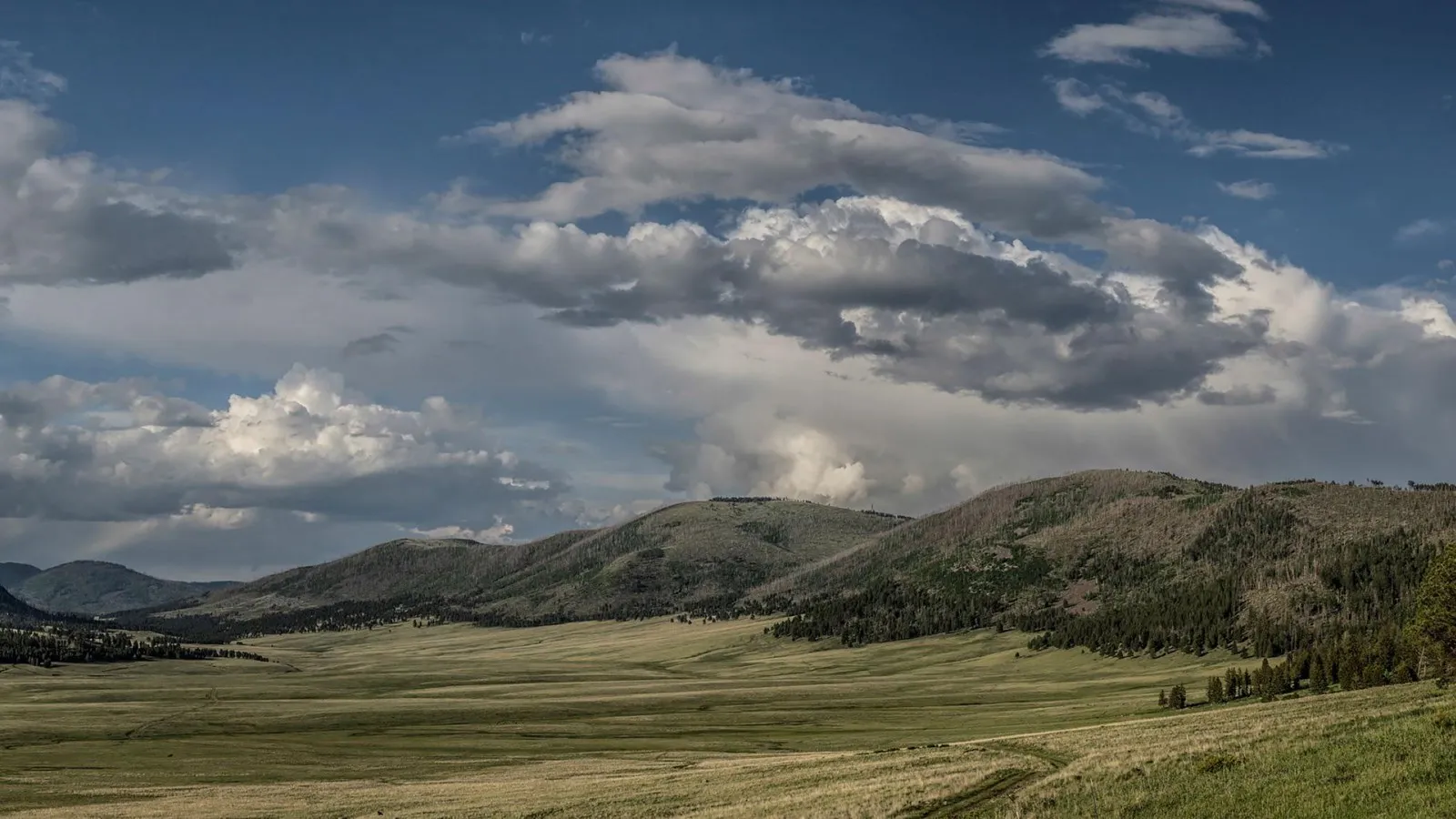
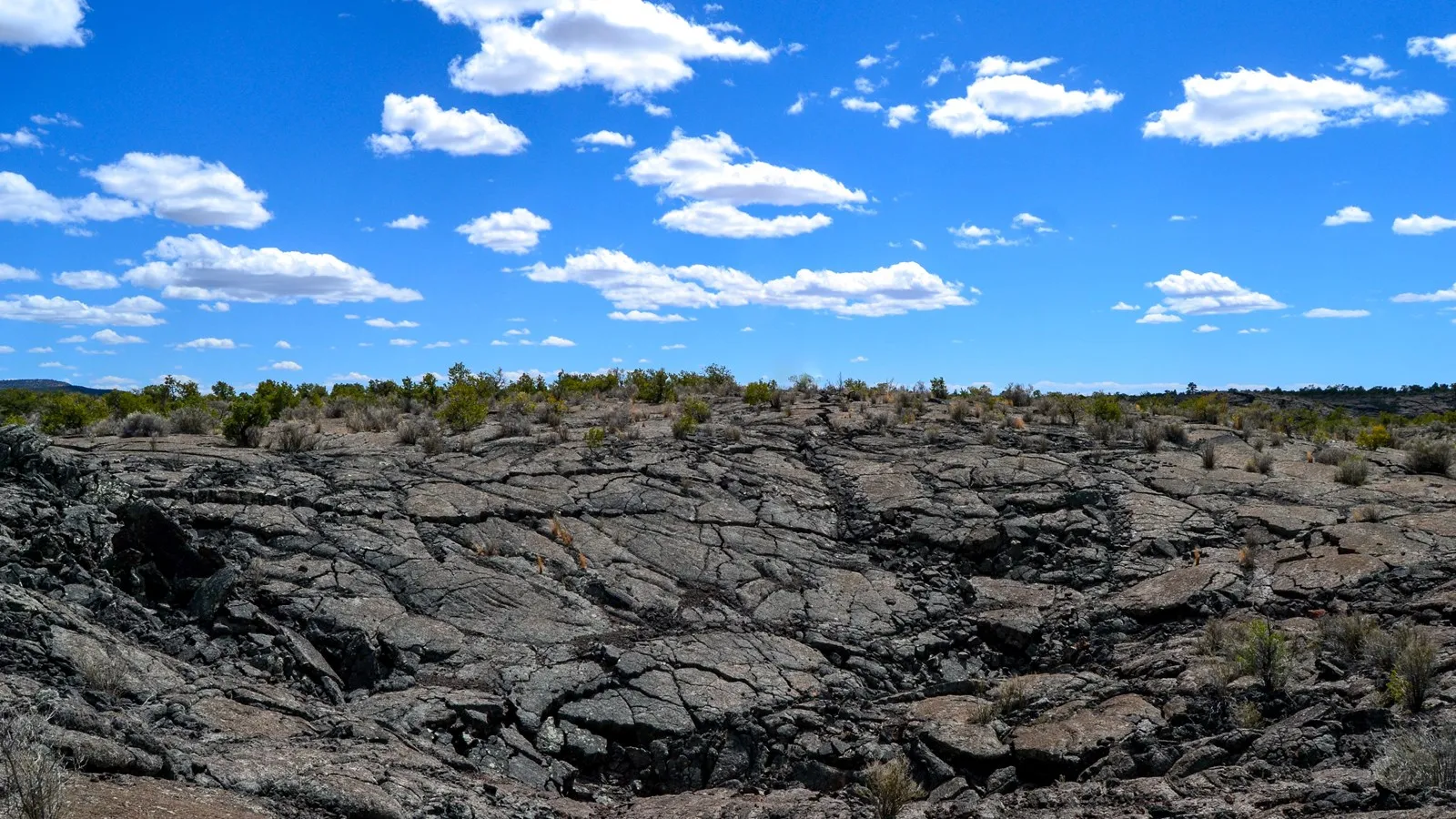
Bandelier National Monument protects canyons, mesas and places where Ancestral Pueblo people built homes and communities in what is now northern New Mexico. In Frijoles Canyon, a short walking route connects the visitor center with masonry walls, petroglyphs and dwellings carved into soft volcanic rock.
The people connected to these places did not disappear: Pueblo communities maintain living relationships with their ancestral homelands. Approach a visit with that continuity in mind, and use the National Park Service’s interpretation to learn the stories behind the landscape. These five steps make a thoughtful first visit easier to plan.
1. Check access to Frijoles Canyon
Begin by checking Bandelier’s official alerts, hours and directions. Parking in the canyon is limited, and seasonal shuttle arrangements can affect how visitors reach the visitor center. The schedule and requirements vary, so verify the current plan for your date instead of assuming you can drive directly to the trailhead.
An entrance fee applies. Review current pass options, allow time for any shuttle ride and ask a ranger about trail conditions. Weather, fire risk, flooding or maintenance can close individual routes, including ladders or other features along the trails.
Carry water, sun protection and layers. Elevation and changing weather can make a short walk feel more demanding than its mileage suggests. Restrooms, maps and current advice at the visitor center make it a useful first stop before heading into the canyon.
2. Walk the Main Pueblo Loop
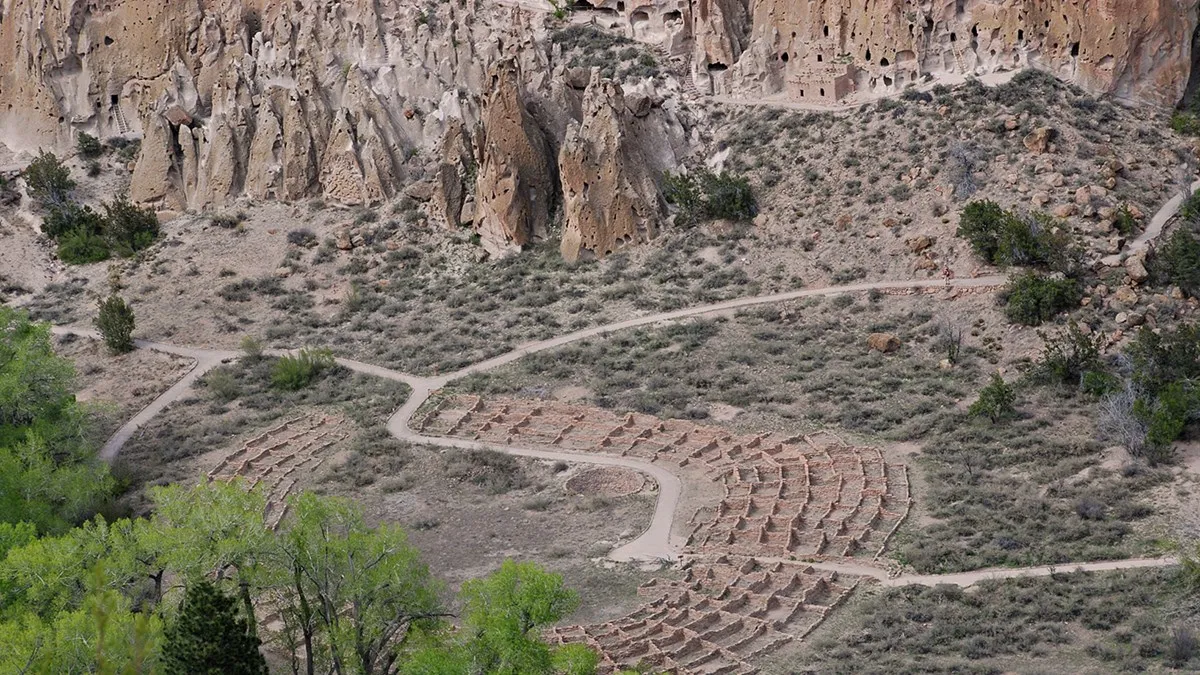
The Main Pueblo Loop Trail is about 1.4 miles round trip and passes several archaeological sites. The improved surface makes it easier to follow than a backcountry trail, but the NPS notes steep grades, narrow points and other features that mean it does not meet accessibility standards. Ask staff about the portions suitable for your group.
Allow time to stop and read the trail guide. The loop is a chance to consider how homes, fields, water and community life related to the canyon. Walk at a comfortable pace, use the signed route and keep children close around steps and exposed edges.
The trail can be sunny and warm in one season and icy in another. Sturdy shoes are useful even on a relatively short walk. If the full route is not right for everyone, discuss alternatives with a ranger rather than venturing onto an unmarked path.
3. Look across Tyuonyi and the canyon
Tyuonyi is the large village site visible along the loop. Its remaining masonry walls trace a community whose rooms once formed part of a much larger pattern of life in Frijoles Canyon. Look across the village and surrounding cliffs to understand how built spaces and the natural landscape fit together.
Do not enter or climb walls unless a signed route specifically permits it. Leave potsherds, stones and other objects in place, and never add marks to rock surfaces. A fragment left where it is can retain context that is lost when it is picked up or moved.
Photographs can preserve a memory without removing anything. Give other visitors room to read, reflect or walk through, and recognize that these are ancestral places connected to present-day people as well as archaeological resources.
4. Understand the cliff dwellings and ladders
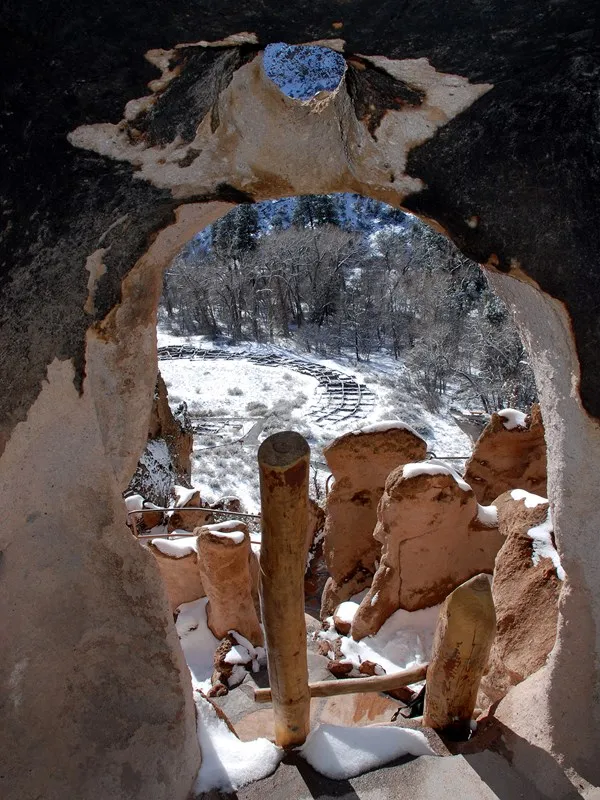
Along parts of the canyon wall, people enlarged natural openings in the soft volcanic tuff to create rooms known as cavates. The NPS also interprets Long House and other dwellings along the route. Look for features identified by the park and consider the skill needed to build and maintain homes in this landscape.
Some designated cavates can be reached by park-installed ladders when they are open. Climbing is optional: evaluate your comfort with heights, the ladder and your ability to descend before starting. Follow staff guidance and any posted closure; never climb an unsanctioned route or touch fragile surfaces.
Alcove House requires an additional walk beyond the main loop and a series of ladders when accessible. Confirm its status and requirements at the visitor center, since conditions can change. A visitor who skips the climb can still learn a great deal from the canyon floor and park interpretation.
5. Leave time for the broader landscape
Bandelier includes far more than the popular loop. Trails cross mesas and canyons with substantial elevation changes, uneven surfaces and limited services. Choose longer hikes only after checking current access, weather and your group’s preparedness; carry water and a map and tell someone your plan.
The park notes that flooding destroyed portions of the Falls Trail and there is no access to the Rio Grande from Frijoles Canyon on that route. Do not rely on an old map or a trail description that implies otherwise. After heavy rain, avoid washes and follow flash-flood warnings.
Before leaving, pack out litter, follow pet rules and keep all cultural and natural materials where you found them. A respectful visit supports the living communities and park staff who continue to care for this extraordinary place.