At Pecos National Historical Park, a short trail passes the ancestral sites of Pecos Pueblo and the remains of a Spanish mission church. The walk is an introduction to a long and complex history of trade, community, colonization and resistance in northern New Mexico.
The park also protects places connected to the Santa Fe Trail, ranching and the Civil War. These four parts of a visit can help you explore without rushing past the stories that give the landscape its meaning.
1. Begin at the visitor center
The E. E. Fogelson Visitor Center has exhibits on the region’s archaeology, history and contemporary connections. Pick up a map, ask about current trail conditions and consider a trail guide before starting. The park is fee-free, but hours vary by season and it closes on certain holidays; check the NPS schedule for your date.
Bring drinking water, a hat and sunscreen. The route is exposed in places, and weather can shift quickly. A clear morning does not rule out wind, rain or an afternoon storm, so use the forecast and ranger advice when planning how long to stay.
The visitor center and its restrooms are accessible. Ask staff about route conditions and audio-description devices if they would make the visit more comfortable. A thoughtful visit can begin with the museum even if a member of the group chooses not to walk the entire trail.
2. Walk the Ancestral Sites Trail
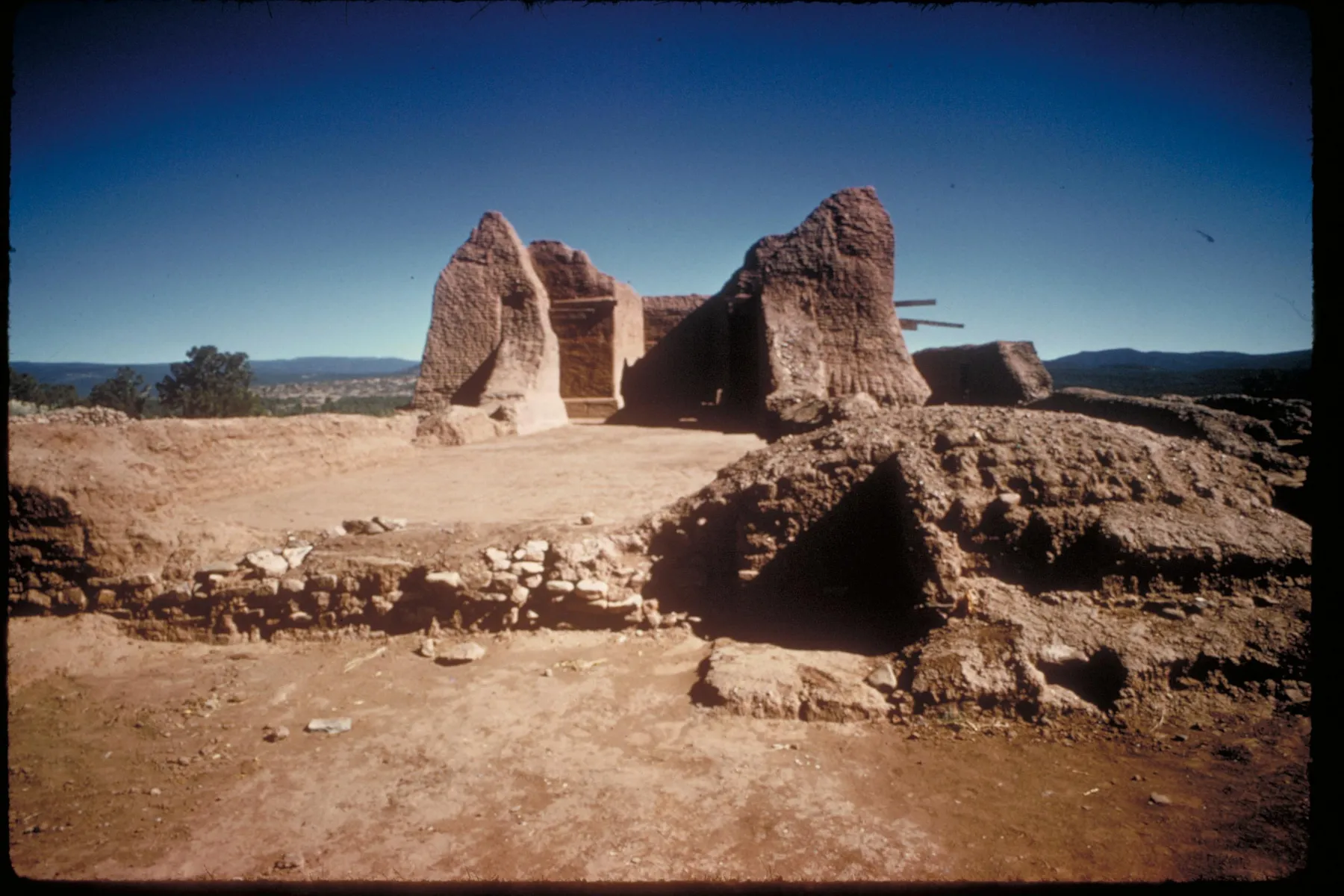
The 1.25-mile loop begins behind the visitor center and passes the ancestral sites of Pecos Pueblo and the mission church. The NPS describes an elevation change of about 80 feet. Its surface is mostly packed dirt and gravel; although much of the route is relatively gentle, certain grades and features may be difficult for some mobility devices.
Allow time to read the interpretation and look across the Pecos River Valley. The community at Pecos was part of extensive trade networks, and the visible walls represent only part of a much larger story. The park explains connections between the ancestral site and Pueblo communities today; those connections are an essential part of understanding the place.
Stay on established routes and leave stones, pottery fragments and other materials where they are. Do not climb walls, enter closed areas or add marks to surfaces. These sites are both fragile archaeological resources and ancestral places that deserve care.
3. Understand the mission and the Pueblo Revolt
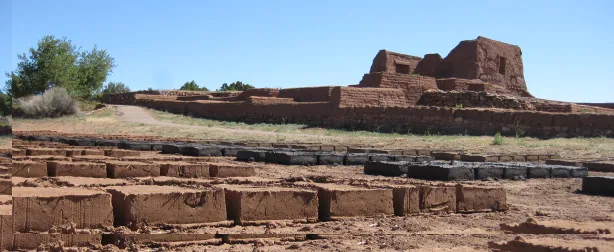
Spanish colonial authorities and Franciscan missionaries sought control and religious conversion in the region. The NPS explains that Pecos people provided unpaid labor for the mission complex and faced exploitation, forced tribute and interference with traditional religion. These pressures formed part of the background to the Pueblo Revolt of 1680.
Pecos joined other Pueblo communities in the revolt, during which the earlier church and convento burned. Spanish colonizers later returned, and the smaller church whose walls stand today was completed in 1717. The building is striking, but it should be read alongside the history of the people whose labor and resistance shaped it.
The trail includes reconstructed kivas that require climbing ladders. Enter only where the park permits and only if you can safely climb and descend. Visitors who cannot use the ladders can still learn from the above-ground interpretation and the visitor-center exhibits.
4. Add another chapter if time allows
Pecos National Historical Park also interprets the Battle of Glorieta Pass, the Santa Fe Trail and the twentieth-century Forked Lightning Ranch. Ask at the visitor center which areas, ranger programs and trails are open on your date. Some locations have different hours or access arrangements from the main ancestral-sites loop.
The Glorieta Battlefield Trail has its own route and visitor guidance. Check the current details before leaving the visitor center, carry water and stay on designated paths. Do not assume that every historic landscape is open to independent exploration or that a program is offered every day.
Dogs are allowed on the Ancestral Sites Trail when leashed and controlled; clean up after them and check rules for other areas. Camping is not allowed on the park grounds. Nearby public lands have separate operators and regulations, so verify those details if extending the trip.
Before leaving, pack out litter and give the visitor center time for final questions. Pecos rewards a slower approach: the landscape holds stories of community, conflict and survival that cannot be understood from a photograph alone.