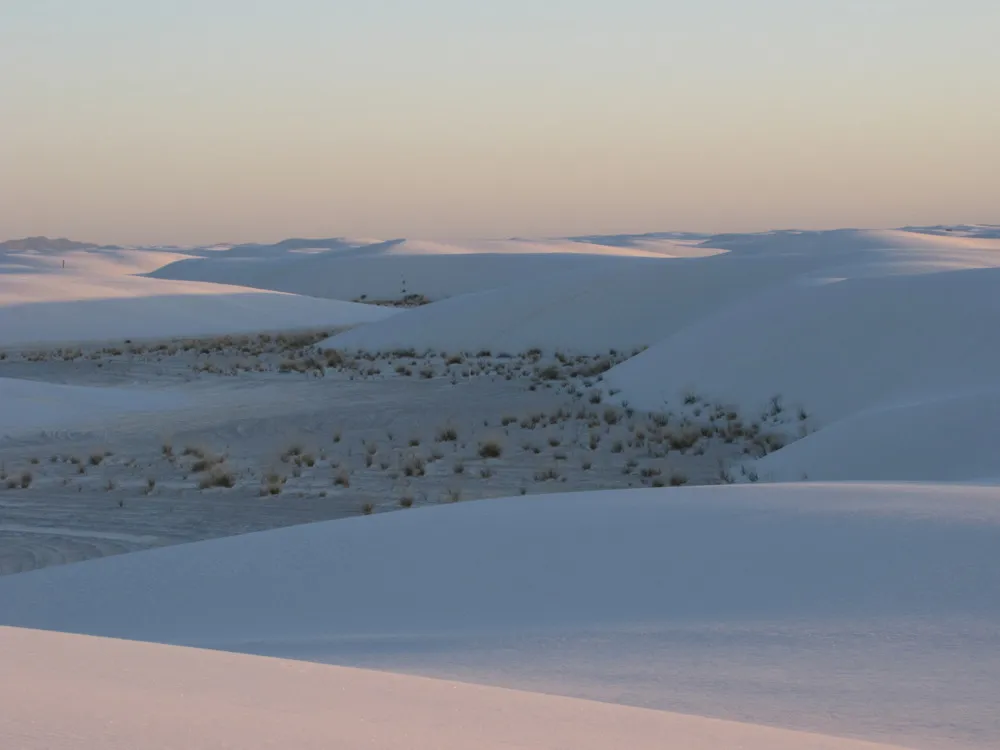
White Sands National Park looks almost like a snowfield beneath New Mexico’s desert sky. Its bright dunes are made of gypsum, however, and they move with the wind across the Tularosa Basin. The landscape invites a walk, a scenic drive or a careful sled ride—but its beauty comes with heat, shifting weather and occasional access restrictions.
These six ways to plan a visit will help you enjoy the dunes while protecting yourself and the park. Check official conditions on the day you travel; the most useful itinerary is one that can change.
1. Check closures before leaving
The neighboring White Sands Missile Range conducts military tests that can require temporary closure of Dunes Drive. Highway 70 may also close during some tests. The National Park Service posts known closure information but says notice can sometimes be short, so check both park and highway conditions shortly before departure.
As of the park’s published safety-corridor guidance, stopping or leaving vehicles is prohibited along a designated section of Dunes Drive, and the Interdune Boardwalk is closed. Ask at the visitor center for the current boundaries and alternatives; these restrictions may change as recovery work continues.
Confirm operating hours as well. Sunset changes throughout the year, and the time you must leave the dunefield depends on the park’s schedule. Build in enough time to return to the entrance without rushing.
2. Take Dunes Drive at a relaxed pace
Dunes Drive runs eight miles from the visitor center into the dunefield, making a 16-mile round trip. The NPS describes the first five miles as paved and the final three as a hard-packed gypsum surface suitable for ordinary vehicles under normal conditions. Rain, snow, ice or drifting sand can change the road quickly.
Use designated pullouts and parking areas, follow speed limits and watch for cyclists and pedestrians. Do not stop within a signed safety corridor. Carry drinking water from the visitor center: the park says water is available there, not out among the dunes.
A drive without stops takes about 45 minutes according to the park, but allow longer if you intend to walk, photograph or picnic. Light changes the shapes and shadows of the dunes, so a slower schedule can reveal details that are easy to miss through a windshield.
3. Choose a walk for the weather and the group
The park offers marked trails of different lengths. Ask a ranger which are currently open and appropriate for your party, especially while the boardwalk is closed or restrictions are in effect. Soft sand makes walking more tiring than the same distance on pavement, and identical-looking dunes can make navigation difficult.
Carry a map and enough water, stay aware of trail markers and turn back if you lose the route. The NPS advises against hiking when temperatures exceed 85°F. In hot weather, choose a cooler time and keep the outing short; during winter, bring layers for cold mornings and evenings.
Thunderstorms and lightning require prompt shelter in a solid building or vehicle. If you find unfamiliar metal or debris, do not touch it: the park warns that unexploded military material may occur in the dunefield. Note the location and tell a ranger.
4. Sled with a clear, gentle runout
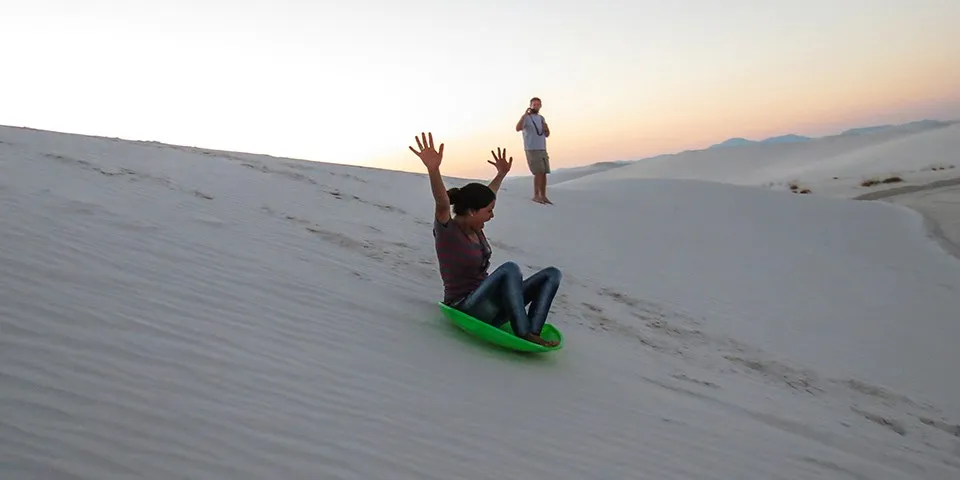
Sledding is a popular way to experience the dunes. The park says waxed plastic snow saucers work well and may be rented or purchased at the gift shop; visitors may also bring their own. Sand behaves differently from snow, so start slowly and learn how the sled responds.
Choose a gentle slope with a level area where you can stop. Check the entire route for plants, hard sand, other people and obstacles, and never sled toward a road or parking area. Sit or lie feet first; do not stand or go head first. Adults should closely supervise children.
The park prohibits sledding around the Interdune Boardwalk area. Ask staff where sledding is currently permitted, especially when safety restrictions are active. Climbing a dune repeatedly can be strenuous, so take breaks and avoid hard exertion in heat.
5. Understand the gypsum beneath your feet
The dune grains began as gypsum deposited in ancient seas. Over geologic time, mountain building, water and evaporation helped concentrate the mineral in the Tularosa Basin. Wind and water then broke crystals into fine grains and moved them into dunes that continue to change shape.
The pale color reflects sunlight, but it does not mean the air is cool or that dehydration is unlikely. Protect your skin and eyes, use footwear suited to the conditions and bring more water than you expect to need. Keep sand out of cameras and other delicate equipment on windy days.
Leave plants and natural objects in place, and avoid disturbing animal tracks or wildlife. Small species have adapted to this shifting environment; observe them from a distance without feeding or handling them.
6. Make time for the evening light
Low sun can cast long shadows across the dunes and illuminate the surrounding mountains. The park also offers a ranger-led Sunset Stroll on selected days when staffing and weather allow. Check the current calendar and meeting instructions rather than relying on an older schedule.
Stay aware of closing time, especially if you venture beyond a parking area. Orient yourself before walking into the dunes, keep companions together and carry a light if you may return near dusk. A beautiful sunset is easier to enjoy when you already know the way back.
Pack out litter, secure loose belongings against the wind and leave the dunes as you found them. Before traveling, review the NPS closure, weather and safety pages linked below for the latest information.