Above the confluence of the Heart and Missouri rivers, Fort Abraham Lincoln State Park holds more than one chapter of North Dakota history. Its reconstructed Mandan earthlodges and military buildings stand on different parts of a landscape with a much longer story than either reconstruction. A visit is most rewarding when you allow time for both, and for the open prairie between them.
The park is near Mandan, making it a manageable outing from the Bismarck area. Start at the visitor center, ask which buildings are open, and pick up a map. Guided tours and services vary by season; the park's official information is the best place to check current access before driving out.
1. Begin with the Mandan village at On-A-Slant
On-A-Slant Village was a Mandan community overlooking the river long before the military post was established. The state park says the village was occupied for roughly two centuries. Following the smallpox epidemic of 1781, survivors moved north to join other Mandan communities. The earthlodges visible today are reconstructions, not buildings that have stood intact since the village was occupied.
That distinction makes the landscape especially interesting. A reconstruction can help visitors picture the scale and form of a home, but it cannot by itself convey the lives of the people who lived there. Begin with the park's interpretation and take time to read it. Mandan people and their descendants are living communities today, not just subjects of a historical display.
2. Look closely at the earthlodges
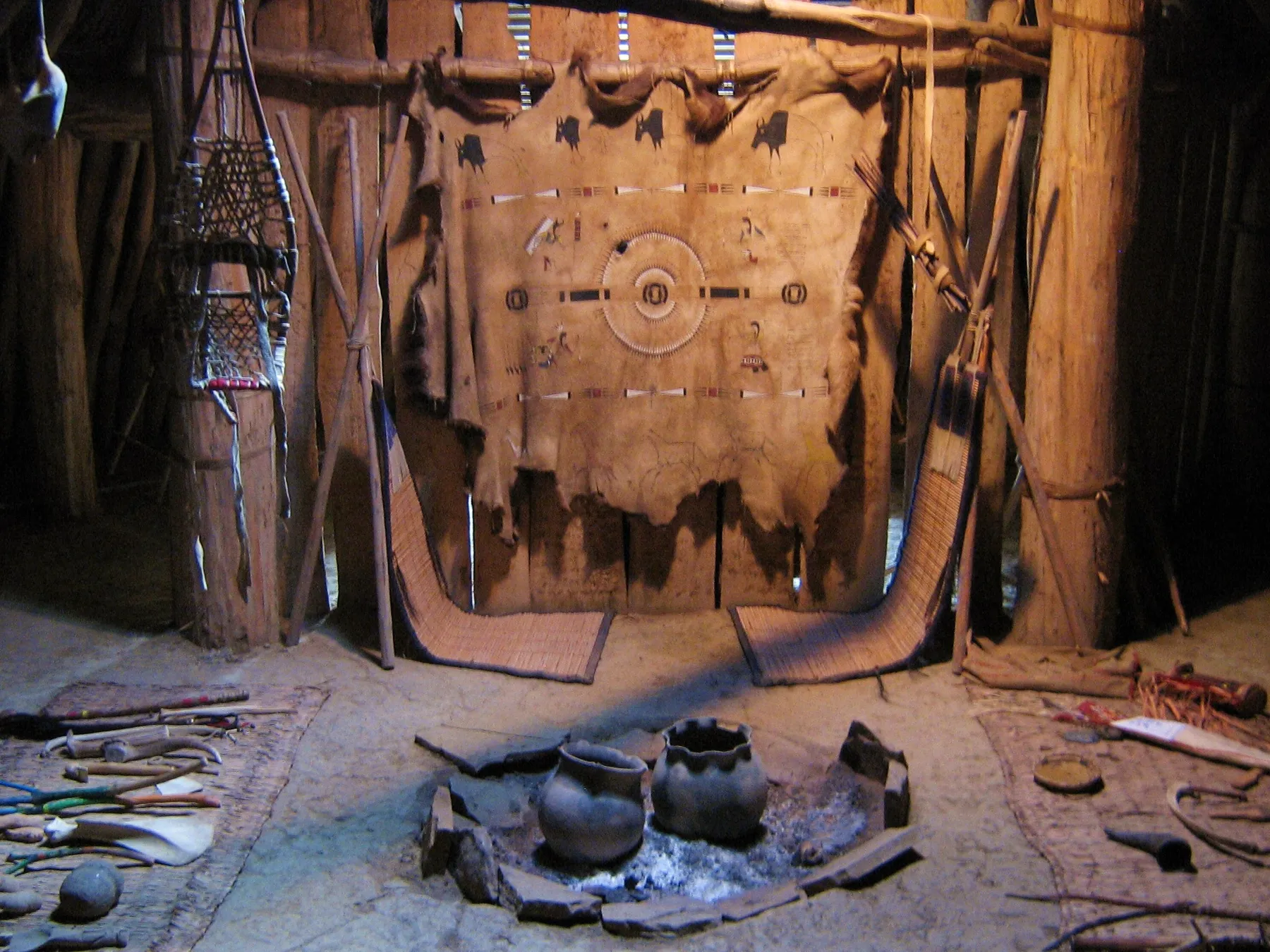
The park describes six reconstructed earthlodges, including a council lodge. The timber supports and earth covering make the buildings strikingly different from the military structures elsewhere in the park. Inside, observe how a broad central space could accommodate the activities of a household. The effect is more meaningful when you pause to notice the relationship between the village, the surrounding land, and the rivers below.
The reconstruction itself has a history. During the 1930s, Civilian Conservation Corps workers built lodges using plans associated with Mandan Corn Priest Scattered Corn. These are interpretive structures, so check the park's current visitor information for when entry is available. The park asks visitors to recognize the village as a sacred place to Mandan people; treat the site with the same care you would give any other place of cultural and spiritual significance.
3. Explore the military post and its hilltop views
The military post was established in the 1870s, first as Fort McKeen and then renamed Fort Abraham Lincoln. Today, reconstructed buildings and interpretive exhibits introduce that period. The fort became associated with the 7th Cavalry and George Armstrong Custer, whose 1876 expedition ended at the Battle of the Little Bighorn in present-day Montana.
Military history here belongs in a larger story of westward expansion and its consequences for Native nations. Visiting the village and the post together helps keep those perspectives in view. Walk the grounds with a map rather than assuming every building is original: the park's reconstructions are designed to help explain places and events, not to erase the changes that have occurred since.
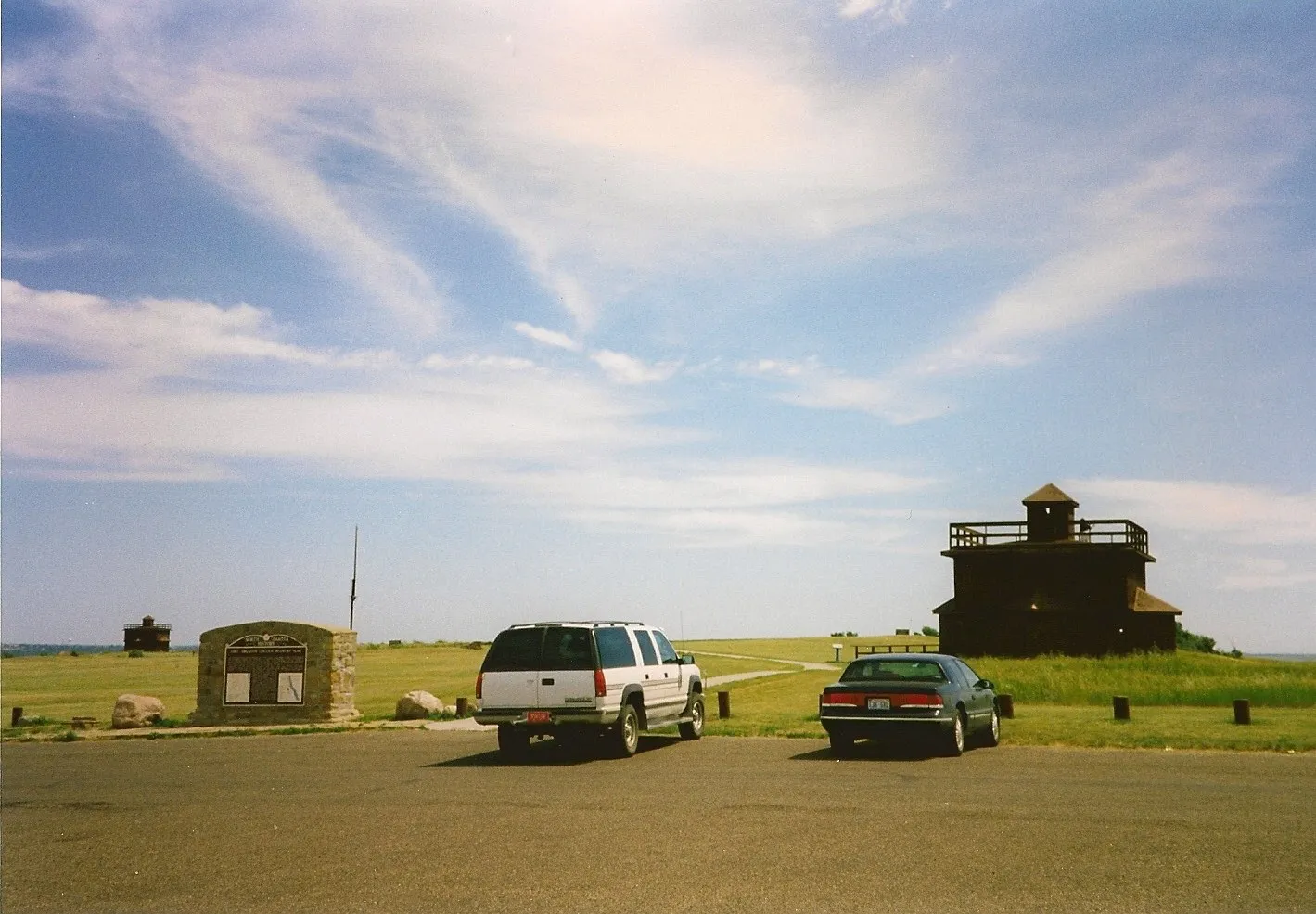
On the higher ground, reconstructed blockhouses offer another view of the fort's setting. From here it is easier to appreciate why the hills and river valleys shaped travel and settlement. Stay on designated paths and use care on uneven or slippery ground, especially after rain or snow.
4. Check whether the Custer House is open
The reconstructed Custer House is one of the park's best-known stops, with interpretation centered on life at the military post. Touring it can add detail about the domestic side of the fort, from the layout of rooms to the practical demands of living at a remote post. Ask what the tour covers and how long it takes when you arrive.
Do not assume the house is open every day of the year. The park lists tours as seasonal, and schedules or staffing can change. If an interior tour is essential to your trip, confirm it directly with the park beforehand; if it is unavailable, the grounds and other open exhibits can still make a worthwhile visit.
5. Take the Scattered Corn Trail
The park identifies the Scattered Corn Trail as a roughly four-tenths-of-a-mile route connecting the visitor center and On-A-Slant Village. It is a useful way to slow the transition between orientation and the historic landscape. Ask staff about the surface, current conditions and the most suitable route for your group before setting out.
For a longer walk, consult the park's trail map rather than choosing a route by distance alone. Terrain, exposure, weather and seasonal conditions can make a short prairie walk feel very different from a shaded city path. Carry water, wear comfortable shoes, and watch the forecast; prairie weather can change quickly. Leave plants and historic materials where you find them.
6. Plan the day around the season
A half-day gives most visitors room to see the main interpreted areas without rushing, especially if a tour is offered. Families may prefer to begin at the visitor center, walk to the village while everyone is fresh, and then drive or walk to the military-post area as conditions and the park map permit. Bring a layer even on a pleasant day: wind on the exposed hills can change how the temperature feels.
The park also has camping and other recreation, so a visit can be part of a longer stay. Check current reservations, entrance requirements, accessibility information and facility openings with North Dakota Parks and Recreation before leaving. If you bring a pet, review the park's current rules and follow signs around buildings and cultural sites.
However long you stay, give the Mandan village more than a quick glance on the way to the fort. Together, the two areas invite a richer conversation about the people who made their homes here, the changes brought by the military post, and the communities whose history continues beyond the park's reconstructed buildings.