Eastern Oklahoma offers opportunities to learn about Cherokee history from the Cherokee Nation itself, as well as sites that help explain the difficult history of removal and federal expansion. In Tahlequah, museums and a cultural pathway connect stories of government, language, art and the living Cherokee Nation. A longer drive reaches Sequoyah's Cabin and Fort Gibson.
These six stops do not tell the same story, and none should be treated as a substitute for the voices of the people whose history is represented. Check hours with each operator, allow time for exhibits, and approach places connected to forced removal with care.
1. Cherokee National History Museum, Tahlequah
Begin in the historic Cherokee National Capitol building, where the Cherokee Nation's museum follows the Cherokee story from origins through the Trail of Tears and into the present. Exhibits address art, government, cultural continuity and sovereignty. The museum's modern-era gallery also explores Cherokee life after Oklahoma statehood.
The Nation lists free admission and regular hours Tuesday through Saturday, 10 a.m. to 4 p.m., at 101 South Muskogee Avenue. Check for holiday changes and current exhibitions. Give yourself time to read and listen: the museum presents a living nation's history, not a culture confined to the past.
2. Cherokee National Supreme Court Museum
At 122 East Keetoowah Street, the Cherokee National Supreme Court Museum explores the Nation's judicial system, written language and journalism. The building dates to 1844, and the museum describes a collection that includes an original Cherokee Advocate printing press and materials connected with the Cherokee Phoenix.
The Nation lists free admission and the same regular Tuesday–Saturday schedule. Exhibits can change, so check the operator's current information. This is a useful companion to the history museum because it shows how institutions, writing and the press helped shape Cherokee public life.
3. Cherokee Cultural Pathway
The Cultural Pathway links the history, supreme court and prison museums in downtown Tahlequah. Cherokee Nation describes the landscaped route as a place for permanent and rotating works by Cherokee artists. Walking between museums makes space to encounter contemporary expression alongside historic buildings.
The pathway is listed as open daily around the clock and free, while the museums have their own hours. Check the current exhibition and weather, use crossings and public walkways, and leave installations undisturbed. An outdoor visit can still be worthwhile when indoor sites are closed, but a museum day is best planned during their shared opening hours.
4. Cherokee National Prison Museum
The Cherokee National Prison Museum, at 124 East Choctaw Street, presents the history of Cherokee law, enforcement and incarceration. The original prison dates to 1875; the Nation describes the current site as two buildings interpreting the prison and its wider history.
Admission is listed as free Tuesday through Saturday, 10 a.m. to 4 p.m. Some subjects and a reproduction gallows may be difficult for younger visitors, so adults can decide how much detail is appropriate. This stop adds another perspective on the Cherokee Nation's government and legal institutions.
5. Sequoyah's Cabin Museum near Sallisaw
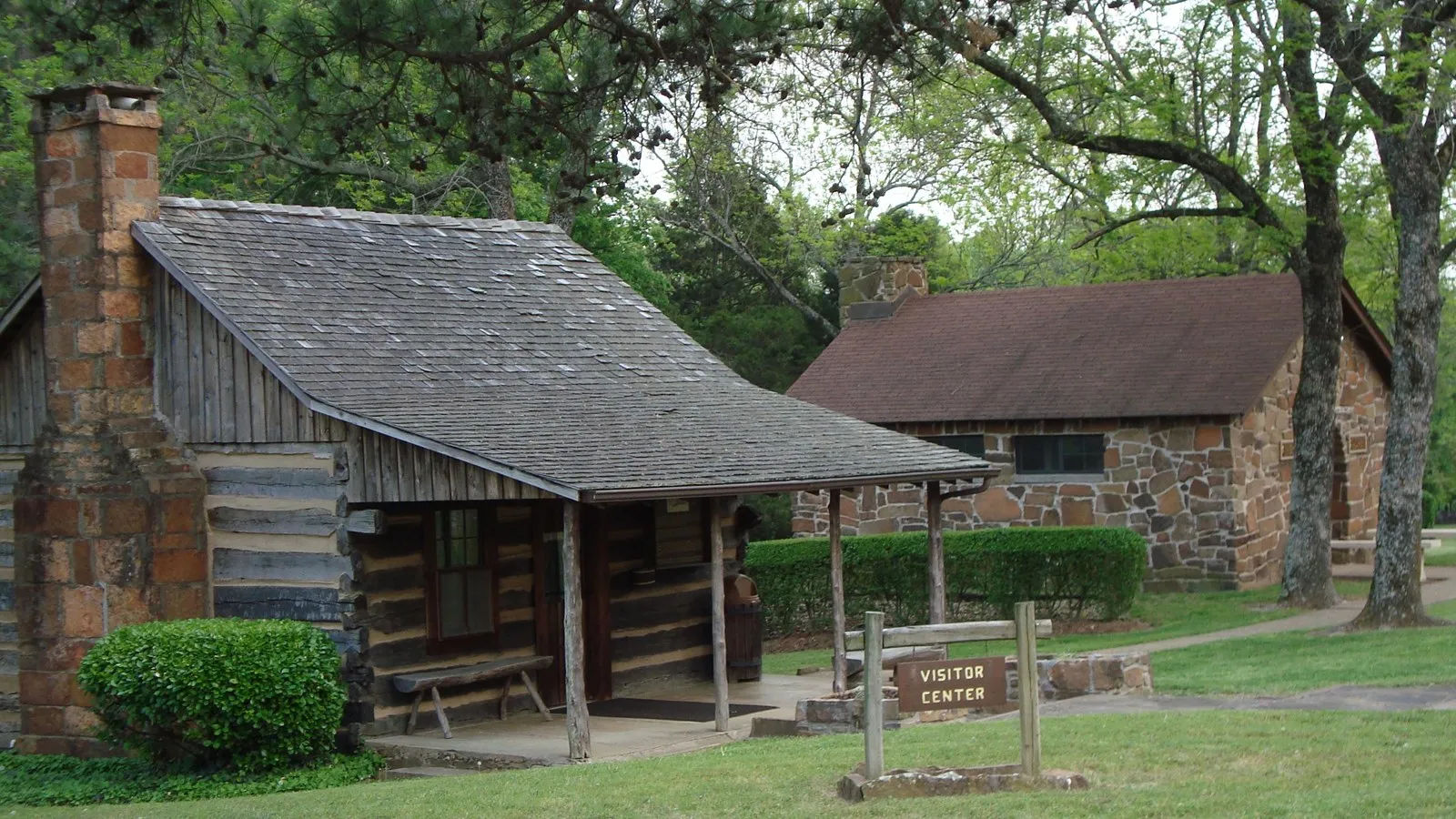
Sequoyah developed the Cherokee syllabary, a writing system that made reading and writing in the Cherokee language possible. The National Park Service says he built the cabin in 1829 after moving to what is now Oklahoma. Today the Cherokee Nation operates the site and its surrounding grounds.
The museum is at 470288 Highway 101 near Sallisaw. The Nation lists free admission and Tuesday–Saturday hours from 10 a.m. to 4 p.m.; confirm before making the drive. Take time to learn about the syllabary's continuing importance, not just the building. Sequoyah did not invent the spoken Cherokee language; his achievement was creating its writing system.
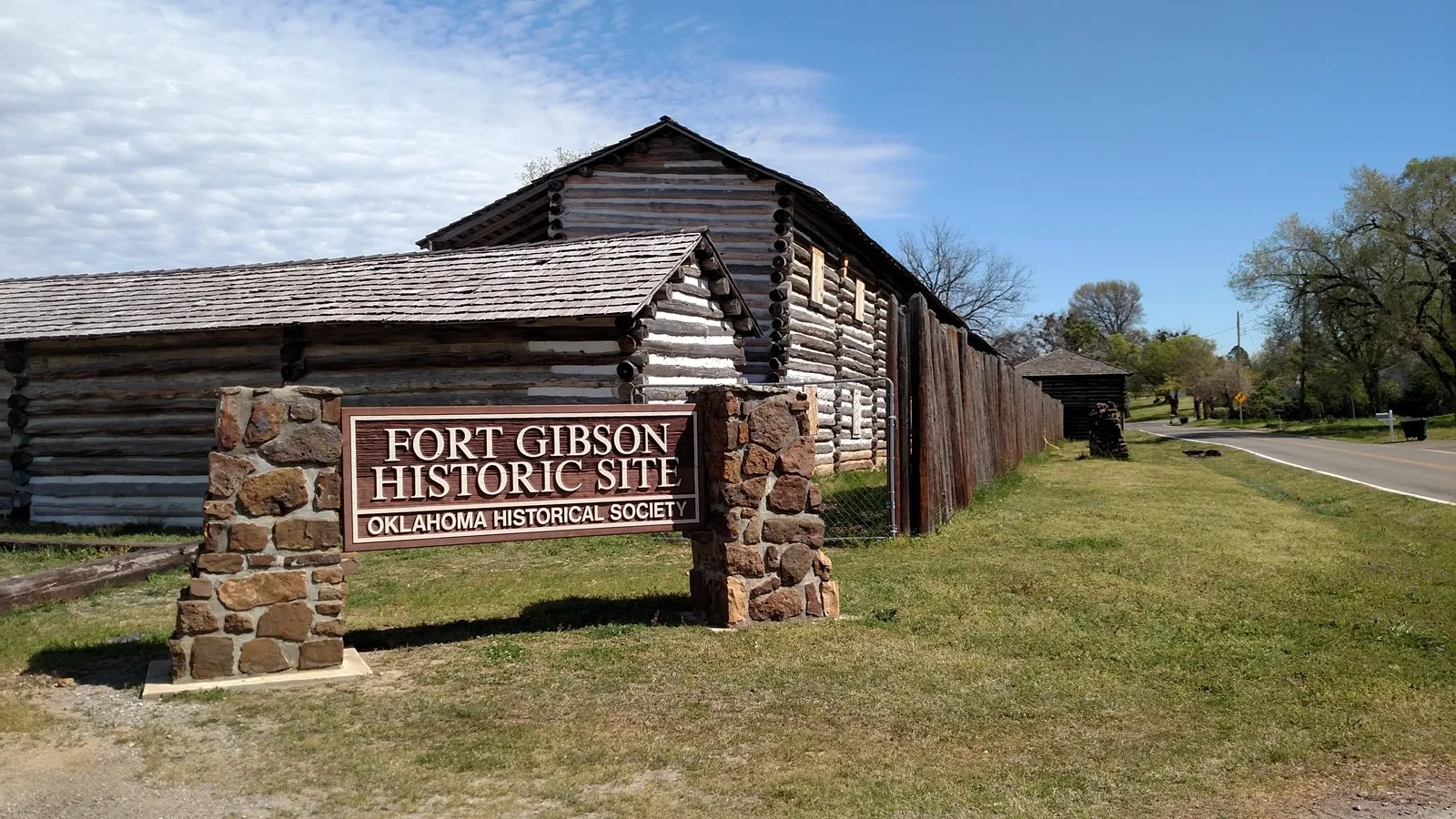
6. Fort Gibson Historic Site
The Oklahoma Historical Society operates Fort Gibson, a U.S. military site whose history intersects with the forced removal of Indigenous peoples. The NPS identifies it as a dispersal site for Seminole and Muscogee (Creek) people after their journeys from the Southeast. It also served as a center of federal military activity in Indian Territory.
The log stockade is a reconstruction; several stone buildings are original and restored. The historical society lists a museum and exhibits, along with paid admission and regular Tuesday–Saturday hours. Its visitor information gives 803 North Garrison Avenue, Fort Gibson, and lists occasional special closures. Check directly before traveling.
For a Tahlequah-centered day, the first four stops fit together geographically; the cabin and fort are separate drives best planned with a map and sufficient time. One commonly suggested destination, the Cherokee Heritage Center, is listed by Cherokee Nation as temporarily closed for renovation. Consult the Nation's current attraction information rather than relying on older travel guides.